The Alipore Bomb Case: the Bullet, the Approver and the Lawyer Who Saved Aurobindo Ghose
On 6 May 1909 a Sessions Judge at Alipore acquitted the man the Empire wanted most, after 206 witnesses and eight days of defence argument. Read as a lawyer reads it, the trial was decided by rules of evidence that still protect every accused person in India.
The trial decided by the rules of evidence
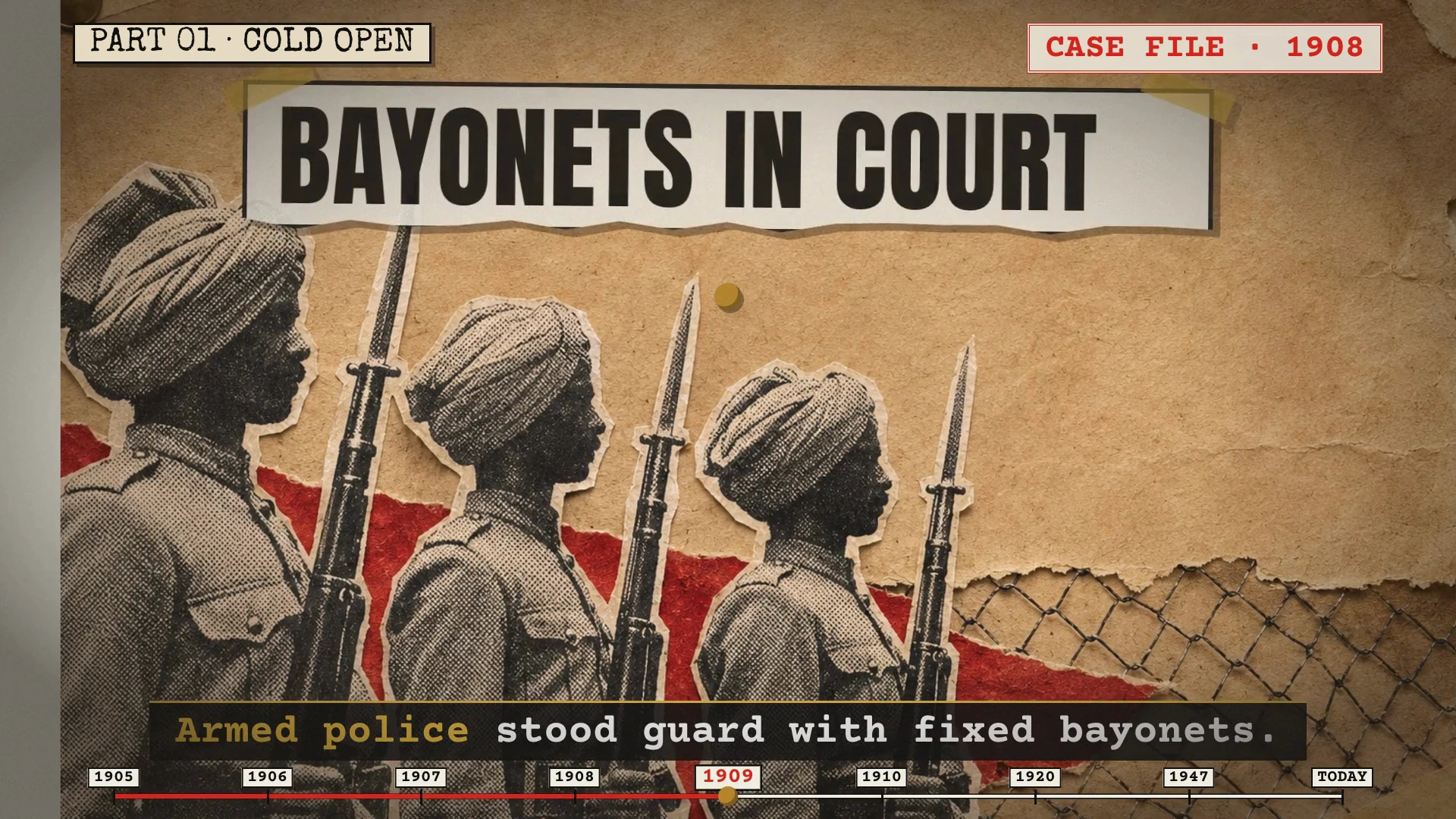
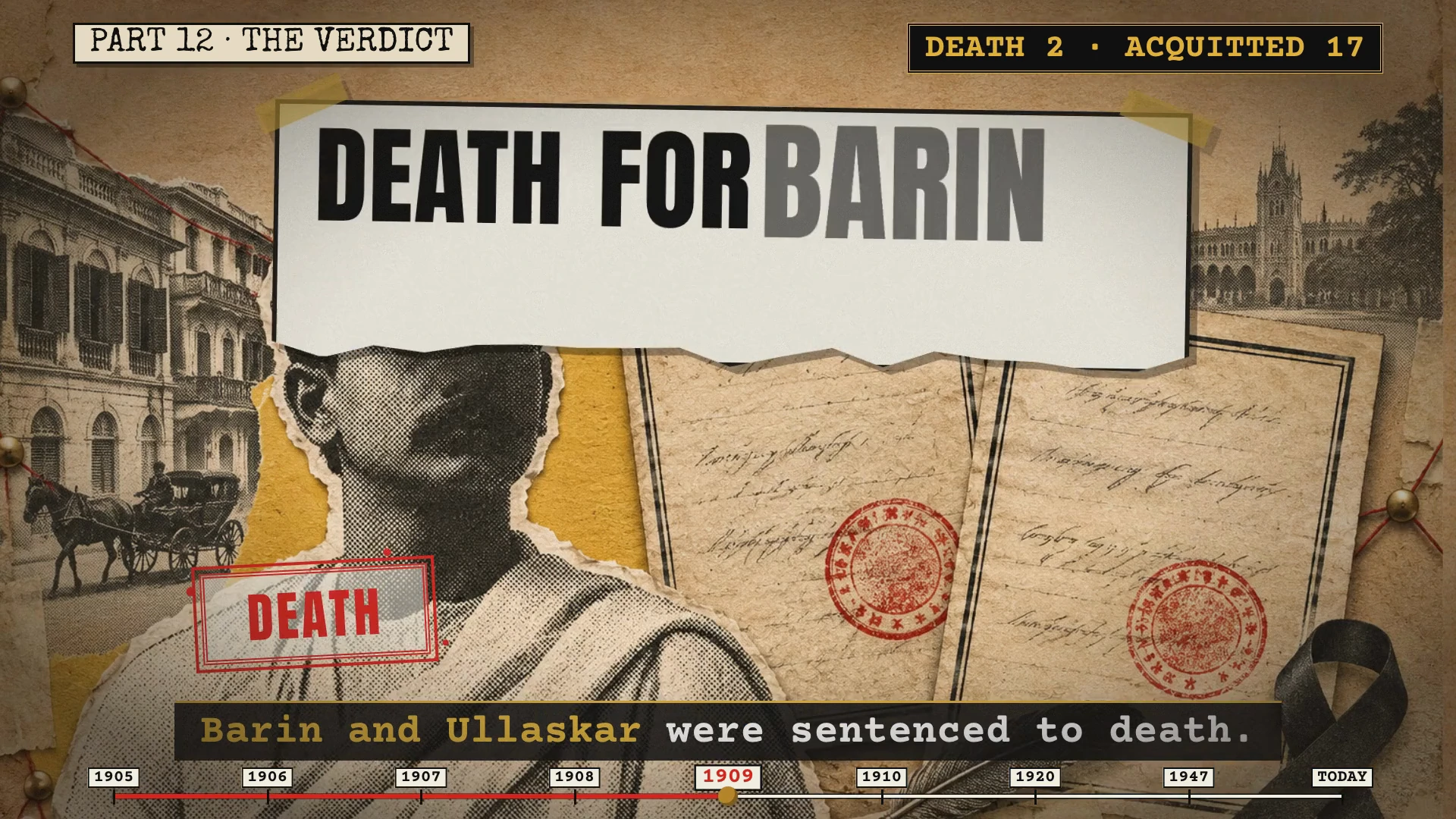
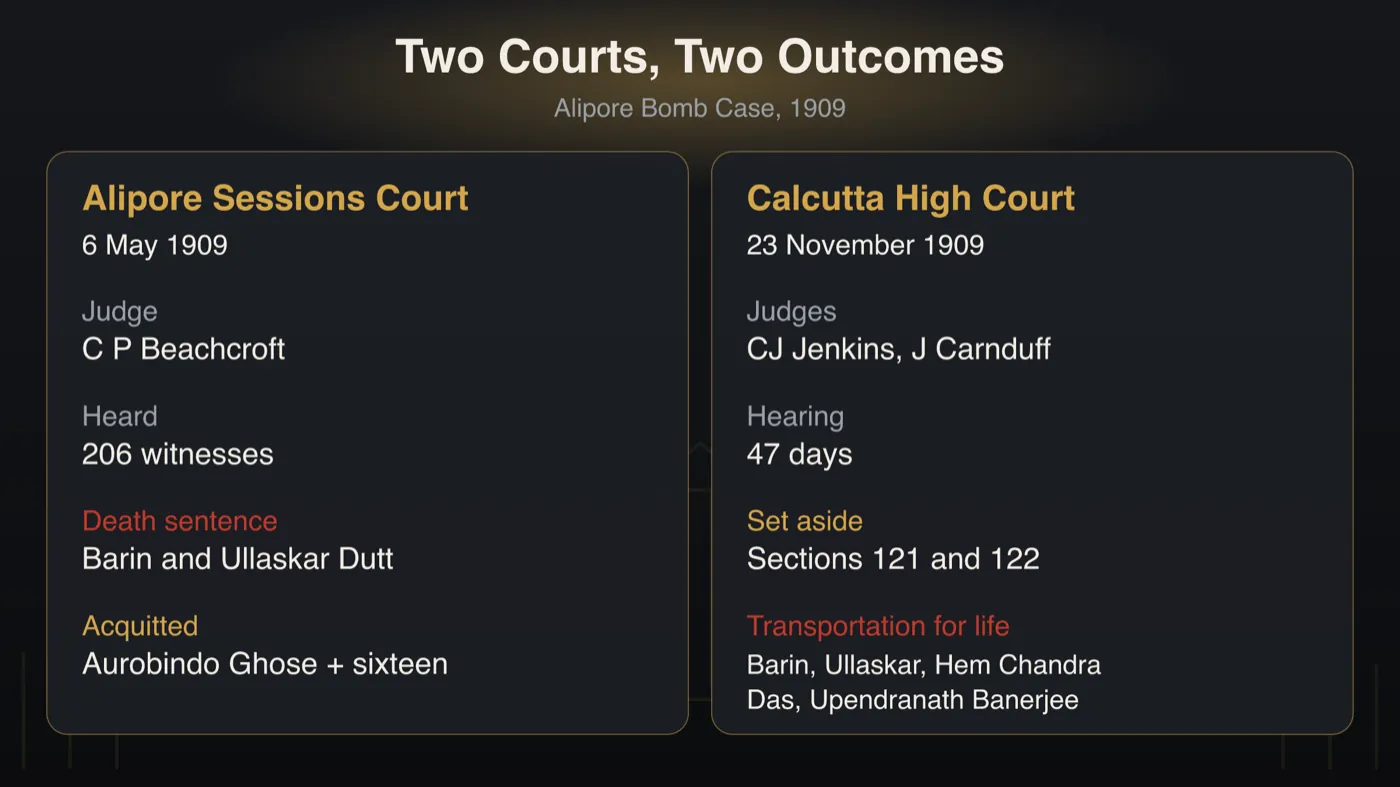
On 6 May 1909, Judge C P Beachcroft began to read his verdict at Alipore. The accused sat behind wire netting, armed police stood guard with fixed bayonets, and, according to the prosecutor himself, he kept a loaded revolver on his brief. Two hundred and six witnesses had been heard. Barindra Kumar Ghose and Ullaskar Dutt were sentenced to death, but Aurobindo Ghose and sixteen others were acquitted. The convicts appealed to the Calcutta High Court, where Chief Justice Lawrence Jenkins and Justice Carnduff gave judgment on 23 November 1909. The appeal is reported as Barindra Kumar Ghose and Ors. v. Emperor, (1910) ILR 37 Cal 467.
The question that decided the trial was a lawyer’s question: what happens when the Crown’s most important witness, an approver, is killed before he can be cross-examined? The judge refused to read the dead approver’s earlier statement against the accused, because the right to cross-examine had never been given. That rule now lives in Section 27 of the Bharatiya Sakshya Adhiniyam, 2023, and it is argued daily in criminal courts, including in matters handled by a Calcutta High Court advocate and in cases where a criminal lawyer in Kolkata must test a prosecution witness.
How long each stage lasted
Day counts from the dates in the trial record, so you can compare the stages at a glance.
Short explainers from Adv. Sudip Patra
More short explainers on our YouTube channel: Patra’s Law Chambers on YouTube ↗
Which evidence question are you trying to understand?
The Alipore trial turned on a few rules of evidence that still apply in Indian courts. Pick the situation closest to your question to see the rule and where the law stands now. This is general information, not advice.
Choose one of the options above.
From Muzaffarpur to the High Court: how the case moved
The case ran from a bomb in Bihar to an appeal in the Calcutta High Court in about nineteen months. These are the stages in order.
Khudiram Bose and Prafulla Chaki threw a bomb into a carriage they took to be Kingsford’s. It carried Mrs Kennedy and her daughter Grace, and both died.
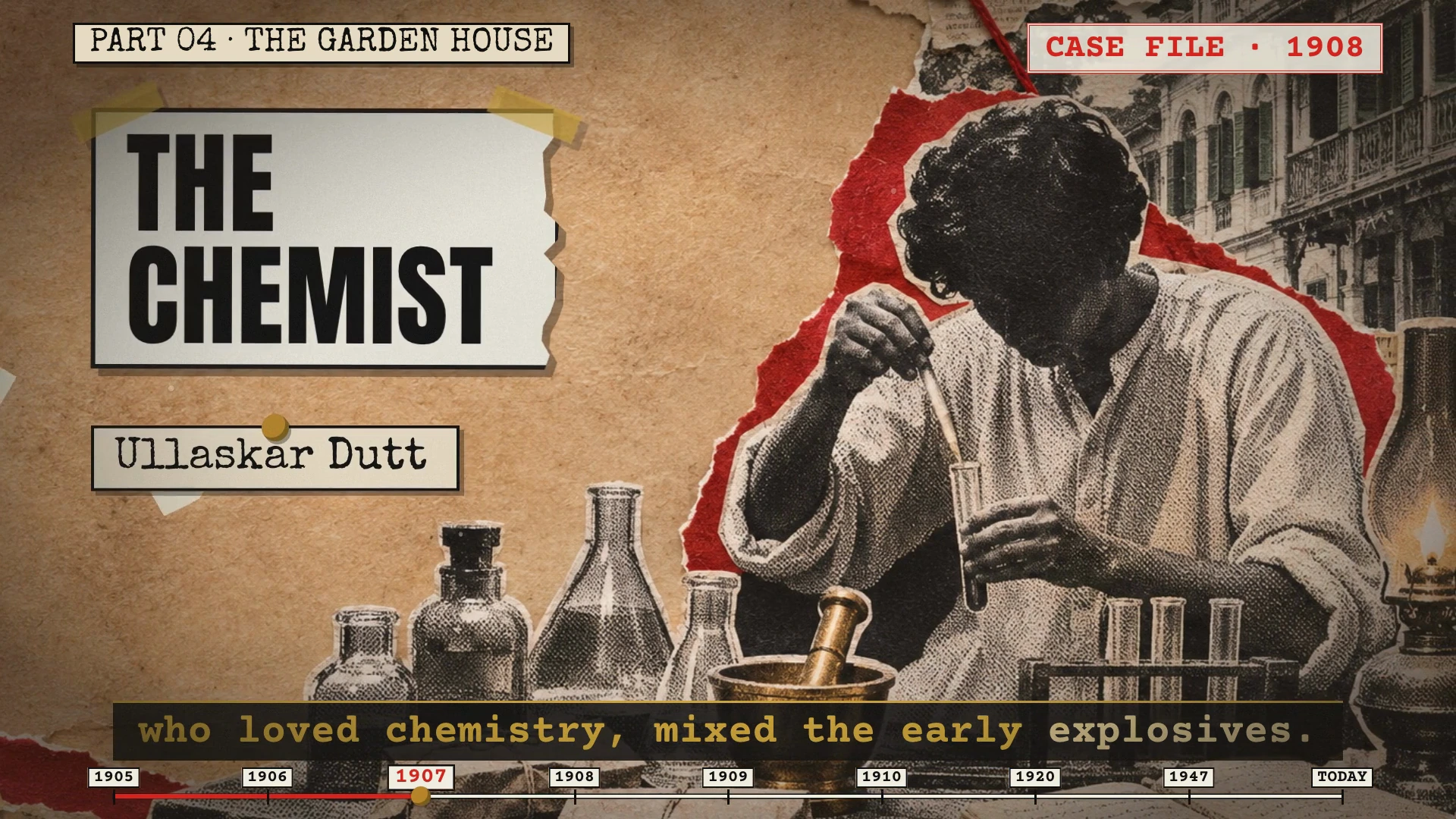
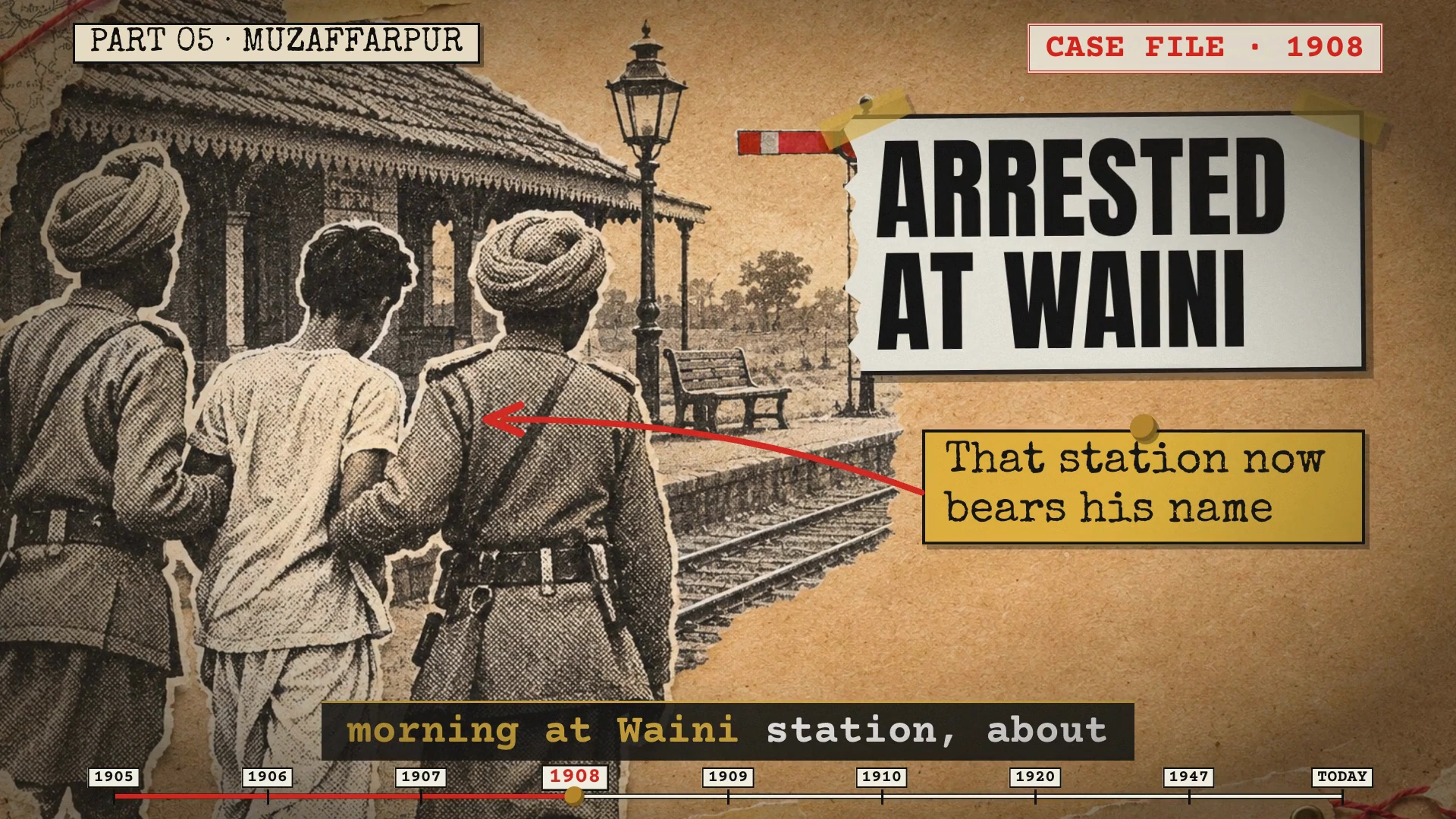
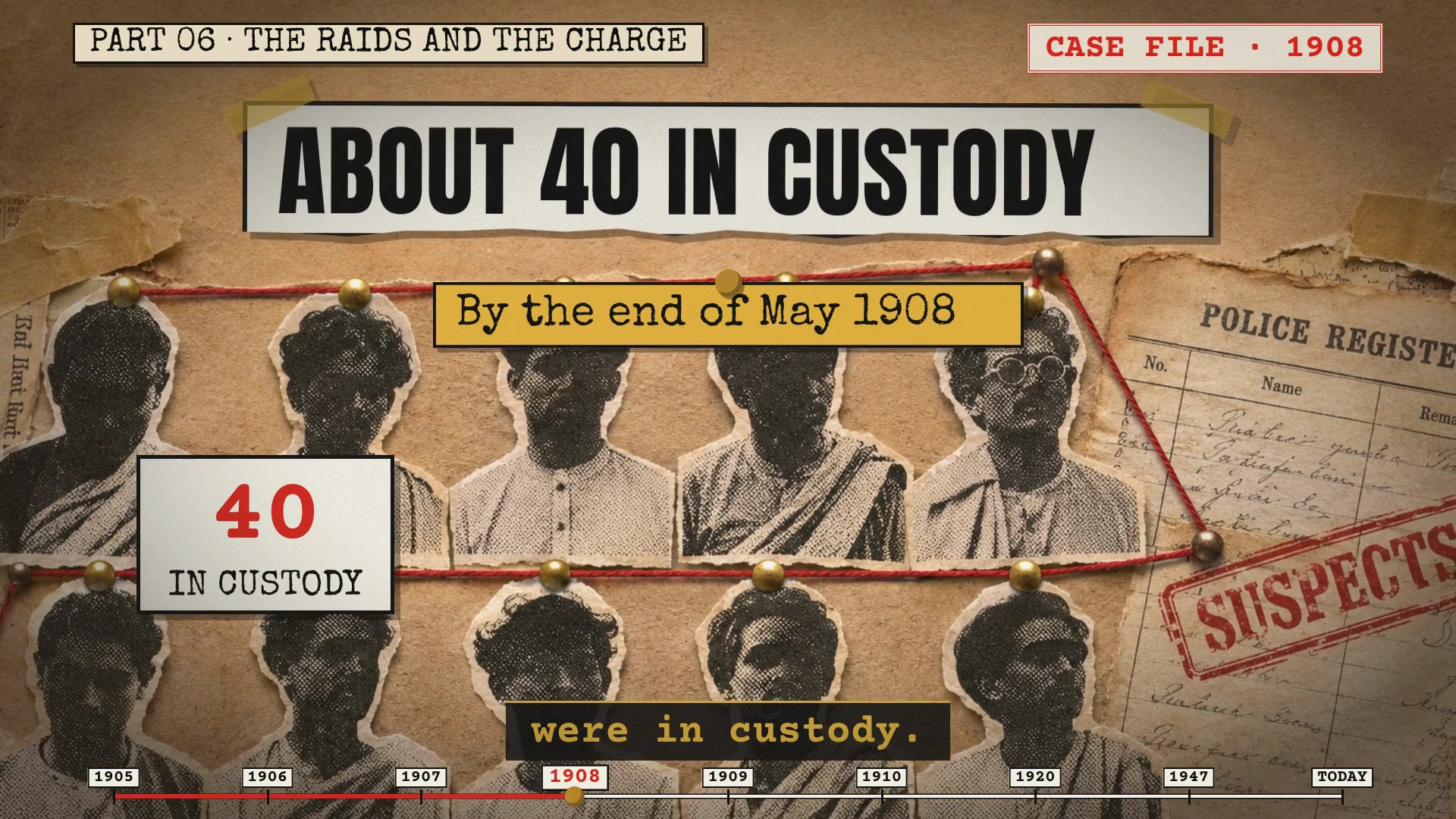
Police searched eight addresses in Calcutta. They found bombs and arms at the Maniktala garden house and arrested Barin, Ullaskar and others. Aurobindo was arrested at 48 Grey Street.
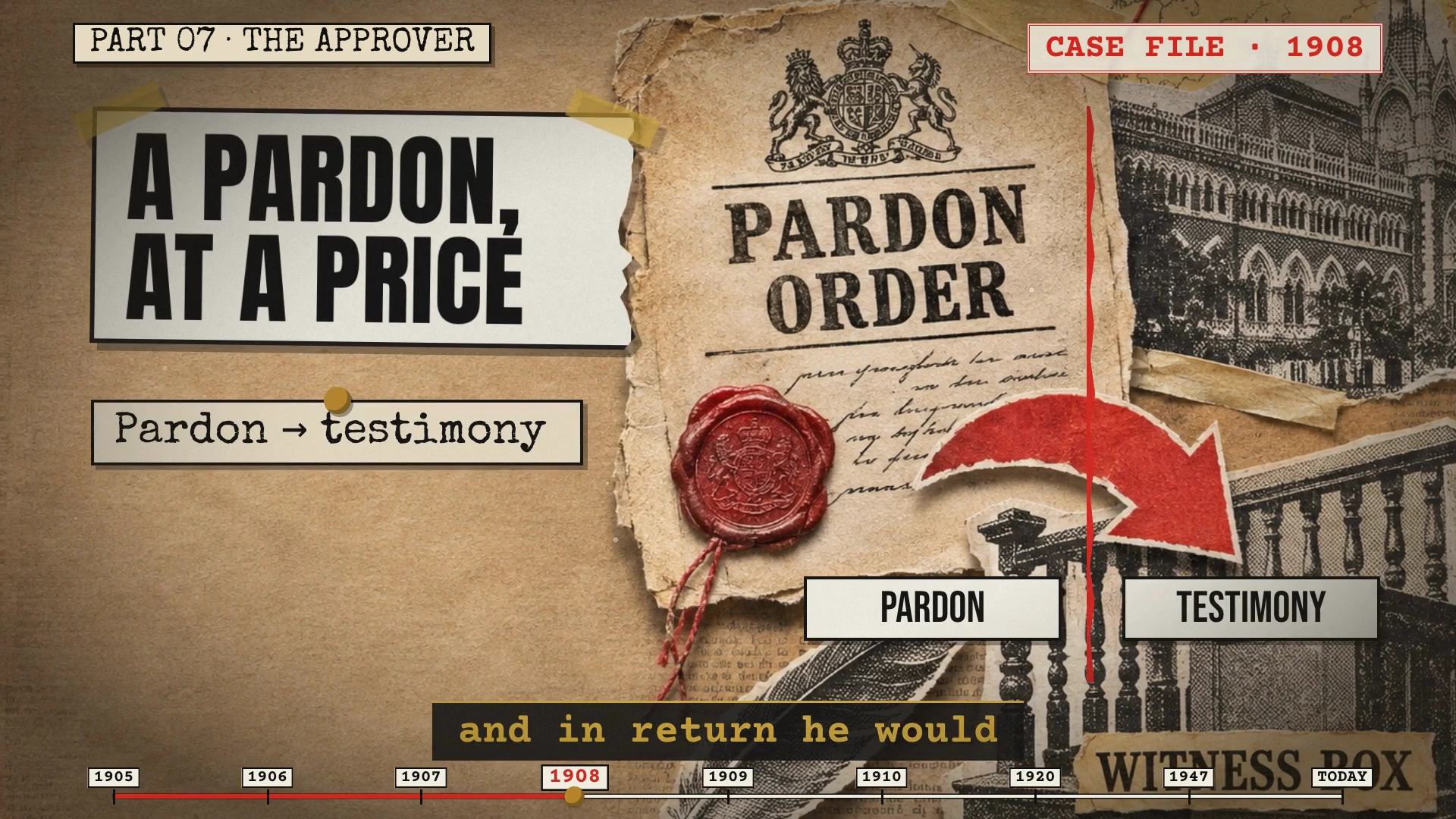
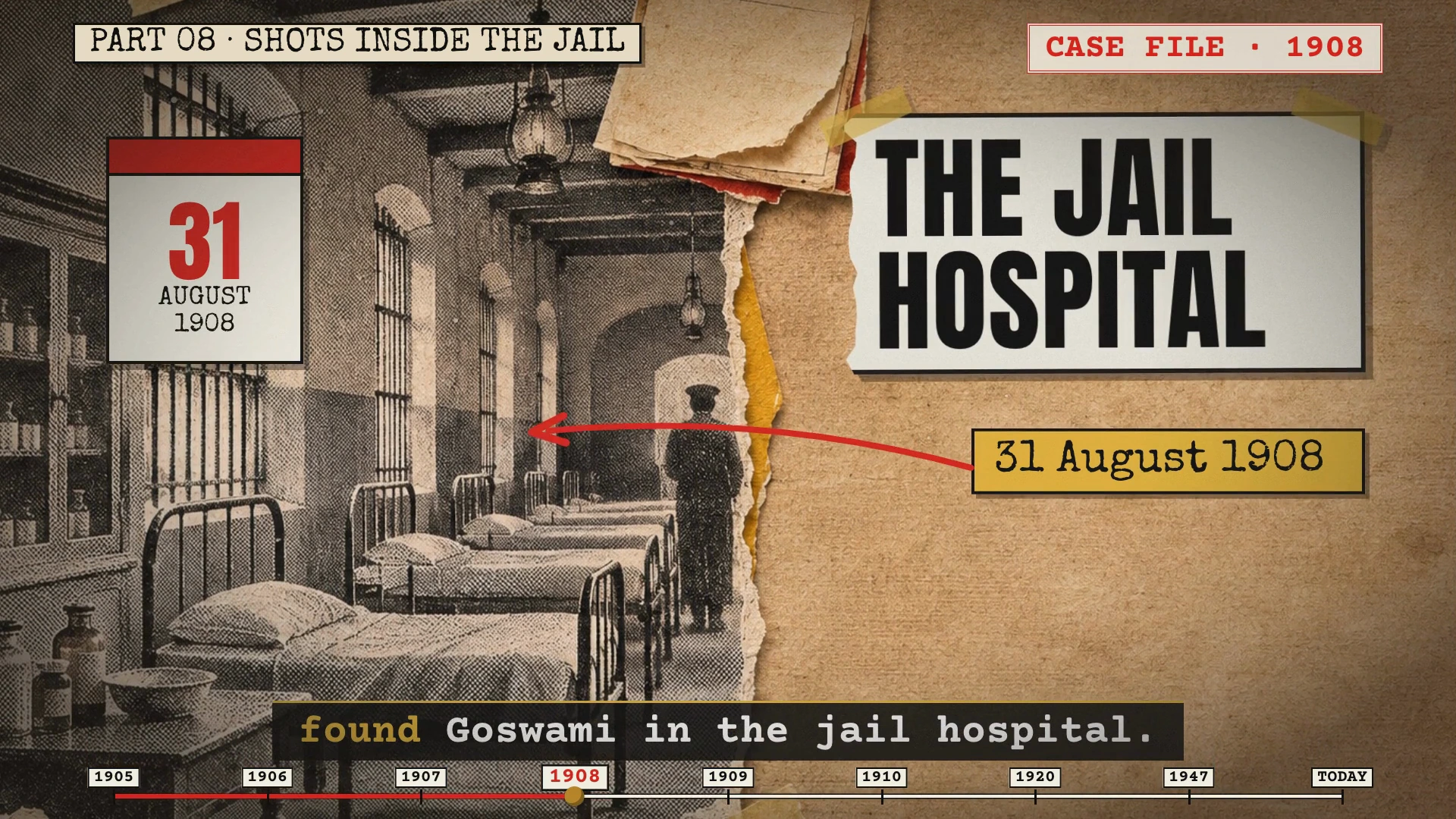
Narendranath Goswami accepted a pardon and named Aurobindo before the magistrate, with no cross-examination. On 31 August 1908 he was shot dead in the Alipore Jail hospital.
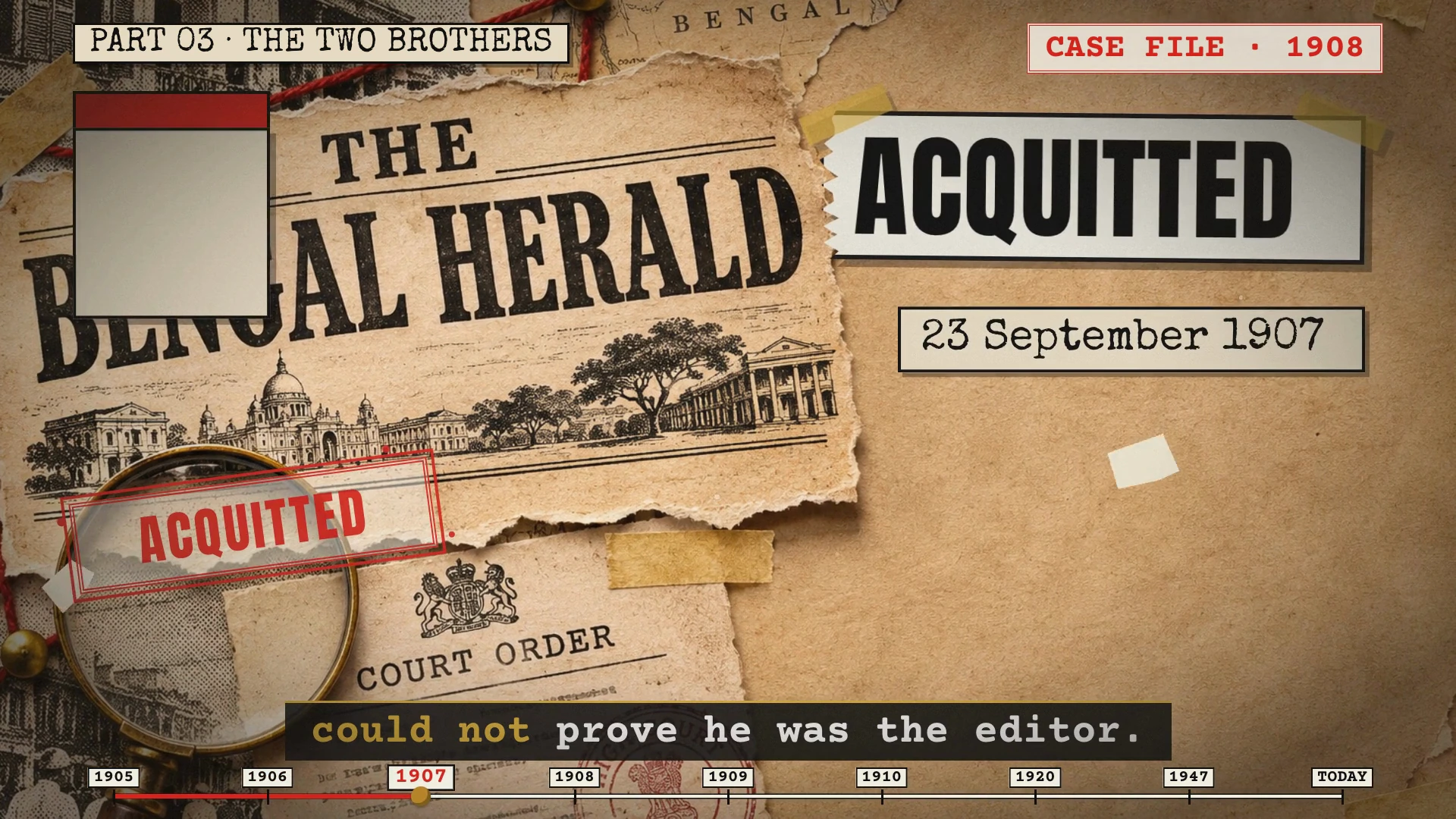
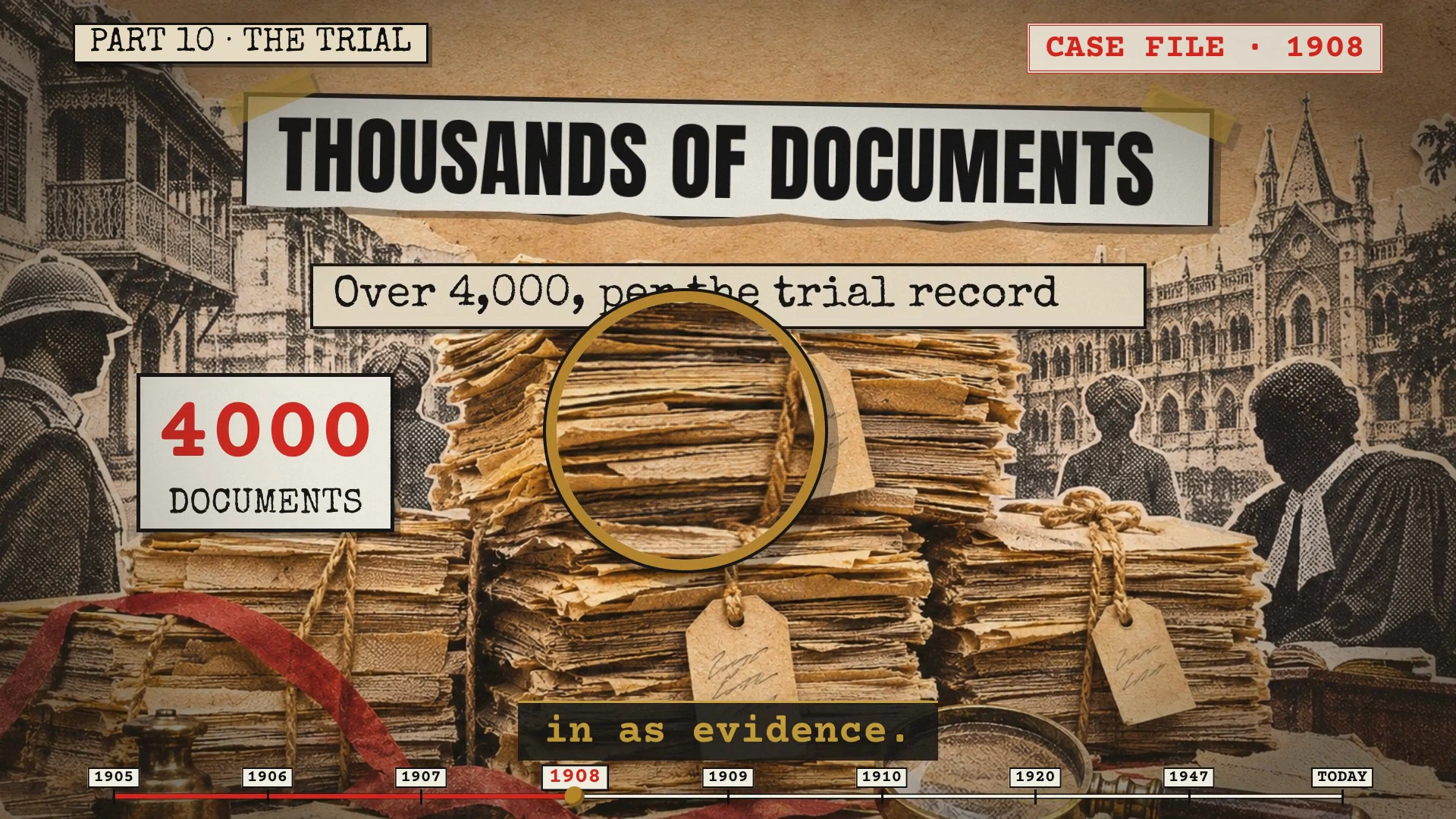
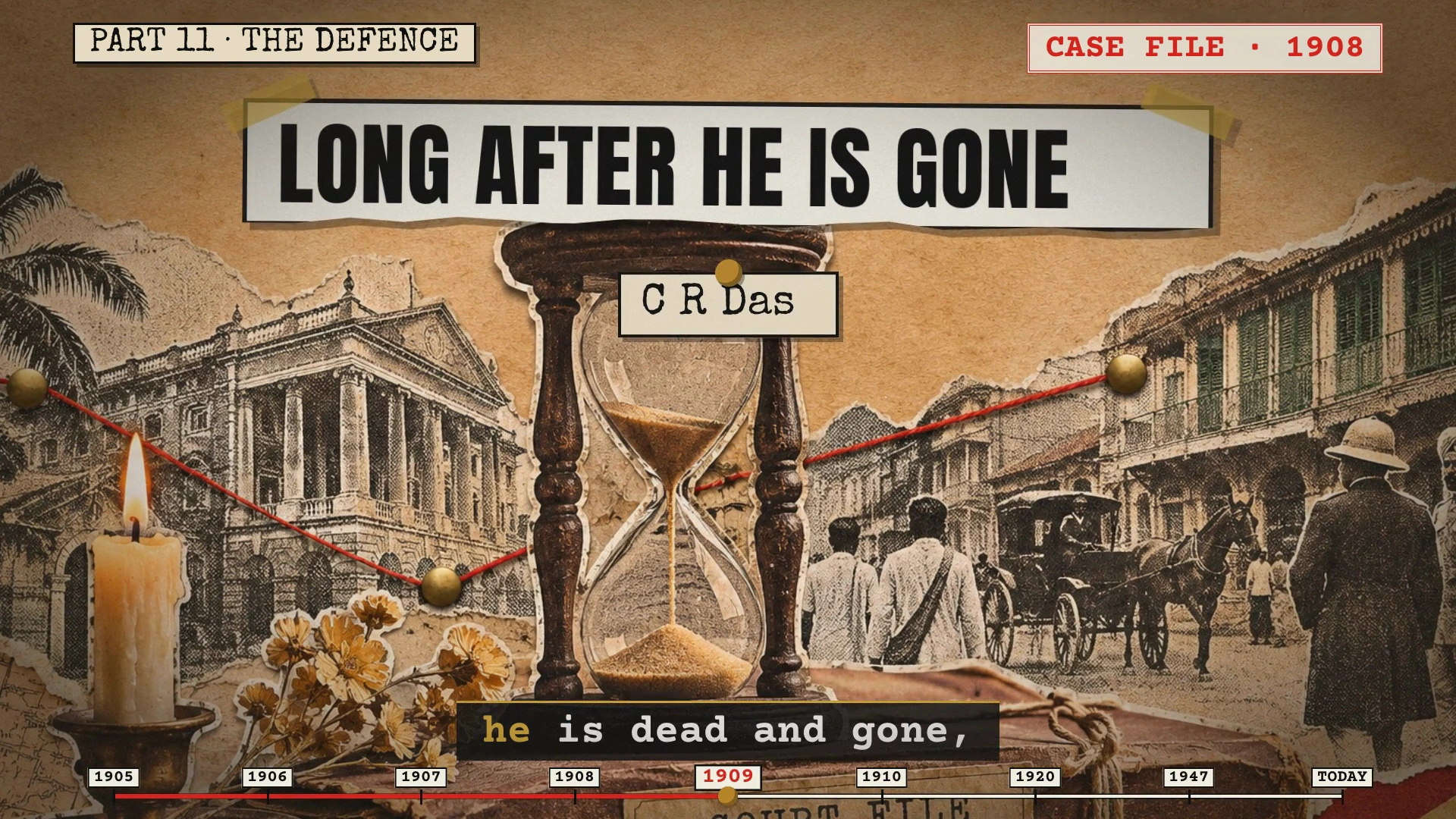
Judge Beachcroft heard 206 witnesses and more than 4,000 documents. He refused Goswami’s earlier statement, and C R Das argued for eight days. Aurobindo and sixteen others were acquitted.
Chief Justice Jenkins and Justice Carnduff heard the appeal for forty-seven days. The death sentences were not confirmed. A criminal lawyer in Kolkata will recognise this as the usual route from a Sessions conviction to the High Court.
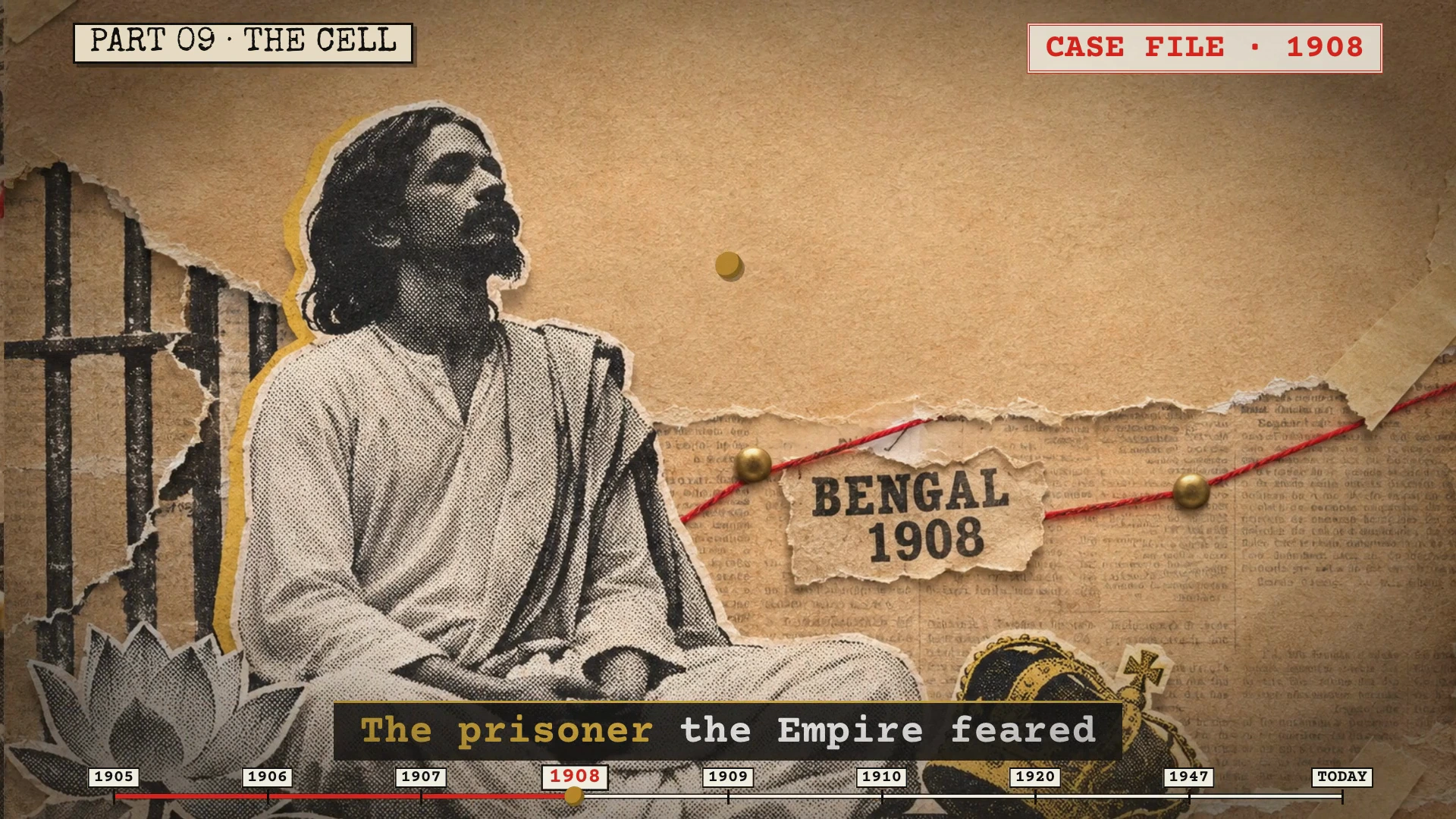
Convicts were shipped to the Cellular Jail. Most were freed only in the amnesty of 1920.
The law behind the verdict: tap a card
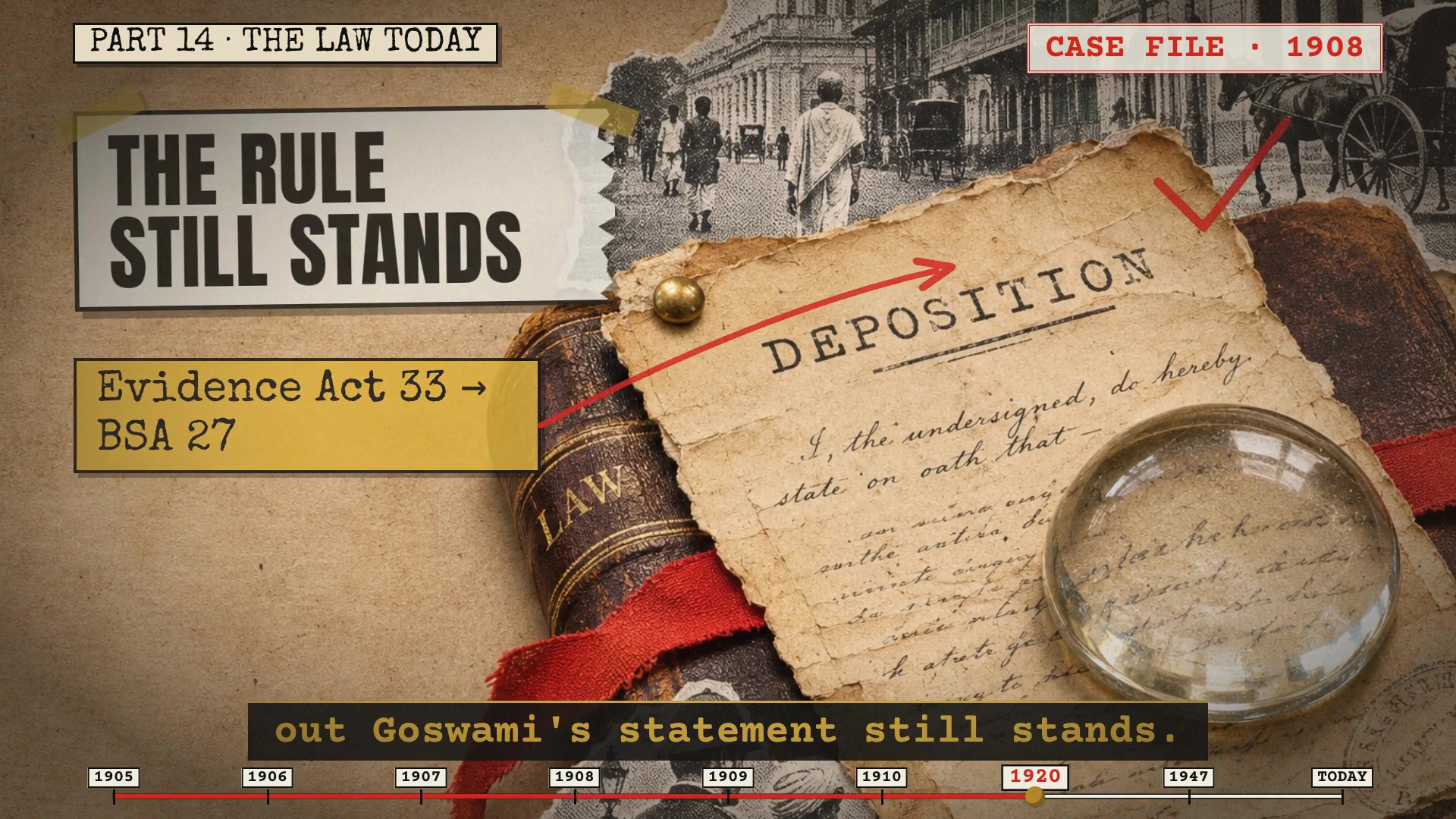
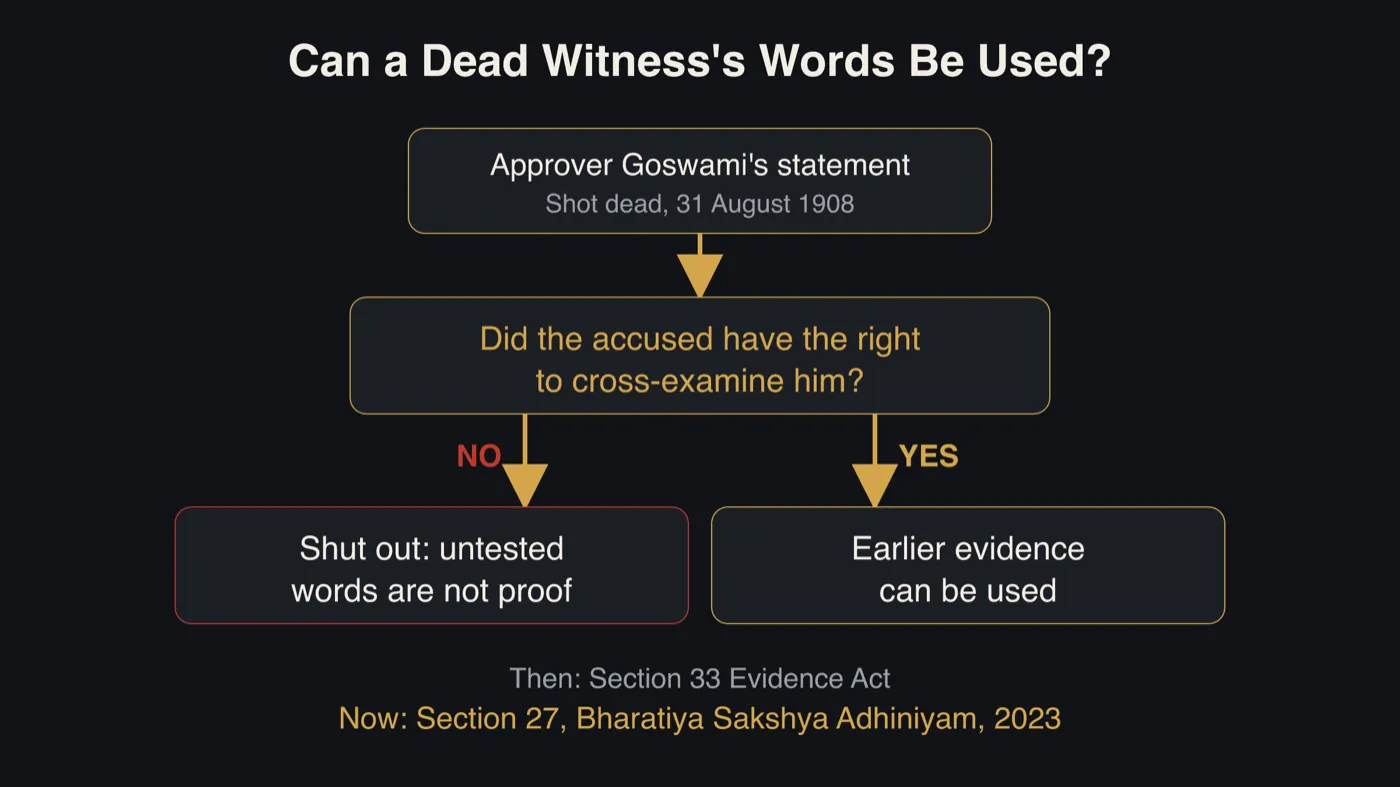
Goswami named Aurobindo, but the defence never cross-examined him. Section 33 of the Evidence Act, now Section 27 of the BSA, kept that statement out.
Section 10 of the Evidence Act, now Section 8 of the BSA, covers a conspirator’s words about the common plan. Goswami had been pardoned and was a Crown witness, so it did not apply.
Beachcroft said that even if the sweets letter was a forgery, it was a splendid one, but the evidence still fell short. The standard remains proof beyond reasonable doubt.
Four points a lawyer takes from Alipore
The approver: the Crown’s weapon
Narendranath Goswami, one of the accused, turned approver: an accomplice pardoned on condition that he tells the whole truth. Before the magistrate he named Aurobindo as a leader of the conspiracy, but the defence could not cross-examine him at that stage. That test had to wait for the trial.
Why the dead approver’s statement was shut out
Goswami was shot dead in Alipore Jail on 31 August 1908. Judge Beachcroft refused his earlier statement: a pardoned witness is no longer a conspirator speaking for the plan, and a dead witness’s earlier evidence can be used only if the accused had the right and chance to cross-examine him.
The charge and the verdict
The Crown charged waging war, conspiracy to wage war and collecting men and arms. On the “sweets” letter the judge said that if it was a forgery it was a splendid specimen of the forger’s art, yet held that the proof fell short. Aurobindo Ghose and sixteen others were acquitted.
The appeal: death sentences not confirmed
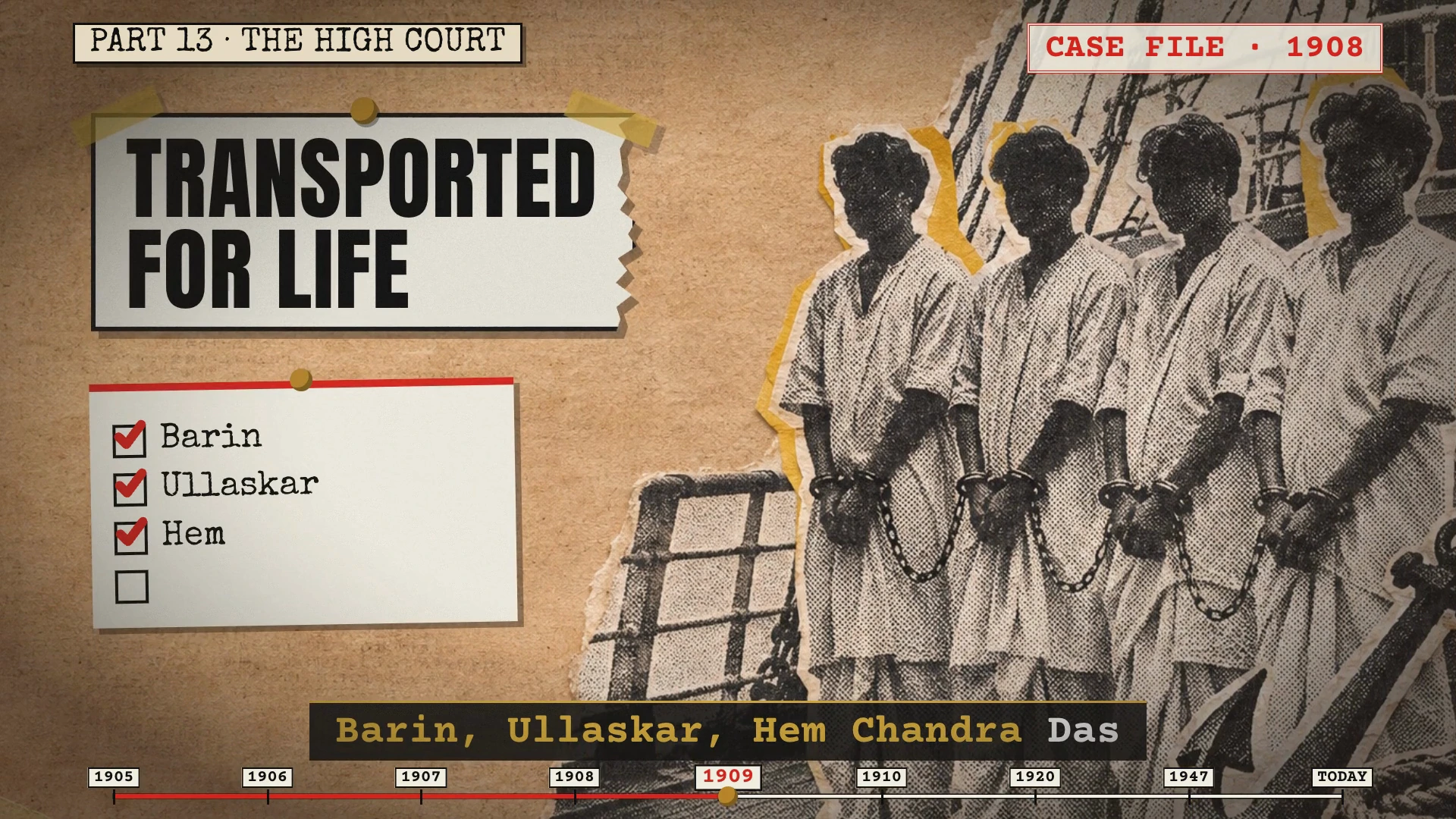
After forty-seven days of hearing, the convictions under Sections 121 and 122 were set aside and most convictions under Section 121A were upheld. Barin, Ullaskar, Hem Chandra Das and Upendranath Banerjee were sentenced to transportation for life. On five men the two judges differed and Justice Harington acquitted three.
Principles that still protect an accused
- The right to cross-examine is not a formality: untested words are not proof.
- An approver has a reason to please the prosecution; courts look for independent corroboration on material points (Haroon Haji Abdulla v. State of Maharashtra, AIR 1968 SC 832).
- The graver the charge, the stricter the proof: proof beyond reasonable doubt.
- Every accused deserves a real defence; Aurobindo’s case nearly faltered for want of money until C R Das took the brief.
- Under Section 27 BSA, earlier evidence of a dead witness is usable only if the adverse party had the right and opportunity to cross-examine him, among other conditions.
The rulings behind the Alipore Bomb Case lesson on approvers and untested evidence
The Alipore trial was decided on the rules of evidence. These decisions show how Indian courts have treated approvers, conspirators’ statements and evidence that was never cross-examined, from the 1909 appeal to today.
1910
Waging-war convictions set aside, conspiracy upheld
Chief Justice Lawrence Jenkins and Justice Carnduff heard the Alipore convicts’ appeal. They set aside the convictions for waging war under Sections 121 and 122 IPC and upheld the conspiracy convictions under Section 121A for most of the accused. The death sentences on Barin and Ullaskar were not confirmed and became transportation for life. A third judge, Justice Harington, decided the five cases on which the two judges differed.
1952
Accomplice evidence needs independent corroboration
The Supreme Court held that the rule in King v. Baskerville is the law in India. Corroboration of an accomplice must come from independent sources, so one accomplice ordinarily cannot corroborate another. It need not be direct proof of guilt. Circumstantial evidence connecting the accused with the crime can be enough, as long as it makes the accomplice’s story probable.
1957
The double test for approver evidence
An approver’s evidence must pass two tests. First, the court asks whether he is a reliable witness, as it would ask of any witness. Only then does it apply the second test, which applies only to tainted evidence: his account must be corroborated on material points. Applying this test, the Supreme Court set aside the convictions in this case.
1965
Limits on using co-conspirators' statements
The Supreme Court explained Section 10 of the Evidence Act, now Section 8 of the BSA. A conspirator’s words or acts about the common design can be used against the others only if there is reasonable ground to believe they conspired. Those words or acts must also have been said or done while the conspiracy was alive. This is the rule that did not help the Crown use Goswami’s statement after he turned approver.
1968
No conviction on approver's word alone
The case against Haroon rested mainly on the accomplice Kashinath. The Supreme Court held that his earlier statement to the Customs authorities and a co-accused’s retracted confession were not proper corroboration. Unless some other evidence implicates the accused on a material point, a conviction resting on an approver cannot stand. This is the same caution the Alipore court applied.
How approver evidence is handled today, under the BNSS and the BSA
Tender of pardon
Under Section 343 of the Bharatiya Nagarik Suraksha Sanhita (earlier Section 337 CrPC 1898 and Section 306 CrPC 1973), a magistrate may tender a pardon to an accomplice. The condition is that he makes a full and true disclosure of everything he knows about the offence and about every person involved in it.
Examination as a witness
The person who accepts the pardon is examined as a witness in the magistrate’s court and again at the trial. He stays in custody until the trial ends unless he is already on bail. This keeps him from being pressured or from disappearing before the defence can question him.
Cross-examination at the trial
At the trial the accused has the right to cross-examine the approver. This is the test Goswami never faced. Untested words before a magistrate do not take the place of evidence that has been tested in the witness box.
Use of earlier evidence if the witness dies
If a witness dies or cannot be found, his earlier evidence can be used only on the conditions in Section 27 of the Bharatiya Sakshya Adhiniyam (earlier Section 33 of the Evidence Act). The conditions include that the adverse party had the right and the opportunity to cross-examine him.
Court looks for corroboration
Section 138 of the BSA says an accomplice is a competent witness. Section 119, illustration (b), lets the court presume that an accomplice is unworthy of credit unless corroborated on material points. Following Sarwan Singh, the court first asks whether the approver is reliable and then looks for independent corroboration.
Pardon withdrawn if conditions are broken
If the public prosecutor certifies that the approver has hidden something essential or given false evidence, he loses the protection of the pardon. He can then be tried for the offence itself under Section 344 BNSS (earlier Section 308 CrPC).
How the dead approver's statement was shut out
Five steps explain why the Crown’s strongest evidence against Aurobindo never reached the judge’s verdict.
Goswami takes a pardon
He became an approver under Section 337 of the 1898 Code and named Aurobindo before the magistrate.
No cross-examination
The defence had no chance to test his words at the committal stage.
Shot in the jail hospital
On 31 August 1908 he was killed before he reached the witness box.
Crown tries Section 10
The conspiracy rule failed because he spoke as a pardoned Crown witness.
Section 33 closes the door
Earlier evidence of a dead witness needed a chance to cross-examine, so it was refused.
The Alipore story in 16 chapters
Tap a chapter number to read that part of the story, in the same order as the film, or use Next and Previous.
General legal awareness only. Dates and details follow Bejoy Krishna Bose, The Alipore Bomb Trial (1922), the High Court judgment and the other sources of the article.
The law of Alipore, 1908 and today
Choose a group to compare the law applied at Alipore in 1908 to 1909 with the Bharatiya Nyaya Sanhita, Bharatiya Nagarik Suraksha Sanhita and Bharatiya Sakshya Adhiniyam, all of 2023.
General information only. Check the current text of each provision before relying on it.
Mistakes the Alipore Bomb Case still warns against
Treating an approver's word as enough An approver has a reason to please the prosecution. A conviction that rests on his evidence alone, with no independent corroboration on material points, is open to challenge.
Waiving or skipping cross-examination If the defence lets a key witness go without proper cross-examination, it loses the very protection that saved Aurobindo. Section 27 BSA lets earlier evidence in if the accused had the opportunity to cross-examine, even if that opportunity was not used.
Assuming every statement of a co-accused is admissible The conspiracy rule in Section 8 BSA (earlier Section 10 of the Evidence Act) covers only words and acts about the common design while the conspiracy was alive. A statement made after a conspirator turns approver or is arrested does not fall under it.
Going to trial without real defence counsel Aurobindo’s defence nearly failed for want of money until C R Das took the brief. A person facing a grave charge should get a lawyer early, before the committal and pardon stages, when the record is first made.
From our practice
Facing a serious criminal charge? Speak to an advocate early.
The Alipore trial shows how much turns on evidence, cross-examination and a properly prepared defence. If you are dealing with a serious criminal matter in Kolkata, Patra’s Law Chambers can review your papers and explain the position under the BNS, BNSS and BSA. See the criminal law consultation page or the page on FIR and arrest advice. No result can be promised in any case.
Book a ConsultationEstablished by a distinguished alumnus of IIT Kharagpur, Patra’s Law Chambers stands as a beacon of legal expertise in Kolkata & Delhi. Know more →
Kolkata Office
NICCO House, 6th Floor, 2 Hare Street
Kolkata-700001 (Near Calcutta High Court)
Delhi Office
4455/5, First Floor, Gali Shahid Bhagat Singh
Main Bazar Road, Paharganj, New Delhi-110055
Contact
[email protected]
+91 890 222 4444 / +91 7003 715 325
Tested evidence against untested evidence
The rule applied at Alipore still separates words that have been questioned from words that have not.
Frequently asked questions about the Alipore Bomb Case
It was the 1908 to 1909 trial at Alipore of Aurobindo Ghose, his brother Barindra Kumar Ghose and more than thirty co-accused. The charges were waging war and conspiring to wage war against the King. It followed the Muzaffarpur bombing and the Maniktala raids. It is also called the Alipore Conspiracy Case.
The evidence against him fell short of the proof needed for so serious a charge. The approver Goswami, who had named him, was killed before cross-examination, and the judge refused his earlier statement. The remaining evidence, including the sweets letter, was not enough.
Chittaranjan Das (C R Das), a Calcutta barrister who later became a leader of the national movement. He took the brief after the first counsel, Byomkesh Chakravarti, stepped away. His closing argument lasted eight days.
C P Beachcroft, Sessions Judge of Alipore, of the Indian Civil Service, sat with two assessors. The appeal was decided by Chief Justice Lawrence Jenkins and Justice Carnduff of the Calcutta High Court, with Justice Harington deciding the five men on whom they differed.
Khudiram was arrested at Waini station the morning after the Muzaffarpur bombing and tried. He was hanged on 11 August 1908, aged eighteen. Prafulla Chaki shot himself at Mokama when the police cornered him.
Under Section 27 of the Bharatiya Sakshya Adhiniyam, 2023, earlier Section 33 of the Indian Evidence Act, evidence given in an earlier proceeding can be used after the witness’s death only if the adverse party had the right and opportunity to cross-examine him, among other conditions.
The Indian Penal Code punished waging war against the King under Section 121, conspiracy under Section 121A and collecting arms under Section 122. The Bharatiya Nyaya Sanhita, 2023 now covers these in Sections 147, 148 and 149.