Have You Been Accused of a Cheque Bounce Offence? Expert legal help for Section 138 cheque bounce cases in Kolkata. Patra's Law Chambers offers experienced advocates to protect your rights. Contact us today.
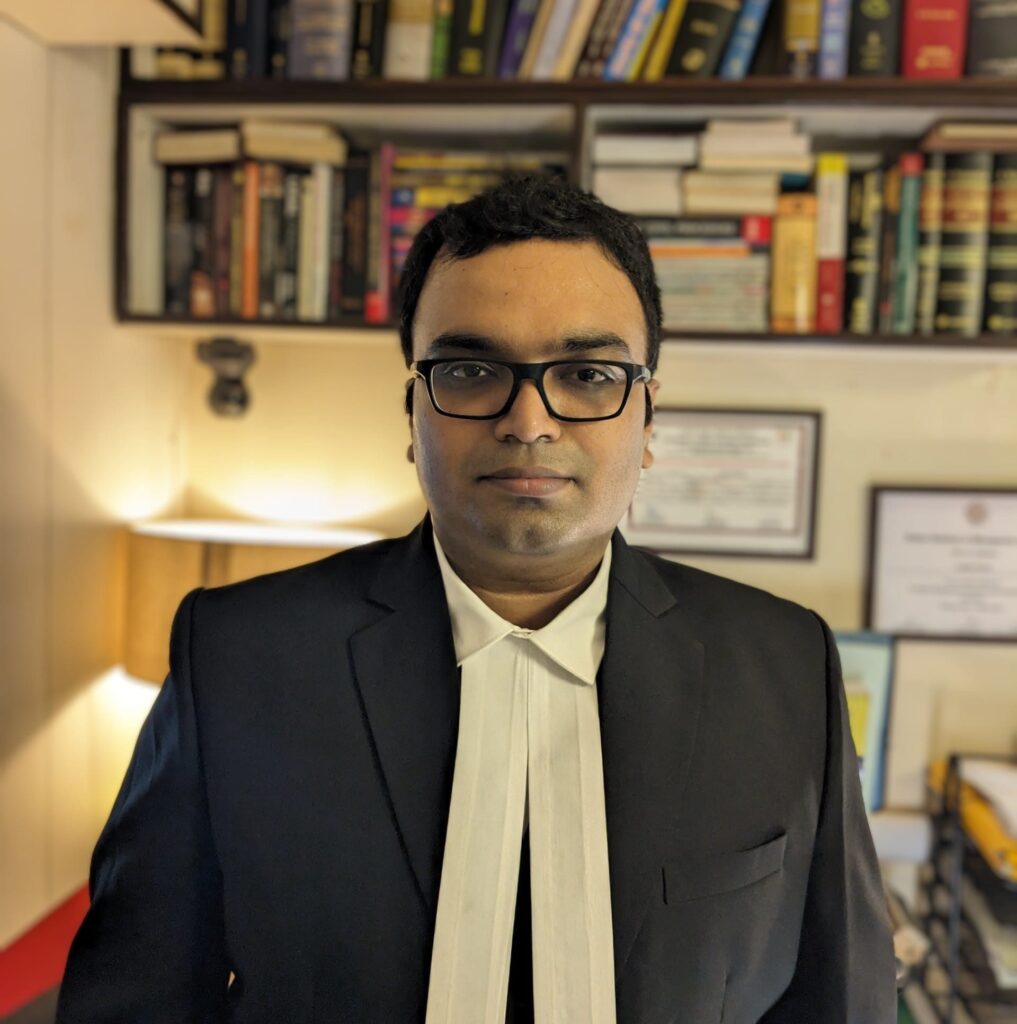
ADVOCATE SUDIP PATRA, SUPREME COURT & HIGH COURTS, Cheque Bounce Matters
Click the call button to get free legal aid!!
Advocate Sudip Patra (+91) 890 222 4444/ 7003715325
Experienced Advocate with more than 10 years of experience.
Cheque Bounced? Don’t Lose Your Money or Your Peace of Mind.
Expert Legal Solutions for Cheque Bounce Cases Under Section 138
A bounced cheque can be more than just an inconvenience; it can signal a serious financial breach and lead to stressful legal consequences. Whether you have received a dishonoured cheque or are facing allegations for issuing one, the clock is ticking. Swift, strategic legal action is paramount.
Patra’s Law Chambers, a premier law firm with offices in Kolkata and Delhi, specializes in navigating the complexities of cheque bounce cases under the Negotiable Instruments Act, 1881. We provide decisive legal support to protect your financial interests and defend your rights.
Are You the Victim of a Bounced Cheque?
It’s time to recover what you are rightfully owed.
When you accept a cheque, you trust that the payment is secure. A bounce on that cheque is a breach of that trust and can disrupt your cash flow and business operations. Our firm empowers you to take firm legal action.
Our Services for the Payee (Recipient of the Cheque):
Drafting & Sending a Potent Legal Demand Notice: This is the critical first step. We draft a precise, legally compliant notice that solidifies your claim and puts the issuer on a strict timeline to pay.
Filing a Criminal Complaint: If the issuer fails to pay within 15 days of receiving the notice, we will promptly file a criminal complaint under Section 138 of the Negotiable Instruments Act on your behalf.
Court Representation: Our seasoned lawyers will expertly represent you throughout the court proceedings, from summons to the final verdict, to ensure the recovery of your funds, plus interest and legal costs.If you want to know more details about the checkbounds cases, you can click here.
Civil Recovery Suit: Alongside criminal proceedings, we can advise on and initiate a civil suit for the recovery of your money.
Section 138 NI Act Lawyer Near Metropolitan Magistrate Court, Kolkata:
Patra’s Law Chambers is located at Nicco House, 2 Hare Street, Kolkata — just minutes from the Calcutta Metropolitan Magistrate Court where Section 138 cheque bounce complaints are filed and heard daily. Advocate Sudip Patra has been appearing before the Metropolitan Magistrate Court, Calcutta, in cheque bounce matters under the Negotiable Instruments Act, 1881 for over a decade, representing both complainants seeking recovery and accused persons defending allegations.
Whether your cheque bounce case is at the pre-complaint notice stage, has reached the pre-cognizance hearing, or is at trial before the Metropolitan Magistrate, our chamber is positioned to provide you immediate legal assistance. We handle demand notice drafting, complaint filing, bail applications, compounding negotiations, and full trial representation — all under one roof, steps away from the court.
Call Advocate Sudip Patra now:
+91 890 222 4444
Or WhatsApp: +91 890 222 4444 |
Email: [email protected]
Have You Been Accused of a Cheque Bounce Offence?
A strong defense is your best protection.
Receiving a legal notice for a bounced cheque can be alarming. You could be facing penalties including a fine of up to double the cheque amount, or even imprisonment. It is crucial to act immediately and not ignore the notice.
Our Services for the Drawer (Issuer of the Cheque):
Strategic Reply to Legal Notice: We will analyze the notice you’ve received for any legal flaws and draft a robust reply that forms the foundation of your defense.
Formidable Court Defense: We will represent you in court, challenging the complainant’s case and presenting strong arguments in your defense to prove your innocence or mitigate penalties.
Exploring Settlement Options: Where appropriate, we can negotiate with the other party for a fair and amicable out-of-court settlement.
Quashing of Proceedings: We explore all legal avenues, including filing petitions to quash the proceedings if the case filed against you is frivolous or lacks legal merit.
- Pre-cognizance notice: For hearing process and appearance in pre-cognizance notice stage.
Please also check: Understand Pre-Cognizance Notice: BNSS & Cheque Bounce Cases
Please also check: Cheque Bounce Cases in India: A Comprehensive Guide
Why Choose Patra’s Law Chambers for Your Cheque Bounce Case?
Mastery of the Law: Led by Advocate Sudip Patra (B.Tech, LL.B. (IPR), LL.M., P.G.D. from IIM Calcutta), our team possesses an in-depth understanding of the Negotiable Instruments Act and the procedural nuances of these cases.
Time-Sensitive Action: We know that deadlines are critical in cheque bounce matters. Our firm is structured to act quickly and efficiently, ensuring no deadlines are missed.
Strategic & Tailored Approach: We don’t believe in a one-size-fits-all solution. We analyze the specifics of your case—the nature of the transaction, the evidence available, and your objective—to build a customized legal strategy.
Comprehensive Service: We handle every aspect of the case, from the initial notice and filing to evidence presentation and final arguments, providing you with a seamless and stress-free experience.
ECS Bounce and EMI Default Cases Under Section 25 of the Payment and Settlement Systems Act
Many clients approach Patra’s Law Chambers not with a bounced cheque but with a bounced ECS mandate or a failed EMI auto-debit. If your bank account has insufficient funds when a lender presents an Electronic Clearing Service (ECS) instruction or a NACH auto-debit for your loan EMI, home loan instalment, microfinance payment, or insurance premium, you can face criminal proceedings under Section 25 of the Payment and Settlement Systems Act, 2007 — an offence that carries the same punishment as a cheque bounce case under Section 138 of the Negotiable Instruments Act, 1881: imprisonment up to two years, a fine up to double the dishonoured amount, or both.
If a bank uses an ECS mandate for your loan EMI and it bounces, they will file a case under Section 25. If you had given a post-dated cheque and it bounces, they will file under Section 138. The impact on your record and the legal battle is virtually the same. The procedure — demand notice, 15-day reply period, complaint filing, summons — mirrors Section 138 exactly.
Cheque bounce and ECS bounce cases are filed in the Metropolitan Magistrate Court in Kolkata mostly by banks and NBFCs who have their offices in Kolkata. This means borrowers from across India — in Delhi, Mumbai, Bangalore, Chennai — regularly receive summons from the Bankshall Court, Kolkata in ECS bounce matters where the lending institution is headquartered here. If you have received such a summons or a legal notice for an ECS or NACH bounce from a Kolkata-based bank or NBFC, Advocate Sudip Patra can advise you on your defence, represent you before the Metropolitan Magistrate Court, and explore compounding and settlement options to resolve the matter swiftly.
Call now: +91 890 222 4444 | WhatsApp: +91 890 222 4444
Frequently Asked Questions — Cheque Bounce & ECS Bounce Cases in Kolkata
Q1. What is a cheque bounce case under Section 138 of the NI Act?
A cheque bounce case arises when a cheque issued by a person is returned unpaid by the bank — usually due to insufficient funds, stop payment instruction, or account closure. Section 138 of the Negotiable Instruments Act, 1881 makes this a criminal offence punishable with imprisonment up to two years, a fine up to double the cheque amount, or both. The complainant must first send a demand notice within 30 days of the bank’s dishonour memo, wait 15 days for payment, and then file a complaint within one month of the cause of action arising.
Q2. Where are cheque bounce cases filed in Kolkata?
Cheque bounce cases in Kolkata are filed before the Metropolitan Magistrate Court at Bankshall Street — commonly known as Bankshall Court — or before the Judicial Magistrate Court, depending on where the payee’s bank branch is located. Under the 2015 amendment to the NI Act, the complaint must be filed in the court within whose jurisdiction the bank branch of the payee is situated. Patra’s Law Chambers is located at Nicco House, 2 Hare Street — minutes from the Bankshall Court — and handles cases across all Metropolitan Magistrate courts in Kolkata.
Q3. I have received a legal notice for a cheque bounce. What should I do immediately?
Do not ignore the notice. You have 15 days from receipt of the demand notice to make the payment. If you pay within this window, the complainant cannot file a criminal complaint. If you have a genuine defence — such as the cheque was given as security, the debt is disputed, the notice was defective, or the amount mentioned is incorrect — consult a lawyer immediately. Call Advocate Sudip Patra at +91 890 222 4444 for an immediate consultation.
Q4. I live outside Kolkata and have received a summons from Bankshall Court in a cheque bounce case. Do I have to travel to Kolkata?
You must appear before the court, but there are options available under the Bharatiya Nagarik Suraksha Sanhita, 2023 including electronic summons and, in appropriate cases, appearance through video conferencing. In the first instance, a lawyer can appear on your behalf for certain procedural steps and apply for exemption from personal appearance. Contact us immediately — do not ignore the summons as non-appearance leads to a warrant being issued against you.
Q5. What is the punishment for a cheque bounce offence?
Conviction under Section 138 NI Act can result in imprisonment for a term which may extend to two years, or a fine which may extend to twice the amount of the cheque, or both. Additionally, under Section 143A NI Act, the court can order the accused to pay interim compensation of up to 20% of the cheque amount even during the trial. This interim compensation must be paid within 60 days of the court’s order.
Q6. Can a cheque bounce case be settled out of court?
Yes — and courts actively encourage this. A cheque bounce case can be compounded under Section 147 of the NI Act at any stage — before trial, during trial, or even at the appellate stage. Compounding means the complainant and accused reach a settlement, the complainant receives payment, and the case is closed. The Supreme Court’s recent 2025 directions specifically encourage settlement at the threshold stage to reduce pendency. Patra’s Law Chambers regularly negotiates settlements in cheque bounce matters on behalf of both complainants and accused persons.
Q7. What is ECS bounce and is it treated the same as a cheque bounce?
An ECS bounce occurs when an Electronic Clearing Service instruction — typically for an EMI, loan repayment, or insurance premium — is returned unpaid due to insufficient funds. This is governed by Section 25 of the Payment and Settlement Systems Act, 2007, which prescribes the same punishment as Section 138 NI Act and follows an almost identical procedure — demand notice, 15-day period, and complaint filing. Banks and NBFCs headquartered in Kolkata regularly file ECS bounce cases before the Metropolitan Magistrate Court, Kolkata, against borrowers from across India.
Q8. I gave a cheque as security for a loan. Can I still be prosecuted if it bounces?
This is one of the most common defences in cheque bounce cases. The law raises a presumption that every dishonoured cheque was issued against a legally enforceable debt or liability. However, this presumption is rebuttable. If you can establish through evidence that the cheque was given as security and not in discharge of a debt, you have a valid defence. The burden of proof, however, shifts to you once the basic facts are established by the complainant. Early legal consultation is critical in such cases.
Q9. What happens if I ignore a cheque bounce summons from the court?
If you ignore a court summons in a cheque bounce case, the court will issue a bailable warrant against you. If the warrant is also ignored, the court can issue a non-bailable warrant. Once a non-bailable warrant is issued, you can be arrested anywhere in India. Do not ignore court notices or summons under any circumstances — contact a lawyer immediately for a bail application or warrant recall.
Q10. How long does a cheque bounce case take to conclude?
The timeline varies. The Supreme Court’s 2025 guidelines direct courts to push cheque bounce cases through Summary Trial procedure for faster disposal. In practice, cases before the Metropolitan Magistrate Court, Kolkata can take anywhere from 6 months to 3 years depending on the complexity, number of hearings, and whether the matter is settled. Cases that are compounded at the pre-cognizance stage or early trial stage conclude much faster — sometimes within 2 to 3 months of the complaint being filed.
Q11. What is a pre-cognizance notice in a cheque bounce case?
Under Section 223 of the Bharatiya Nagarik Suraksha Sanhita, 2023 (which replaced CrPC), after a complainant files a cheque bounce complaint, the Magistrate may issue a notice to the accused before formally taking cognizance — this is called a pre-cognizance notice. It gives the accused an opportunity to appear and make submissions before the Magistrate decides whether to proceed. Receiving this notice means a complaint has already been filed against you. You must respond — ignoring it leads to the case proceeding ex-parte against you.
Q12. Can the complainant file both a criminal case under Section 138 and a civil recovery suit for the same bounced cheque?
Yes. Filing a criminal complaint under Section 138 NI Act does not bar the complainant from simultaneously or subsequently filing a civil recovery suit for the cheque amount with interest and costs. In practice, the threat of criminal proceedings often results in faster settlement, after which the civil suit may be withdrawn. Patra’s Law Chambers advises clients on the most effective combination of legal remedies based on the specific facts of each case.
Q13. What defences are available to the accused in a cheque bounce case?
Several defences are available depending on the facts — the cheque was issued as security and not against a debt; the legal demand notice was defective or sent to the wrong address; the complaint was filed after the limitation period; the cheque was stolen or issued without authority; the debt itself is not legally enforceable; partial payment was made reducing the liability; or the complainant does not have the locus standi to file the complaint. Each defence requires careful examination of the facts and documents. Consult Advocate Sudip Patra to assess which defence applies in your case.
Q14. What is interim compensation under Section 143A and can the court force me to pay before the trial ends?
Yes. Section 143A of the NI Act empowers the trial court to direct the accused to pay interim compensation up to 20% of the cheque amount during the pendency of the case. This order can be made at the first hearing itself after the accused pleads not guilty. If the accused fails to pay the interim compensation within 60 days, the court can recover it as if it were a fine — including attachment of property. If the accused is ultimately acquitted, the court orders the complainant to repay the interim compensation with interest.
Q15. My employer’s cheque bounced — can the company director be personally prosecuted?
Yes. Under Section 141 of the NI Act, when a company commits a cheque bounce offence, every person who at the time of the offence was in charge of and responsible for the conduct of the business of the company is deemed guilty. This means managing directors, directors, and company secretaries can be personally prosecuted. However, a director who proves they had no knowledge of the offence and exercised due diligence can claim a defence. If you are a director who has been named in a cheque bounce complaint relating to a company cheque, consult a lawyer immediately.
Q16. What is the limitation period for filing a cheque bounce complaint?
The cheque bounce case must be filed within one month of the date on which the cause of action arises. The cause of action arises when the 15-day period given in the demand notice expires without payment. For example — if the cheque bounced on 1 January, you must send the demand notice by 31 January, and if no payment is received within 15 days of the accused receiving the notice, the complaint must be filed within one month of that date. A complaint filed after the limitation period is ordinarily time-barred, though courts have discretion to condone delay in exceptional circumstances.
Q17. Can a cheque bounce case be quashed by the High Court?
Yes. Under Section 528 of the Bharatiya Nagarik Suraksha Sanhita, 2023 (equivalent to the old Section 482 CrPC), the Calcutta High Court has inherent powers to quash a cheque bounce complaint if the proceedings amount to an abuse of process of court, if the parties have already settled the matter, or if the complaint does not disclose the essential ingredients of the offence. Patra’s Law Chambers appears before the Calcutta High Court in cheque bounce quashing petitions and can advise you on whether your case meets the threshold for quashing.
Q18. How do I contact Patra’s Law Chambers for a cheque bounce case in Kolkata?
You can reach Advocate Sudip Patra directly by phone or WhatsApp at +91 890 222 4444 or +91 7003 715 325, by email at [email protected], or visit our office at Nicco House, 6th Floor, 2 Hare Street, Kolkata — 700001, located minutes from the Metropolitan Magistrate Court at Bankshall Street. We offer a free initial consultation and handle cheque bounce matters at all stages — from demand notice to trial, appeal, and High Court proceedings.
Don’t Delay—The Law Demands Prompt Action!
The validity of your claim or the strength of your defense in a cheque bounce case depends heavily on timely action. Contact Patra’s Law Chambers today for a confidential consultation to understand your legal options.
Contact Us Now:
Website: www.patraslawchambers.com
Email: [email protected]
Phone: +91 890 222 4444 / +91 7003 715 325
Kolkata Office: NICCO HOUSE, 6th Floor, 2, Hare Street, Kolkata-700001 (Near Calcutta High Court)
Delhi Office: House no: 4455/5, First Floor, Ward No. XV, Gali Shahid Bhagat Singh, Main Bazar Road, Paharganj, New Delhi-110055