Calcutta High Court Advocate: Phone, Chamber and First Consultation
Writs, service matters, anticipatory bail, FIR quashing, civil revisions and appeals, argued by Advocate Sudip Patra from chambers at NICCO House, 2 Hare Street, a short walk from the Calcutta High Court and Bankshall Court. Phone, WhatsApp and the chamber address are set out below, so you can reach the chamber directly.
How to contact an advocate at the Calcutta High Court
Most people searching for a Calcutta High Court advocate’s contact number or a chamber near them want one simple thing: a person who will read the papers and say where they stand. You can reach our chamber on +91 890 222 4444 (call or WhatsApp) or +91 7003 715 325. The chamber is at NICCO House, 6th Floor, 2 Hare Street, Kolkata-700001, in the BBD Bag court district. Documents can be sent to [email protected]. The official roll of advocates is maintained by the Calcutta High Court and its Bar associations, and you do not need a list to get in touch.
For the first message, write two lines on the problem, say if anything is urgent (an arrest threat, a hearing date, an auction or a demolition), and send a photo of the order, notice or FIR. Matters of personal liberty are explained on our anticipatory bail and FIR advice page. Disputes with government employers are covered on our service matters page. Every case turns on its own documents, so the advice after reading them may differ from any general description.
Writ petition or quashing petition: what is the difference?
Both go to the Calcutta High Court, but they rest on different powers and suit different problems.
Short explainers from Adv. Sudip Patra
What is the latest paper or problem in front of you?
Pick the closest match to see the usual High Court route. This is general information, not advice, and the right remedy always depends on your documents.
Choose one of the options above.
From a first call to a High Court hearing
A High Court matter usually moves through these stages. Timings vary with the facts and the Court’s lists.
You give a short account and say whether anything is urgent, such as an arrest threat, an auction or a demolition. Urgent matters are noted at the start.
You send the order, notice, FIR or judgment along with earlier proceedings, by WhatsApp or email. The conference then starts from the record rather than from memory.
In chambers at NICCO House or by video, we look at forum, limitation or delay, maintainability and the likely relief. For arrest-related matters see FIR and arrest advice.
The petition, affidavit and annexures are drafted and filed. Writ steps are explained in filing a writ petition in the Calcutta High Court.
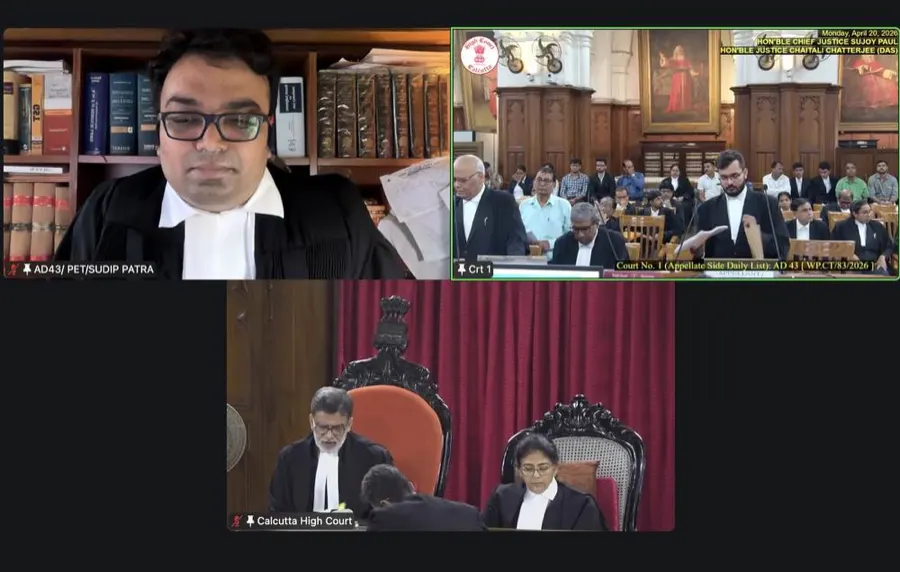
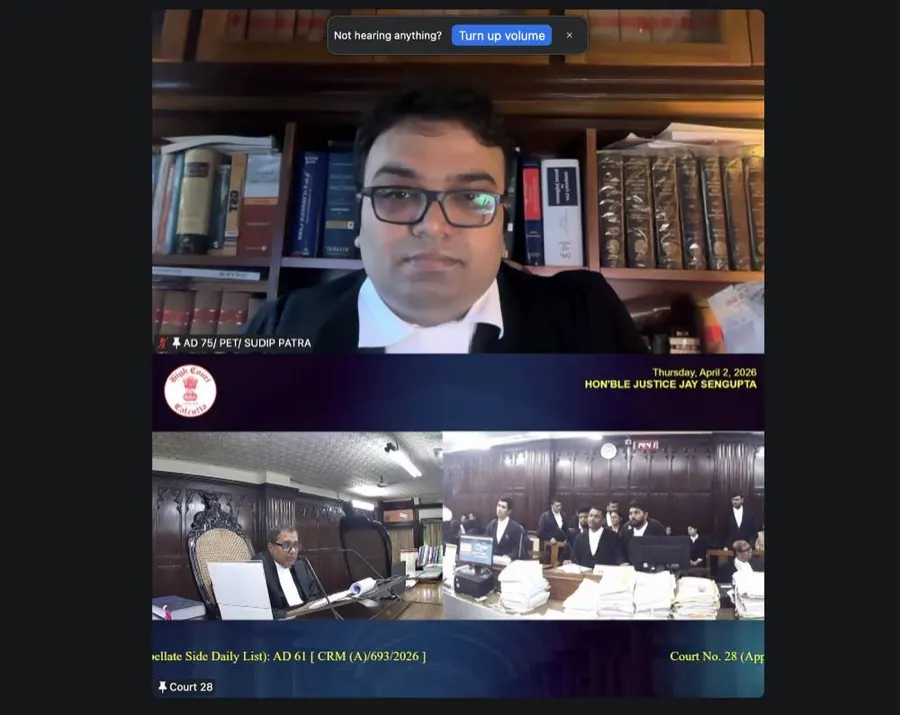
Where the facts justify it, the matter is mentioned for urgent listing. Hearings may be in person or through the Court’s video link. Service disputes follow this route.
Three ideas that decide many High Court cases, tap a card
A writ is not barred merely because another remedy exists. The Supreme Court in Whirlpool Corporation v. Registrar of Trade Marks, (1998) 8 SCC 1, recognised exceptions such as breach of natural justice or an authority acting without jurisdiction.
Article 226 has no fixed limitation period, but unexplained delay can defeat discretionary relief. Criminal and service remedies have their own time limits, so check the dates on your papers early.
Earlier petitions and orders on the same issue must be disclosed to the Court. Suppression of facts can cost a petitioner the relief even where the case is otherwise good.
What we handle in the Calcutta High Court
Writ petitions
Police inaction, arbitrary administrative orders, licences, tenders, municipal and land matters, through mandamus, certiorari, prohibition, quo warranto or habeas corpus. For matters that may also need the Supreme Court, see our Supreme Court advocate consultation page.
Anticipatory bail and bail
Pre-arrest protection and regular bail, with attention to the case diary and the conditions a court may impose. Read more on our anticipatory bail and FIR advice page and our criminal lawyer consultation page.
Service matters and CAT challenges
Promotion, seniority, transfer, suspension, disciplinary and pension disputes, and writs against Central Administrative Tribunal orders heard by a Division Bench. See Kolkata government service matters.
Appeals, revisions and SARFAESI
First appeals, civil revisions under Article 227, criminal revisions and appeals arising from banking recovery orders. For banking and tribunal appeals, see our DRT and banking matters page.
Phone, WhatsApp and address
- Call or WhatsApp: +91 890 222 4444
- Alternate number: +91 7003 715 325
- Email documents: [email protected]
- Chamber: NICCO House, 6th Floor, 2 Hare Street, Kolkata-700001, walkable from the High Court and Bankshall Court
- For the first conference bring the impugned order, notice or FIR, earlier petitions and orders, identity proof and a short chronology of dates
- The first meeting covers facts, the correct forum, limitation, the likely remedy and the documents still needed. No result can be promised; the advice follows the papers
Six rulings that shape Calcutta High Court practice
Every first conference with a Calcutta High Court advocate starts with the same questions: is the High Court the right forum, and which remedy fits? These six Supreme Court decisions decide most of those answers, and we check each one against your papers before anything is filed.
1998
Alternative remedy is no absolute bar
The State’s most common preliminary objection is that you should have appealed or gone to a tribunal first. Whirlpool holds that an alternative remedy is a rule of discretion, not a bar. A writ may still be heard where a fundamental right is at stake, natural justice was breached, the authority acted wholly without jurisdiction, or the validity of an Act is challenged. See our guide to filing a writ petition in the Calcutta High Court.
1997
Tribunal orders go to a Division Bench
A Constitution Bench held that the High Court’s power of judicial review under Articles 226 and 227 is part of the basic structure of the Constitution. Decisions of tribunals set up under Articles 323A and 323B, including the Central Administrative Tribunal, are challenged first before a Division Bench of the High Court that has territorial jurisdiction. That is why a lost CAT case comes back as a WP.CT. More on our service matters practice.
2014
Police must register an FIR for cognizable offences
A Constitution Bench held that registering an FIR is mandatory under Section 154 CrPC, now Section 173 BNSS, when the information discloses a cognizable offence. A preliminary inquiry is allowed only in limited categories. Section 173(3) BNSS now also permits a preliminary enquiry for certain offences punishable with three to seven years. This ruling is the footing for a police-inaction writ.
1992
Illustrative categories for quashing criminal proceedings
The Supreme Court listed illustrative categories in which an FIR or criminal case may be quashed to prevent abuse of process. They include allegations that disclose no offence even when taken at face value, allegations so absurd that no prudent person could accept them, a legal bar on the proceedings, and cases that are plainly mala fide. The power, earlier in Section 482 CrPC, now sits in Section 528 BNSS. Read more on quashing of criminal cases.
2020
Anticipatory bail need not be time-bound
A Constitution Bench held that anticipatory bail need not ordinarily be limited to a fixed period. It can continue till the end of the trial, although the Court may impose conditions, or limit the protection where specific facts call for it. The power, earlier in Section 438 CrPC, is now in Section 482 BNSS. If you fear arrest, see our FIR and arrest advice page.
2015
Civil court orders: Article 227, not 226
A three-judge Bench held that judicial orders of civil courts cannot be challenged by a writ under Article 226. The remedy is the High Court’s separate power of superintendence under Article 227, which it uses sparingly. On that point the Bench overruled Surya Dev Rai. Orders of tribunals and quasi-judicial authorities can still be challenged under Article 226. Compare the options in FA vs FMA vs Article 227.
How a matter reaches a Calcutta High Court bench
Forum and maintainability check
Before drafting, we confirm the High Court is the correct forum. That means checking whether a statutory appeal or tribunal remedy comes first, whether the case belongs at the Principal Seat or the Circuit Bench at Jalpaiguri, and whether limitation or delay has to be explained.
Representation or prior remedy
In many writ and service matters the authority must first be approached by a dated representation, with proof that it was delivered. In police-inaction cases the Court usually asks whether the Superintendent of Police (Section 173(4) BNSS) or the Magistrate (Section 175(3) BNSS) was approached.
Drafting the petition and affidavit
The petition, supporting affidavit, annexures and vakalatnama are prepared from the record. Every earlier petition and order in the same dispute is disclosed, and the relief, including any interim prayer, is framed narrowly so the bench can see exactly what is asked and why.
Filing, defects and service
The papers are filed in the proper department, checked for defects, corrected and given a case number. Where the rules require it, advance copies are served on the respondents or the State’s advocates, and proof of service is kept ready for the first hearing.
Listing and urgent mentioning
The matter is listed before the bench that holds that class of case under the current roster. Where there is a real threat of arrest, demolition, an auction or another coercive step, it can be mentioned for urgent listing once filing is complete.
Hearing, affidavits and the order
At the first hearing the Court may give directions for affidavits-in-opposition and replies, grant or refuse interim protection, or decide the matter outright. Once the order is uploaded or certified, it is sent to the authority concerned so it can be complied with.
What happens when a CAT case is lost
A usual route to the Division Bench, based on L. Chandra Kumar v. Union of India, (1997) 3 SCC 261.
Collect the CAT order
Obtain the final order, the pleadings and any earlier orders in the case.
Check dates and grounds
Note the order date and see whether the grounds suit a writ review.
Draft the WP.CT
The petition challenges the Tribunal order under Articles 226 and 227.
File before Division Bench
Tribunal orders are heard by a Division Bench of the High Court.
Seek interim relief if justified
Where facts warrant, the matter is mentioned for early listing.
Mistakes that weaken a good High Court case
Waiting too long. Writ petitions have no fixed limitation period, but unexplained delay and laches can defeat relief. Criminal revisions, appeals and service remedies each have their own deadlines, which keep running while you wait.
Choosing the wrong forum. A service dispute may first belong before the CAT or a State tribunal, and a civil court order calls for Article 227 or a statutory appeal rather than an Article 226 writ. Filing in the wrong forum wastes months.
Hiding earlier proceedings. Every earlier petition, complaint and order in the same dispute must be disclosed. Suppression alone can cost you discretionary relief, even when the case is otherwise strong.
Skipping the representation or prior remedy. The Court often asks first whether the authority, the Superintendent of Police or the Magistrate was approached. A dated representation with proof of delivery strengthens the petition.
Speak to the chamber about your High Court matter
Call or WhatsApp +91 890 222 4444 with a short description and a photo of the order, notice or FIR. Consultation is available in chambers at NICCO House, 2 Hare Street, or by video or phone if you are outside Kolkata. Bengali: কলকাতা হাইকোর্টের অ্যাডভোকেটের ফোন নম্বর +91 890 222 4444 (কল বা হোয়াটসঅ্যাপ)। চেম্বার: নিকো হাউস, ৬ষ্ঠ তলা, ২ হেয়ার স্ট্রিট, কলকাতা-৭০০০০১।
Book a ConsultationEstablished by a distinguished alumnus of IIT Kharagpur, Patra’s Law Chambers stands as a beacon of legal expertise in Kolkata & Delhi. Know more →
Kolkata Office
NICCO House, 6th Floor, 2 Hare Street
Kolkata-700001 (Near Calcutta High Court)
Delhi Office
4455/5, First Floor, Gali Shahid Bhagat Singh
Main Bazar Road, Paharganj, New Delhi-110055
Contact
[email protected]
+91 890 222 4444 / +91 7003 715 325
Frequently asked questions about consulting a Calcutta High Court advocate
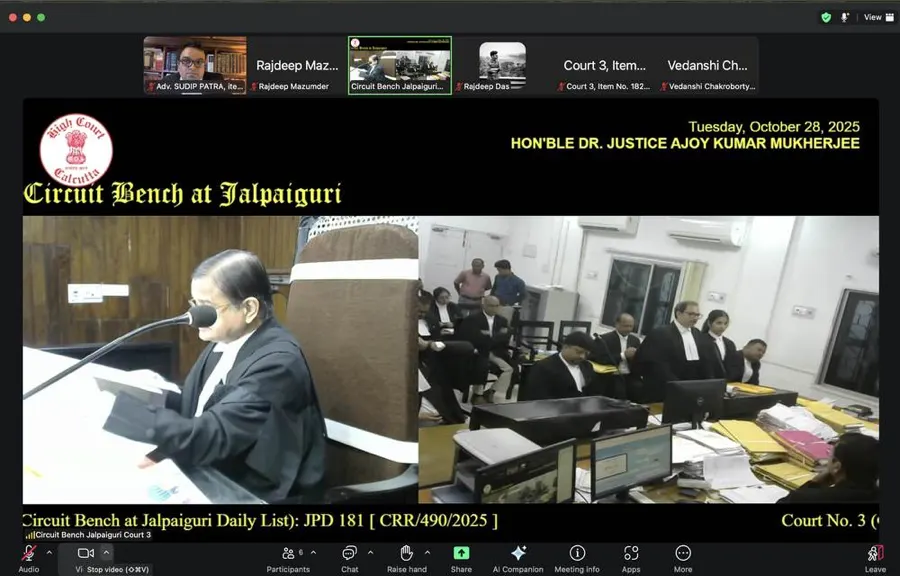
Writ petitions under Article 226, writs against Central Administrative Tribunal orders (WP.CT), anticipatory and regular bail, quashing under Section 528 BNSS (earlier Section 482 CrPC), criminal and civil revisions, appeals, and probate on the Original Side. The chamber also appears before the Circuit Bench at Jalpaiguri.
Call or WhatsApp +91 890 222 4444, or +91 7003 715 325, with a two-line summary and a photo of the order, notice or FIR. A conference is then fixed in chambers at NICCO House, 2 Hare Street, or by phone or video.
NICCO House, 6th Floor, 2 Hare Street, Kolkata-700001, in the BBD Bag court district. It is a short walk from the Calcutta High Court and the Bankshall Court complex. The Delhi office is at Paharganj, New Delhi-110055.
Yes. The roll of advocates is kept by the High Court and the Bar associations, but you do not need a list to reach this chamber. Call or WhatsApp +91 890 222 4444 and you will speak with the chamber about your matter.
Bring the order, notice, FIR or judgment you want to challenge, earlier petitions and orders, your representation with proof of sending, identity proof, and a dated chronology. For criminal matters, add any Section 35(3) BNSS notice and the charge-sheet if filed.
The first meeting looks at the facts and papers, the correct forum, limitation or delay, and the remedies that may be open. It also covers the risks and the next practical steps. No result can be promised, because every case turns on its own record.
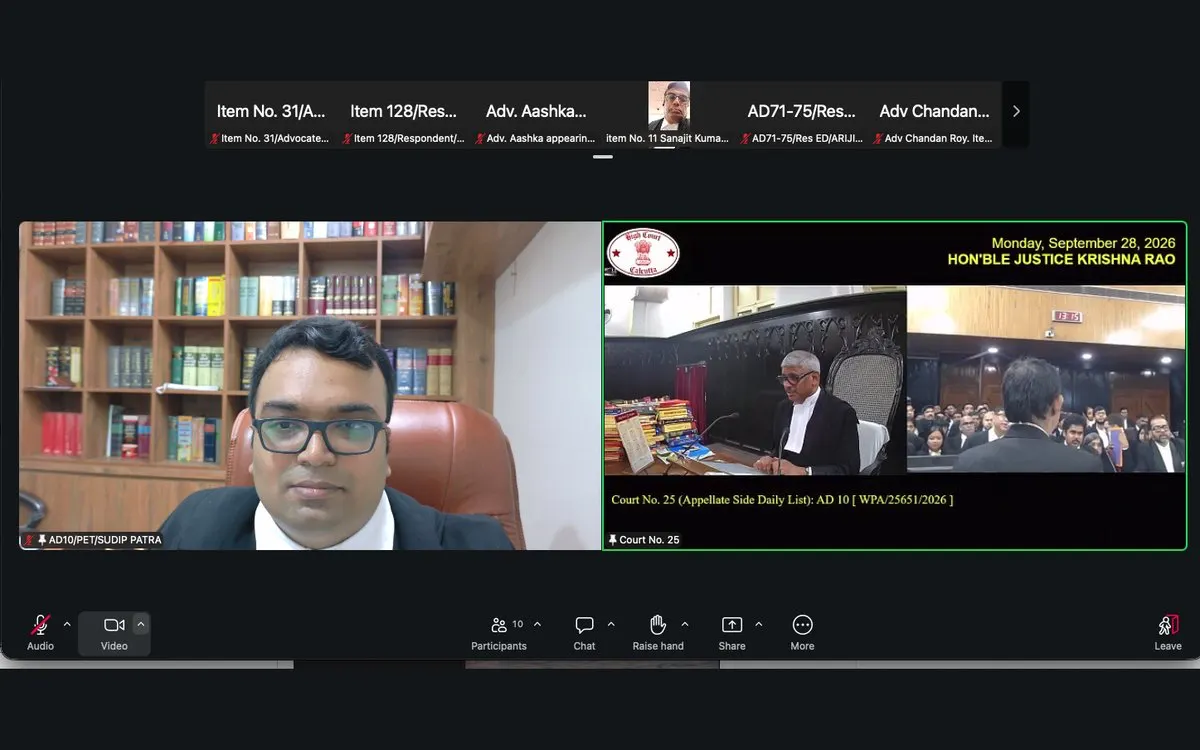
Yes. Clients from the districts, other states and abroad consult by phone or video and share documents on WhatsApp or email. The Calcutta High Court also permits virtual appearance in suitable matters.
A genuinely urgent matter, such as an imminent arrest, demolition or auction, can be mentioned for urgent listing once the petition is drafted and filed with supporting documents. Say it is urgent when you call so drafting can begin at once.