Service Element of Disability Pension: Why Even 1 Day of Service Counts After 1973
Service Element is the career-based half of disability pension — and since 01-01-1973, no minimum qualifying service bars a claim to it. A complete guide to entitlement, the invalidation-vs-premature-release dispute, and the judgments veterans rely on.
A vested right, not a longevity-earned benefit
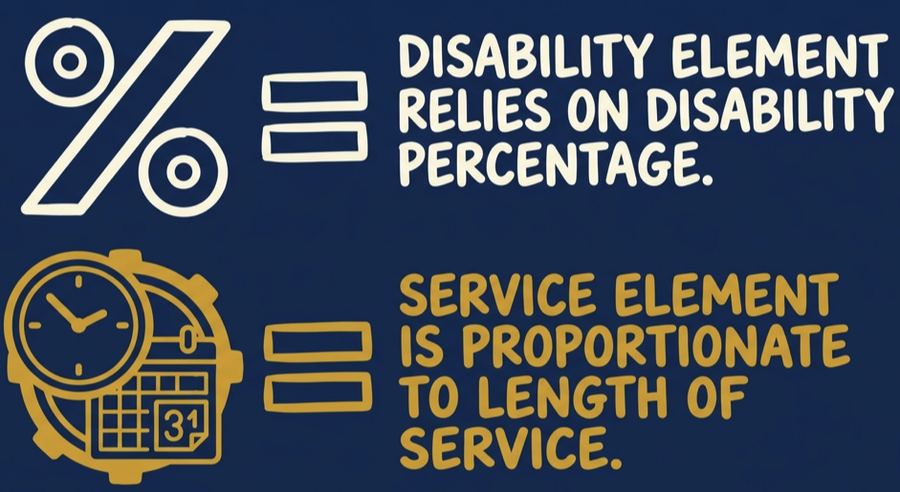
Disability pension has two components — a medical Disability Element tied to the percentage of disablement, and a career-based Service Element tied to length of service rendered. The Service Element is the more heavily contested of the two, because the government routinely tries to deny it on the ground of “insufficient service” or the mode of a soldier’s exit. This guide sets out why that stand collapses in law: the 1973 abolition of minimum qualifying service, the 2014 rectification for pre-1973 retirees, the live dispute between invalidation and premature release, and the judgments — from the Armed Forces Tribunal up to the Supreme Court — that settle the question.
Abolition of minimum service — and the <20% trap that survives it
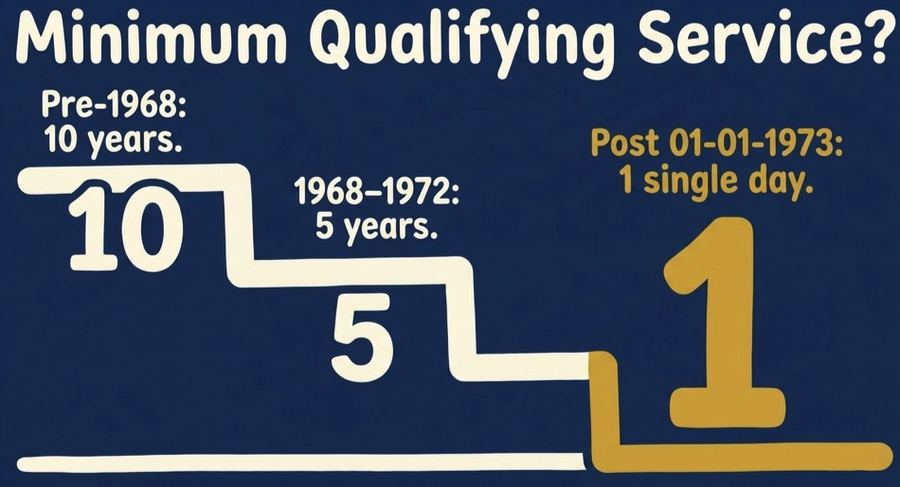
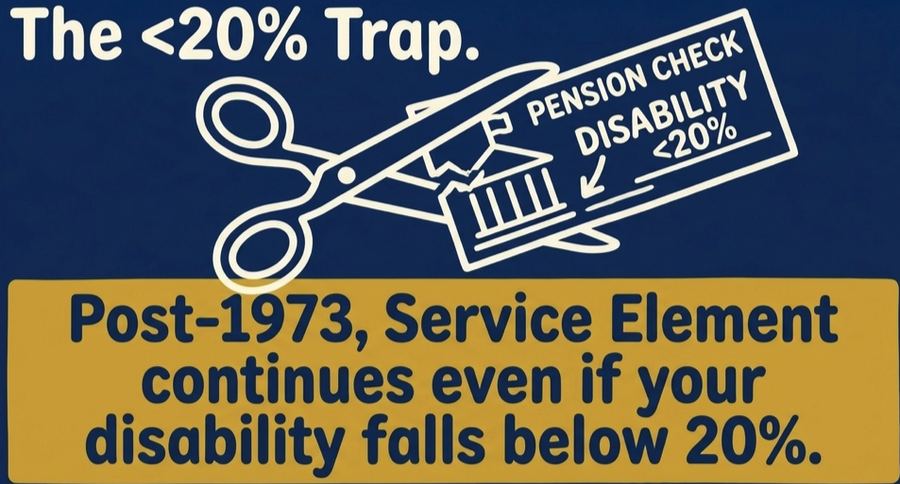
Until 1968, a soldier needed 10 years of qualifying service before the Service Element could be claimed. That fell to 5 years between 1968 and 1972. From 01-01-1973 onward, the requirement was abolished altogether — a single day of service is enough. Crucially, this entitlement stands even where the disability itself was, or later became, assessed below 20%.
10 years required
Fully abrogated — 1 day of service qualifies
Reduced to 5 years
No minimum service bar at all
Often treated as disqualifying
Service Element continues even if disability is/becomes <20%
2014 rectification for pre-1973 retirees
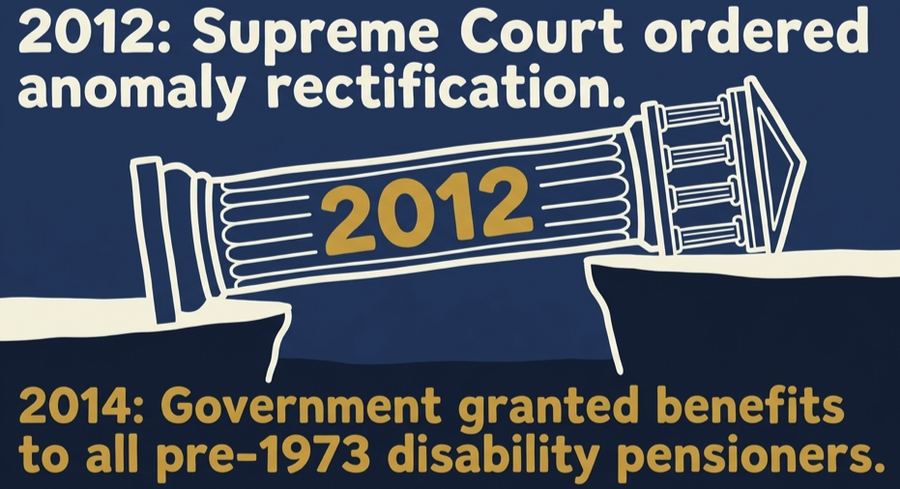
High Courts split on how far back the benefit should reach — some backdated it fully to 1973, others capped arrears at three years. In 2012, the Supreme Court gave the Ministry of Defence an opportunity to self-correct the anomaly, and MoD agreed to extend the benefit to all pre-1973 retirees. A Policy Letter dated 10-02-2014 backdated the benefit to 01-01-1973 and neutralised the three-year arrears cap.
Invalidation vs. premature release — the government’s narrow reading, and why it fails
The government’s standard stand is that only personnel medically boarded out before their term or retirement age qualify for the Service Element. That reading does not survive contact with the actual statutory definition of invalidation.
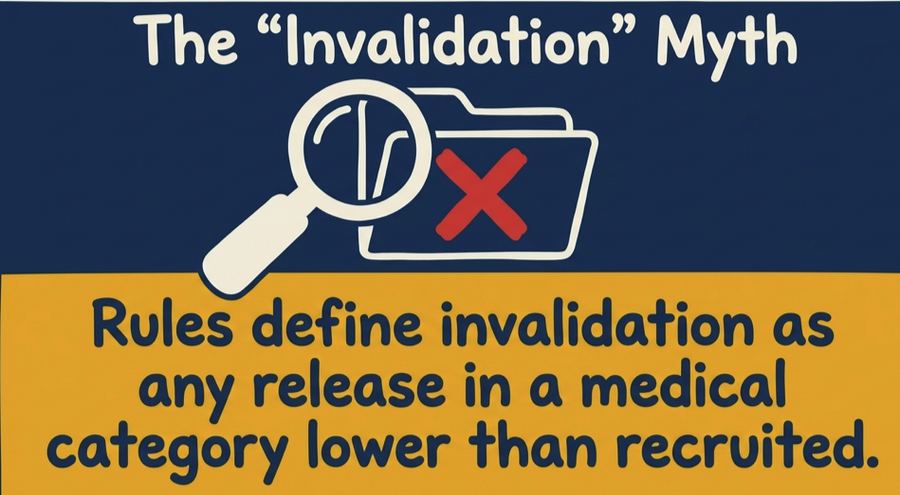
The Real Test: Medical Category, Not Exit Label
Invalidation means release in a lower medical category than the one held at recruitment — irrespective of the mode of exit. Whether the discharge is labelled “invalided out” or “premature release,” the medical-category test is what governs entitlement.
Short Service, Non-Regular & Own-Request Releases
Short Service and Non-Regular officers, and personnel who sought premature retirement at their own request, are equally covered — provided the medical-category test is met at the time of exit.

Statutory basis
Pension Regulations, 1961
Sets out the computation method for the Service Element for non-commissioned ranks.
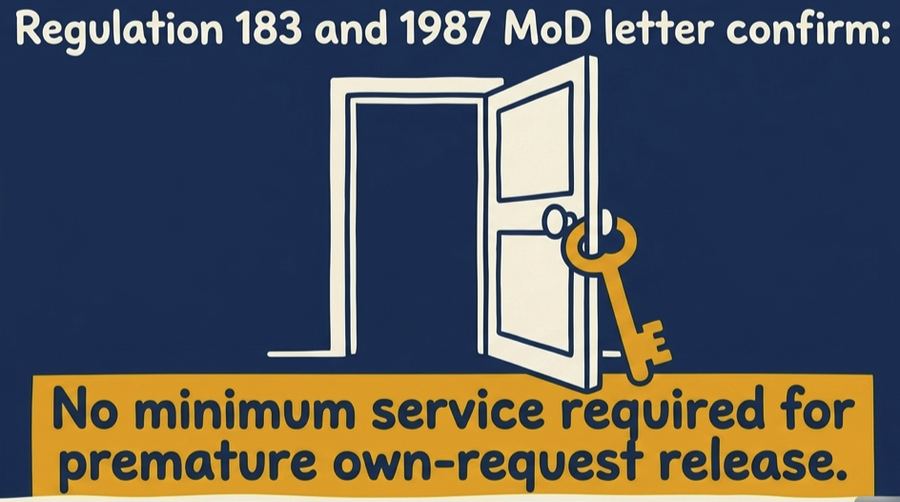
Dated 30-10-1987
Confirms there is no minimum-service bar and lays down the calculation method — including for premature, own-request release.
The judgments that settle the question
From High Courts in the 2000s to the Supreme Court as recently as 2022, the case law is remarkably consistent: the Service Element is a vested right, not a longevity-earned privilege.
2019
Entitlement affirmed for own-request, pre-term release
The Supreme Court affirmed the Service Element for a personnel released before the end of his term at his own request, rejecting the government’s attempt to treat premature release as disqualifying.
2004
Minimum-service requirement struck down
The Delhi High Court struck down the minimum-service requirement for the Service Element, an early and influential ruling that shaped subsequent litigation on the point.
2005
Right reaffirmed irrespective of service length
The Delhi High Court reaffirmed that entitlement to the Service Element does not depend on how long the personnel served.
2017
No minimum qualifying service — settled
Upheld through the Armed Forces Tribunal and the Supreme Court, closing off any residual argument that a minimum service period survives for post-1973 claims.
2015
No minimum service bar, confirmed
The Chandigarh Bench of the Armed Forces Tribunal confirmed the absence of a minimum-service bar to the Service Element.
2019
Right affirmed for premature retirees
The Supreme Court affirmed the entitlement of premature retirees to the Service Element, consistent with the line of authority beginning with Nanukuttan Nair.
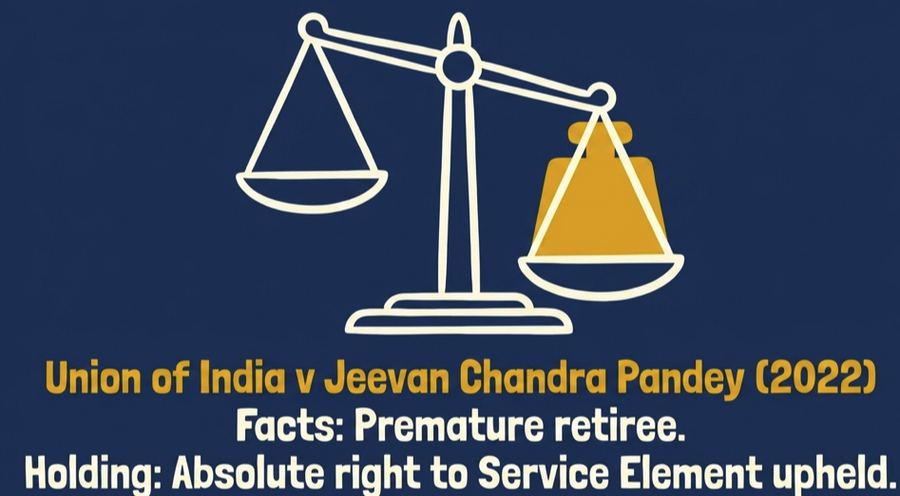
2022
Absolute right reconfirmed
In another premature-retiree matter, the Supreme Court reconfirmed the absolute character of the right to the Service Element, leaving little room for the government to reopen the question.

Punjab & Haryana High Court, 2025
A Division Bench of the Punjab & Haryana High Court upheld an Armed Forces Tribunal finding that a service-attributable or aggravated disability entitles a serviceman to both the Disability Element and the Service Element — and that meeting a qualifying service period is not mandatory, consistent with the line of authority above. (LiveLaw report)
Pursuing a Service Element claim — five stages
Gather the service and medical record
Discharge certificate, release medical board proceedings, medical category held at recruitment versus at exit, and the pension sanctioning authority’s rejection letter, if any.
Fix the applicable era
Determine whether the claim falls pre-1968, the 1968–1972 transitional band, or post-01-01-1973 — this decides whether minimum service is even in issue at all.
Apply the medical-category test
Compare the medical category at recruitment against the category at release under Rule 1 (1939) / Rule 4 (1982) — irrespective of whether the exit is labelled invalidation or premature release.
Represent to the pension sanctioning authority
File a detailed representation citing Regulation 183 and the 30-10-1987 MoD letter, backed by the settled case law, before escalating further.
Move the Armed Forces Tribunal
If the representation is rejected or ignored, file an Original Application before the AFT under Section 14 of the AFT Act, 2007, relying on the Nanukuttan Nair–Jeevan Chandra Pandey line of Supreme Court authority.
Four mistakes that sink an otherwise strong claim
Accepting the government’s “insufficient service” objection at face value. Post-1973, there is no minimum-service bar at all — the objection has no statutory footing.
Treating “premature release” as automatically disqualifying. The real test is the medical category held at exit versus at recruitment, not the administrative label on the discharge.
Assuming a sub-20% disability defeats the Service Element. The Disability Element may fall away below 20%, but the Service Element survives independently for post-1973 claims.
Overlooking the 2014 Policy Letter for pre-1973 retirees. Some claimants still accept a 3-year arrears cap when the 10-02-2014 letter neutralised it and backdated the benefit to 01-01-1973.
Specialized advocacy in service and pension law
Patra’s Law Chambers represents veterans and serving personnel in Service Element and disability pension disputes — drafting representations to the pension sanctioning authority, filing Original Applications before the Armed Forces Tribunal, Kolkata Bench, and pursuing appeals up to the Supreme Court where required. For a broader look at disability pension entitlement, see our complete guide to disability pension in the Indian Army.
Book a ConsultationEstablished by a distinguished alumnus of IIT Kharagpur, Patra’s Law Chambers stands as a beacon of legal expertise in Kolkata & Delhi. Know more →

Kolkata Office
NICCO House, 6th Floor, 2 Hare Street
Kolkata-700001 (Near Calcutta High Court)
Delhi Office
4455/5, First Floor, Gali Shahid Bhagat Singh
Main Bazar Road, Paharganj, New Delhi-110055
Contact
[email protected]
+91 890 222 4444 / +91 7003 715 325
Common questions
It is the career-based half of disability pension, computed on length of service rendered — distinct from the Disability Element, which is based purely on the percentage of disability assessed.
No. The requirement was progressively reduced — 10 years till 1968, 5 years from 1968–1972 — and fully abolished from 01-01-1973 onward. Even a single day of service now qualifies.
Yes, for claims arising after 1973. The Disability Element depends on crossing the disability threshold, but the Service Element continues even if the disability was, or later became, assessed below 20%.
Not by itself. Rule 1 of the Entitlement Rules 1939 and Rule 4 of the Entitlement Rules 1982 define invalidation as release in a lower medical category than the one held at recruitment — irrespective of the mode of exit. Regulation 183 and the 30-10-1987 MoD letter confirm no minimum service is required for premature own-request release either.
Yes. They are covered on the same basis as regular commissioned personnel, provided the medical-category test under Rule 1 (1939) / Rule 4 (1982) is met.
Yes. Following a 2012 Supreme Court direction, the Ministry of Defence issued a Policy Letter dated 10-02-2014 extending the benefit to all pre-1973 retirees, backdating entitlement to 01-01-1973 and neutralising the earlier 3-year arrears cap that some High Courts had applied.
Regulation 183 of the Pension Regulations, 1961 sets out the computation method for non-commissioned ranks, and the Ministry of Defence Letter dated 30-10-1987 (Para 14.2) confirms there is no minimum-service bar and lays down the calculation method.
After exhausting representation to the pension sanctioning authority, the remedy lies before the Armed Forces Tribunal under Section 14 of the AFT Act, 2007, with further appeal to the Supreme Court where warranted.