Comprehensive Jurisprudential Analysis of Army Courts of Inquiry: Statutory Framework, Procedural Safeguards, and Judicial Remedies in Military Law
Creditor and contributor of this article:
Patra’s Law Chambers:
About Us:
Patra’s Law Chambers is a law firm with offices in Kolkata & Delhi, offering comprehensive legal services across various domains. Established in 2020 by Advocate Sudip Patra (Advocate, Supreme Court of India & Calcutta High Court) an alumnus of the Prestigious Rajiv Gandhi School of Intellectual Property Law, IIT Kharagpur ,with Post Graduate diploma in Business Law from IIM Calcutta, the firm specializes in Civil, Criminal, Writs,High Court Matters, Trademark, Copyright, Company, Tax, Banking, Property disputes, Service law, Family law, and Supreme Court matters.You can know more about us in here
Kolkata Office:
NICCO HOUSE, 6th Floor, 2, Hare Street, Kolkata-700001 (Near Calcutta High Court)
Delhi Office:
House no: 4455/5, First Floor, Ward No. XV, Gali Shahid
Bhagat Singh, Main Bazar Road, Paharganj, New Delhi-110055
Website: www.patraslawchambers.com
Email: [email protected]
Phone: +91 890 222 4444/ +91 7003 715 325
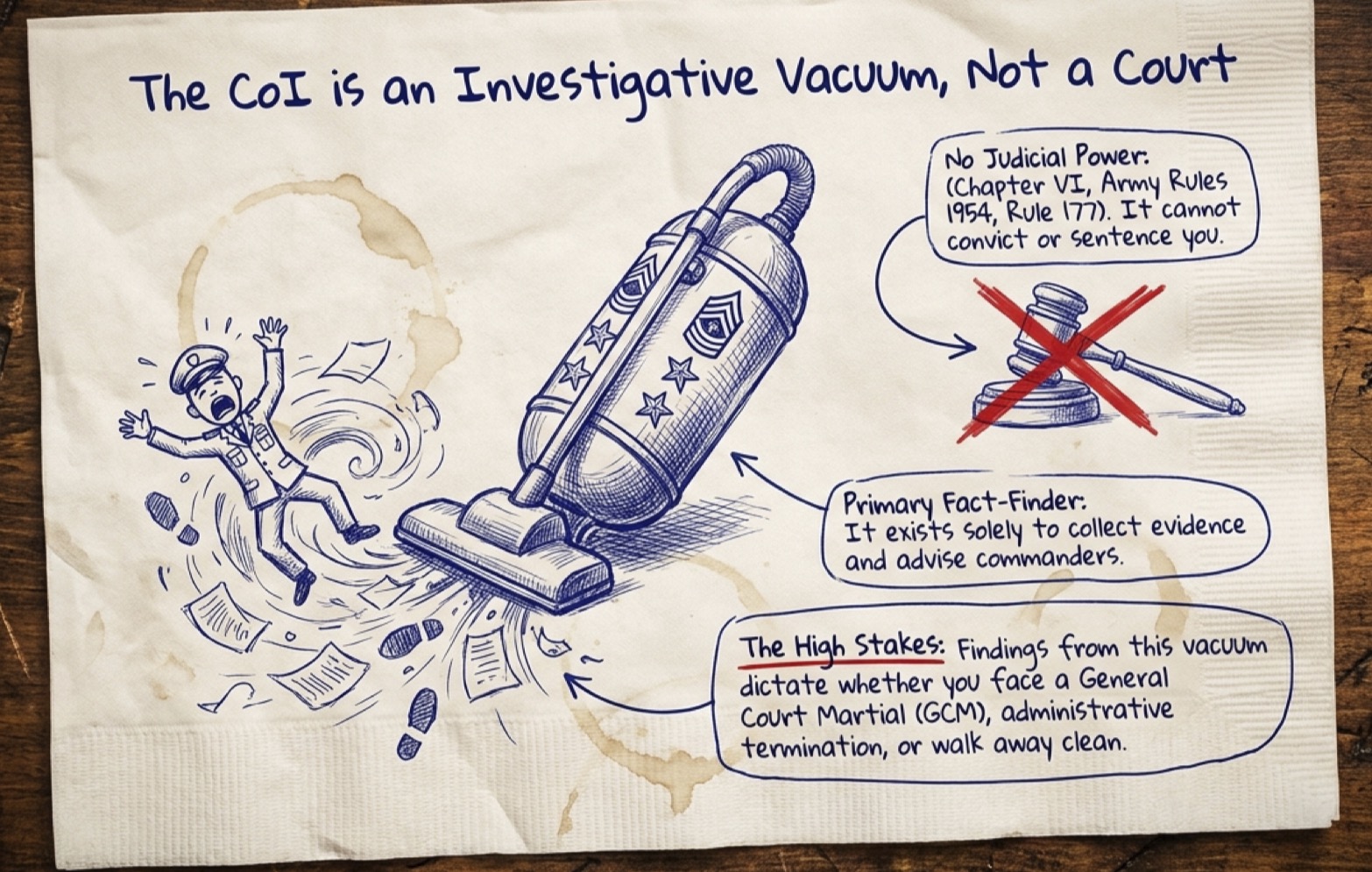
The military justice system in India serves as a specialised, autonomous legal framework designed to maintain the highest standards of discipline and operational efficiency within the Armed Forces. At the bedrock of this system lies the Court of Inquiry (CoI), an administrative and investigative assembly that functions as the primary fact-finding mechanism for military commanders. Unlike the civilian criminal justice system, where investigations are carried out by police agencies subject to the Code of Criminal Procedure, the military process utilizes the CoI to collect evidence, determine culpability, and provide a basis for disciplinary or administrative action. This investigative phase is governed by a complex hierarchy of statutes, primarily the Army Act, 1950, and the Army Rules, 1954, supplemented by a plethora of administrative policies, most notably the Additional Directorate General of Discipline and Vigilance (ADG DV) policy letters.1
The importance of the Court of Inquiry cannot be overstated, as its findings often dictate whether an individual will face a General Court Martial (GCM), administrative termination of service, or a total exoneration. Consequently, the procedural rights and legal defenses available to an officer or soldier during this stage are of paramount significance. Central to these protections is Army Rule 180, which embeds the fundamental principles of natural justice into the military investigative process, ensuring that no individual is condemned unheard when their professional reputation or character is at risk.2
The Statutory Architecture of the Court of Inquiry
The Court of Inquiry finds its legal definition and authority under Chapter VI of the Army Rules, 1954. Rule 177 defines a CoI as an assembly of officers, or a combination of officers and Junior Commissioned Officers (JCOs), Warrant Officers, or Non-Commissioned Officers, directed to collect evidence and, if required, to report on any matter referred to them.1 A CoI is not a court in the judicial sense; it does not possess the power to convict or sentence. Instead, it is an investigative committee of the convening authority.4
Composition and Authority for Assembly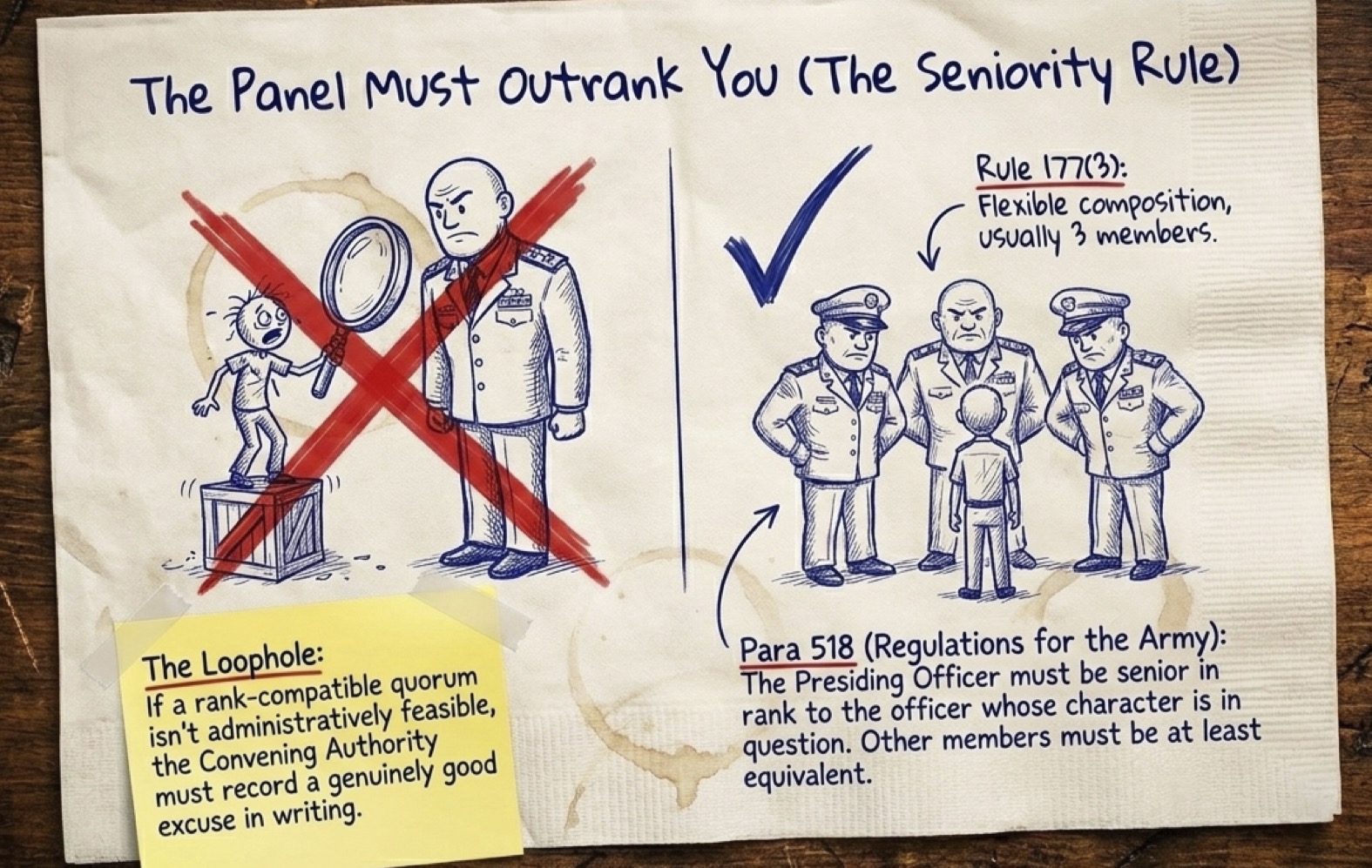
Under Rule 177(3), a Court of Inquiry may be assembled by the officer in command of any body of troops.1 The composition of the court is flexible, consisting of any number of officers of any rank, though typically it involves three members to ensure a balanced perspective.1 The ADG DV policy letter of 2013 clarifies that the convening authority is responsible for ensuring that the members possess the experience and training necessary to deal with the subject matter of the investigation.1
A critical ethical requirement is that the detailed personnel should have no personal interest or involvement, direct or indirect, in the subject matter.1 This principle of impartiality is reinforced by Para 518 of the Regulations for the Army, which stipulates that when the character or military reputation of an officer is likely to be an issue, the Presiding Officer should, wherever possible, be senior in rank to that officer, and other members should be at least equivalent in rank.1 If such a rank-compatible quorum is not administratively feasible, the convening authority must record the reasons in writing.1
The Role of the Convening Order and Terms of Reference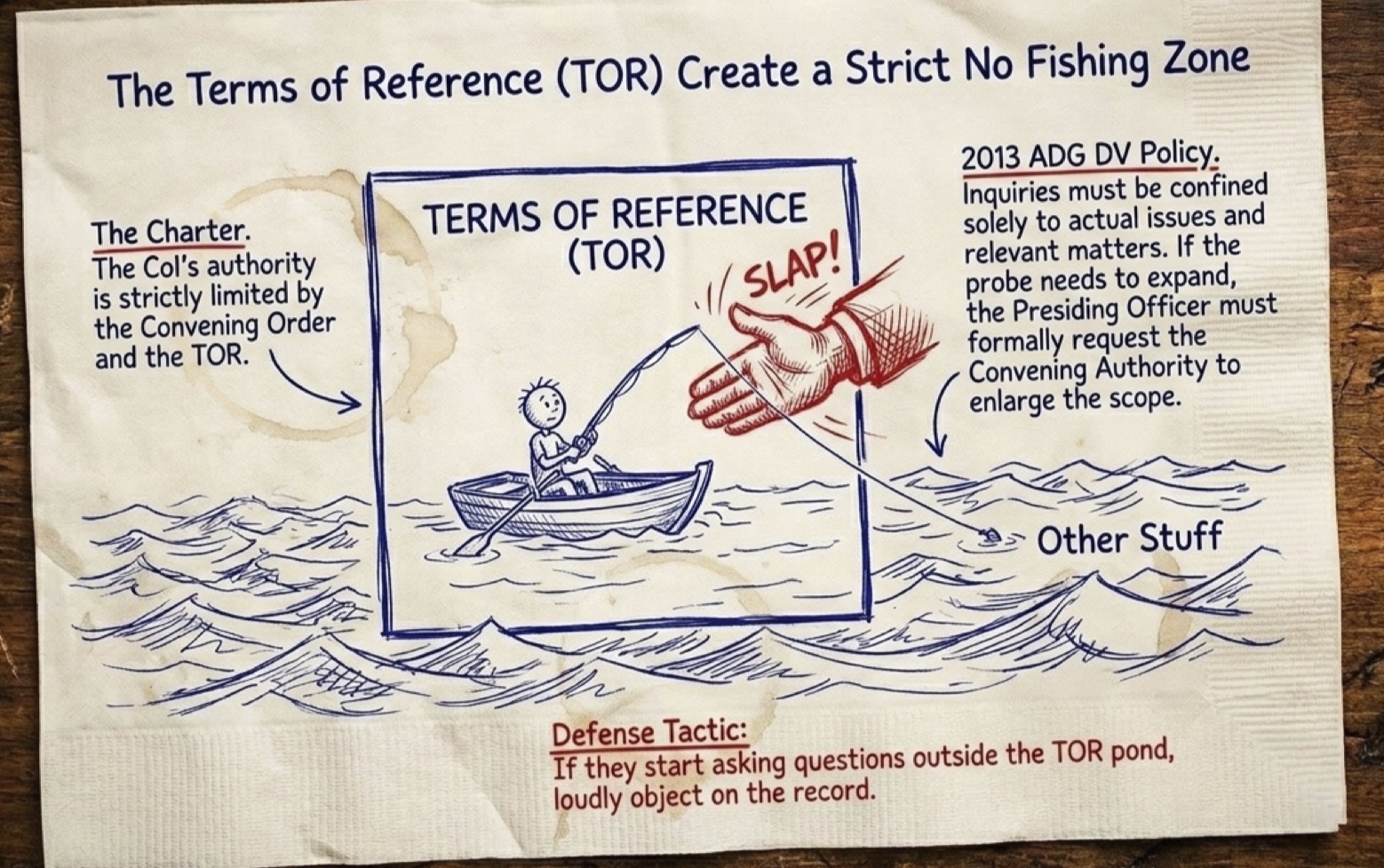
The scope of a CoI is strictly limited by its Convening Order and the accompanying Terms of Reference (TOR). The TOR serve as the investigative charter, specifying the facts to be investigated and whether the court is required to express an opinion or make recommendations.1 The 2013 policy emphasizes that an inquiry should confine itself solely to actual issues and matters strictly relevant thereto.1
The Convening Authority is duty-bound to provide detailed guidance through the TOR. If the investigation evolves during the proceedings, the Presiding Officer may request the Convening Authority to enlarge or restrict the scope of the investigation.1 This prevents “fishing expeditions” and ensures that the court does not overstep its administrative mandate.
The Investigative Process: Taking Evidence and Procedures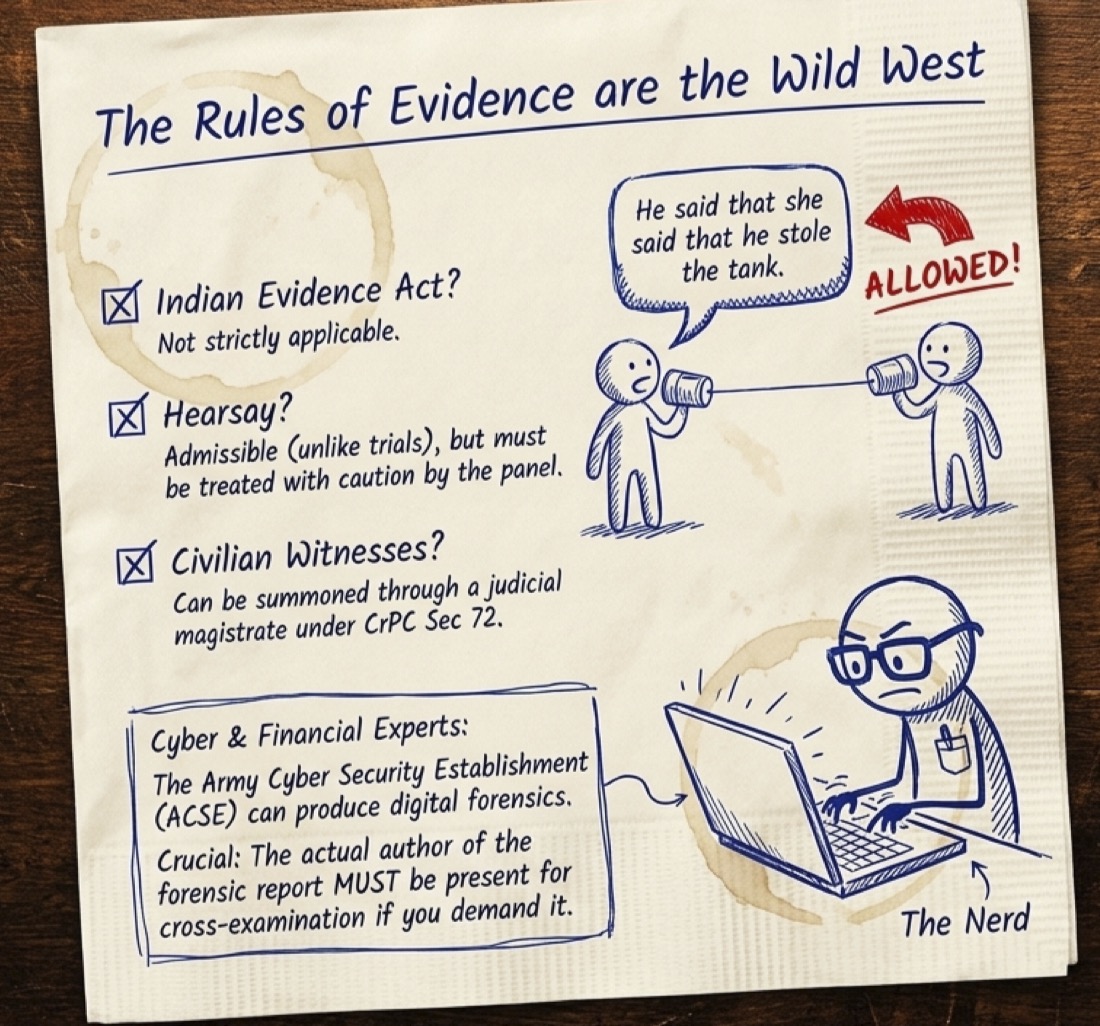
The procedure for conducting the inquiry is outlined in Army Rule 179. The court is guided by the written instructions of the convening authority and must provide previous notice of the time and place of the assembly to all persons concerned.1 This notice is a mandatory requirement to ensure that affected parties can prepare their defense or presence.
Witness Examination and the Rules of Evidence
A Court of Inquiry is not bound by the Indian Evidence Act in the same rigorous manner as a Court Martial or a civilian court.1 For instance, hearsay evidence may be admitted, and it is not strictly necessary to prove handwriting through expert testimony at this stage.1 However, the court is encouraged to follow general rules of evidence to ensure the findings are sustainable upon judicial review.
Witnesses are usually encouraged to give their evidence in their own words through a narrative statement rather than being subjected to immediate questioning.1 The court may then put questions to the witness to test the accuracy or truth of the testimony or to elicit further facts.1 A significant procedural power is the ability to summon civilian witnesses through a judicial magistrate, a power granted under Section 72 of the Code of Criminal Procedure when requested by the military authorities.1
| Evidence Category | Procedural Rule/Policy | Key Provision |
| Oral Testimony | Rule 179(4) | Court may ask questions to test accuracy or elicit truth. |
| Oaths/Affirmations | Rule 181 | Generally no oath, except for POWs, illegal absence, or when directed. |
| Hearsay | Policy Letter 2013 | Admissible in CoI, unlike in trials, but must be treated with caution. |
| Self-Incrimination | Rule 182 | Proceedings generally inadmissible as evidence in subsequent trials. |
| Documentary Evidence | Policy Letter 2013 | Original documents not usually appended; certified true copies are standard. |
| Questionnaires | Policy Letter 2013 | Used for remote or out-station witnesses to prevent delays. |
Specialized and Expert Witnesses
In cases involving technical failures, financial irregularities, or cyber-related offenses, the court may utilize expert witnesses or “Members In-Attendance”.1 If an individual possessing specialized knowledge is not subject to the Army Act, they are designated as “In-Attendance” and assist the court in inspecting evidence and cross-examining witnesses within their field of expertise.1
The 2013 policy specifically addresses the involvement of the Army Cyber Security Establishment (ACSE). Reports on forensic examinations of digital devices should ideally be produced by the author, who can then be cross-examined by any witness whose character is affected under Rule 180.1 If the presence of the author cannot be procured, a questionnaire may be sent, but if the affected person insists on personal cross-examination, the presence of the forensic expert becomes inescapable.1
Army Rule 180: The Cornerstone of Military Natural Justice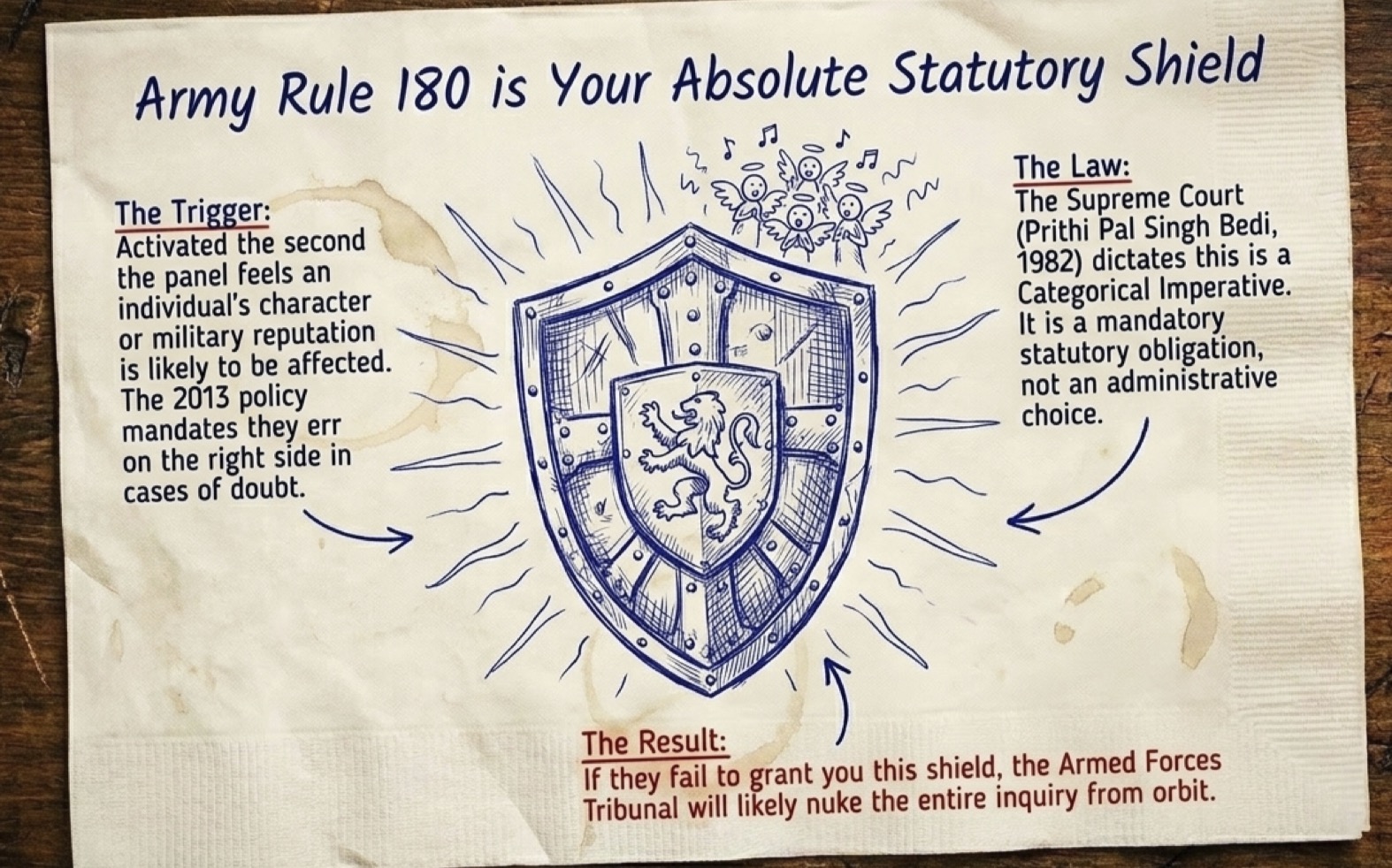
Army Rule 180 represents the most critical procedural safeguard for any individual subject to the Army Act during an investigation. It is a mandatory provision that embodies the constitutional right to a fair hearing. The rule stipulates that whenever an inquiry affects the character or military reputation of a person subject to the Act, they must be afforded a full opportunity to participate in the proceedings.1
The Mandatory Nature of Rule 180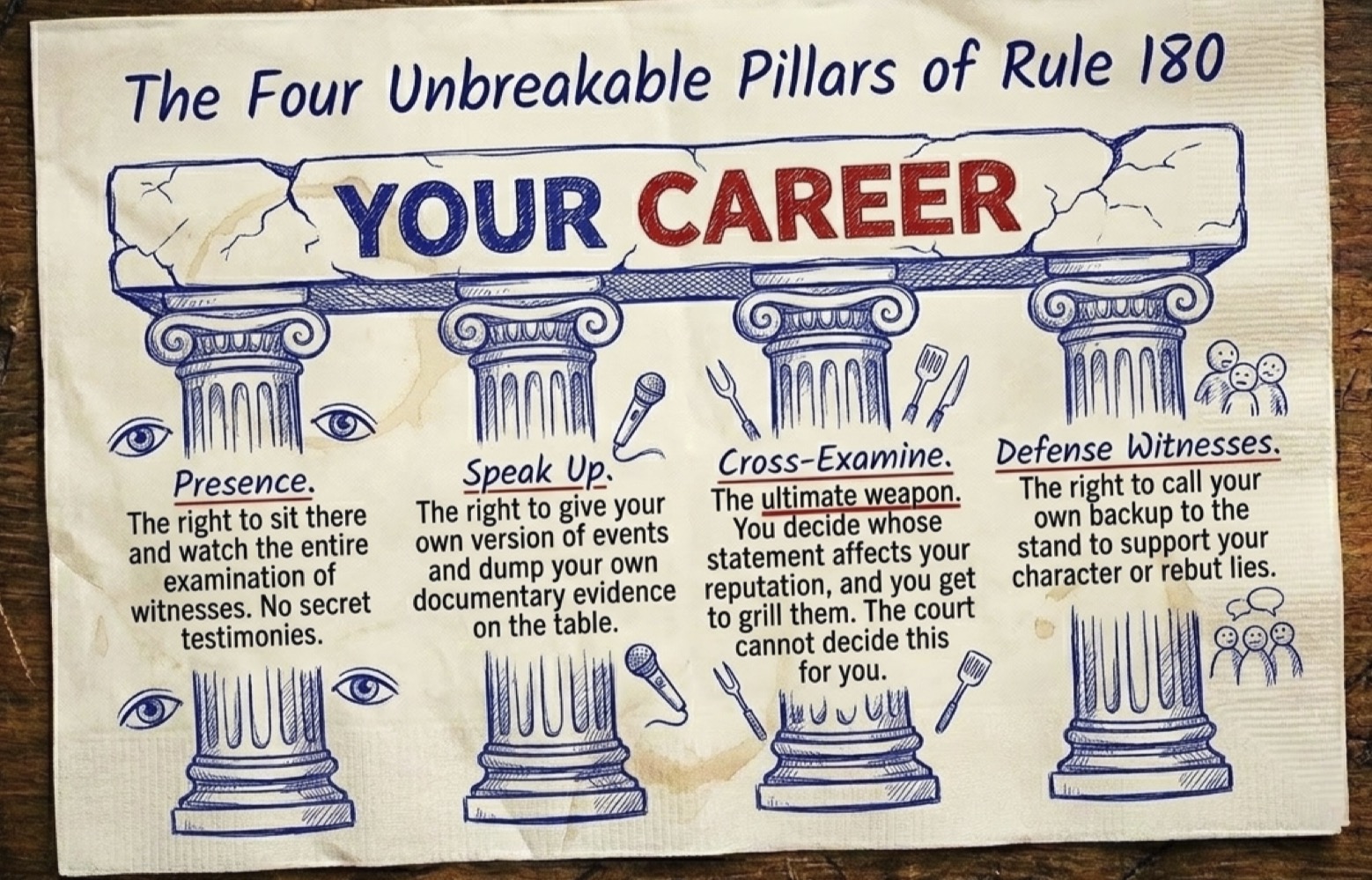
The phrasing of Rule 180—”full opportunity must be afforded”—has been interpreted by the Supreme Court as a categorical imperative. It is not an administrative choice but a statutory obligation.2 The rule is triggered as soon as it appears to the court that a person’s reputation is “likely to be affected”.1
The 2013 policy letter advises Presiding Officers to “err on the right side” by invoking Rule 180 in cases of doubt.1 If the character or military reputation of an officer senior to the court members becomes involved mid-inquiry, the court must adjourn and inform the convening authority to potentially reconstitute the board with more senior members.1
The Four Pillars of the Affected Person’s Rights
When Rule 180 is invoked, the affected person is granted four distinct and non-negotiable rights:
- Right of Presence throughout the Inquiry: The person must be allowed to be present during the entire examination of witnesses.1 This ensures they are aware of all evidence being built against them.
- Right to Make Statements and Give Evidence: The individual can provide their own version of events or produce documentary evidence in their favor.1
- Right of Cross-Examination: This is perhaps the most powerful tool. The affected person can cross-examine any witness whose evidence, in their opinion, affects their reputation.1 The policy explicitly states that the decision as to which witness’s statement affects them lies with the affected person, not the court.1
- Right to Produce Defense Witnesses: The individual may call witnesses to testify in support of their character or to rebut allegations.1
The Presiding Officer is responsible for ensuring the person fully understands these rights. Failure to comply with Rule 180 can result in the entire inquiry being quashed by the Armed Forces Tribunal or the High Court, and the Presiding Officer may face disciplinary action for the miscarriage of justice.1
Defenses and Tactical Opportunities for the Affected Officer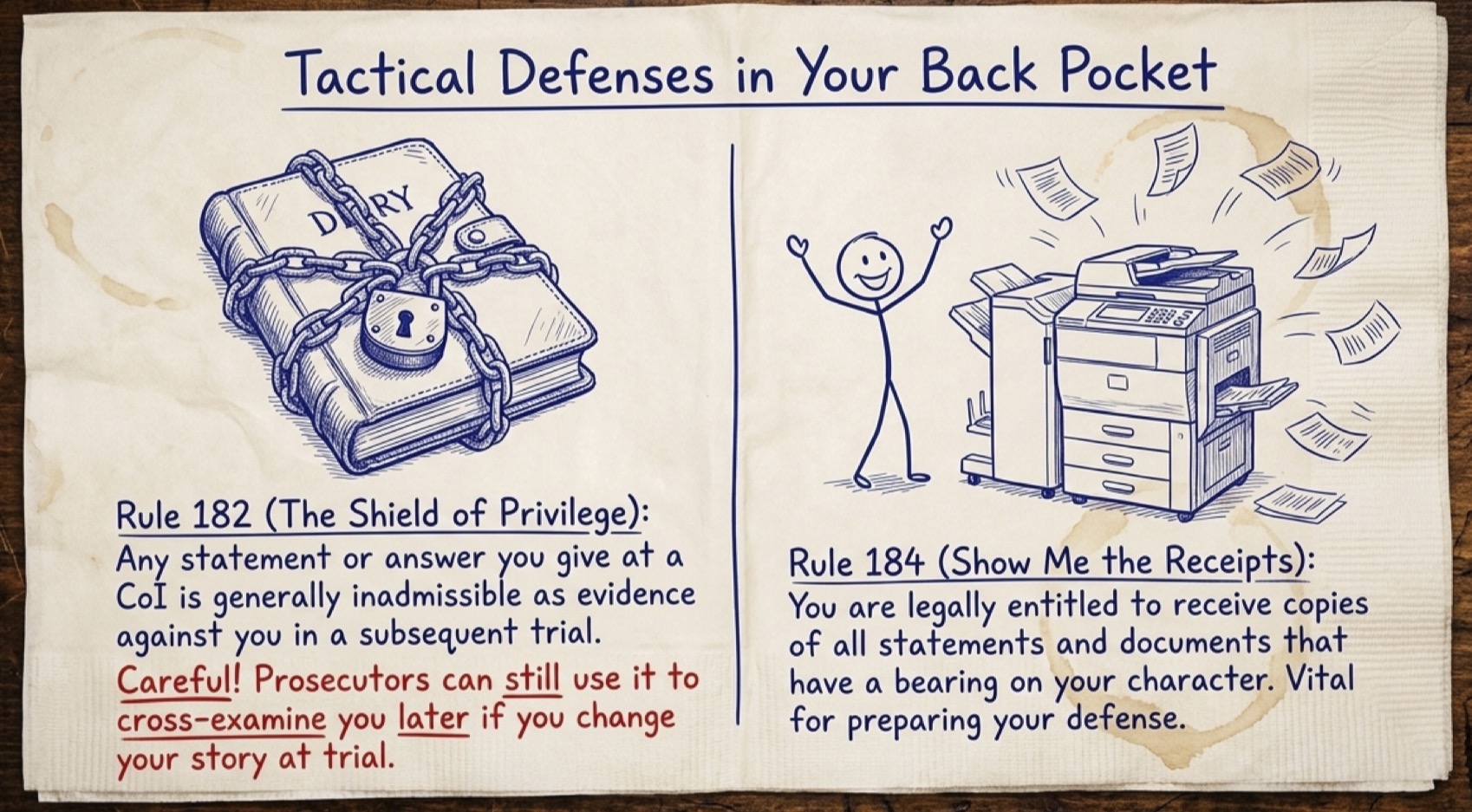
A Court of Inquiry is often the stage where a military career is saved or lost. An officer facing a CoI must strategically utilize the procedural protections available under the rules and policy.
Strategic Use of Rule 182 and Rule 184
Army Rule 182 provides a “privilege” protection: any confession, statement, or answer given at a CoI is not admissible as evidence against the person in a subsequent trial.1 This allows for a degree of transparency during the fact-finding stage. However, the defense must be aware that the prosecutor can use CoI statements to cross-examine the accused in a later trial if the accused gives conflicting testimony.4
Rule 184 entitles the affected person to copies of the statements and documents that have a bearing on their character or reputation.1 This right to disclosure is fundamental for preparing a defense for any subsequent Summary of Evidence (SoE) or Court Martial.4
Challenging Bias and Composition
One of the primary defenses is challenging the impartiality of the court. Following the landmark Sanjay Jethi judgment, the “doctrine of bias” is a potent weapon.2 If a member of the court was involved in the preliminary investigation or has a conflict of interest, the entire CoI can be challenged as biased.2 Furthermore, an officer who has conducted a “one-man inquiry” or a departmental probe that led to the CoI should not be a member of that CoI.1
The “Terms of Reference” Defense
The TOR define the legal boundaries of the investigation. If a court begins investigating matters outside its TOR, the affected person should formally record an objection in the proceedings.1 This creates a record of procedural irregularity that can be used to challenge the findings later in the Armed Forces Tribunal.7
Comparative Analysis with Air Force and Naval Frameworks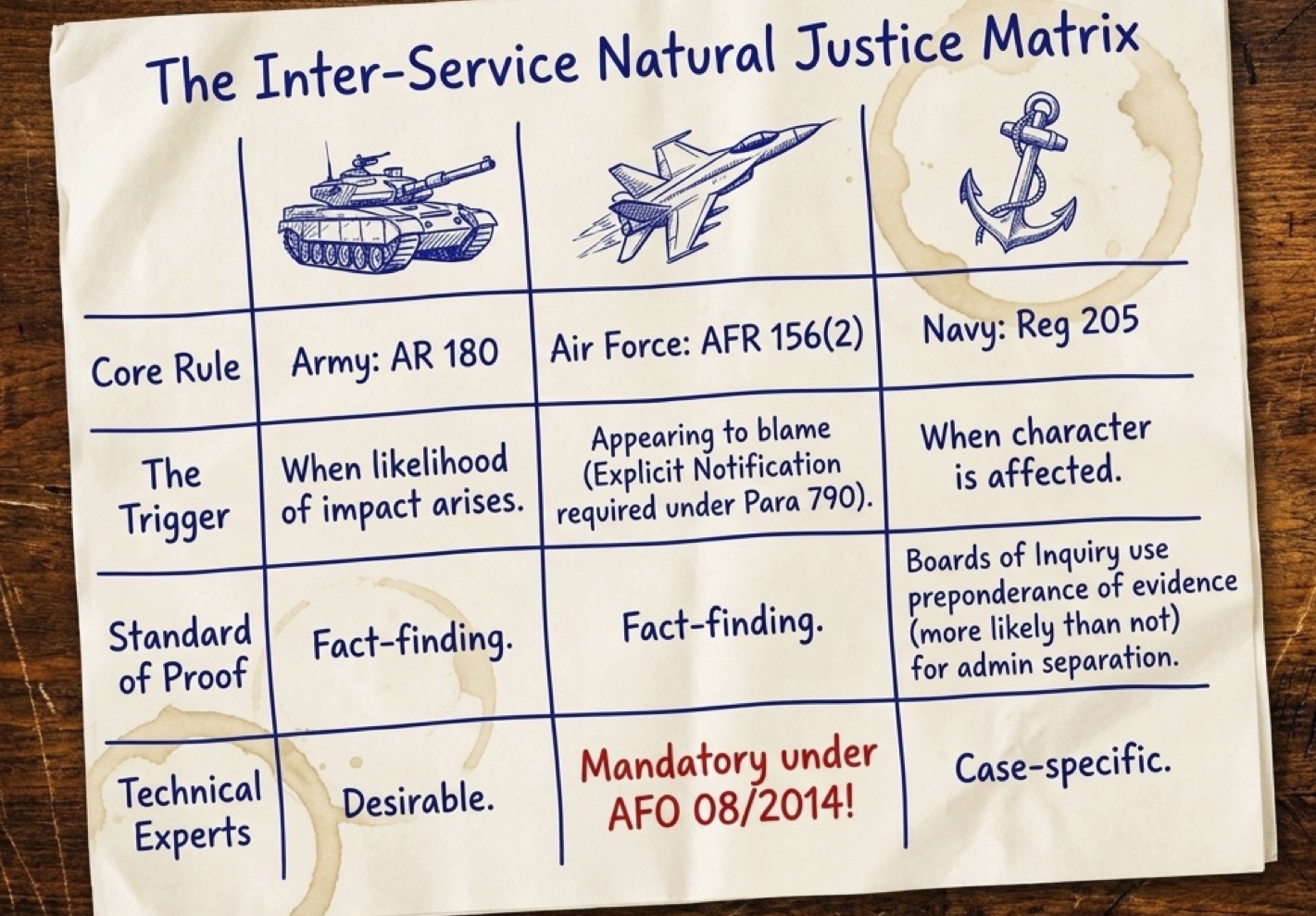
While the Indian Army, Navy, and Air Force all operate under the umbrella of military law, their specific rules and administrative circulars possess nuanced differences that can affect the rights of the accused.
The Air Force Framework: Rule 156 and AFO 08/2014
Air Force Rule 156(2) is the functional equivalent of Army Rule 180.4 The Air Force procedure is further detailed in Air Force Order (AFO) 08/2014 and Regulation 790 of the Air Force Regulations.
A key distinction in the Air Force is the explicit requirement under Para 790 for a “Notification of Blame”.5 As soon as it appears to the court that an officer is to blame, the court must inform them and read over all evidence recorded up to that stage.5 The officer then has the right to recall and cross-examine any previous witnesses.5 Additionally, AFO 08/2014 mandates the inclusion of a “competent technical expert member” for specialized inquiries, the absence of which was used as a ground for quashing proceedings in Wg Cdr Shyam Naithani v. Union of India.5
The Naval Framework: Regulation 205 and Boards of Inquiry
The Navy utilizes “Boards of Inquiry” (BoI) governed by the Navy Act, 1957, and the Regulations for the Navy, Part II. Regulation 205 triggers the same core rights as Army Rule 180, including the right to be present and cross-examine witnesses.8
However, the Navy often uses BoIs as “Show Cause Boards” for administrative separation.9 The standard of proof in these naval hearings is the “preponderance of evidence” (more likely than not) rather than “beyond a reasonable doubt,” making the defense’s role in building a record during the BoI even more critical.10 Unlike the Army, where the Commanding Officer has significant influence, all officer misconduct in the Navy that could result in punishment must be reported to the Chief of Naval Personnel, centralizing the disciplinary authority.12
| Feature | Indian Army (AR 180) | Indian Air Force (AFR 156) | Indian Navy (Reg 205) |
| Core Provision | Army Rule 180 | Air Force Rule 156(2) | Naval Regulation 205 |
| Notification | Triggered by “likelihood” | Triggered by “appearing to blame” | Triggered by “character affected” |
| Right of Presence | Yes | Yes (Para 790 AF Regs) | Yes |
| Recall Witnesses | Implicit | Explicit (recall and re-examine) | Implicit |
| Technical Expert | Desirable (Policy 2013) | Mandatory (AFO 08/2014) | Case-specific |
Landmark Judgments of the Supreme Court Favoring Petitioners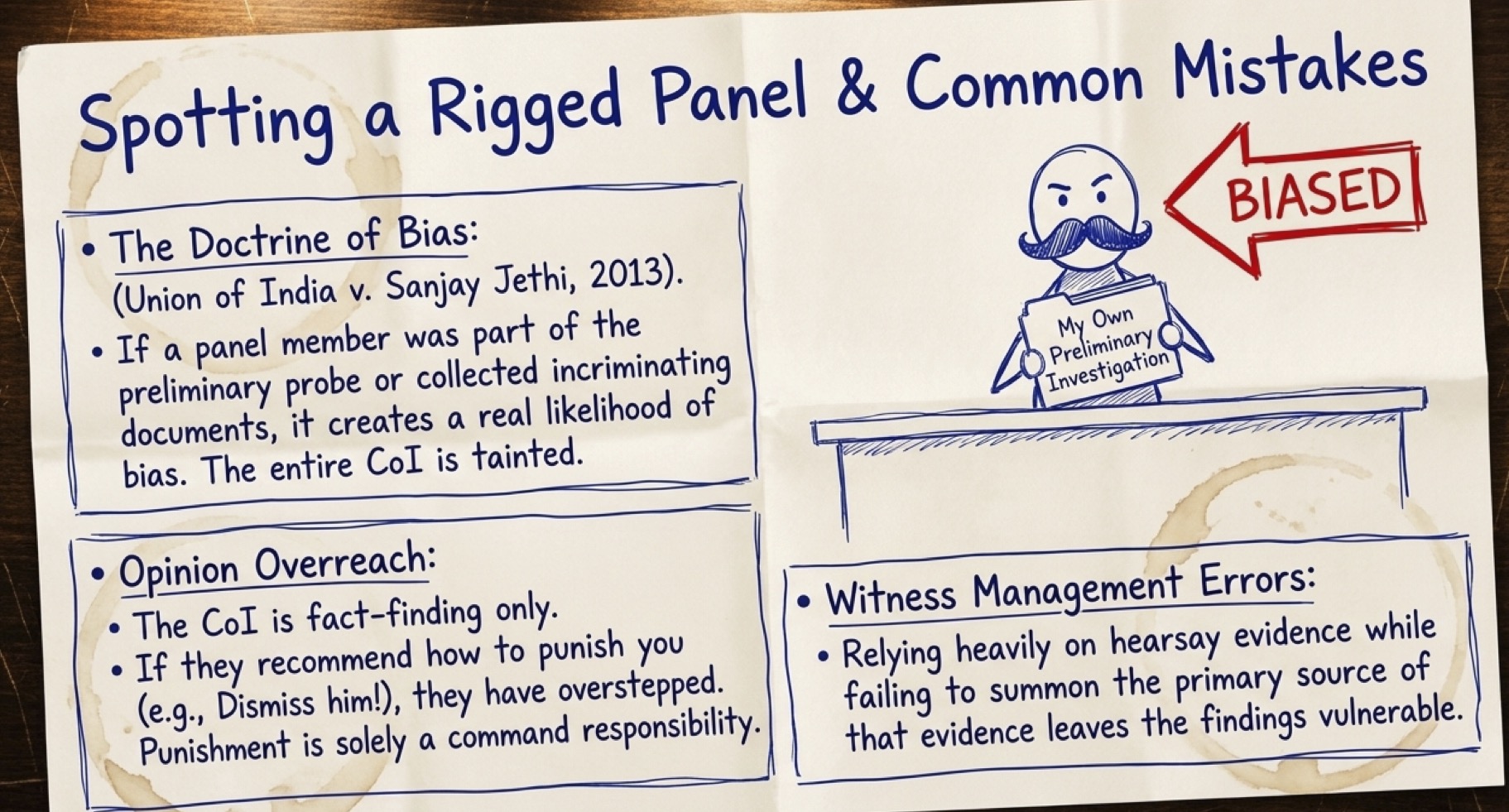
The judiciary has played a vital role in curbing the arbitrary use of investigative power by military commanders. Several landmark cases have established the non-negotiable nature of procedural safeguards.
Lt. Col. Prithi Pal Singh Bedi v. Union of India (1982)
In this seminal case, the Supreme Court ruled that Rule 180 is a mandatory provision. The Court emphasized that while military law requires discipline, it cannot function in a vacuum devoid of the principles of natural justice.2 This judgment laid the foundation for the requirement that any inquiry affecting character must afford the subject a “categorical imperative” right of participation.2
Union of India v. Sanjay Jethi (2013)
The Sanjay Jethi case is the definitive authority on bias in military inquiries. The Court held that the presence of members who were part of the initial investigation or the collection of incriminating documents creates a “real likelihood of bias”.2 The judgment reinforced that military tribunals and inquiry boards must be meticulously designed to avoid conflicts of interest, thereby upholding the sanctity of the disciplinary process.2
Lt. Gen. Surendra Kumar Sahni v. Chief of Army Staff (2007)
The Delhi High Court, in this instance, quashed the proceedings of a CoI and a subsequent attachment order on the grounds of non-compliance with Rule 180.3 The court noted that the respondents had failed to provide the petitioner with meaningful opportunities to cross-examine witnesses or defend his character against pseudonymous complaints.3 This case is significant for high-ranking officers, as it confirms that procedural rights are rank-agnostic.
Major A. Hussain v. Union of India (1997)
The Supreme Court reiterated that non-observance of Rule 180 is a mandatory violation that can vitiate subsequent disciplinary proceedings.6 The Court clarified that if an accused has been prejudiced by the denial of Rule 180 rights, the High Court and the AFT have the power to strike down the resulting conviction.6
Union of India v. Ex. No. 3192684 W. Sep. Virendra Kumar (2020)
This recent judgment by the Supreme Court introduced a crucial limitation.14 While affirming that Rule 180 is obligatory, the Court held that its non-compliance does not automatically nullify a trial if the trial itself was fair and no prejudice was shown.14 The Court noted that if the accused does not raise the Rule 180 violation during the Summary of Evidence or the GCM, they cannot raise it for the first time after the trial has concluded.13 This judgment places a burden on the defense to raise procedural objections at the earliest possible stage.
Challenging Inquiries in the Armed Forces Tribunal (AFT)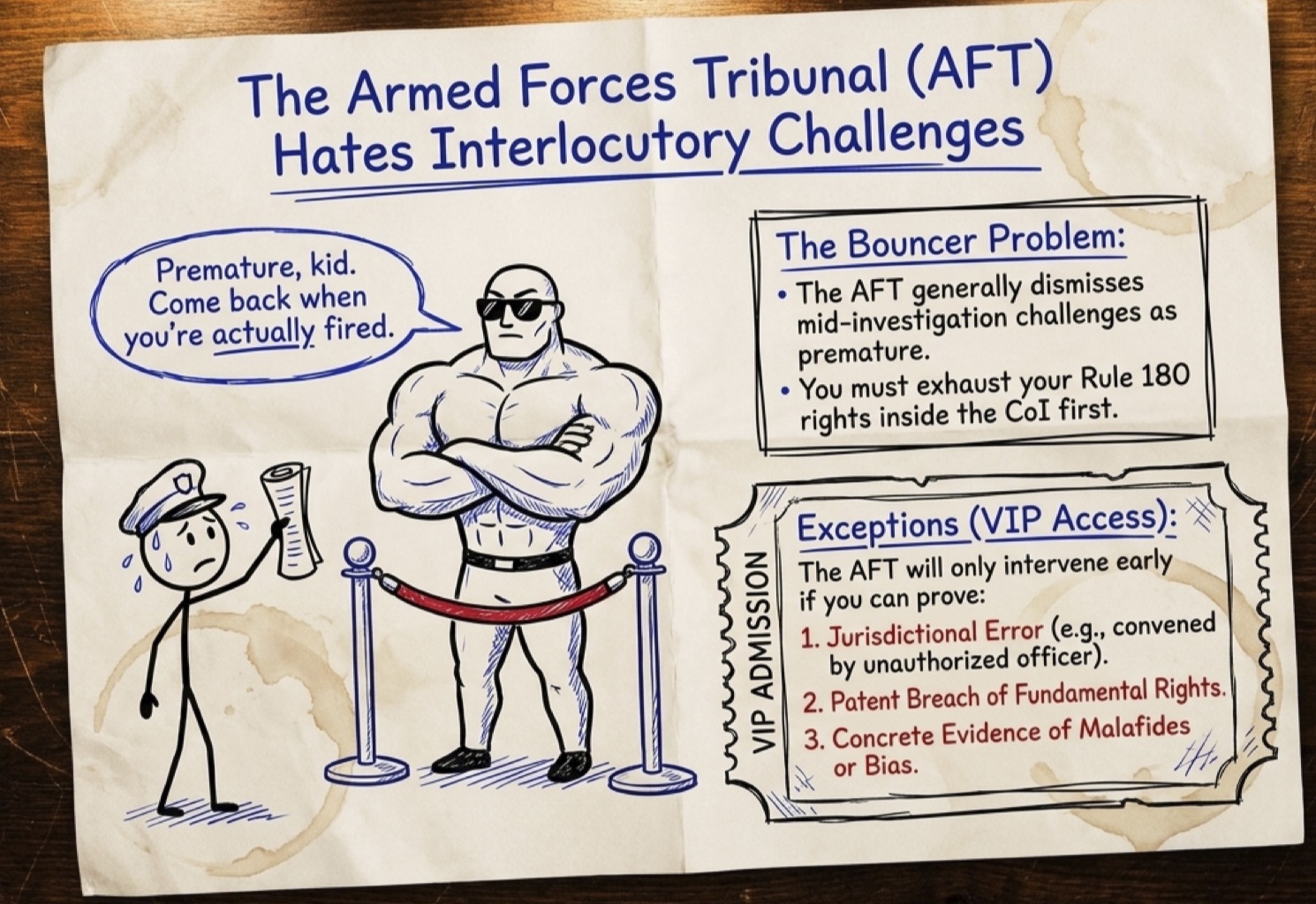
The Armed Forces Tribunal is the primary statutory body for the adjudication of military service and disciplinary matters. Challenging a Court of Inquiry in the AFT requires a nuanced understanding of maintainability and the stage at which judicial intervention is permitted.
The Problem of “Interlocutory Challenges”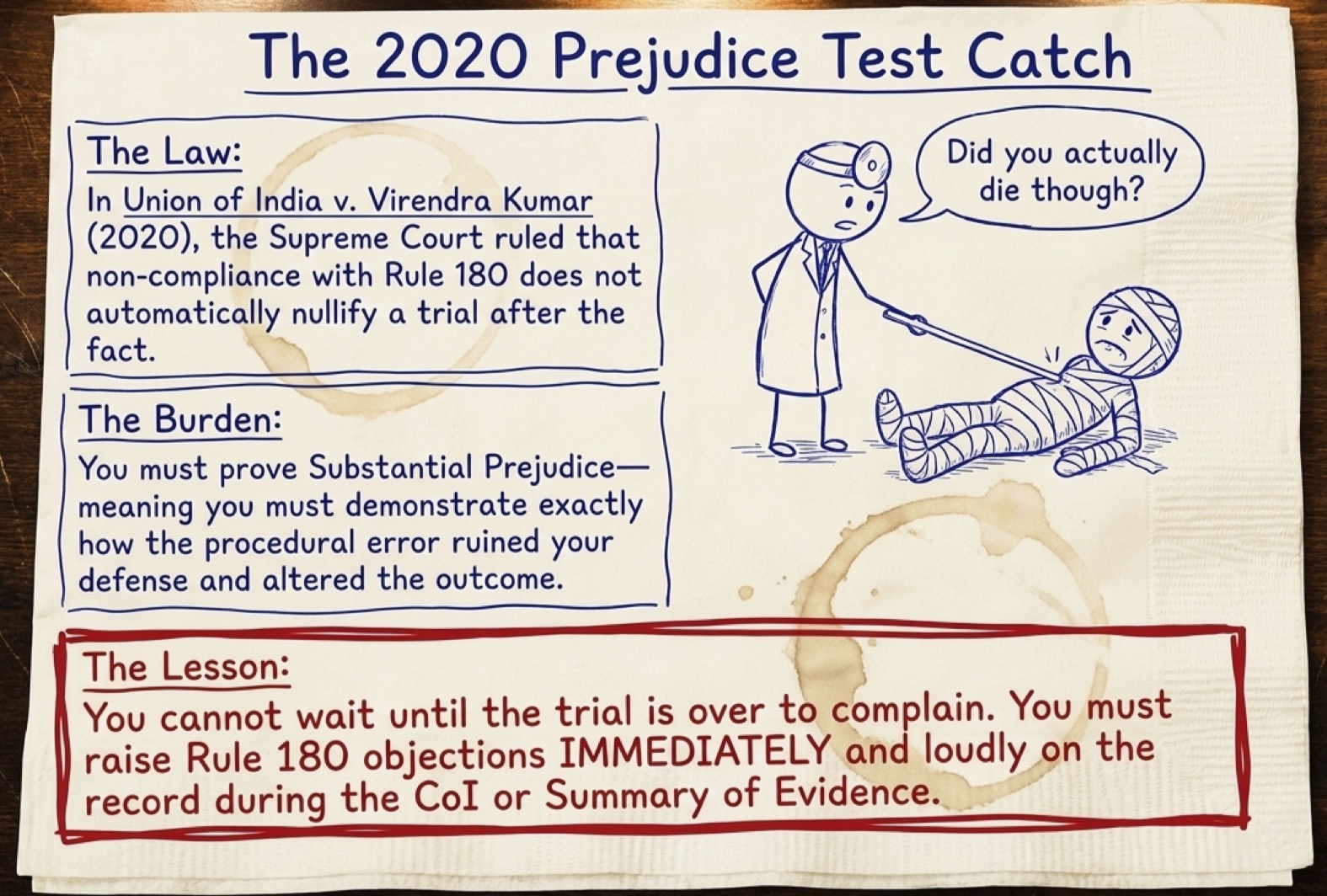
As a general rule, the AFT is hesitant to interfere with a Court of Inquiry while it is still in the investigative stage.16 Because a CoI is not a “final order,” a challenge to the CoI alone is often dismissed as “premature”.18 The Tribunal’s reasoning is that the individual should first utilize the opportunities within the inquiry (Rule 180) to clear their name.18
A cause of action typically only arises when a “final order adversely affecting a party” is passed, such as the issuance of a charge sheet for trial or the recommendation for administrative dismissal.18 However, the AFT may intervene early if:
- Jurisdictional Error: The authority convening the inquiry lacks the statutory power.18
- Violation of Fundamental Rights: There is a patent breach of constitutional protections or natural justice.19
- Apparent Bias: There is concrete evidence of malafides or a predetermined outcome.2
Challenging Attachment Orders and DV Bans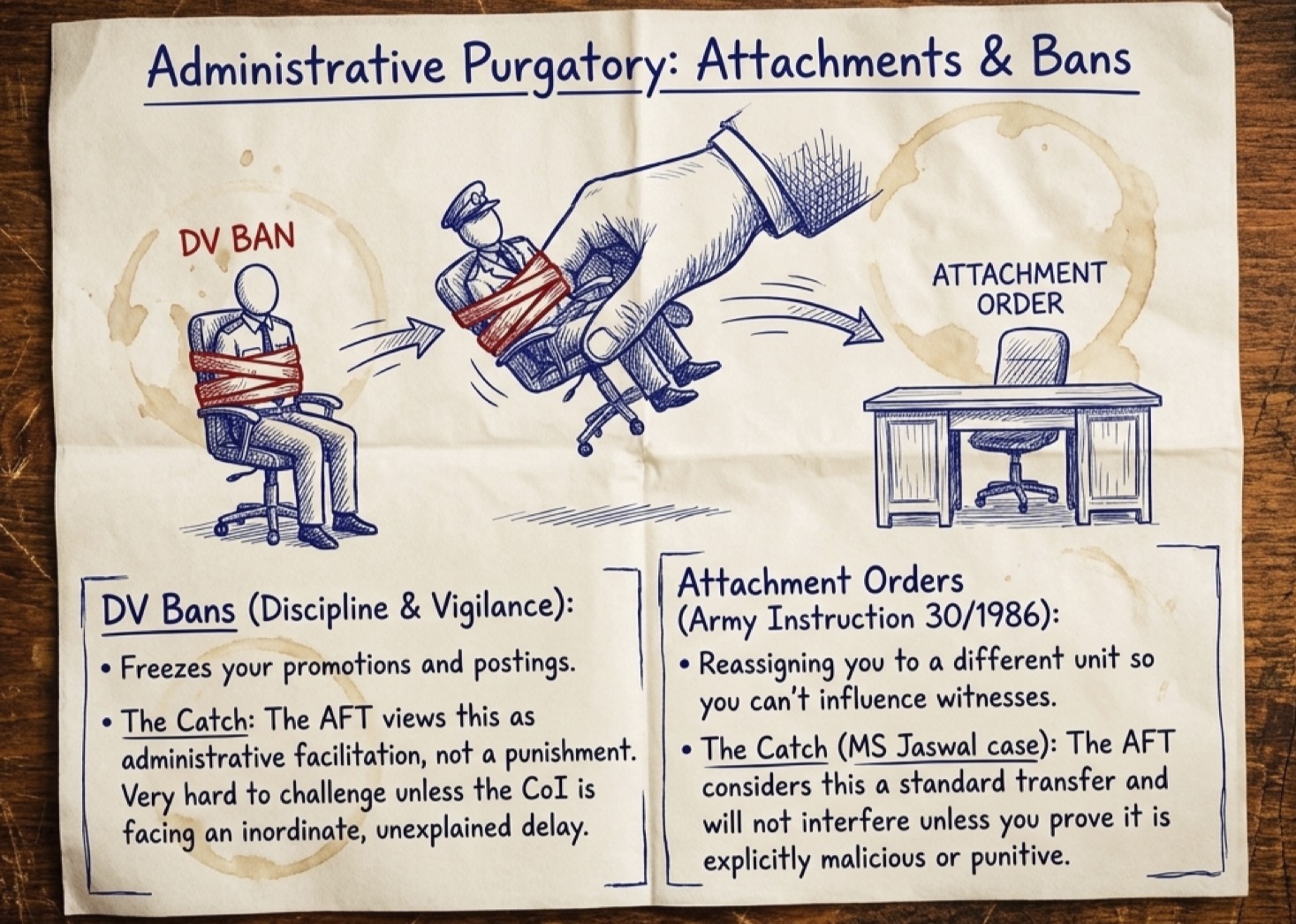
A common grievance among service personnel is the “Attachment Order” issued under Army Instruction 30/1986. This order reassigns the individual to a different unit during an investigation to prevent them from influencing the process.20
A Larger Bench of the AFT in MS Jaswal v. Union of India addressed whether an attachment order is a “service matter” amenable to AFT jurisdiction or a “transfer/posting” excluded under Section 3(o)(ii) of the AFT Act.21 The Tribunal concluded that unless the attachment is shown to be prima facie malicious, punitive, or actuated by extraneous considerations, it falls within the exclusion clause, and the AFT lacks jurisdiction.22
Similarly, “DV Bans” (Discipline and Vigilance Bans) that freeze promotions and postings can be challenged in the AFT.24 The Tribunal has held that a DV Ban is an “administrative facilitation” rather than a punishment, and challenges are often dismissed if the underlying inquiry is still active, provided it is not inordinately delayed.24
Guide to Navigating the Armed Forces Tribunal Process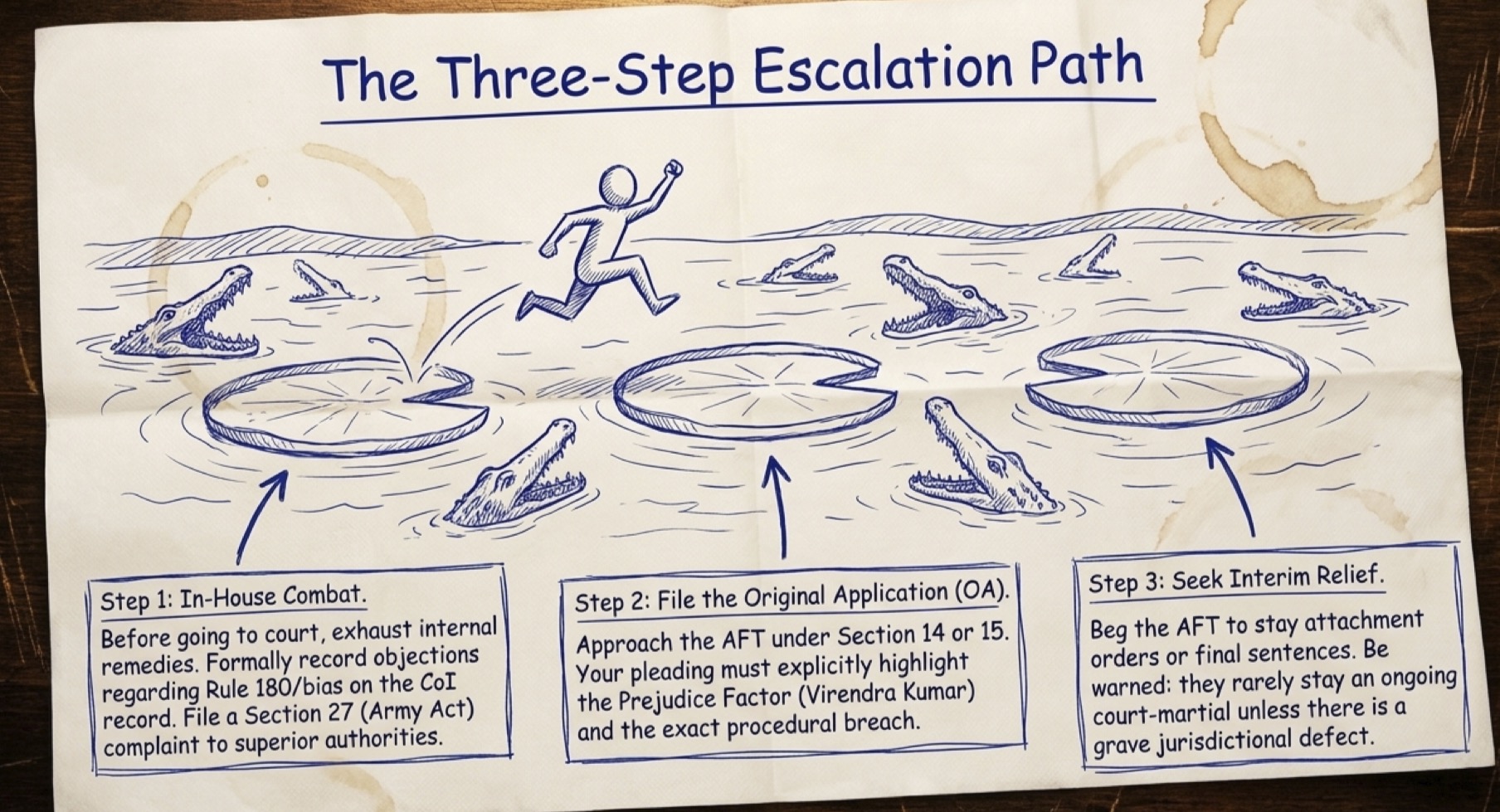
For an officer or soldier seeking to challenge a CoI proceeding or order in the AFT, the following guide outlines the strategic path:
Step 1: Raising Objections within the Military Chain
Before approaching the AFT, the individual must exhaust internal remedies where possible. This involves:
- Recording a formal objection in the CoI proceedings regarding the violation of Rule 180 or bias.
- Submitting a statutory or non-statutory complaint under Section 27 of the Army Act to the superior authority.24
Step 2: Filing the Original Application (OA)
An OA is filed under Section 14 of the AFT Act for service matters or Section 15 for appeals against Court Martial findings.22 The OA must clearly plead:
- The Prejudice Factor: Under the Virendra Kumar precedent, the applicant must demonstrate how the procedural lapse in the CoI materially affected the outcome of their case.13
- The Procedural Breach: Specific instances where Rule 180 was denied (e.g., statements recorded in absence, refusal of cross-examination).5
Step 3: Seeking Interim Relief
The AFT has the power to grant interim stays on attachment orders or the promulgation of sentences if a prima facie case of illegality is made out.20 However, the Tribunal will rarely stay an ongoing Court Martial unless there is a grave jurisdictional defect.16
| Challenge Stage | Ground for AFT Intervention | Key Legal Authority |
| Convening Stage | Lack of jurisdiction in the convening authority. | Rule 177 / AA Sec 101 |
| Investigative Stage | Egregious violation of Rule 180 (Natural Justice). | Prithi Pal Singh Bedi |
| Attachment Stage | Order is prima facie malicious or punitive. | MS Jaswal |
| Charge Sheet Stage | Bar of limitation under Section 122. | Lt Col R.R. Behura |
| Post-Trial Stage | Procedural lapses caused substantial prejudice. | Virendra Kumar (2020) |
Common Procedural Mistakes: Identifying Grounds for Defense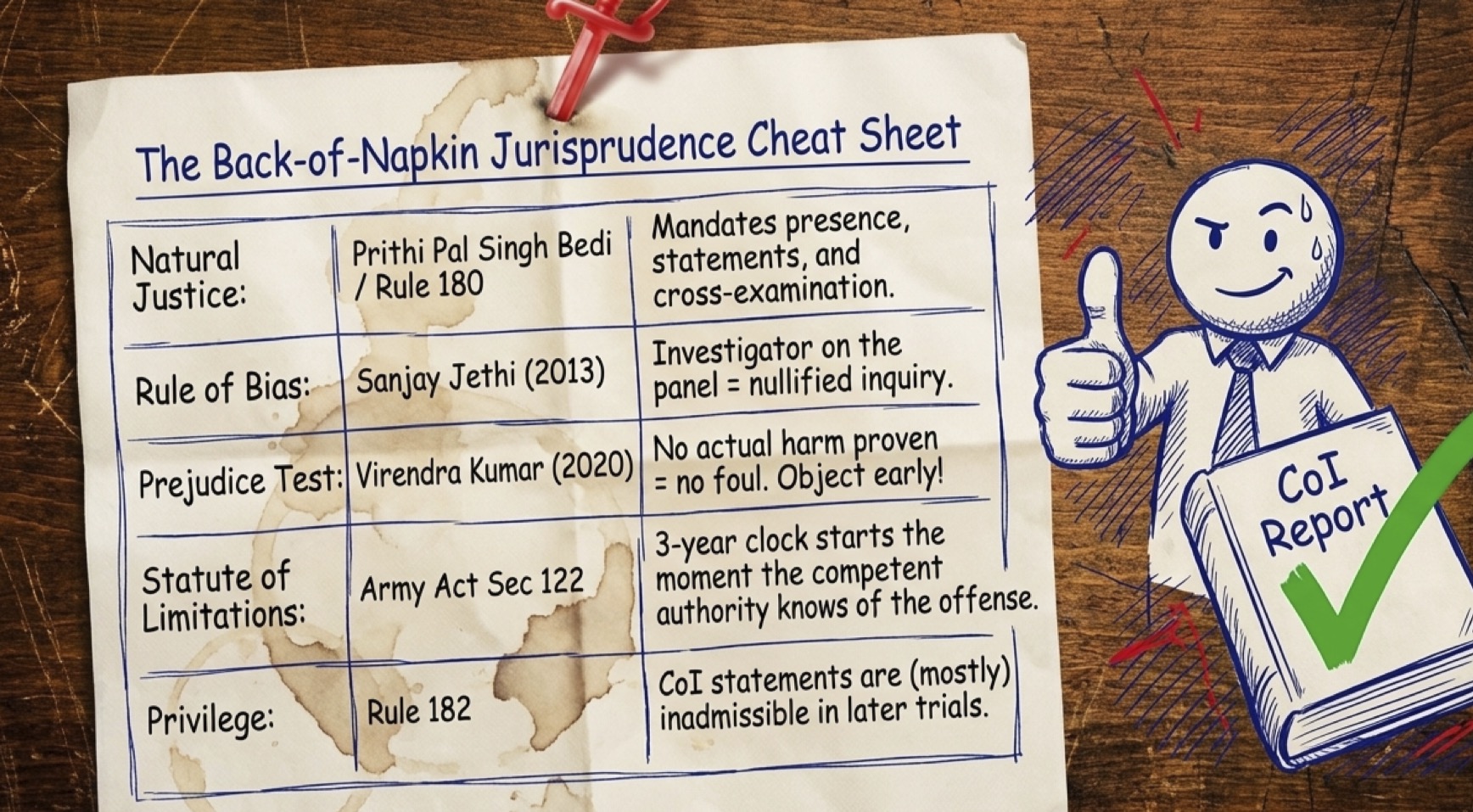
The 2013 policy identifies several “Common Mistakes” that often infirm CoI proceedings and provide grounds for legal challenge.1 A vigilant defense should look for the following:
Failure to Comply with the TOR
A CoI that drifts into unauthorized areas or fails to answer the specific questions posed in the TOR is procedurally flawed.1 The defense can argue that the court’s findings are based on evidence it was not authorized to collect.
Incomplete Compliance with Rule 180
Mistakes include failing to invoke the rule at the appropriate time, failing to record a formal statement from the affected person, or missing signatures on testimony pages.1 The 2013 policy emphasizes that each page containing testimony must be signed by the witness and the Presiding Officer.1
Opinion Bias and Mode of Penal Action
A common error is for the Court of Inquiry to explicitly recommend the mode of penal action (e.g., “the officer should be dismissed”). The 2013 policy explicitly states that the Opinion of the Court should not make recommendations on initiating administrative or disciplinary action, as this is purely a command responsibility.1 If the court makes such recommendations, its opinion may be challenged as being outside its fact-finding mandate.
Witness Management Errors
The policy identifies “leading of witnesses while questioning” and “failure to call material witnesses” as frequent mistakes.1 If the court relies on hearsay evidence while failing to summon the primary source of that evidence, the resulting findings are vulnerable to challenge under the principles of fairness.1
Principles, Rules, and Jurisprudential Laws of Court of Inquiry
To synthesize the vast regulatory and judicial landscape, the following table summarizes the core principles that govern military inquiries.
| Principle / Law | Source | Legal Effect |
| Fact-Finding Nature | Rule 177 / Inder Jit Kumar | CoI is investigative and does not result in a judicial sentence. |
| Natural Justice | Rule 180 / Prithi Pal Singh Bedi | Mandatory rights of presence, statement, and cross-examination. |
| Rule of Bias | Sanjay Jethi (2013) | Bias in court composition nullifies the entire inquiry. |
| Prejudice Test | Virendra Kumar (2020) | Procedural errors must cause actual prejudice to invalidate a trial. |
| Disclosure Right | Rule 184 | Accused is entitled to copies of statements relevant to defense. |
| Privilege of Statements | Rule 182 | CoI statements generally inadmissible in subsequent trials. |
| Limitation Period | AA Section 122 | Knowledge of the offense by competent authority starts the 3-year clock. |
| Rank Seniority | RA Para 518 | Presiding Officer should be senior to the officer whose character is involved. |
Conclusion: Balancing Military Efficiency and Individual Rights
The Court of Inquiry remains an indispensable tool for military commanders, enabling them to manage large-scale organizations through evidence-based decisions. However, the evolution of military jurisprudence in India, driven by the Supreme Court and the Armed Forces Tribunal, has significantly enhanced the accountability of these investigative bodies. The transition from the “absolute command” model to a “due process” model ensures that the rights of service personnel are not discarded in the pursuit of disciplinary speed.
For the officer or soldier under investigation, the Court of Inquiry is the first and most critical battleground. Mastery of the Army Rules and the specific administrative policies of the ADG DV is essential for mounting an effective defense. While the 2020 Virendra Kumar judgment has raised the bar for post-trial challenges by requiring proof of “substantial prejudice,” it simultaneously reinforces the need for the individual to assert their Rule 180 rights vigorously and early. As military law continues to integrate with broader constitutional standards, the transparency and procedural integrity of the Court of Inquiry will remain the ultimate measure of the fairness of the Indian military justice system. Management of the inquiry process, from the drafting of the TOR to the final review of findings, must therefore be executed with legal precision to withstand the rigorous scrutiny of the modern judicial apparatus.
Works cited
- THE ARMY RULES, COURTS OF INQUIRY.pdf
- Ensuring Impartiality in Courts of Inquiry: Reinforcement of Rule 180 in Union of India v. Sanjay Jethi – CaseMine, accessed on April 29, 2026, https://www.casemine.com/commentary/in/ensuring-impartiality-in-courts-of-inquiry:-reinforcement-of-rule-180-in-union-of-india-v.-sanjay-jethi/view
- Delhi High Court Upholds Mandatory Compliance with Army Rule 180: Lt. Gen. Sahni’s Case – CaseMine, accessed on April 29, 2026, https://www.casemine.com/commentary/in/delhi-high-court-upholds-mandatory-compliance-with-army-rule-180:-lt.-gen.-sahni’s-case/view
- IN THE ARMED FORCES TRIBUNAL REGIONAL BENCH, GUWAHATI. OA 18/2016, accessed on April 29, 2026, https://www.aftrbghy.nic.in/judgement/OA%2018%20of%202016.pdf
- COURT No.1 | Armed Forces Tribunal, accessed on April 29, 2026, https://www.aftdelhi.nic.in/assets/disposed_cases/2021/May/OA/OA%201209-2020-09-10-2020.pdf
- “army+rule+180″+”mandatory” | Indian Case Law – CaseMine, accessed on April 29, 2026, https://www.casemine.com/search/in/%22army%2Brule%2B180%22%2B%22mandatory%22
- Ic 57454M Col Jps Bakshi vs Union Of India And Ors on 3 June, 2022 – Indian Kanoon, accessed on April 29, 2026, https://indiankanoon.org/doc/93538600/
- IN THE ARMED FORCES TRIBUNAL, PRINCIPAL BENCH, accessed on April 29, 2026, https://aftdelhi.nic.in/assets/judgement/2010/TA/TA-395-2009-%20Comm%20Vinod%20Kumar%20Jha%20VS%20Union%20Of%20India%20%20Ors.pdf
- Navy Board of Inquiry Process | BOI (Officer Elimination) & Show Cause – Korody Law, P.A., accessed on April 29, 2026, https://korodylaw.com/navy-board-of-inquiry-process/
- Navy Board of Inquiry (BOI) Defense – How Officers Can Protect Their Careers in 2026, accessed on April 29, 2026, https://ucmjdefense.com/navy-board-of-inquiry-defense-how-officers-can-protect-their-careers-in-2026/
- Navy Administrative Separation Boards – Boards Of Inquiry BOI Lawyers, accessed on April 29, 2026, https://ucmjdefense.com/navy-administrative-separation-boards-boards-of-inquiry-boi-lawyers/
- Navy Boards of Inquiry – Attorney Matthew Barry – Process Explained, accessed on April 29, 2026, https://mattbarrylaw.com/2019/09/20/navy-boards-of-inquiry/
- Ensuring Procedural Compliance: Upholding Rule 180 in Military Judicial Proceedings, accessed on April 29, 2026, https://www.casemine.com/commentary/in/ensuring-procedural-compliance:-upholding-rule-180-in-military-judicial-proceedings/view
- Non-compliance of Rule 180 Army Rules no ground to annul Court Martial once trial concluded—AFT exceeded jurisdiction in ordering de novo inquiry – LaWGiCo, accessed on April 29, 2026, https://lawgico.in/law-updates/sc-non-compliance-of-rule-180-army-rules-no-ground-to-annul-court-martial-once-trial-concluded-aft-exceeded-jurisdiction-in-ordering-de-novo-inquiry/
- Non-compliance of Rule 180 of the Army Rules, 1954 cannot be a ground for ordering a re-trial – SCC Online, accessed on April 29, 2026, https://www.scconline.com/blog/post/2020/01/09/non-compliance-of-rule-180-of-the-army-rules-1954-cannot-be-a-ground-for-ordering-a-re-trial/
- Tribunal cannot interfere while court martial proceedings are underway, says AFT, accessed on April 29, 2026, https://www.tribuneindia.com/news/india/tribunal-cannot-interfere-while-court-martial-proceedings-are-underway-says-aft/
- OA 752 of 2022 – Armed Forces Tribunal, accessed on April 29, 2026, https://aftdelhi.nic.in/assets/judgement/2023/OA/OA%20752-2022.pdf
- Untitled – Armed Forces Tribunal, accessed on April 29, 2026, https://www.aftdelhi.nic.in/assets/judgement/2021/OA/OA%201064-2021.pdf
- Siddarth Pradhan vs Union Of India And Ors on 4 December, 2025 – Indian Kanoon, accessed on April 29, 2026, https://indiankanoon.org/doc/47390583/
- O R D E R – Armed Forces Tribunal, accessed on April 29, 2026, https://aftdelhi.nic.in/assets/largerbenchcases/MS%20JASWAL-965-2017.pdf
- Untitled – Armed Forces Tribunal, accessed on April 29, 2026, https://www.aftdelhi.nic.in/assets/disposed_cases/2019/May/OA/OA%20965_2017-10-05-2019.pdf
- Ms Jaswal v. Union Of India | Armed Forces Tribunal | Judgment | Law – CaseMine, accessed on April 29, 2026, https://www.casemine.com/judgement/in/5e05af378ef15209c953c148
- O R D E R – Armed Forces Tribunal, accessed on April 29, 2026, https://www.aftdelhi.nic.in/assets/disposed_cases/2022/January/MA/MA%205-2022-18-01-2022.pdf
- OA 2352/2019 – Armed Forces Tribunal, accessed on April 29, 2026, https://www.aftdelhi.nic.in/assets/judgement/2023/OA/OA%202352-2019.pdf
- COURT No.1 – Armed Forces Tribunal, accessed on April 29, 2026, https://www.aftdelhi.nic.in/assets/judgement/2020/MA/OA-115-2019%20LT%20Col%20Amit%20Mahendra%20Sharma%20VS%20Union%20of%20Inida%20%20Ors.pdf
- OA No. 587 of 2025 – Armed Forces Tribunal, accessed on April 29, 2026, https://aftdelhi.nic.in/assets/judgement/2025/OA/OA%20587-2025.pdf
- Administration of Justice in the Army – United Service Institution of India, accessed on April 29, 2026, https://usiofindia.org/pdf/Art2037.pdf
- Col Akshaya Kumar Shukla ( IC 62805A) v. UOI & Ors | Armed Forces Tribunal – CaseMine, accessed on April 29, 2026, https://www.casemine.com/judgement/in/69e24c2c68f72a610e0baa6e
- Tribunal cannot interfere while court martial proceedings are underway, says AFT, accessed on April 29, 2026, https://www.sanjhamorcha.com/tribunal-cannot-interfere-while-court-martial-proceedings-are-underway-says-aft/