Beyond the Courtroom: Mapping the District Court, Branch by Branch
The courtroom is only the last stop a case file makes. Long before a matter is called, it has already passed through a filing counter, a records wing, and the hands of half a dozen ministerial officers whose names most young lawyers never learn. This is the walk I wish someone had made me take on day one.
Why interns end up in the canteen with a cold coffee
I have personally seen many interns and young juniors wandering around the court complex — full of hope but completely unsure of where to go or what to learn. After a while, they quietly sit in the canteen with a cold coffee, lost in their thoughts, wondering what comes next. Ask them what happened, and they say the same thing with disappointment in their voice: no one from the office told them where to go or what they were supposed to do.

If you are reading this, one thing is clear: you have the hunger to grow and the courage to do something meaningful, but you may be missing guidance and real exposure. I have been there myself. What follows is not a bookish theory but the path I personally walked, which slowly built my confidence at the Bar.
Ask a senior how to improve, and you usually get two lines: “improve your basics” and “be in the court.” Almost no one has the time to explain what those basics actually are, or which door in the building you are supposed to walk through. Please understand this clearly — a court is not just the courtroom, or the Ahlmad room. Those are only the final stop for a file. To really understand a court, ask yourself: where does a file come from before it reaches the judge? Where does it go after the hearing ends? What happens to it once the matter is finally decided? Which branch serves summons when the court so directs? Where do you get a certified copy of a judgment? Who pays a summoned witness their diet money? Which office looks after committees and oath commissioners? Is there even a separate branch for the cleanliness of the building itself?
If you haven’t asked these questions yet, ask them now. Walk into different branches, speak to the officials directly, and understand what each section does. I practise largely before the Delhi District Courts, so that is the example used through this guide — but the same structure exists across India, sometimes under a different name, as the section just below shows.
One system, three vocabularies
The functions below exist in almost every district and subordinate court in India — but the designations attached to them are not uniform. Delhi and most of North India use Persian-origin terms inherited from the old Mughal and colonial courts. West Bengal and South India kept a different naming convention for some of the same ministerial posts. High Court establishment rules govern the exact designation in each state, so always confirm locally — the mapping below reflects the commonly used names.
Delhi and most North Indian States (UP, Punjab, Haryana, Rajasthan) run on this three-way split.
Where guidance and filing actually happen
These are usually the first branches a litigant or a new junior ever sees — and the ones most often confused with each other.
Felicitation Centre
Know who the PRO (Public Relations Officer) and APRO (Assistant PRO) are, and where the Facilitation Centre sits in the complex. They guide litigants and lawyers on procedure and general queries — courtroom location, case status, filing counters — but they do not give legal advice. In case of need, they can also help arrange facilities such as a wheelchair for your client.

Filing Counters
Filing counters sometimes sit inside the Facilitation Centre itself, but don’t confuse the two — facilitation is guidance, filing is where documents are actually lodged. Counters generally run 10:00 a.m. to 1:30 p.m., and again 2:00 p.m. to 2:30 p.m.

Copying Agency — Civil, Criminal & Sessions
Three separate wings — Copying Agency Civil, Criminal, and Sessions — supply certified copies of documents from judicial case files. You usually don’t need to visit the Copying Agency in person; dedicated counters at the Facilitation Centre both accept the application and hand over the copy. Always confirm the fee and the timing — certified copies are generally issued between 10:30 a.m.–1:00 p.m. and 2:00 p.m.–3:00 p.m.

Record Room / Record Inspection Section
There are two kinds of judicial records — pending and decided. A pending case file can be inspected only by the litigant concerned (or their counsel), on a nominal fee, usually through the Ahlmad or the concerned court with the court’s permission. A decided case file is open for inspection to any member of the public on payment of a nominal fee, after filing an application before the Officer In-Charge, Record Room.
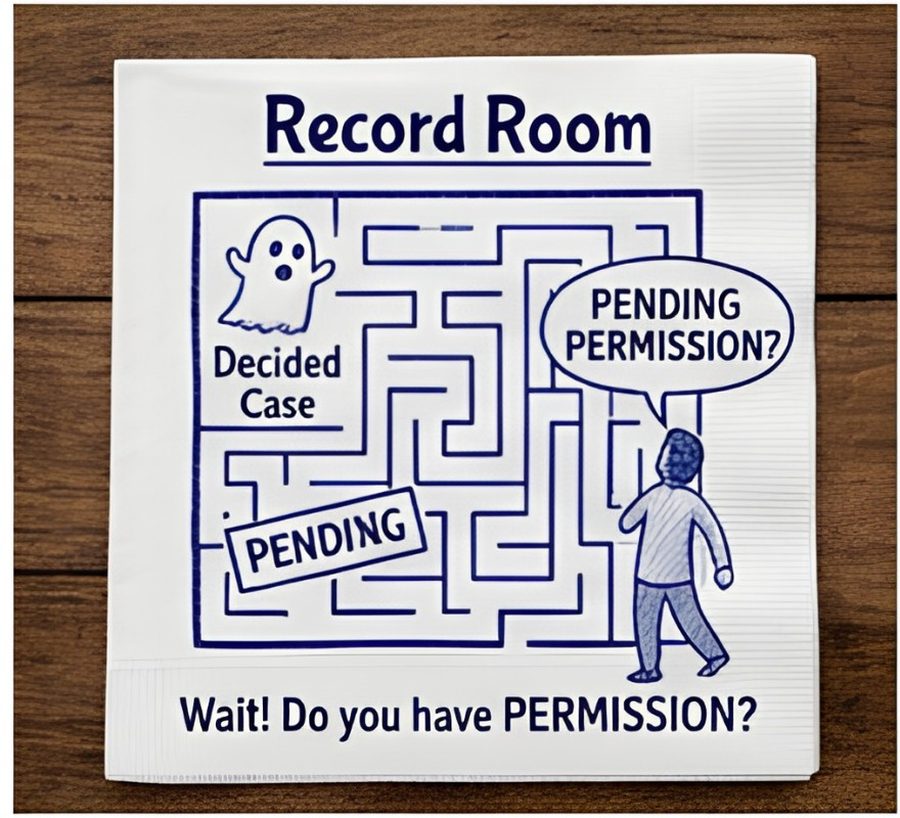
Where a live case actually lives between hearings
This is the backbone of day-to-day court functioning — the wing most young lawyers never step inside until they are forced to.
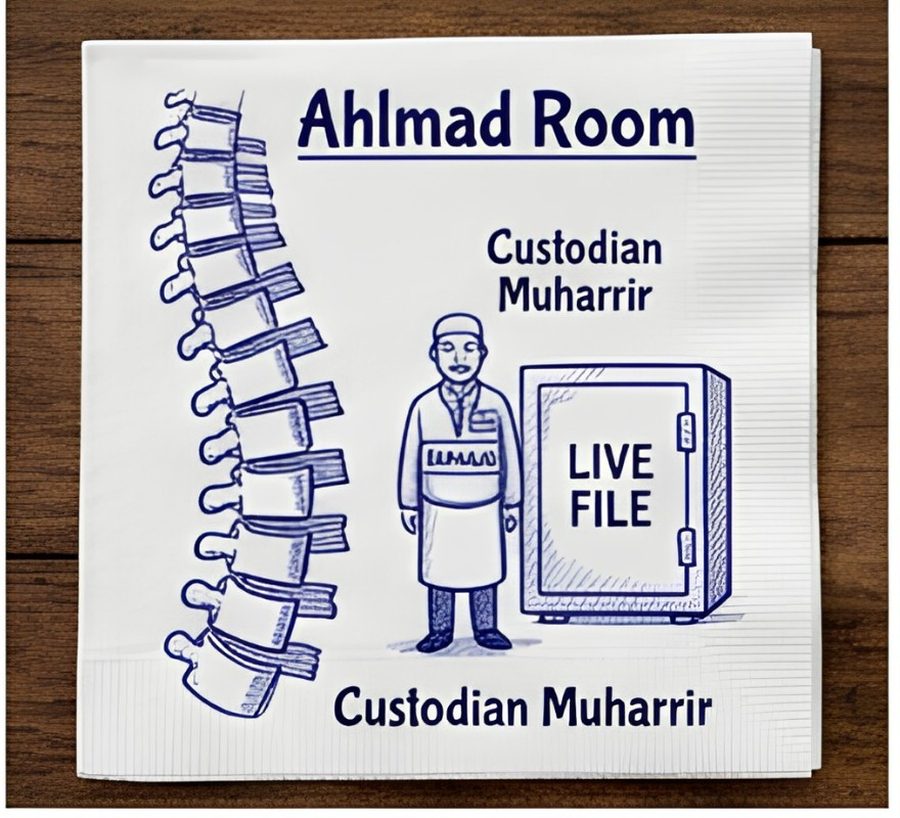
Ahlmad Room
The judicial files of pending cases are kept here, under the custody of the Ahlmad or Muharrir of a particular court. Every file listed before a Judge passes through the Ahlmad room before it reaches the courtroom. Inspection of pending records is generally facilitated through the Ahlmad, with the court’s permission. In simple terms: this is where live case files are maintained, updated, and produced before the court — the backbone of day-to-day functioning.
Nazarat Branch
One of the most important yet least understood administrative wings. It handles custody, receipt, disposal and destruction of confiscated case property, service of court processes, and daily logistics. Till 2019, Tis Hazari Court Complex ran a single centralised Nazarat Branch; after directions of the Hon’ble Supreme Court, it was decentralised into separate District Nazarat Branches across eleven districts for smoother handling. The branch also prepares calculation reports in land acquisition compensation matters and handles cheque deposits and counter receipts.

Process-Serving Establishment
In some complexes, such as Patiala House Courts, this functions as part of the Nazarat Branch. It carries out the actual service and execution of civil and criminal court processes — summons, notices, warrants, attachments, delivery of possession — under the Senior Subordinate Judge, with the Civil Nazir as its ministerial head. Only registered process servers may carry out this work, and detailed registers track accountability, staff conduct and allocation.
Cash Branch
Handles all cash receipts — challans, fines, fees — and their deposit in the government treasury or the Reserve Bank of India. Witnesses summoned by the court are paid transportation expenses (“diet money”), and this disbursement is made from the Cash Branch.
Where the money and the paperwork actually move
Mediation Centre
Understand how the mediation centre works — if a settlement is reached through mediation while your case is pending, you are entitled to a refund of the full court fee you paid when you initiated the litigation.

General Branch
Takes care of miscellaneous committees, appointment of oath commissioners and local commissioners, canteens and kiosks, lawyers’ chambers, and general administration of the court complex.
Administration Branch
One complex can have more than one Administration Branch for different districts sharing the same building. These branches handle court employees’ service records, postings, leave, and establishment matters.
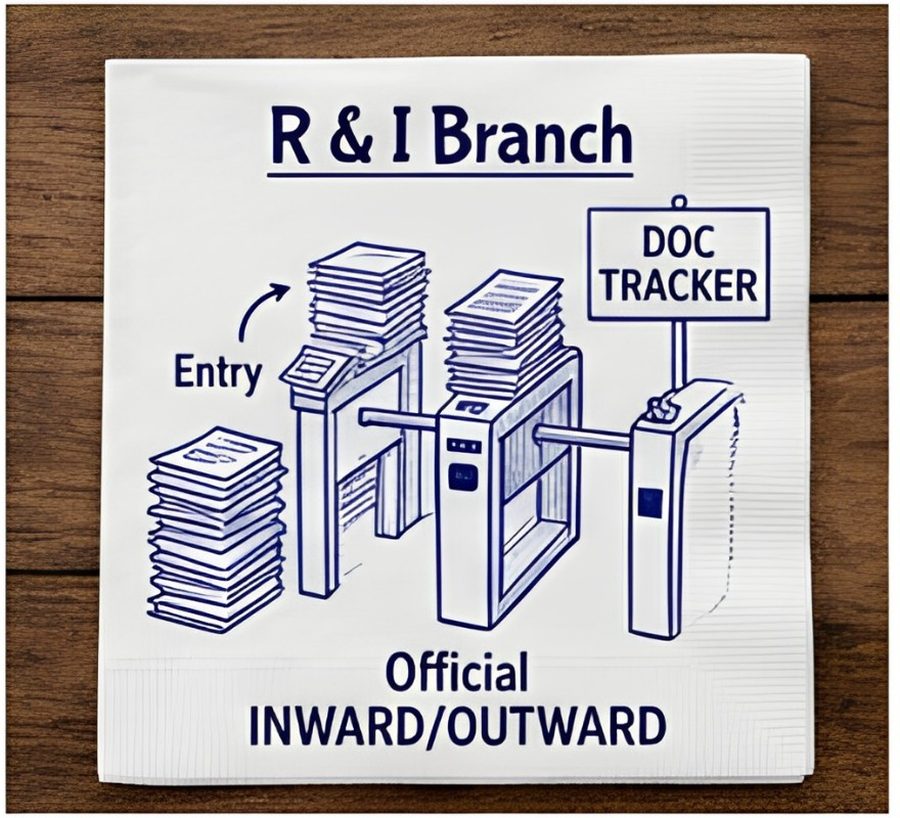
R & I Branch (Receipt & Issue)
Handles the official inward and outward movement of documents. Every letter, communication, application and correspondence entering the court is received here, and every official paper leaving the court is issued from here — the formal entry and exit point for court paperwork.
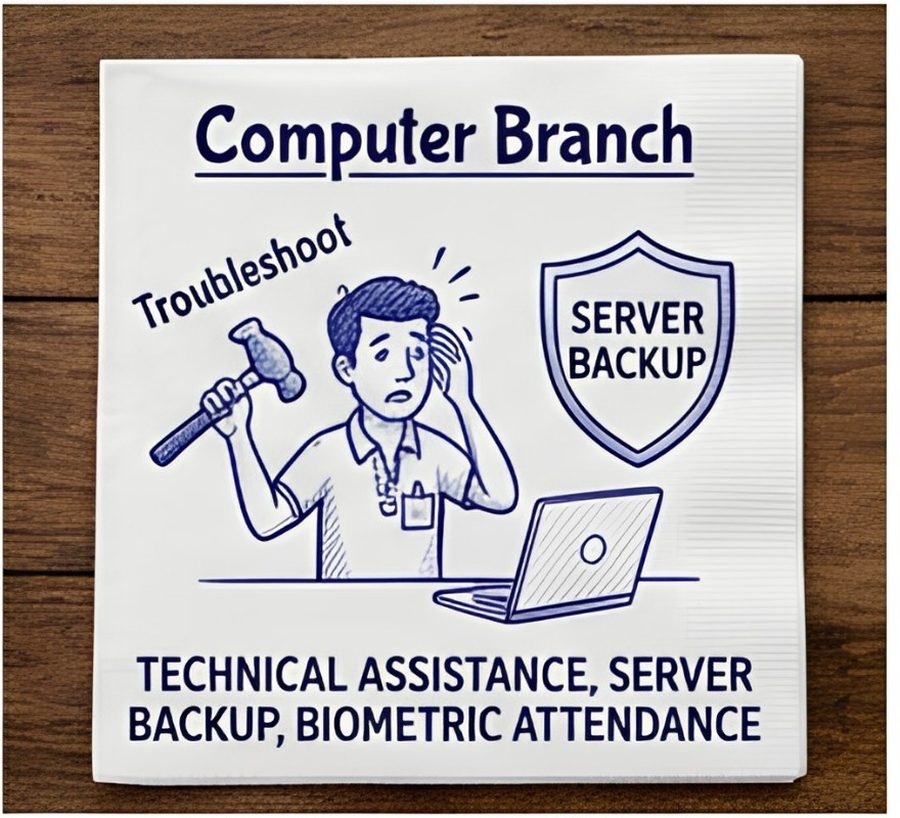
Computer Branch
Controls the computer facilities in every court, branch and residence of the Judicial Officers, and provides technical troubleshooting. It maintains the stock and record of computers and peripherals, the server and its backups, and the biometric attendance system for court employees.
Eight more offices worth finding on your first walk
Tap a card to see what each one actually does.
PIO / RTI Section
Tap to revealWhat it does
Handles RTI applications filed under the Act and the establishment-specific service conditions rules notified by the High Court.
Care Taking Branch
Tap to revealWhat it does
Supervises Group-D staff (safai karamcharis, farash, chowkidars) and the building’s cleanliness, plus meeting arrangements and PWD/AMC-related complaints.
Library
Tap to revealWhat it does
Most complexes run more than one — commonly a separate library for Judges and another for Advocates. Find both.
CMM Office
Tap to revealWhat it does
Receives and dispatches letters/orders between Metropolitan Magistrates, the High Court and Supreme Court; maintains leave records and handles transfer applications.
Vigilance
Tap to revealWhat it does
Headed by an Administrative Officer. If any court staff harasses you or demands a bribe, this is the office to approach.
Accounts Branch
Tap to revealWhat it does
Maintains pay bills, medical bills, service books, advances, GPF/CPF, LTC & TA and retirement benefits of staff — includes its own cash, fine and audit sections.
Video Conferencing
Tap to revealWhat it does
Enables VC between the court and jail authorities/inmates across states, and links to the High Court for remote hearings.
Legal Aid Office
Tap to revealWhat it does
Find out who qualifies for free legal aid, its timing, compensation schemes for victims, and — importantly — who the Remand Advocate is.
The rooms no one enjoys visiting, but should
Lock-Up Room (Hazat)
In Delhi courts, the lock-up is commonly called the “Court Lock-Up” or “Judicial Lock-Up” — in everyday practice, lawyers and staff simply call it the Hazat. It is the secure area where under-trial prisoners or accused persons are kept temporarily during production, hearings, or remand, under police or prison custody.

Treasury
Deals with receipt, custody, accounting and disbursement of court funds — fines, compensation, security amounts and other sums ordered by the court — ensuring payments are accounted for and released per judicial orders. In Delhi, treasury office hours run 9:30 a.m. to 6:00 p.m. (five days a week); deposits can be made between 10:00 a.m. and 1:00 p.m.

Apart from these, learn where the complex keeps its medical facilities, police post, bank, ATM, stamp vendors, typists, notary public and oath commissioners, book shops, stationery shops, photocopiers, e-stamp counter, post office, eating joints, and the public grievance, feedback and suggestions desk.
Tap each stop to see what actually happens there
Put the branches above in motion — this is roughly how one ordinary case file moves through its life in the building.
The plaint or petition is lodged at the filing counter within its 10:00 a.m.–1:30 p.m. window, scrutinised for defects, and assigned a case number.
The ministerial officers who actually run the building
Not judicial officers — the ministerial ones. Learn their designations, and every branch above starts making sense.
01
Attached to Senior Subordinate Judges & Small Causes Judges
A ministerial official who assists a particular judge in day-to-day administration — maintaining registers, managing papers, assisting in the preparation and movement of files, distinct from a reader, stenographer, or Ahlmad.
02
The immediate interface between Judge, staff and Bar
The reader calls out cases, places files before the Judge, notes down directions, coordinates with the Ahlmad and stenographer, and ensures orders are properly communicated for compliance.

03
Custody of disposed and old case files
Ensure records are properly indexed, stored and retrievable for appeals, execution or inspection. They do not deal with live proceedings — only with what remains after a case moves out of active hearing.
04
Official custodian of the pending court record
Including paid candidates and leave-reserve clerks, they keep custody of case files, write or type orders in English or the vernacular, maintain order sheets and registers, and ensure pleadings and documents are properly placed on the court file.

05
Take down dictation of orders and judgments
Their primary function is to take dictation of the Judge’s orders, judgments and proceedings and prepare the typed record.
06
Bridging English and the vernacular record
Appointed to translate judicial documents, evidence, pleadings and records from one language to another as the court requires.
07
Attached to the Copying Agency
Prepare certified and uncertified copies, transcribing orders, judgments and pleadings into copy applications and ensuring accuracy before certification. They do not deal with live proceedings or custody of originals.
08
Civil and criminal, at the district level
Attached exclusively to the District & Sessions Judge’s court, handling court funds, custody of case property, execution of warrants, and supervision of process-serving staff for both civil and criminal matters — including implementation of criminal orders.
09
Execution and financial work, civil side only
The Civil Nazir heads the Nazir branch in civil courts — court deposits, withdrawals, attachments, sales, custody of attached articles, and execution of warrants. The Naib-Nazir assists as a deputy; the Madad Naib-Nazir is the junior-most functionary, providing hands-on help in physical execution — delivery of possession, attachment, inventories, escorting seized articles.
10
Ground-level enforcement of court orders
Serve summons and notices, execute warrants, effect attachments, and deliver possession under the supervision of the court and the Nazir branch — purely physical execution, no clerical or record-keeping work.
11
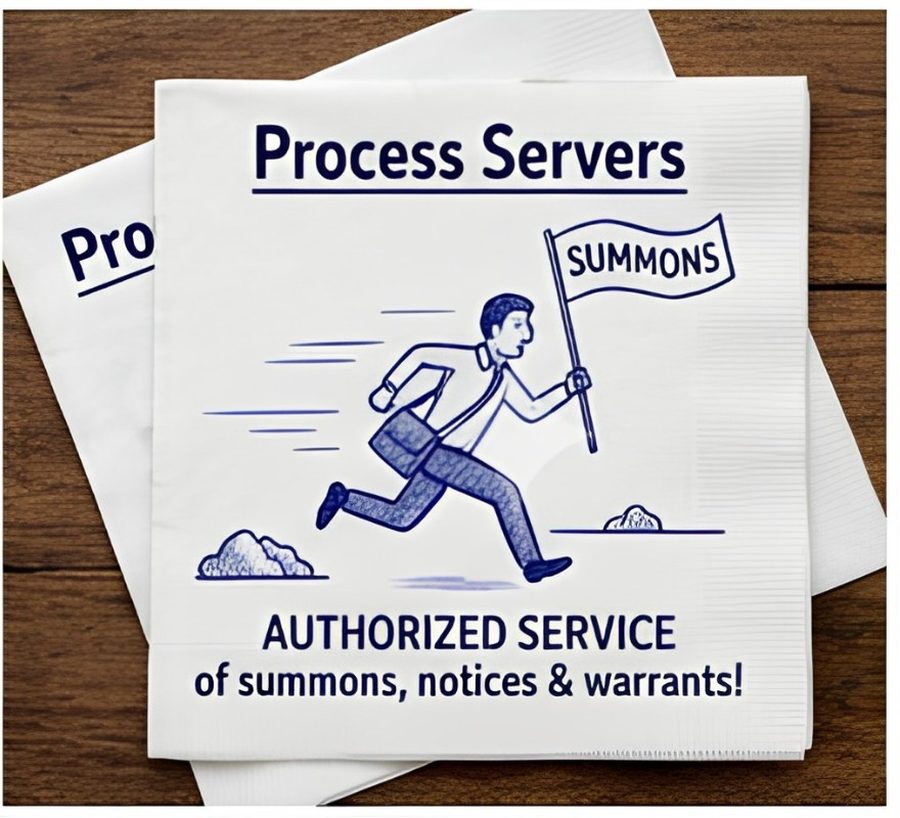
Serving summons, notices and warrants
Responsible for serving court processes on parties and witnesses in accordance with law, and submitting service reports that form the basis for further proceedings.
12
The quiet coordinator inside the courtroom
Helps in calling cases, moving files, coordinating between the Judge, reader and other staff, and ensuring parties, witnesses and officials are present when required.
Which door do you actually need?
Pick what you need, and see which branch to walk into first.
Tap one of the buttons above.
How to actually do this, starting this week
Carry a diary and a pen
Not your phone. A physical notebook where you write down every branch name, room number, and officer’s designation the moment you learn it.
Start at the Facilitation Centre
Ask the PRO/APRO to point you to the filing counter, the Ahlmad room of a court you’re appearing in, and the Nazarat Branch — three names most juniors never think to ask for.
Walk into the Ahlmad room of your own matter
Approach the Ahlmad or Muharrir with respect and only when they are free. Simply ask what happens to your file once the hearing ends.
Ask the Reader one question
“How does an order passed today actually reach the record?” The answer will teach you more than a week of case-law reading.
Visit the Record Room and Nazarat Branch once a month
Even with nothing pending there. Familiarity, not urgency, is what builds real confidence.
Note every officer’s name and rank
The next time you need something done quickly and lawfully, you will already know exactly whose door to knock on.
Four mistakes that keep juniors lost
Accepting “improve your basics” as a complete instruction. Basics, in a court, are physical places and named officers — not just bare acts and procedure.
Treating the Facilitation Centre and the filing counter as the same thing. One guides, the other files — and the timings differ too.
Only visiting the Ahlmad room when your own case is listed. Its real value is understood by watching it function on an ordinary day, with no urgency attached.
Being too impatient or too shy with ministerial staff. Approach every officer with respect and only when they are free — the same courtesy you would want from a senior.
Reading this will not take you very far — walking will
Just reading this article will not take you very far. You have to step into the court and visit these branches yourself. Only then will you truly understand their importance — this is how confidence in court practice is built, slowly and honestly. The same habit serves you whether you practise in the District Court, the High Court, or the Supreme Court. Every branch should feel familiar to you. Approach ministerial officers with respect and only when they are free; carry your diary and pen, walk into the branch, and simply ask what kind of work is done there. I promise, once you do this, the learning stays with you for life.
Book a ConsultationEstablished by a distinguished alumnus of IIT Kharagpur, Patra’s Law Chambers stands as a beacon of legal expertise in Kolkata & Delhi. Know more →

Kolkata Office
NICCO House, 6th Floor, 2 Hare Street
Kolkata-700001
Delhi Office
4455/5, First Floor, Gali Shahid Bhagat Singh
Paharganj, New Delhi-110055
Contact
[email protected]
+91 890 222 4444 / +91 7003 715 325
Common questions
It’s the room where the live, pending judicial files of a court are kept in the custody of the Ahlmad or Muharrir. Every file listed before the Judge passes through here first — it is the real, day-to-day backbone of the court.
The Felicitation (Facilitation) Centre is for guidance — case status, directions, general queries — staffed by the PRO/APRO. The filing counter is where documents are actually lodged, and runs on its own fixed timing.
Apply through the Copying Agency (Civil, Criminal, or Sessions, as applicable) — usually via the dedicated counters at the Facilitation Centre. Certified copies are generally supplied between 10:30 a.m.–1:00 p.m. and 2:00 p.m.–3:00 p.m., on payment of the prescribed fee.
Yes, but only the concerned litigant or their counsel, on a nominal fee, and usually with the court’s permission facilitated through the Ahlmad. A decided case, by contrast, is open to inspection by any member of the public through the Record Room.
The Cash Branch disburses diet money — the transportation expense paid to a witness summoned by the court.
It handles custody, receipt, disposal and destruction of confiscated case property, service of court processes, and day-to-day logistics — one of the most operationally important yet least understood wings of a district court.
Often, yes. In several South Indian states the equivalent senior ministerial officer is called a Sheristadar, while West Bengal’s subordinate courts use graded Bench Clerk (also called Peshkar) posts for much of the reader/clerk function. Always confirm the exact designation under the relevant High Court’s establishment rules.
Walk it. Reading alone builds no confidence — visiting each branch, speaking to the officers, and asking what work they do is what actually builds a lawyer’s understanding of how a court functions.