SIR Tribunal in West Bengal: What the Supreme Court Directed
On 10 March 2026 the Supreme Court directed the Election Commission to form appellate tribunals of former High Court judges for appeals against SIR rejections in West Bengal. This page explains who hears what, who is separate from whom, and what a voter can do next.
Supreme Court directions on the SIR appellate tribunals
In the 2025-26 Special Intensive Revision (SIR) of West Bengal’s electoral rolls, serving judicial officers have been deciding the claims and objections that were left unresolved. In its hearing of 10 March 2026, the Supreme Court of India directed that appeals against those decisions should go to separate tribunals headed by former Chief Justices and former High Court judges, and not to executive officers. The Election Commission of India (ECI) is to notify the tribunals and bear their costs. You can read the Commission’s own notices on the ECI website.
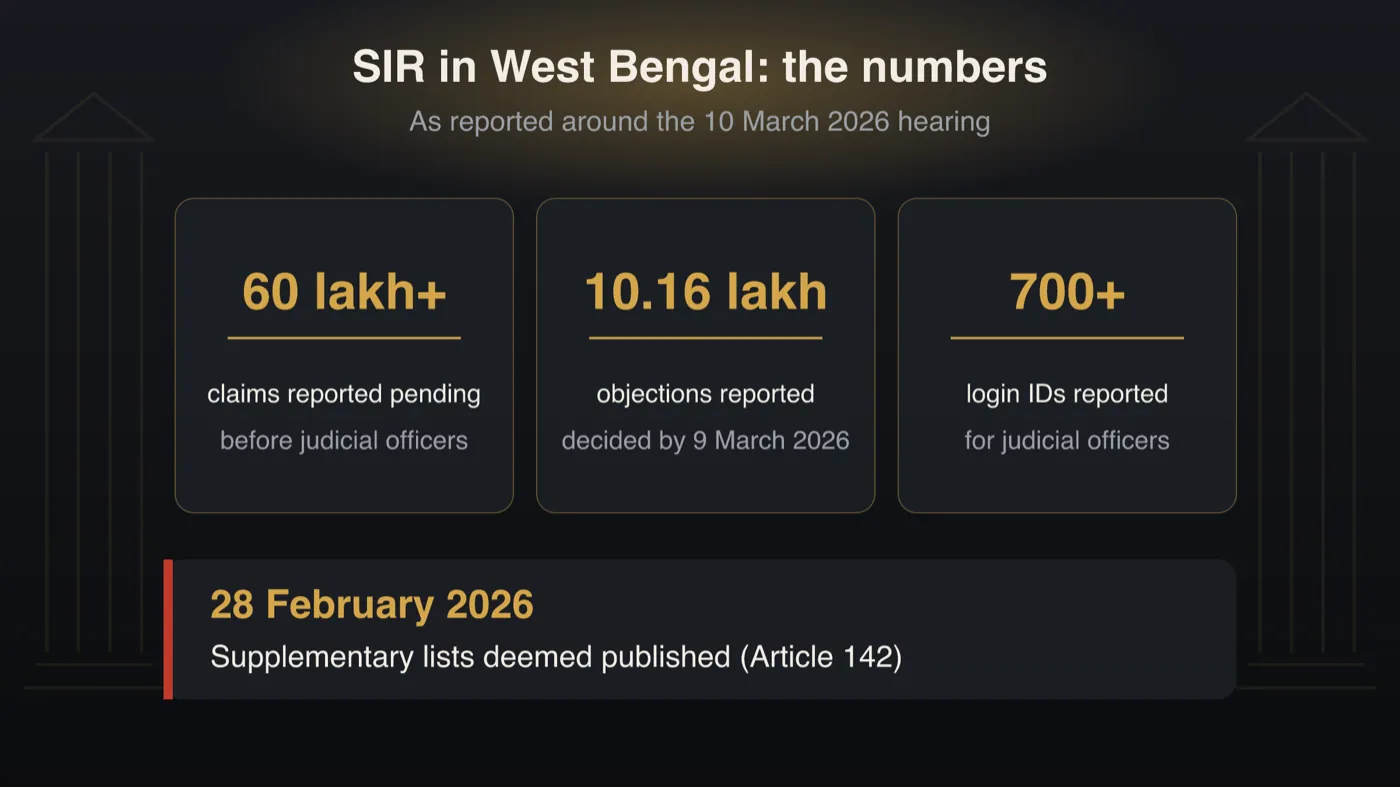
The Court used its power under Article 142 of the Constitution to deem supplementary lists to have been published on 28 February 2026, so that voters cleared at either stage can vote. Those who are rejected must be told the reasons promptly, so that an appeal is not delayed. If your name was left out and you want to understand the appeal route, see our page on the SIR tribunal appeal advocate in West Bengal and, for the wider constitutional remedies, the Calcutta High Court advocate consultation. More about the firm is here. The dates and figures below are as reported; please verify against the order itself.
Who decides first, and who hears the appeal
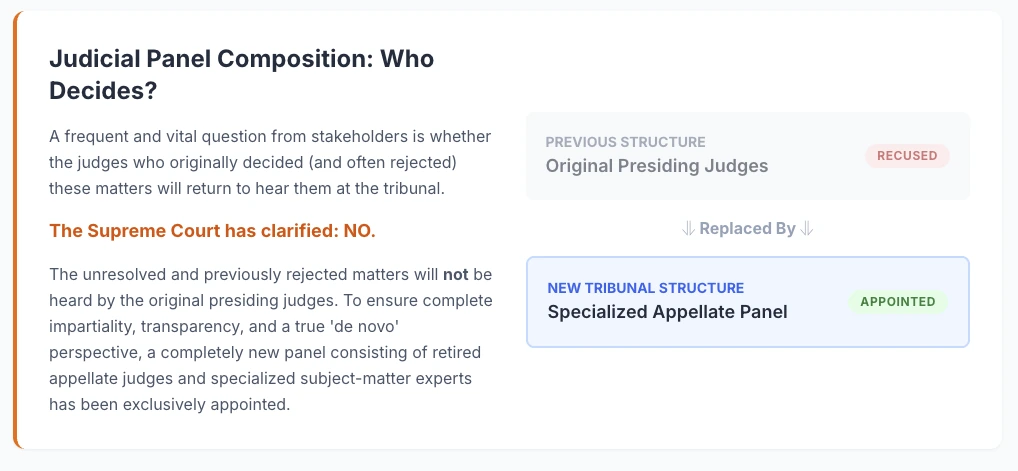
The Supreme Court kept the first decision-makers and the appellate judges apart.
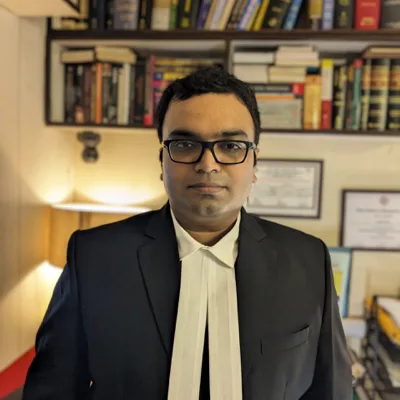
Short explainers from Adv. Sudip Patra
More short explainers on our YouTube channel: Patra’s Law Chambers on YouTube ↗
Which stage is your voter-list matter at?
Pick the paper or situation closest to yours. This is general information based on the Supreme Court’s 10 March 2026 directions, not advice on your own case.
Choose one of the options above.
From the first scrutiny to the appellate tribunal
This is how the process runs under the Supreme Court’s directions of 10 March 2026. Verify the current notifications before you act.
A voter claims inclusion (Form 6) or an objection leads to deletion (Form 7), or the roll is corrected on the officer’s own inquiry. The papers you submit here shape everything that follows.
Serving judicial officers from West Bengal, with officers from Odisha and Jharkhand, act as EROs/AEROs. They have to pass a speaking order giving reasons for accepting or rejecting the claim.
The Court directed that the reasons for exclusion be communicated at once to the affected person. This lets you decide on an appeal without delay.
Former Chief Justices and former High Court judges, nominated by the Chief Justice of the Calcutta High Court, hear the appeals. Read about SIR tribunal appeals in West Bengal and check the notified time limit.
Voters cleared by the judicial officers or by the tribunal enter supplementary lists. Under Article 142 these lists are deemed published on 28 February 2026.
If the tribunal’s order is wrong in law or in procedure, a writ may be considered. A Supreme Court advocate consultation can help you weigh the forum.
Three points people mix up, tap a card
No. Serving District and Civil Judges decide the first-instance matters. The appeals go to a separate tribunal of former Chief Justices and former High Court judges.
The Election Commission of India is to notify the tribunals and bear all related expenses, including the honorarium of the retired judges. The Chief Justice of the Calcutta High Court nominates the members and fixes the number of benches.
Not without the prior approval of the Chief Justice of the Calcutta High Court, as the Court directed. This is meant to stop new hurdles from disrupting the exercise.
What the tribunal means for voters
Retired judges, separate from the first stage
The tribunals are to be headed by former Chief Justices and former High Court judges, with the Chief Justice of the Calcutta High Court nominating members and deciding how many benches are needed. The ECI notifies them and bears the expenses.
Appeals against rejection and exclusion
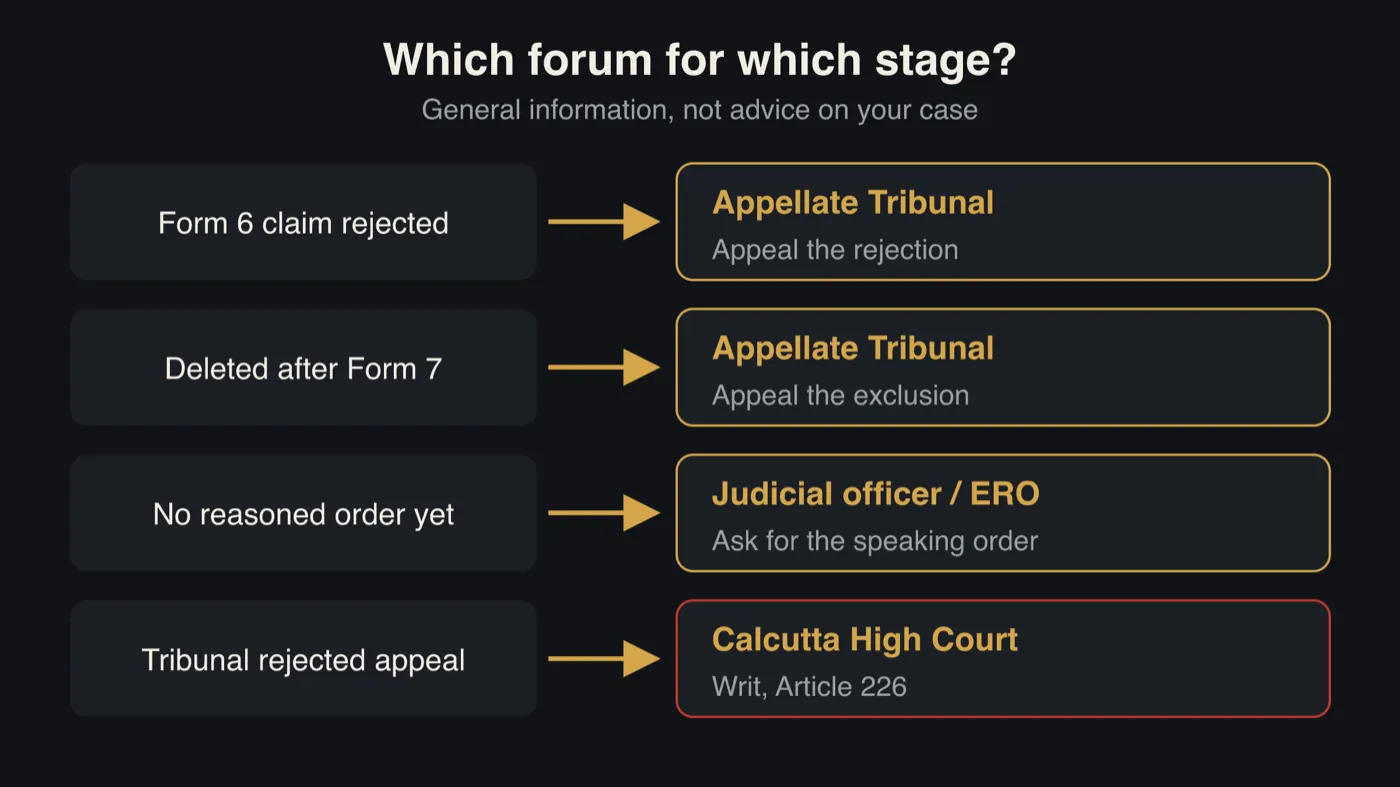
As reported, the tribunal hears appeals where a claim for inclusion (Form 6) was rejected, or where a voter was deleted after an objection (Form 7) or an inquiry on the Commission’s own motion. Check the order for the exact scope.
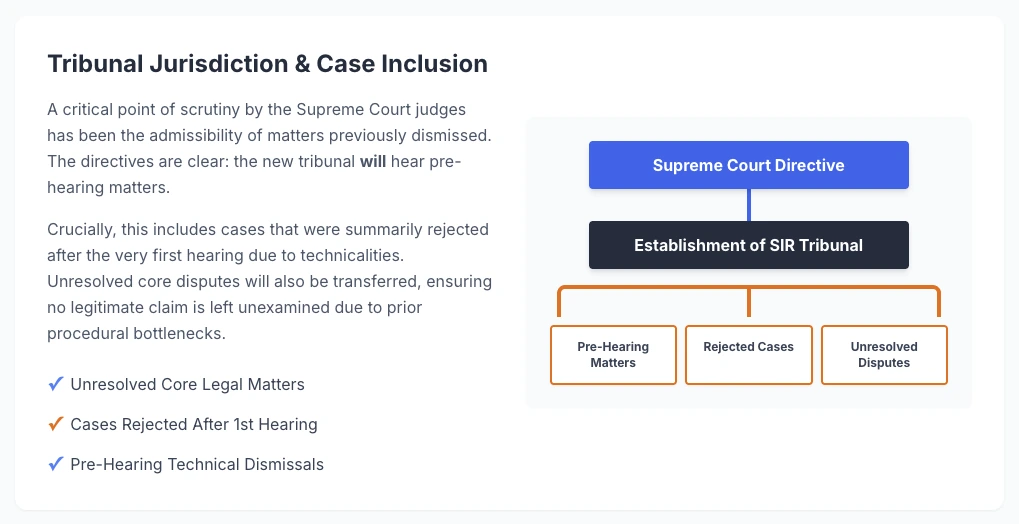
First-stage and appellate judges differ
Serving District and Civil Judges, including officers from Odisha and Jharkhand, decide the first instance. The appellate tribunal is a different group, so those who decided the facts do not hear the appeal.
Supplementary lists deemed published
Supplementary lists arising from adjudication are deemed published on 28 February 2026. Voters cleared by the officers or by the tribunal are legally recognised and eligible to vote in upcoming elections.
Other directions on 10 March 2026
- Create new login IDs for judicial officers promptly, particularly in sensitive districts.
- Resolve technical problems on the online verification portal.
- No new mandatory requirements without prior approval of the Chief Justice of the Calcutta High Court.
- Communicate reasons for exclusion (the speaking order) immediately to affected persons.
- Notify the tribunals and bear their expenses, including the honorarium of retired judges.
Supreme Court rulings that shape SIR appeals and the appellate tribunal
The West Bengal SIR tribunals work inside a settled body of Supreme Court law on electoral rolls, reasoned orders and tribunal review. These are the decisions a voter’s appeal usually rests on.
2026
SIR upheld, with procedural fairness preserved
On 27 May 2026 a Bench of Chief Justice Surya Kant and Justice Joymalya Bagchi upheld the Election Commission’s power to conduct the Special Intensive Revision. The Court held that the presumption arising from an existing roll entry can be rebutted. Fairness in each person’s case still matters, so a voter facing exclusion should press for notice, a hearing and a reasoned decision.
1995
No deletion without notice and hearing
The Supreme Court held that a person already on the electoral roll cannot be struck off as a suspected non-citizen without a notice that discloses the material against them and a fair chance to answer it. Their earlier enrolment also carries probative value. The 2026 SIR judgment read this case as a rule of procedural fairness in individual proceedings, not as a bar on verification.
1977
Orders stand or fall on their own reasons
A five-judge Bench held that when a statutory authority passes an order on stated grounds, its validity must be judged by those reasons alone. They cannot be filled in later by fresh reasons in an affidavit. In an SIR appeal, the tribunal should test the exclusion order on what it actually says.
2010
Quasi-judicial authorities must record reasons
The Supreme Court held that a quasi-judicial authority must record reasons for its conclusions, and that reasons are as necessary as natural justice. They also make review by a superior forum possible. This supports the Supreme Court’s direction that the reasons for exclusion in the SIR be communicated at once, so that the voter can appeal.
1997
Tribunal decisions remain open to High Court review
A seven-judge Bench held that the High Courts’ power of judicial review under Articles 226 and 227 is part of the basic structure. Tribunals add to the High Courts but cannot replace them. A voter who believes the appellate tribunal decided the appeal wrongly may consider a writ petition before the Calcutta High Court, depending on the facts.
How an SIR exclusion appeal moves, step by step
Get the reasoned order
The Supreme Court directed that the reasons for exclusion, the speaking order, be communicated to the affected person at once. Collect the order, the claim or objection form (Form 6 or Form 7) and every document you filed. Check your status with the Electoral Registration Officer or the CEO West Bengal portal.
File the appeal before the Appellate Tribunal
Appeals against the decisions of the judicial officers go to the Appellate Tribunals made up of former Chief Justices and former Judges of High Courts. The Chief Justice of the Calcutta High Court decides the benches. Check the current filing method and time limit in the Election Commission’s notification before you file.
Add documents, verified for genuineness
On 1 April 2026 the Supreme Court clarified that the Appellate Tribunal may accept fresh documents only after verifying that they are genuine. Bring originals, certified copies and any official record that can be cross-checked, such as an earlier roll entry, a school record or a land record.
Ask for an early hearing if it is urgent
The Supreme Court allowed the Appellate Tribunals to give an out-of-turn hearing where real urgency is shown. Explain the urgency in writing, with supporting papers, for example an approaching poll date or a candidacy.
Watch the cut-off before polling
Reported orders say voters cleared by the Appellate Tribunals up to two days before polling may vote, because supplementary lists are deemed published with the main roll under Article 142. Check the exact dates for your constituency, because this cut-off decides whether you can vote.
Writ petition if the tribunal fails you
If the tribunal rejects the appeal without proper reasons or ignores material on record, a writ petition under Article 226 before the Calcutta High Court may be considered. Get advice from a Calcutta High Court advocate on whether your facts support it.
The numbers reported in the SIR hearings
Figures as reported in the media on the hearings; verify against the official orders.
Common mistakes in SIR tribunal appeals
Appealing without the speaking order An appeal without the written reasons cannot answer the actual ground of rejection. Ask for the order first, and test it on what it says, as Mohinder Singh Gill requires.
Filing unverifiable or doubtful documents The tribunal may accept fresh documents only after checking that they are genuine. A doubtful paper can weaken an otherwise sound appeal, so file records that can be cross-checked with the issuing office.
Waiting too long Polling cut-offs and the deadlines in the notification apply. A delayed appeal may be decided after the list for the poll is frozen. If time is short, ask for an early hearing with reasons.
Going straight to the Supreme Court The Supreme Court has sent individual voters, including a candidate whose name was deleted, back to the Appellate Tribunal. Use the tribunal first, then the High Court if needed. For help with the appeal, see our SIR Tribunal appeal service or a Supreme Court advocate consultation for questions about the Supreme Court’s own directions.
If your SIR claim was rejected
A rejection order, the reasons given and the date you received them decide how and when an appeal can be filed. Bring the notice, the Form 6 or Form 7 papers and your identity and address documents, and we will go through the order and the available remedies with you. Each case turns on its own facts, and the tribunal or court decides the outcome. We cannot promise any result.
Book a ConsultationEstablished by a distinguished alumnus of IIT Kharagpur, Patra’s Law Chambers stands as a beacon of legal expertise in Kolkata & Delhi. Know more →
Kolkata Office
NICCO House, 6th Floor, 2 Hare Street
Kolkata-700001 (Near Calcutta High Court)
Delhi Office
4455/5, First Floor, Gali Shahid Bhagat Singh
Main Bazar Road, Paharganj, New Delhi-110055
Contact
[email protected]
+91 890 222 4444 / +91 7003 715 325
How a rejected claim reaches the tribunal
Follow the path of a case from the first hearing to the supplementary list.
Claim or objection decided
A serving judicial officer passes a speaking order.
Reasons reach the voter
The Court directed immediate communication of reasons for exclusion.
Appeal to the tribunal
Former High Court judges review the order.
Tribunal decision
The appeal is allowed or rejected with reasons.
Supplementary list
Cleared voters are deemed published as on 28 February 2026.
Frequently asked questions on the SIR Special Appellate Tribunals
In the West Bengal SIR hearing, the Court directed that appellate tribunals be formed to hear appeals against decisions of the judicial officers. It used Article 142 and directed ECI to notify the tribunals and bear their costs. Please read the official order for the exact wording.
Former Chief Justices and former High Court judges, mainly from the Calcutta High Court or neighbouring states. The Chief Justice of the Calcutta High Court nominates the members and decides how many benches are needed.
Persons whose Form 6 claim for inclusion was rejected, and existing voters deleted after a Form 7 objection or a suo motu inquiry. The tribunal is also to deal with ancillary issues arising from such rejections.
No. The serving District and Civil Judges deciding claims in the districts are a different group from the retired judges on the tribunal. This separation lets an independent senior body review the first-instance orders.
A speaking order records the reasons for accepting or rejecting a claim. The Court said EROs act quasi-judicially and must give reasons, and that the reasons for exclusion must be communicated immediately so that an appeal can be filed without delay.
This page does not state a fixed period, and one should not be guessed. Check the tribunal notification issued by ECI and the date on your order. If time is short, get it verified promptly. You can also see our SIR tribunal appeal page.
Using Article 142, the Court directed that supplementary lists generated from the judicial adjudication are deemed published on 28 February 2026. Voters cleared by the judicial officers or by the tribunal are therefore recognised as eligible voters.
A writ under Article 226 may be considered where the order has a legal or procedural flaw, but each case depends on its facts. Keep the order and all papers ready, and see our Calcutta High Court advocate consultation page.