Cheque Bounce Lawyer in Kolkata for Section 138 Cases
A cheque bounce lawyer in Kolkata acts for the payee, who must send a demand notice within 30 days of the bank’s return memo, and for the drawer, who has 15 days to pay or reply. Under Section 138 NI Act, dishonour of a cheque for a legal debt can mean up to two years’ imprisonment, a fine, or both.
A bounced cheque is a criminal case, and every stage runs on a deadline
If you are looking for a cheque bounce lawyer in Kolkata, the first question is which side you are on. A payee needs a precise demand notice and a complaint filed in the right court within time. A drawer needs a considered reply, an appearance on the first date and a defence built on documents. Advocate Sudip Patra appears for both sides at Bankshall Court, Alipore, Sealdah, Bidhannagar and Barasat.
Dishonour of a cheque for insufficient funds, “exceeds arrangement”, “payment stopped” or a closed account is an offence under Section 138 of the Negotiable Instruments Act, 1881. A complainant can lose the case by missing the 30-day or one-month window. An accused can lose it by ignoring a notice or a summons. Where the drawer is a company, directors face Section 141, and some matters later move to the Calcutta High Court for revision or quashing. Read our guide to cheque bounce cases in India for the full law.
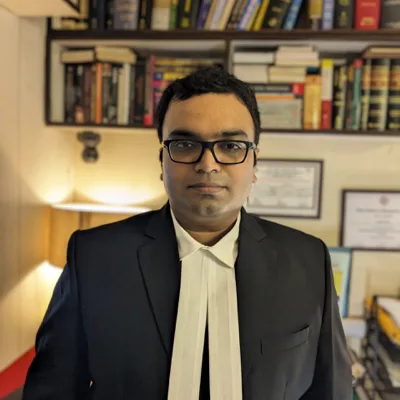
Advocate Sudip Patra: chamber, courts and Bar enrolment
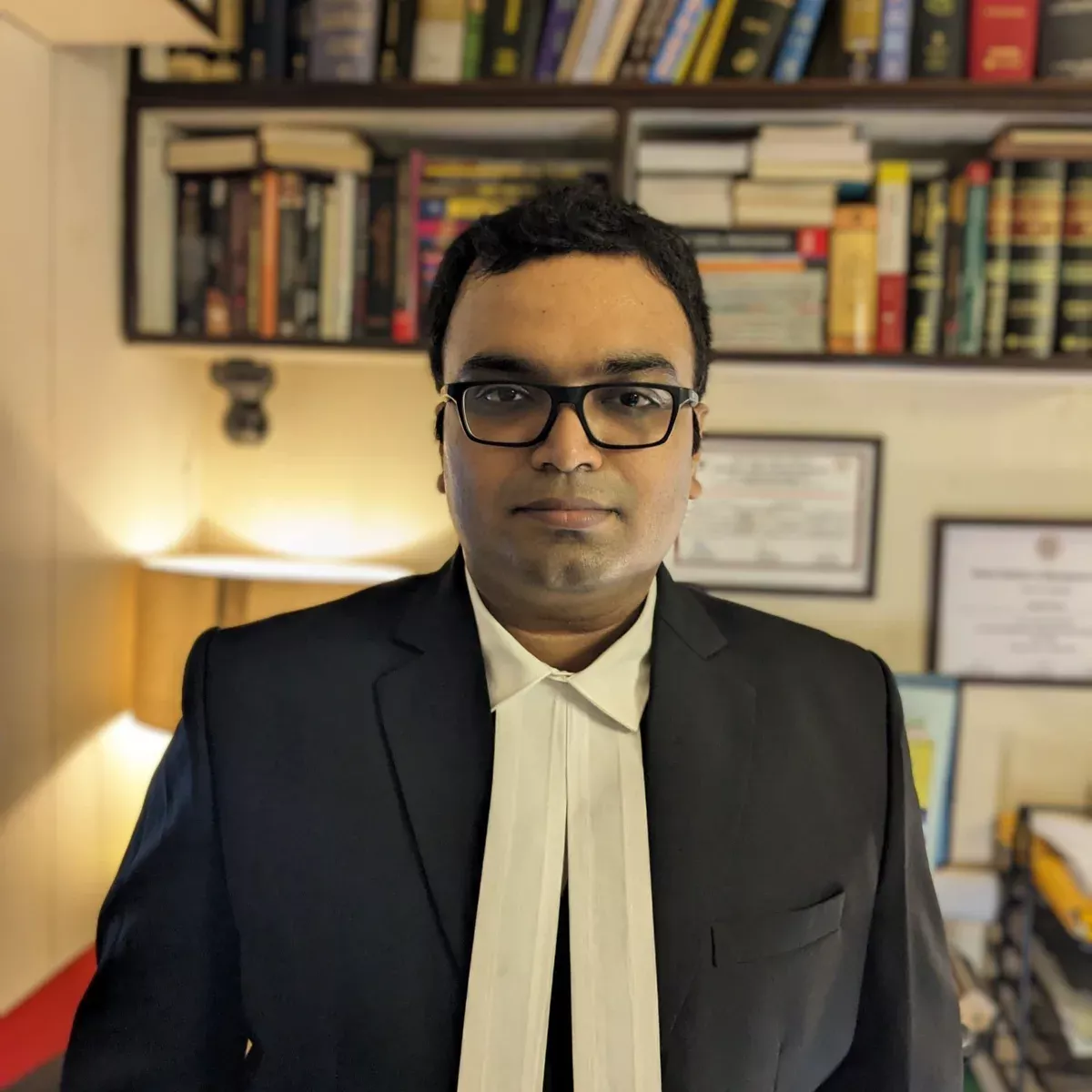
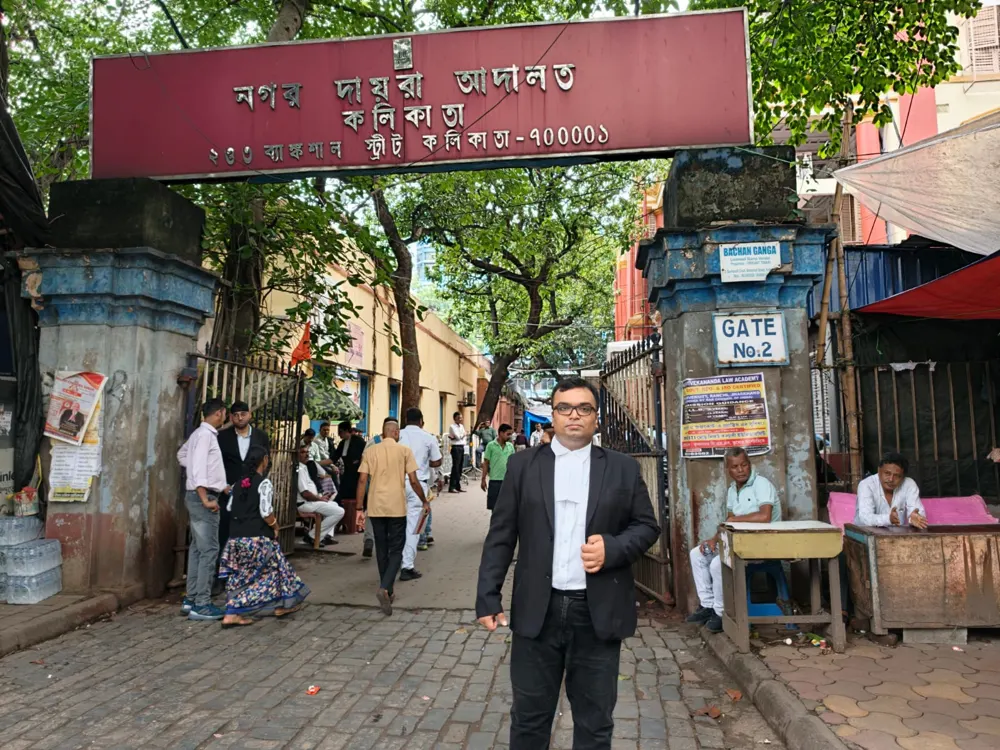
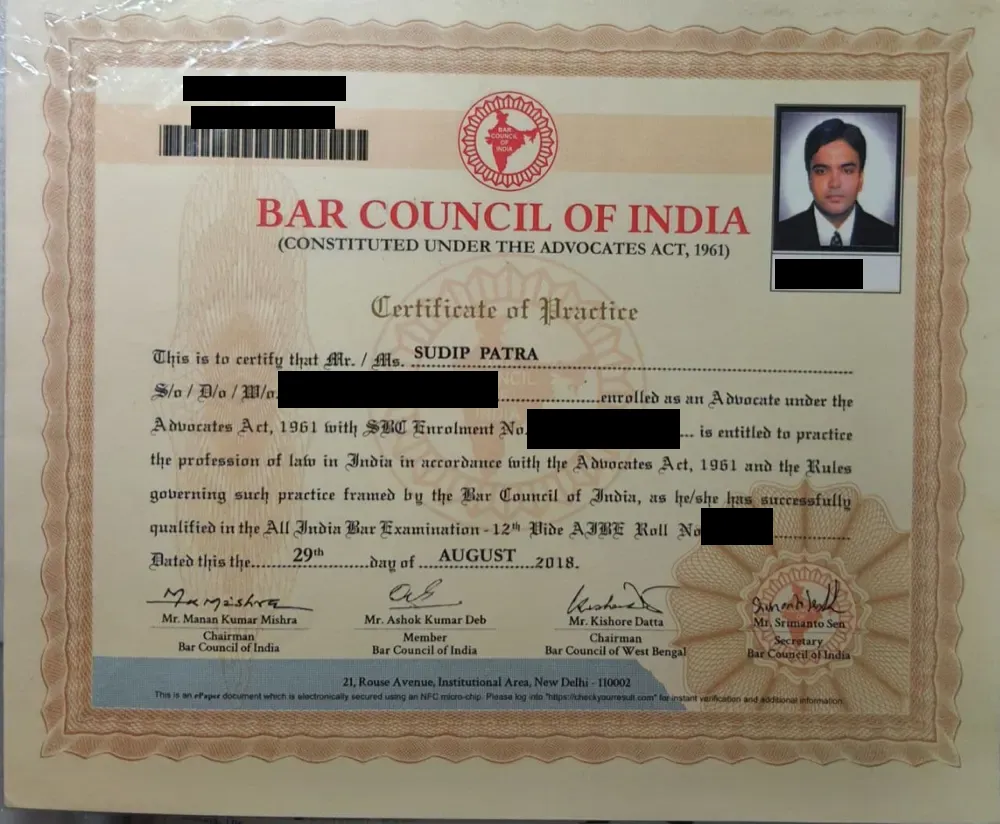
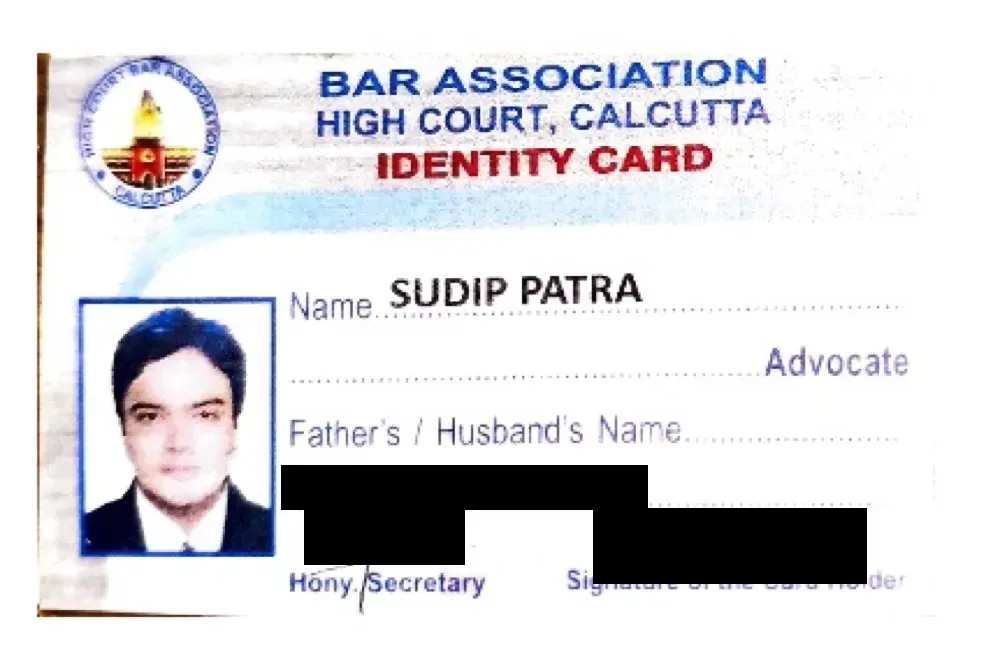
The chamber at Nicco House, 2 Hare Street; Advocate Sudip Patra at Gate No. 2 of the City Sessions Court, Calcutta; his Certificate of Practice from the Bar Council of India; and his identity card from the Bar Association, High Court, Calcutta. Personal details on the certificate and card are blacked out.
Short explainers from Adv. Sudip Patra
What is the latest paper or event in your cheque bounce matter?
Pick the situation closest to yours to see the usual forum and next step. This is general information, not legal advice, and your own papers may change the picture.
Choose one of the options above.
From the returned cheque to judgment: the usual road
Each stage has its own clock. Tap through them to see what can still be done where you are.
The bank issues a return memo stating the reason, such as funds insufficient, exceeds arrangement, payment stopped or account closed. Keep the original cheque and memo, because the whole case rests on them.
The payee must demand the cheque amount in writing within 30 days of receiving the bank’s information. A defective notice is a common reason complaints fail. A criminal defence lawyer can check the notice from either side.
Payment within 15 days of receiving the notice means no offence is made out. If the debt is disputed, this is the time to reply. A drawer who fears arrest in a related matter may also read about anticipatory bail.
The complaint goes to the Magistrate where the payee’s bank branch is situated. After Sanjabij Tari (2025), a Section 223 BNSS pre-cognizance notice is not required in these cases; see our note on pre-cognizance notices.
The accused appears, furnishes bail and is asked about the cheque, signature and liability. If the plea is not guilty, the court may direct interim compensation of up to 20% under Section 143A, payable within 60 days.
Evidence is led on affidavit, followed by cross-examination and judgment. Appeals lie to the Sessions Court, and quashing or revision to the Calcutta High Court. The cheque amount may also be recovered separately through DRT or NCLT routes where those apply.
Three things people get wrong about cheque bounce cases. Tap a card
Dishonour under Section 138 of the NI Act is a criminal offence, punishable with up to two years’ imprisonment, a fine up to twice the cheque amount, or both. It is compoundable, so many cases end in settlement.
The complaint is filed where the payee’s bank branch is situated, so borrowers across India can be summoned to Bankshall Court. You need not travel for every date, but ignoring the summons risks a warrant.
Section 139 presumes the cheque was issued for a legally enforceable debt, but the presumption can be rebutted. Whether a security cheque helps depends on documents, the notice and cross-examination.
Cheque bounce work beyond the first notice
Complaints and demand notices
Drafting the demand notice, checking the return memo and jurisdiction, and filing the complaint under Sections 138 and 142 with evidence on affidavit and, where suitable, an application for interim compensation under Section 143A.
Accused persons and summons
Reply to the notice, appearance and bail, exemption from personal attendance and warrant recall. Where arrest is feared in a connected matter, see our anticipatory bail advocate page and our criminal defence practice.
NCLT, DRT and civil recovery
A cheque case often runs alongside other remedies. Unpaid operational debts may call for an NCLT application, and bank dues for proceedings before the DRT. We coordinate them so positions stay consistent.
Revision and quashing
Where a complaint is time-barred, the notice is defective, the parties have settled or a director is named without Section 141 averments, quashing under Section 528 BNSS may be sought. See Calcutta High Court consultation.
Courts by area
- Bankshall Court: central Kolkata branches, banks and NBFCs
- Alipore: South 24 Parganas judgeship, with Sessions appeals
- Sealdah: ACJM court under the South 24 Parganas judgeship
- Bidhannagar: Salt Lake, New Town and Rajarhat branches
- Barasat: North 24 Parganas district headquarters
- Court is fixed by the payee’s bank branch under Section 142(2)
Supreme Court rulings on Section 138 NI Act that shape every cheque bounce case
These judgments decide how a cheque bounce case in Kolkata is filed, defended, tried and settled. Each one is listed under its reported citation so you can check it yourself.
2025
Faster summons, cheaper early settlement
The Supreme Court allowed summons to be served electronically and held that no Section 223 BNSS pre-cognizance hearing is needed in Section 138 complaints (our note on pre-cognizance notices). It revised compounding costs to nil before defence evidence, 5% before judgment, 7.5% in appeal or revision and 10% before the Supreme Court. It also held that a cash loan of Rs. 20,000 or more remains a legally enforceable debt even though it breaches Section 269SS of the Income Tax Act.
2010
The presumption covers the debt itself
A three-judge bench held that the presumption under Section 139 includes the existence of a legally enforceable debt or liability. The presumption can be rebutted. The accused does not have to prove innocence beyond doubt but must raise a probable defence on a preponderance of probabilities, using documents, cross-examination or their own evidence. Most cheque bounce defences start from this test.
2016
The payee's bank branch decides the court
After the 2015 amendment, the Supreme Court held that Section 142(2)(a) places jurisdiction in the court where the cheque is delivered for collection, which is the payee’s bank branch. Under Section 142A the amendment applies to pending cases too. This is why borrowers living anywhere in India are summoned to Kolkata when the lender’s account is held at a branch here.
2005
Directors need specific in-charge averments
A three-judge bench held that the complaint must specifically state that the director was in charge of, and responsible for, the conduct of the company’s business when the offence was committed. Being described as a director is not enough. A director named without this averment can seek quashing before the Calcutta High Court.
2019
A 20% deposit is the rule in appeal
The Court read Section 148 as ordinarily requiring a convicted appellant to deposit at least 20% of the fine or compensation awarded. It applied this even to complaints filed before the 2018 amendment. Later Supreme Court rulings allow an exception where the appellate court records reasons, for example where the deposit would in effect take away the right of appeal.
2021
Magistrates must give reasons to leave summary trial
The Supreme Court took up the backlog on its own motion after finding 35.16 lakh Section 138 cases pending at the end of 2019. A five-judge bench directed that Magistrates must record reasons before converting a summary trial into a summons trial, and set up a committee headed by Justice R.C. Chavan. High Courts, including Calcutta, issued practice directions to put the order into effect.
Cheque bounce case procedure under Section 138 NI Act
Cheque presented and returned unpaid
The cheque must be presented within its validity period, normally three months from its date. When the bank returns it for insufficient funds, exceeds arrangement, payment stopped or account closed, keep the original cheque and the return memo safe. Every later step depends on these two documents.
Demand notice within 30 days
Under proviso (b) to Section 138, the payee must send a written demand for the cheque amount within 30 days of receiving the bank’s information about the dishonour. Check the amount, the drawer’s name and every known address carefully. A defective notice is a common reason complaints fail.
The drawer's 15-day payment window
Under proviso (c), the drawer has 15 days from receiving the notice to pay the cheque amount. If payment is made within this time, no offence is committed. A drawer who disputes the debt should send a reasoned reply in this window so the defence is on record.
Complaint within one month in the right court
Under Section 142(1)(b), the complaint must be filed within one month of the cause of action, which arises when the 15 days end. Under Section 142(2) it is filed where the payee’s bank branch is located, for central Kolkata usually the Metropolitan Magistrate Court at Bankshall Street.
Summons, appearance and bail
The Magistrate takes cognizance and issues summons, which can now be served electronically. The offence is bailable, so bail is granted on appearance, and the accused can ask to be excused from attending in person. A planned criminal defence from the first hearing keeps every option open.
Trial, judgment and appeal
The case is tried summarily. The court may order interim compensation of up to 20% under Section 143A, and the complainant’s evidence can be given on affidavit. After judgment, an appeal lies to the Sessions Court, which may require a Section 148 deposit. Revision or quashing lies to the Calcutta High Court.
Interim compensation (Section 143A) and maximum fine (Section 138), NI Act
Mistakes that lose cheque bounce cases in Kolkata
Sending the demand notice late or for the wrong amount A notice sent after 30 days, or one that demands more than the cheque amount without a clear breakdown, gives the accused a threshold defence. Count the 30 days from the date you received the bank’s information, and check the figures before sending.
Ignoring the summons from Bankshall Court If the accused does not appear, the court issues a bailable warrant and then a non-bailable warrant, which can be executed anywhere in India. Appearing early through a lawyer, with bail and an exemption application, costs far less than recalling a warrant later.
Overlooking a parallel cheating FIR Some complainants also lodge a police complaint for cheating under Section 318 BNS on the same transaction. Unlike Section 138, that offence can lead to arrest, so the accused may need to apply for anticipatory bail in good time.
Relying only on the cheque case to recover the money Section 138 is a criminal prosecution, and recovery comes through the fine, compensation or a settlement. For an unpaid operational debt owed by a company, insolvency proceedings before the NCLT may be worth considering. Banks and financial institutions can also pursue recovery before the DRT.
Received a bounced cheque, a notice or a summons?
Send the cheque, the bank return memo, the notice and any summons on WhatsApp to +91 890 222 4444. The chamber will tell you which stage your case is at, what deadlines apply and which court has jurisdiction. The first consultation is free. Outcomes depend on the facts and documents of each case, and nothing here is a promise of result.
Book a ConsultationEstablished by a distinguished alumnus of IIT Kharagpur, Patra’s Law Chambers stands as a beacon of legal expertise in Kolkata & Delhi. Know more →
Kolkata Office
NICCO House, 6th Floor, 2 Hare Street
Kolkata-700001 (Near Calcutta High Court)
Delhi Office
4455/5, First Floor, Gali Shahid Bhagat Singh
Main Bazar Road, Paharganj, New Delhi-110055
Contact
[email protected]
+91 890 222 4444 / +91 7003 715 325
Frequently asked questions about cheque bounce cases in Kolkata
Under Section 138 of the Negotiable Instruments Act, 1881, the punishment is imprisonment up to two years, a fine up to twice the cheque amount, or both. The offence is bailable and tried summarily. The court may also direct interim compensation of up to 20% under Section 143A.
A complaint under Section 138 is a criminal case before a Magistrate, though the offence is compoundable. The payee may separately pursue civil recovery, such as a summary suit. The two routes can run side by side, but the facts and reliefs are different, so check strategy before choosing.
Yes, at any stage under Section 147. Following Sanjabij Tari v. Kishore S. Borcar (2025), compounding before defence evidence carries no cost. After that, the cost is 5% before judgment, 7.5% in appeal or revision, and 10% before the Supreme Court. Verify the current position for your case.
There is no fixed period. The law provides a summary trial, but timing depends on the court’s board, service of summons, evidence and any appeal. Many matters take a year or more. Early settlement, or a clean defence at the first stage, can shorten the process.
Some courts accept e-filing, and summons may now be served by email or WhatsApp. A Section 138 complaint still needs the original cheque, return memo, notice and proof of service, and the court’s own filing rules apply. Verify the current procedure with the court or your advocate.
In the court within whose limits the payee’s bank branch is situated (Section 142(2) NI Act). For central Kolkata this is usually the Metropolitan Magistrate Court at Bankshall Street. Other branches fall under Alipore, Sealdah, Bidhannagar or Barasat, so check the branch address first.
Do not ignore it. You have 15 days from receipt to pay. If you dispute the debt, the amount or the purpose of the cheque, a reply sent within that window puts your defence on record. Keep the notice, envelope and cheque details ready for your lawyer.
You must respond, but not necessarily in person on every date. An advocate can appear, arrange bail and seek exemption from personal attendance. Ignoring the summons can lead to warrants that may be executed anywhere in India, so act on the first date.