The Shah Bano Case: She Won in the Supreme Court, Then Parliament Took It Away
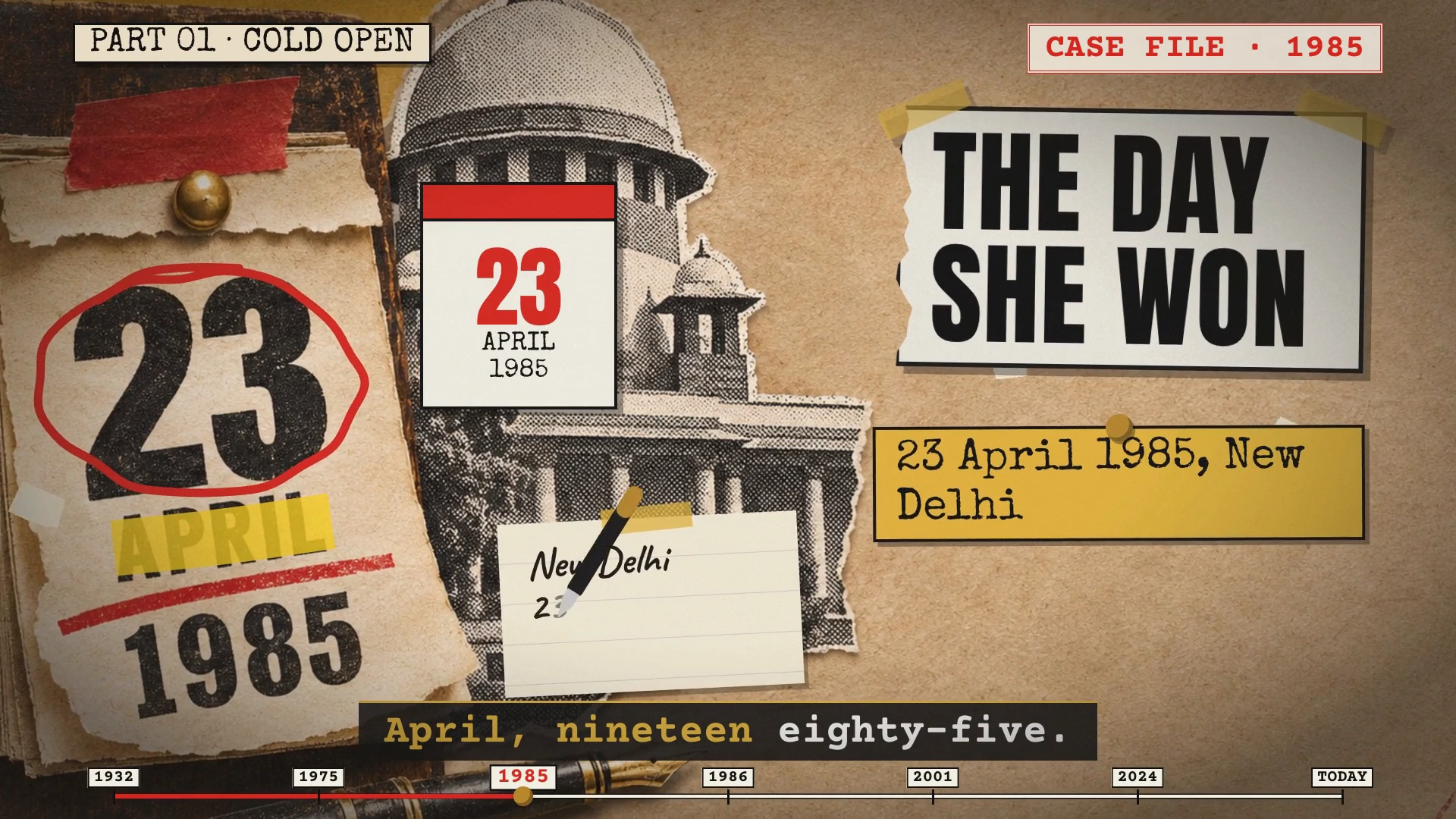
On 23 April 1985, five judges of the Supreme Court unanimously held that Section 125 CrPC applies to every wife, whatever her religion. A year later, Parliament passed a law that took that win away. This page tells the full story, from Rs 25 a month in 1979 to the 2024 judgment, and explains what a wife can claim today under Section 144 BNSS.
Rs 25 a month, a win in the highest court, and a law that undid it
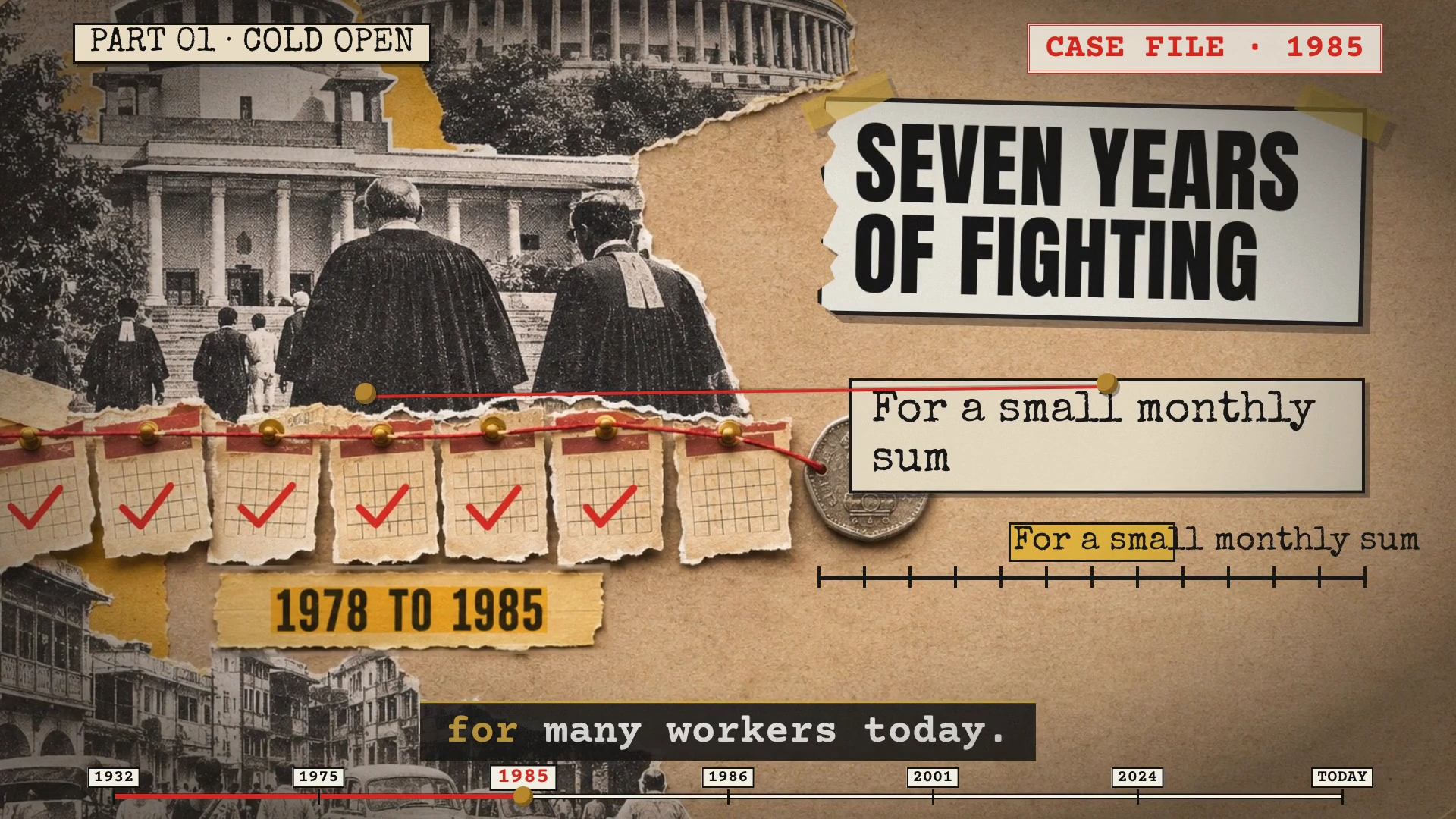
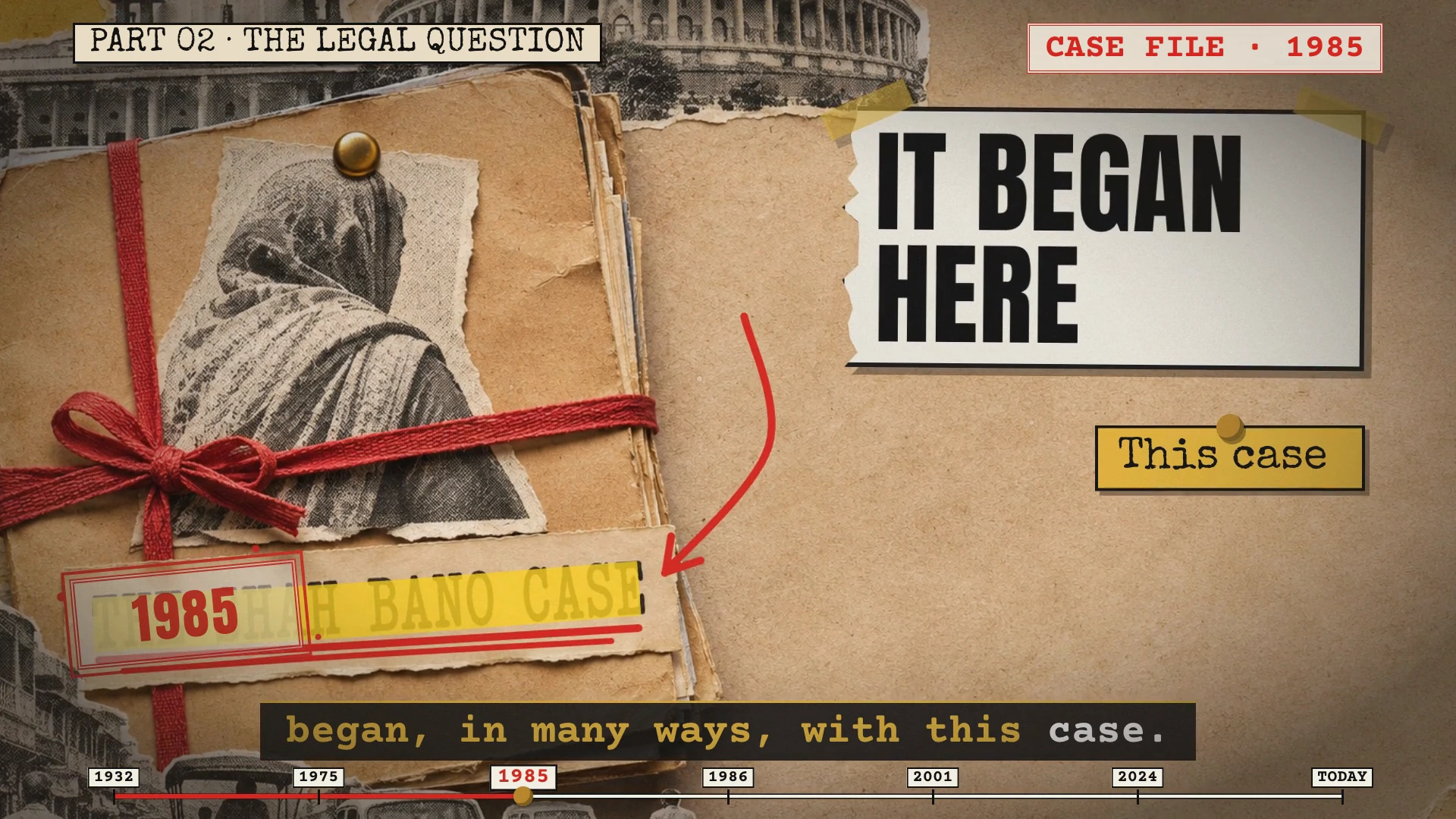
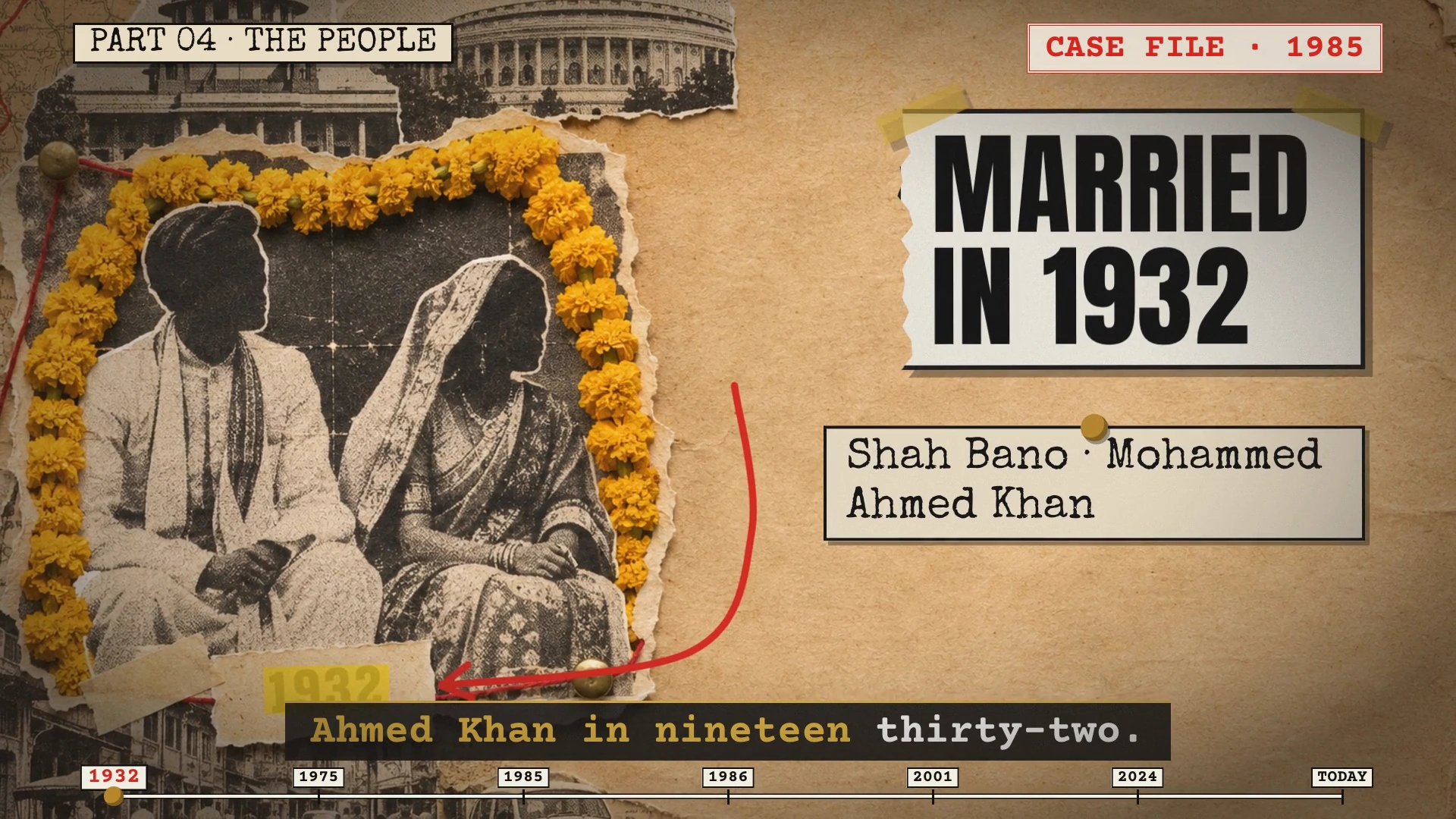
On the twenty-third of April 1985, five judges of the Supreme Court of India gave judgment in a case about one woman from Indore. She was about seventy years old, with five children. For seven years she had fought her former husband for a monthly sum smaller than a day’s wages for many workers today. Every judge agreed with her. Within a year, Parliament passed a new law, and her victory was taken away. You can read the judgment itself on the Centre for Law and Policy Research record of the Supreme Court judgment.
Most people remember the Shah Bano case as a political storm. This page tells it as the arithmetic of one woman’s life: Rs 25 a month, a unanimous win, the Muslim Women (Protection of Rights on Divorce) Act, 1986, her lawyer’s fight in 2001 and a final answer in 2024 that she never lived to see. It ends with what any wife can claim today under Section 144 of the Bharatiya Nagarik Suraksha Sanhita, 2023. For readers with a maintenance or separation problem, our matrimonial and family law services page explains how such matters proceed, and our Supreme Court advocate consultation page covers appeals to the apex court.
From Rs 25 to Rs 20,000: the figures in the case
Each bar is an amount in rupees a month that appears in the Shah Bano story or the 2024 Telangana case.
Videos from Adv. Sudip Patra
More short explainers on our YouTube channel: Patra’s Law Chambers on YouTube ↗
Which of these sounds like your situation?
The Shah Bano case and the law after it decide which remedy a woman can use. This is general information, not advice on your own matter.
Choose one of the options above.
How a maintenance claim moves today
A general outline of a claim under Section 144 BNSS, drawn from the law as the Shah Bano case and later judgments left it.
Gather papers showing his income and assets (salary slips, business details, property, bank accounts you know of) and your monthly needs: rent, food, medicine, children’s school fees.
File under Section 144 BNSS before the Family Court or the Magistrate where you live. For wider help with marriage and separation disputes, see matrimonial and family law services.
Ask that money starts while the case runs. The court should decide this request, as far as possible, within sixty days from the date the husband is served with notice.
Each side files an affidavit of income, assets and liabilities (Rajnesh v. Neha, 2020). Maintenance can run from the date the application is filed.
If he does not pay, apply for recovery within one year of each missed amount. The court can issue a warrant and can send him to jail for up to one month for each unpaid month. If an appeal reaches the highest court, see Supreme Court advocate consultation.
The three ideas behind the case, tap a card
The Supreme Court called Section 125 truly secular in character. It is a rule against destitution, so it applies to everyone whatever their religion.
The court held that the mahr is due because of the marriage itself, not on divorce. Paying it did not end the husband’s duty, and Section 127 did not help him.
In Danial Latifi (September 2001), the court read the 1986 Act so that the provision made within the iddat period must provide for the woman’s future. It does not end when the iddat ends.
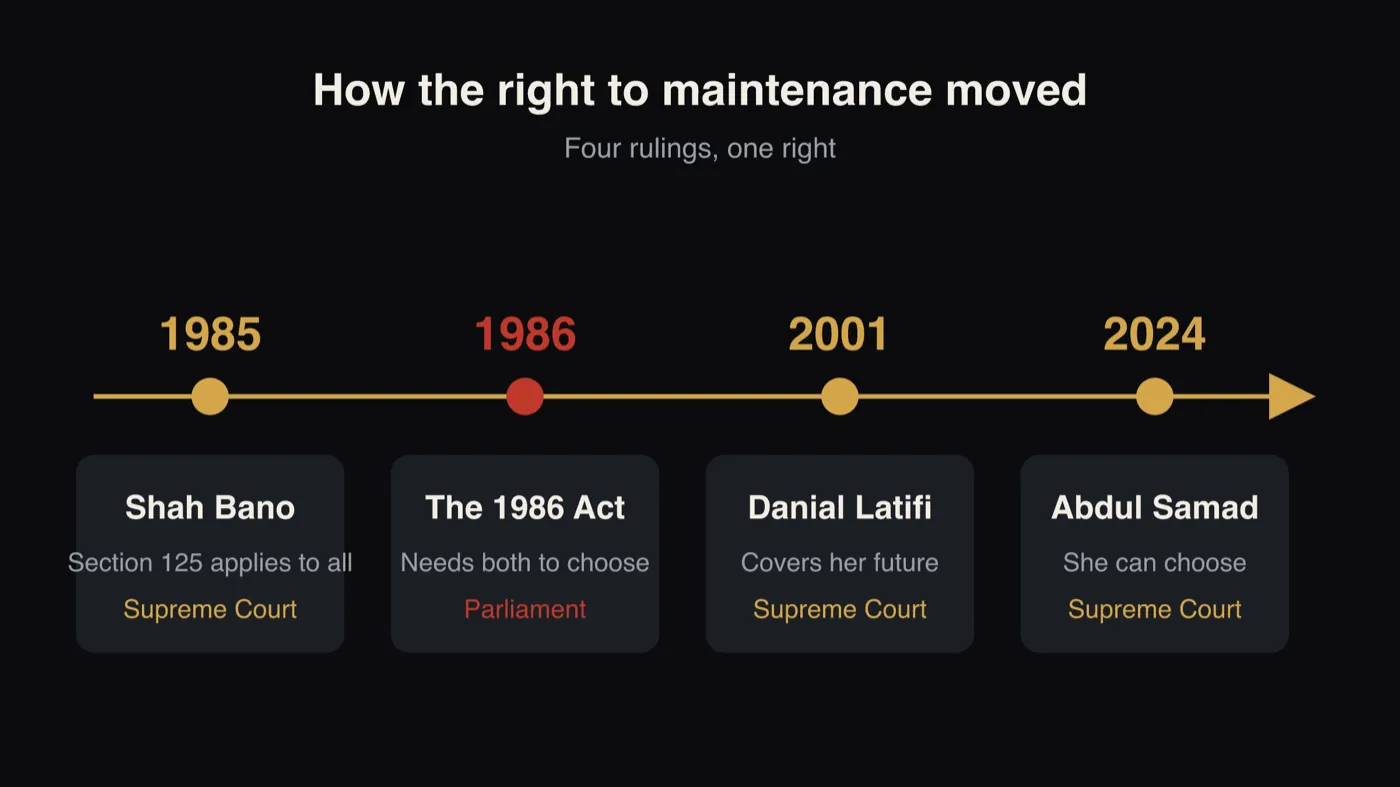
From Section 125 CrPC to Section 144 BNSS: how the law moved
Mohd. Ahmed Khan v. Shah Bano Begum
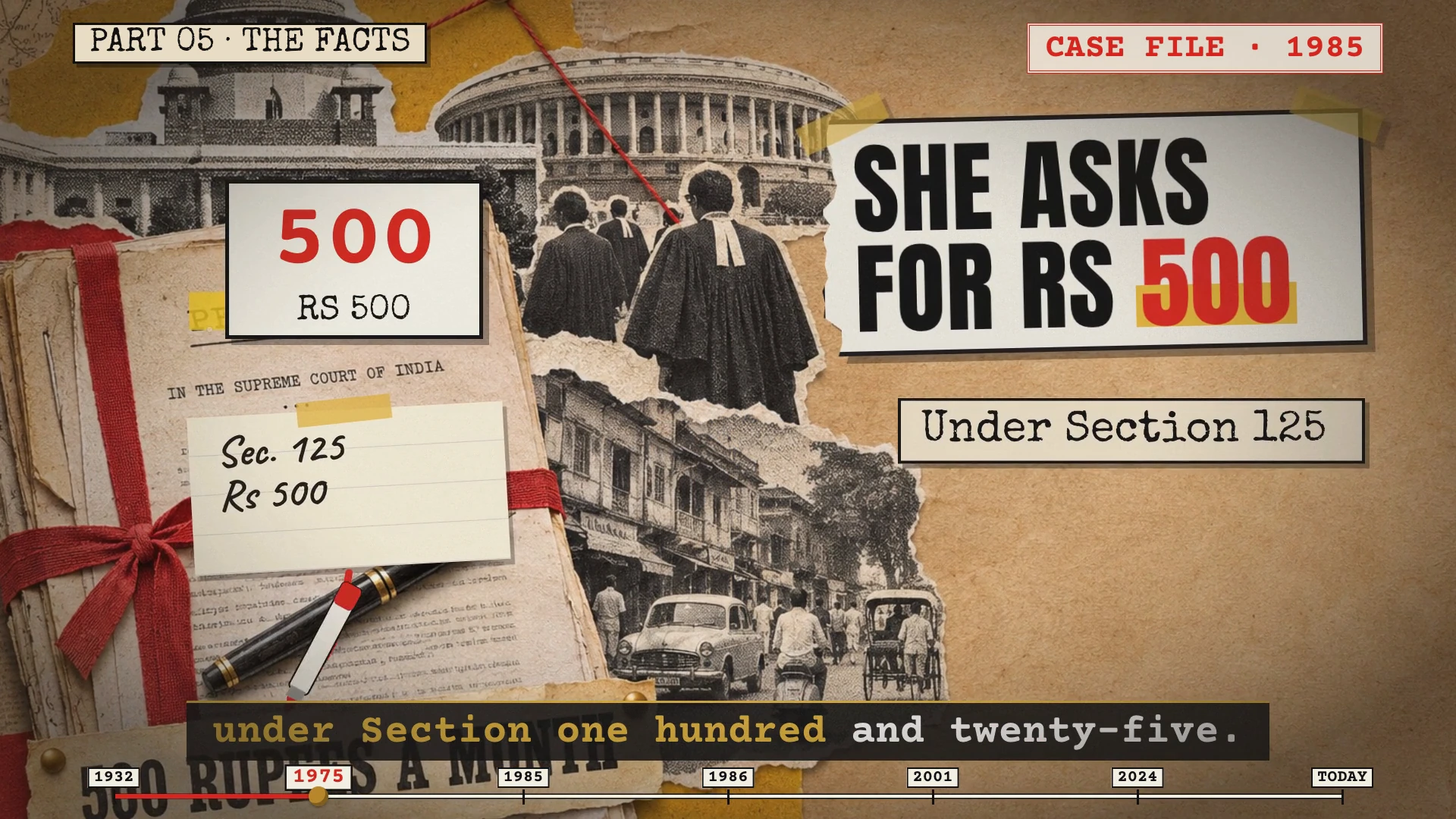
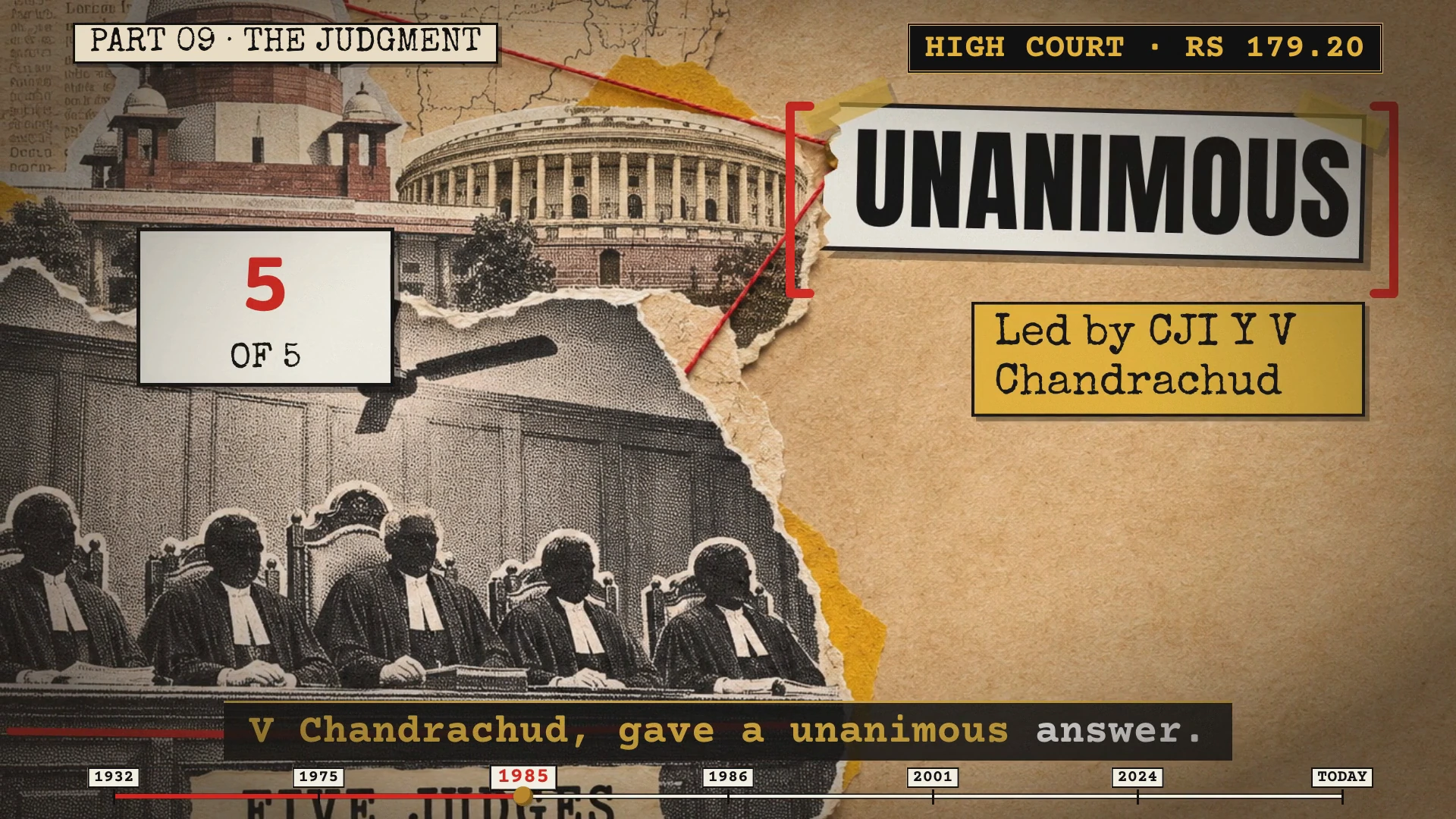
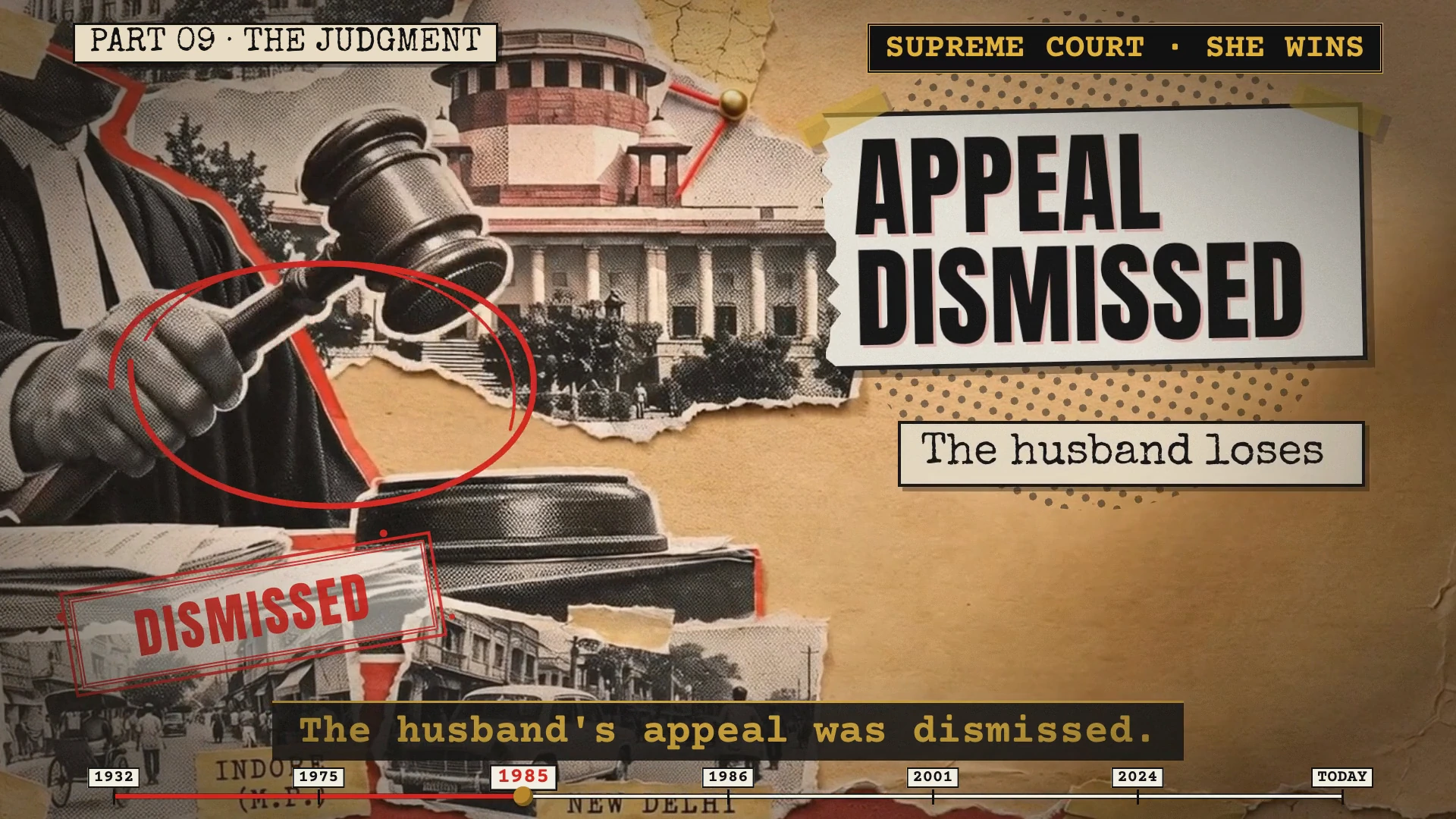
A five-judge bench led by Chief Justice Y. V. Chandrachud held that Section 125 applies to everyone, whatever the religion, and that the mahr is not a sum payable on divorce. The husband’s appeal was dismissed. Citation: (1985) 2 SCC 556 : AIR 1985 SC 945.
Muslim Women (Protection of Rights on Divorce) Act, 1986
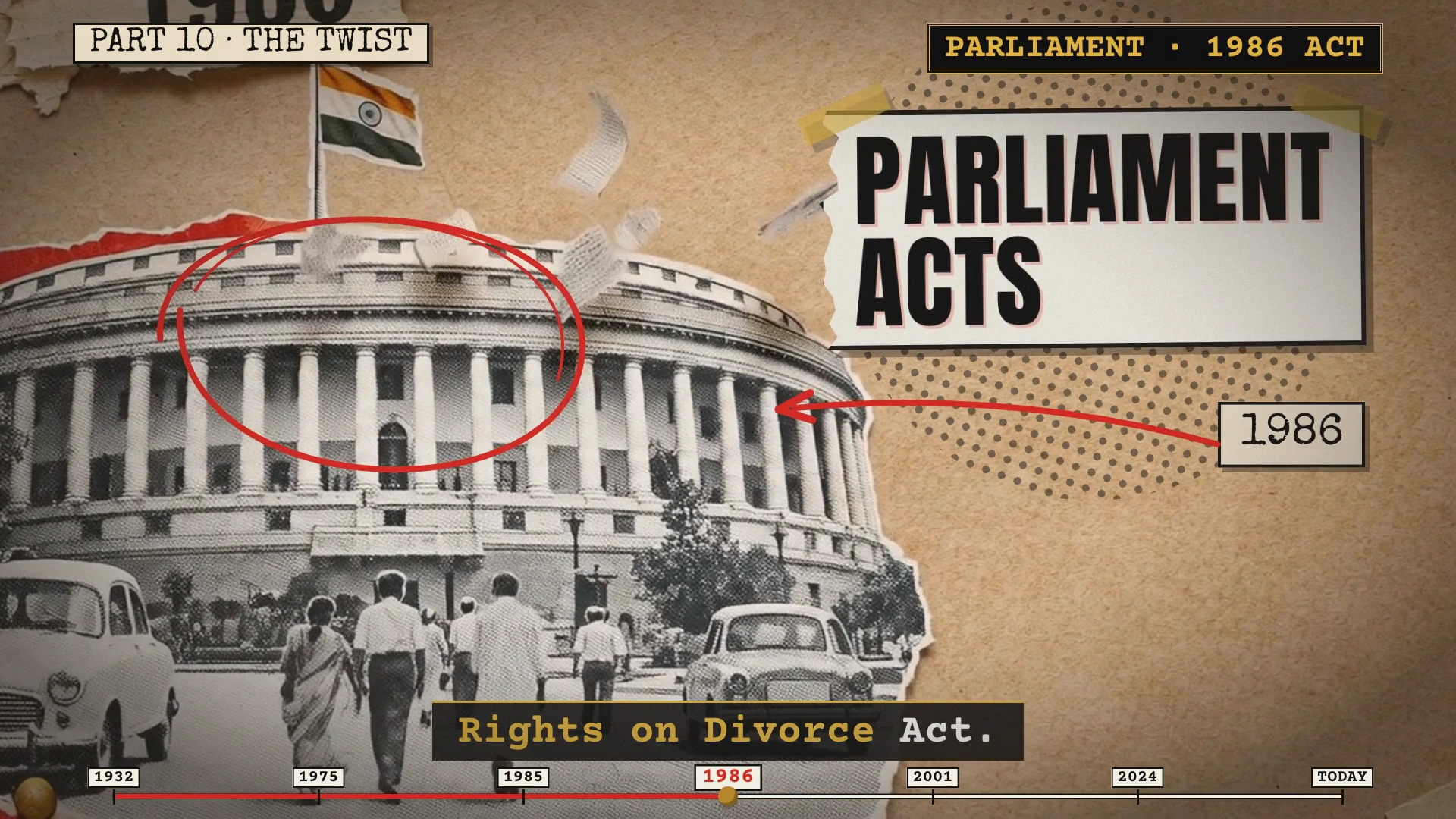
Section 3(1)(a) provided for a reasonable and fair provision and maintenance within the iddat period. Under Section 5, Section 125 applied only if both husband and wife chose it at the first hearing. Many read the Act as ending her claim to monthly support.
Danial Latifi v. Union of India
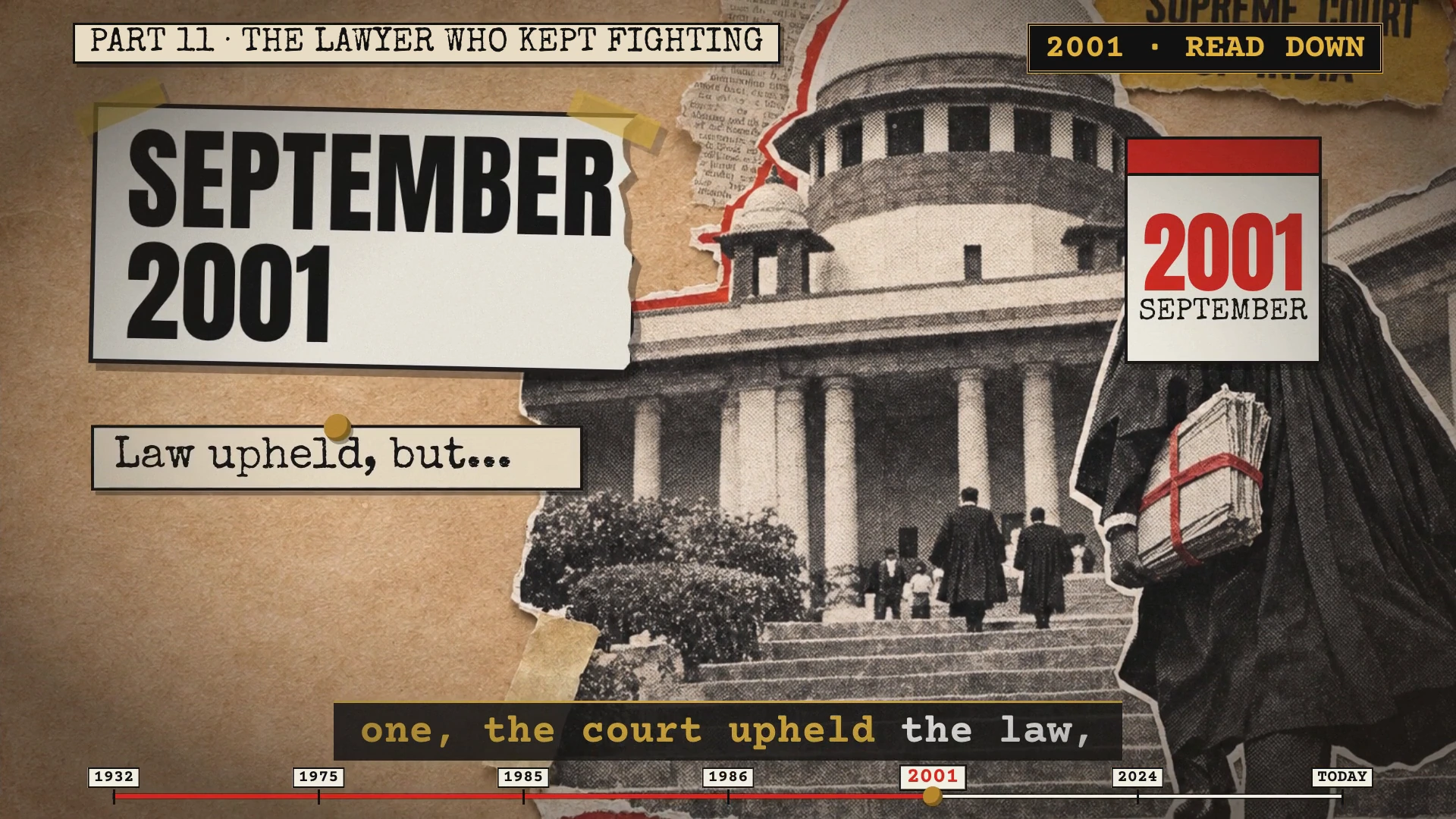
A Constitution Bench upheld the 1986 Act but read it so that the fair provision must provide for the woman’s future and not end with the iddat. Relatives, or the State Wakf Board, must support her if she still cannot maintain herself. SCC citation (2001) 7 SCC 740.
Mohd. Abdul Samad v. State of Telangana
On 10 July 2024 (2024 INSC 506), Nagarathna J and Masih J held that the 1986 Act does not take away the right under Section 125. It is an additional remedy, and a divorced Muslim woman can choose. Rajnesh v. Neha (2020), (2021) 2 SCC 324, adds maintenance from the date of application and an affidavit of assets.
What a wife can do today
- Collect proof of his income and assets and of your own monthly needs.
- File under Section 144 BNSS before the Family Court or the Magistrate where you live.
- Ask for interim maintenance in the same case; the court should decide it, as far as possible, within sixty days of notice to him.
- File the affidavit of assets and liabilities and insist that he files his; maintenance can run from the date of your application.
- If he does not pay, apply for recovery within one year of each missed amount; jail of up to one month for each unpaid month is possible.
- A divorced Muslim woman may claim under Section 144 BNSS, under the 1986 Act, or under both, as the court allows.
The Shah Bano judgement and the rulings that followed, 1979 to 2024
Five Supreme Court decisions trace a divorced wife’s right to maintenance: who can claim it, what the 1986 Act changed, and how a claim runs today under Section 144 BNSS (earlier Section 125 CrPC).
1979
Divorced Muslim wife can claim under Section 125
Before Shah Bano, benches led by Justice V. R. Krishna Iyer held that a divorced Muslim woman could claim maintenance under Section 125 of the Code of Criminal Procedure. In 1981, two judges hearing Shah Bano’s husband’s appeal doubted these rulings and referred the question to a larger bench. That reference led to the five-judge decision of 1985.
1985
Section 125 applies whatever the religion
Five judges led by Chief Justice Y. V. Chandrachud held that Section 125 is secular in character and protects every wife, including a divorced wife who has not remarried. Mahr is paid because of the marriage, not on divorce, so paying it does not end the husband’s duty and Section 127 did not help him. The husband’s appeal was dismissed.
2001
Fair provision must cover her future
A Constitution Bench upheld the Muslim Women (Protection of Rights on Divorce) Act, 1986, but read Section 3(1)(a) so that the reasonable and fair provision is made within the iddat period yet provides for her future. If she still cannot maintain herself, the relatives who would inherit from her, and failing them the State Wakf Board, must support her.
2020
Maintenance runs from the date of application
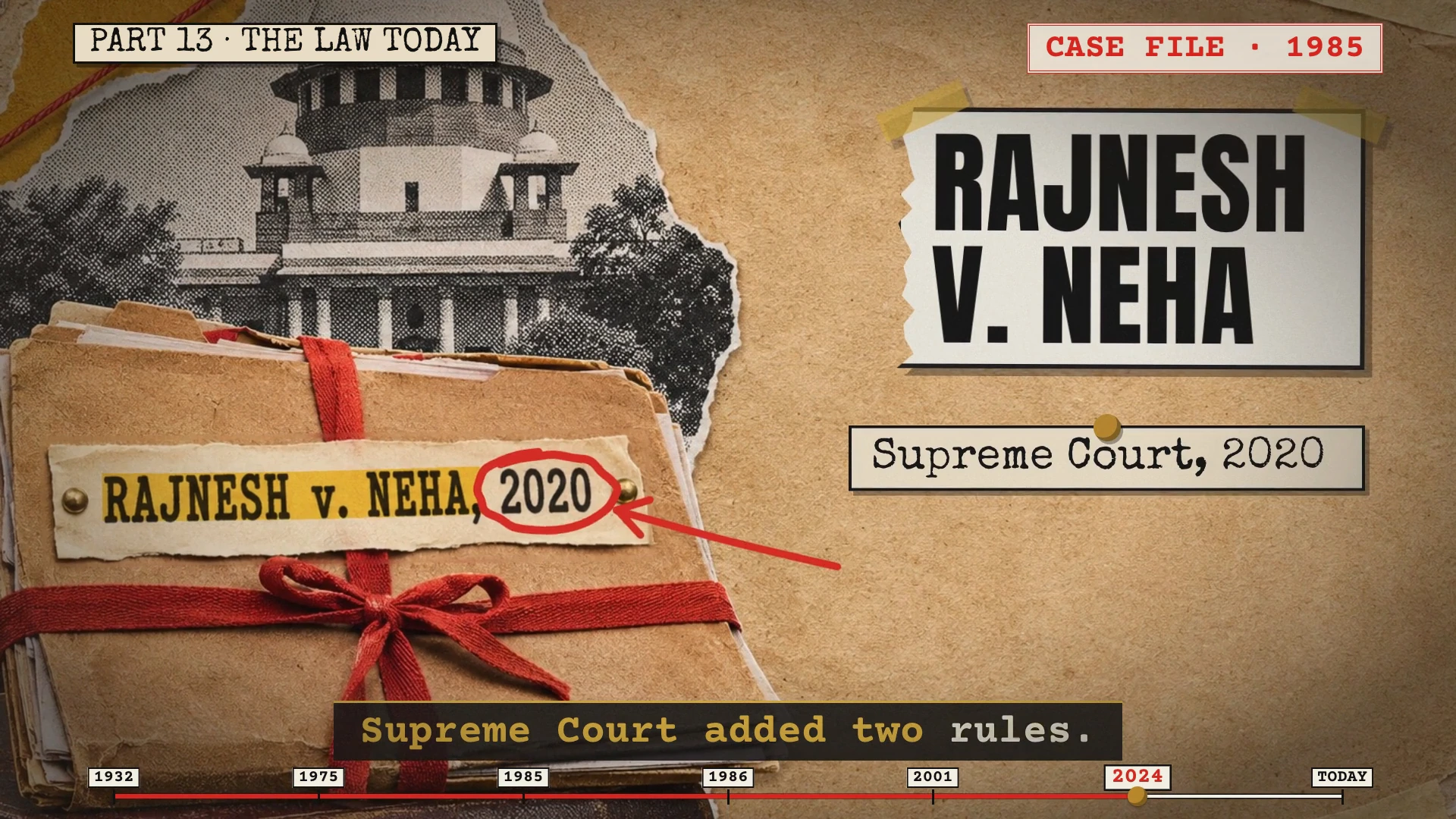
The Supreme Court held that maintenance is payable from the date the application is filed, not the date of the order. Both husband and wife must file an affidavit disclosing their income, assets and liabilities, so the court can fix a fair amount on proof rather than guesswork. Family courts across India apply these guidelines in maintenance cases today.
2024
The 1986 Act adds a remedy, not a bar
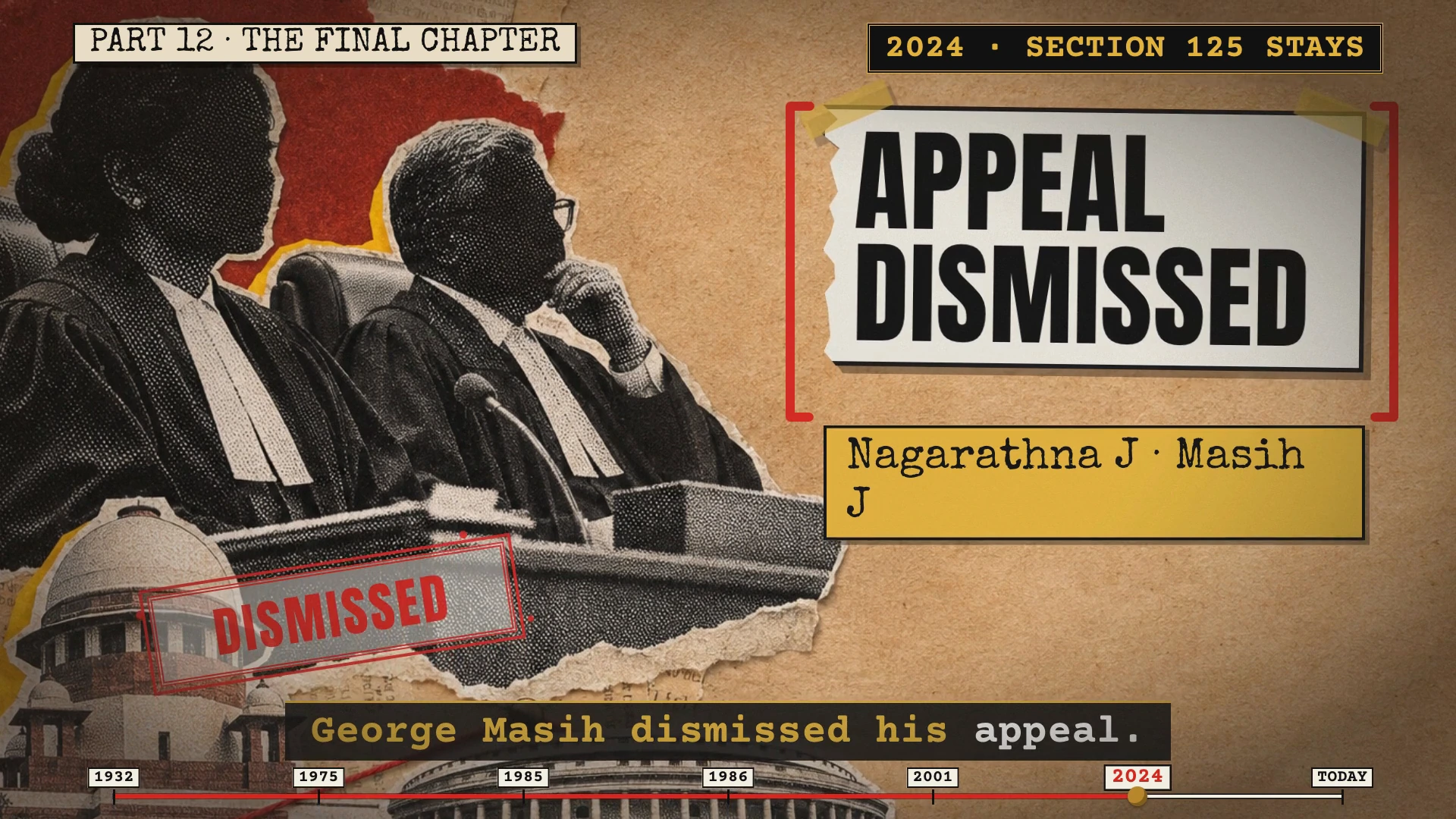
On 10 July 2024, Justice B. V. Nagarathna and Justice Augustine George Masih dismissed a husband’s appeal against interim maintenance of Rs 10,000 a month. The 1986 Act does not take away the right under Section 125 CrPC; it is an additional remedy, and a divorced Muslim woman can choose. Maintenance is part of gender parity, not charity.
How a wife claims maintenance today under Section 144 BNSS
Collect proof of his means and your needs
Gather papers showing his income and assets: salary slips, business details, property and bank accounts you know of. List your own monthly needs: rent, food, medicine and children’s school fees. Maintenance cases turn on proof, so this file decides the amount the court can fix.
File under Section 144 BNSS where you live
File the application before the Family Court or the Magistrate where you live. Section 145 BNSS (earlier Section 126 CrPC) allows this, so you do not have to go to the town where he lives. A divorced wife who has not remarried counts as a wife for this purpose.
Ask for interim maintenance in the same case
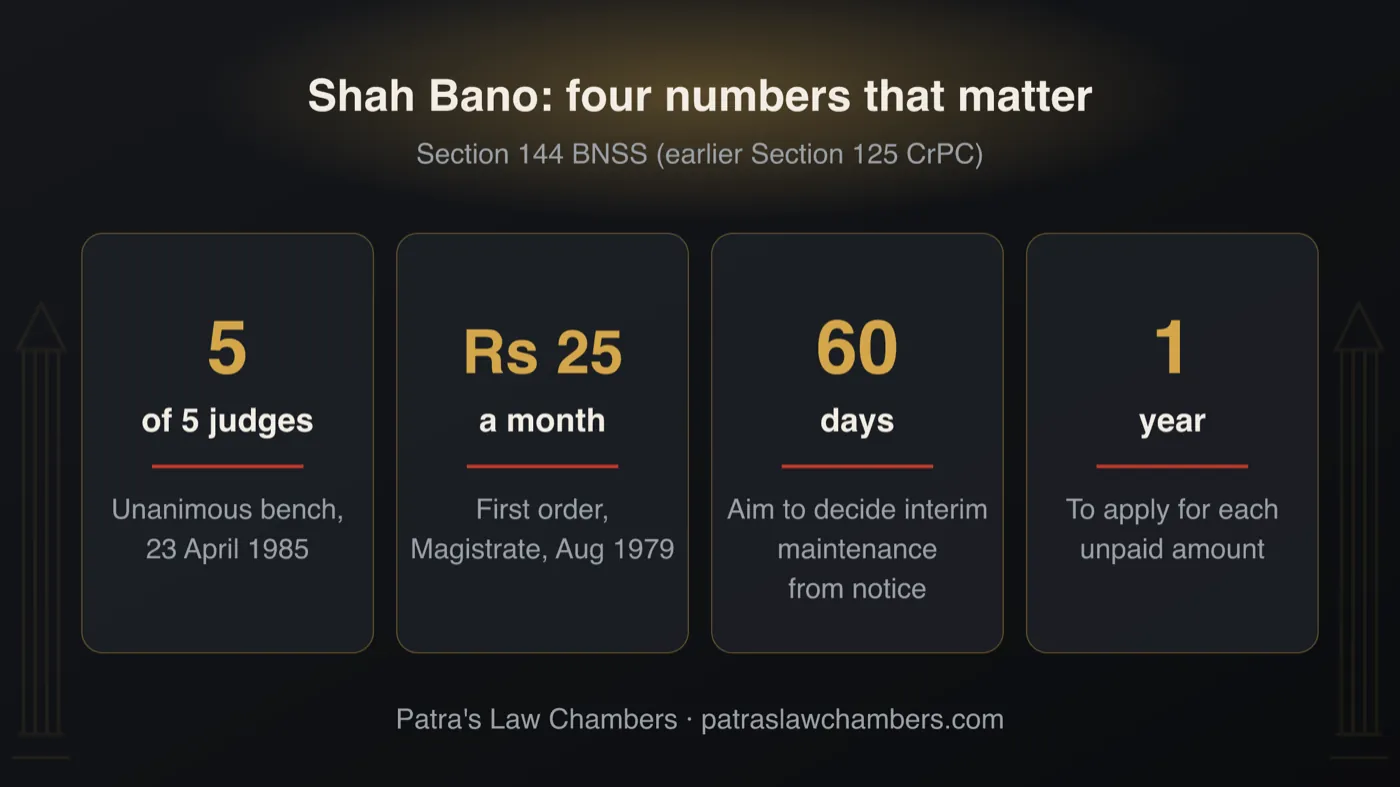
Ask for a monthly sum while the case runs. The court should decide this request, as far as possible, within sixty days from the date the husband is served with notice of it. Interim maintenance keeps money coming in during a case that may take time.
File the affidavit of assets and liabilities
Under Rajnesh v. Neha, both sides must file an affidavit disclosing income, assets and liabilities. File yours and insist that he files his. Maintenance can run from the date you filed your application, so the date of filing matters.
Apply for recovery if he does not pay
If payments stop, apply for recovery within one year from the date each amount fell due. Under Section 144(3) BNSS the court can issue a warrant to recover the money and can send him to jail for up to one month for each month left unpaid.
Divorced Muslim wife: choose the remedy
A divorced Muslim woman may claim under Section 144 BNSS, under the Muslim Women (Protection of Rights on Divorce) Act, 1986, or under both, as the court allows. Mohd. Abdul Samad (2024) held that the 1986 Act is an additional remedy and does not take away the right under Section 125 CrPC.
The 1986 Act as first read, and as the law stands now
How the position of a divorced Muslim woman changed after 1986, 2001 and 2024.
Mistakes that weaken a maintenance claim
Believing divorce ends the claim A divorced wife who has not remarried is still a wife for Section 144 BNSS, as the Shah Bano case held for Section 125 CrPC. A divorce, including one pronounced while the case is pending, does not by itself defeat the claim.
Treating mahr as full settlement Mahr is the wife’s because of the marriage; it is not a divorce settlement that buys the husband out of the duty to prevent her destitution. Section 146 BNSS (earlier Section 127 CrPC) allows cancellation only where she received the whole sum payable on divorce under her personal law, so check this point with an advocate.
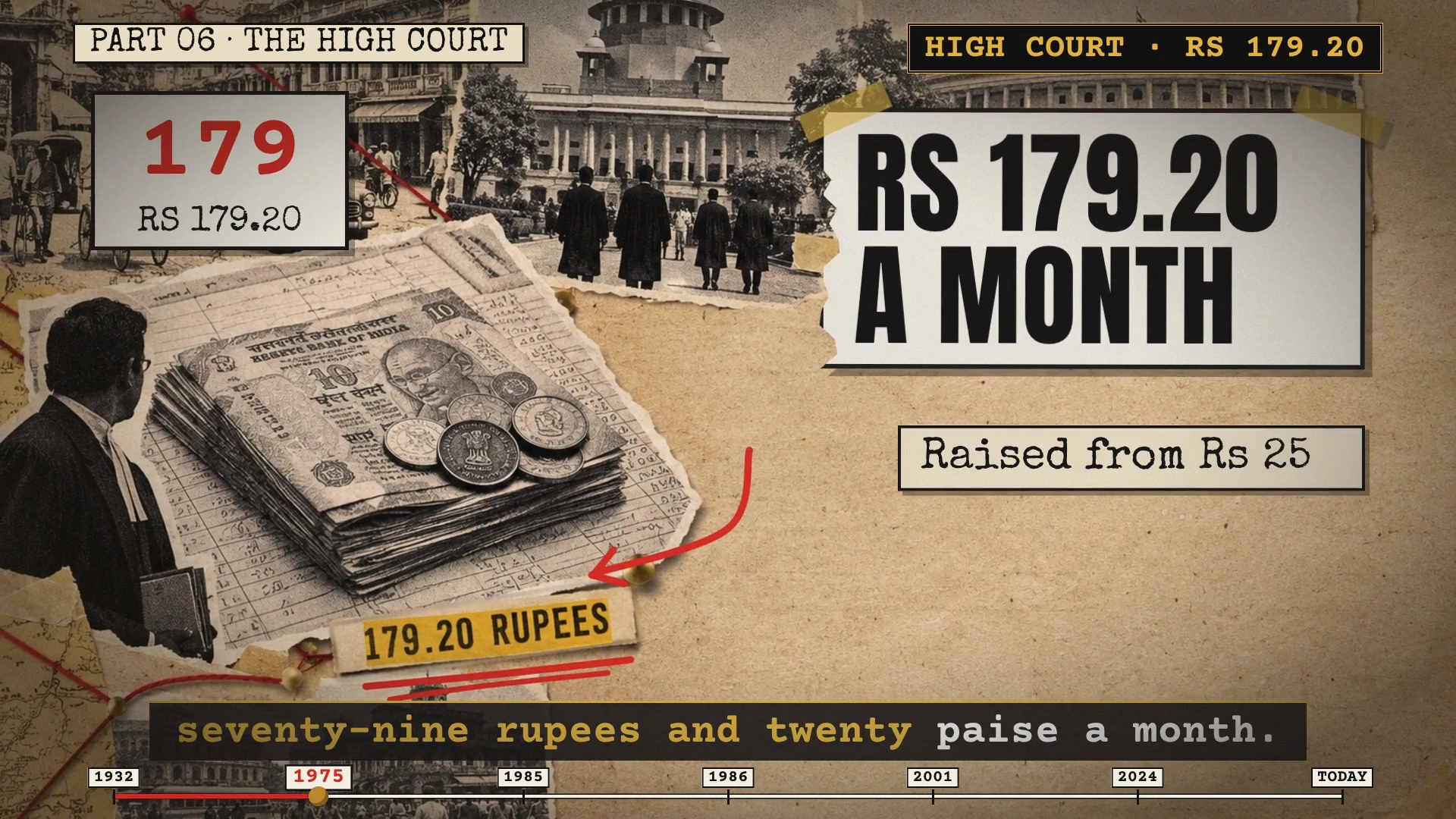
Going to court without proof of his income The amount turns on proof of his means and her needs. In the Telangana case, interim maintenance of Rs 20,000 was cut to Rs 10,000 by the High Court. Bring salary slips, property and bank details, and press for his affidavit of assets under Rajnesh v. Neha.
Waiting too long to recover arrears The application to recover unpaid maintenance must be made within one year from the date each amount fell due. Let it lapse and that month’s money may be lost. For help with a maintenance or divorce matter, see our matrimonial and family law services.
From our practice
Maintenance cases turn on proof
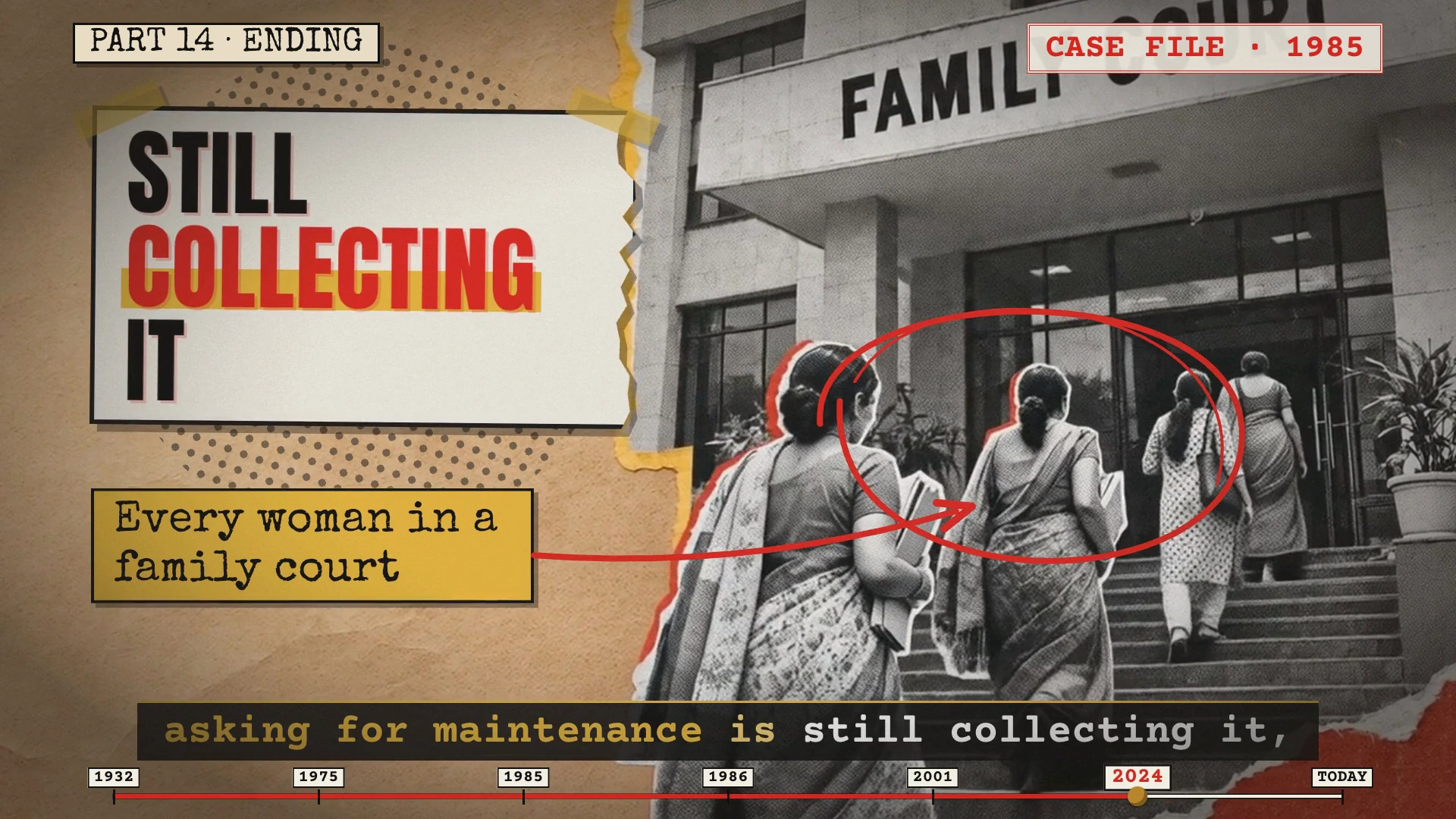
Shah Bano’s story shows that maintenance matters turn on proof of the husband’s means and of the wife’s needs. If you are considering a claim for maintenance, or defending one, an advocate can read your papers and explain the forum, the likely steps and the time limits that apply. See also our pages on child custody and matrimonial matters. Outcomes depend on the facts and on the court’s discretion, and no result can be promised. For legal consultation, call +91 890 222 4444 or visit www.patraslawchambers.com. This page is for general legal awareness and is not personalised legal advice.
Book a ConsultationEstablished by a distinguished alumnus of IIT Kharagpur, Patra’s Law Chambers stands as a beacon of legal expertise in Kolkata & Delhi. Know more →

Kolkata Office
NICCO House, 6th Floor, 2 Hare Street
Kolkata-700001 (Near Calcutta High Court)
Delhi Office
4455/5, First Floor, Gali Shahid Bhagat Singh
Main Bazar Road, Paharganj, New Delhi-110055
Contact
[email protected]
+91 890 222 4444 / +91 7003 715 325
What to keep ready for a maintenance claim
Maintenance cases turn on proof of his means and your needs.
Salary slips or business details that show what he earns.
Property papers and any bank accounts you know of.
Rent, food and medicine, with bills where you have them.
School fees and other costs of the children.
Papers showing the marriage, any divorce and when support stopped.
Both sides must disclose income, assets and liabilities (Rajnesh v. Neha, 2020).
Frequently asked questions about the Shah Bano case and maintenance
Mohd. Ahmed Khan v. Shah Bano Begum was about whether a divorced Muslim woman could claim monthly maintenance from her former husband under Section 125 of the Code of Criminal Procedure. On 23 April 1985, a five-judge bench held unanimously that Section 125 applies to everyone, whatever the religion, and dismissed the husband’s appeal.
Mohd. Ahmed Khan v. Shah Bano Begum, (1985) 2 SCC 556 : AIR 1985 SC 945, decided on 23 April 1985 by a bench led by Chief Justice Y. V. Chandrachud.
The judgment led to protests by several Muslim organisations, who saw it as interference in their personal law, while others welcomed it. In 1986 Parliament passed the Muslim Women (Protection of Rights on Divorce) Act, allowing Section 125 to apply only if both husband and wife chose it.
Yes. In Mohd. Abdul Samad v. State of Telangana, 2024 INSC 506 (10 July 2024), the Supreme Court held that the 1986 Act does not take away the right under Section 125 CrPC. It is an additional remedy, and Section 125 is now Section 144 BNSS.
In September 2001 a Constitution Bench upheld the 1986 Act but read it so that the fair provision must be made within the iddat period and must provide for the woman’s future. If she still cannot maintain herself, her inheriting relatives, or else the State Wakf Board, must support her.
Yes. The court can order interim maintenance, a monthly sum while the case goes on. It should decide that request, as far as possible, within sixty days from the date the husband is served with notice of it.
In Rajnesh v. Neha (2020), the Supreme Court held that maintenance runs from the date the application is filed, and that both sides must file an affidavit disclosing their income, assets and liabilities.
The court can issue a warrant to recover the money and can send him to jail for up to one month for each month left unpaid. The application to recover must be made within one year from the date the amount fell due.