The Kesavananda Bharati Case: A Monk's Land, a 7:6 Verdict and the Basic Structure Doctrine
In 1973 thirteen Supreme Court judges sat together, a first for the Court, and decided by seven votes to six that Parliament may amend the Constitution but may not destroy its basic structure. This page tells the case the way a lawyer reads it, from our own film.
How a monk's land dispute gave India the basic structure doctrine
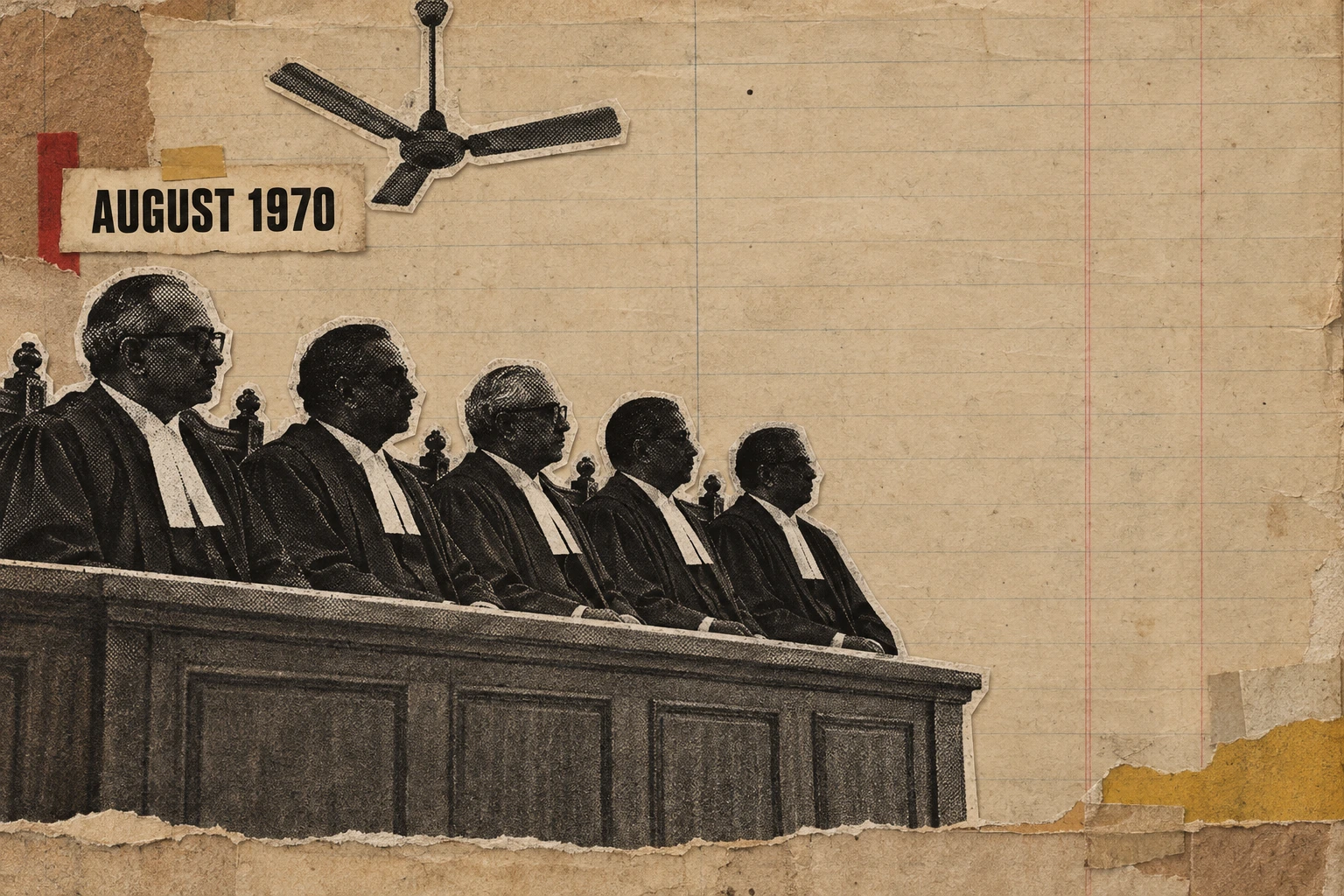
On 24 April 1973, thirteen judges of the Supreme Court of India sat together to deliver one verdict. No bench of the Court had ever been that large. The arguments had run for sixty-eight days. The result was seven votes to six. Within a day, the Government responded in a way India had never seen: three senior judges were passed over for the post of Chief Justice, and all three resigned.
The case behind all of it began with a monk and his land in a small village in Kerala. The monk lost his land. But the rule that came out of his case, that Parliament may amend the Constitution but may not destroy its basic structure, still protects every citizen of India. Read the text of Article 368 and the rest of the Constitution alongside this story. For constitutional questions before the apex court, see our Supreme Court advocate consultation page.
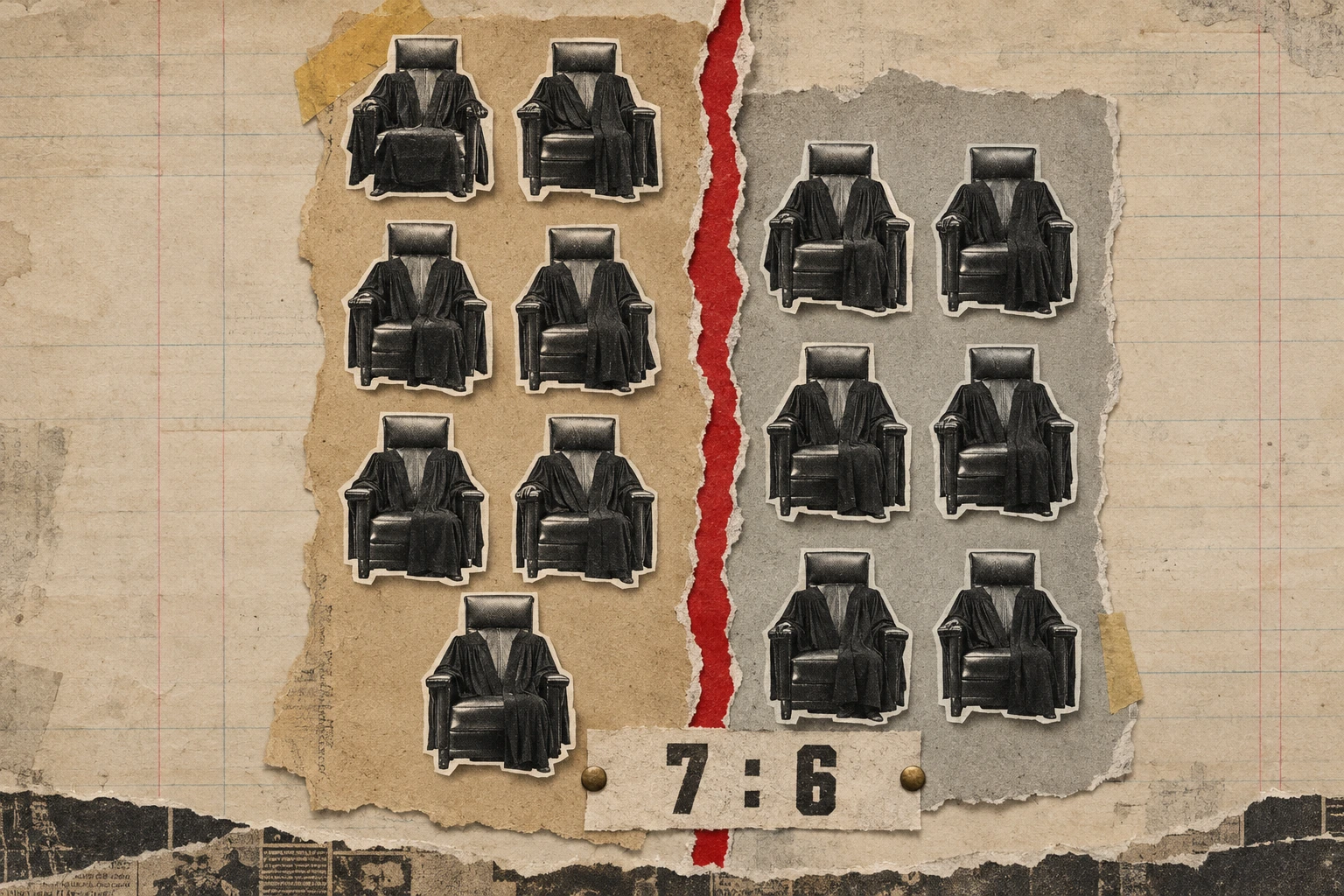
Thirteen judges, one vote apart
The numbers behind the largest bench the Supreme Court had assembled.
Videos from Adv. Sudip Patra
More short explainers on our YouTube channel: Patra’s Law Chambers on YouTube ↗
Which constitutional question is closest to yours?
The Kesavananda Bharati ruling is the test courts still use when a law or amendment is questioned. This is general information, not advice on any individual matter.
Choose one of the options above.
From a monk's land to the basic structure doctrine
The case moved from a village in Kerala to a thirteen-judge bench in Delhi, and its effects ran on for years.
A writ petition was filed directly in the Supreme Court under Article 32, challenging Kerala’s land reform law. Notice was issued to the State of Kerala within four days.
Golaknath (1967) put fundamental rights beyond amendment. Parliament answered with the Twenty-fourth, Twenty-fifth, Twenty-sixth and Twenty-ninth Amendments, and the petition was amended to challenge them.
A thirteen-judge bench led by Chief Justice S M Sikri heard Nani Palkhivala for the petitioner against Attorney General Niren De and H M Seervai. For constitutional questions like this, see our Supreme Court advocate consultation page.
By seven votes to six, the Court held that Parliament can amend any part of the Constitution but cannot destroy its basic structure. Golaknath was overruled and the monk lost on his land.
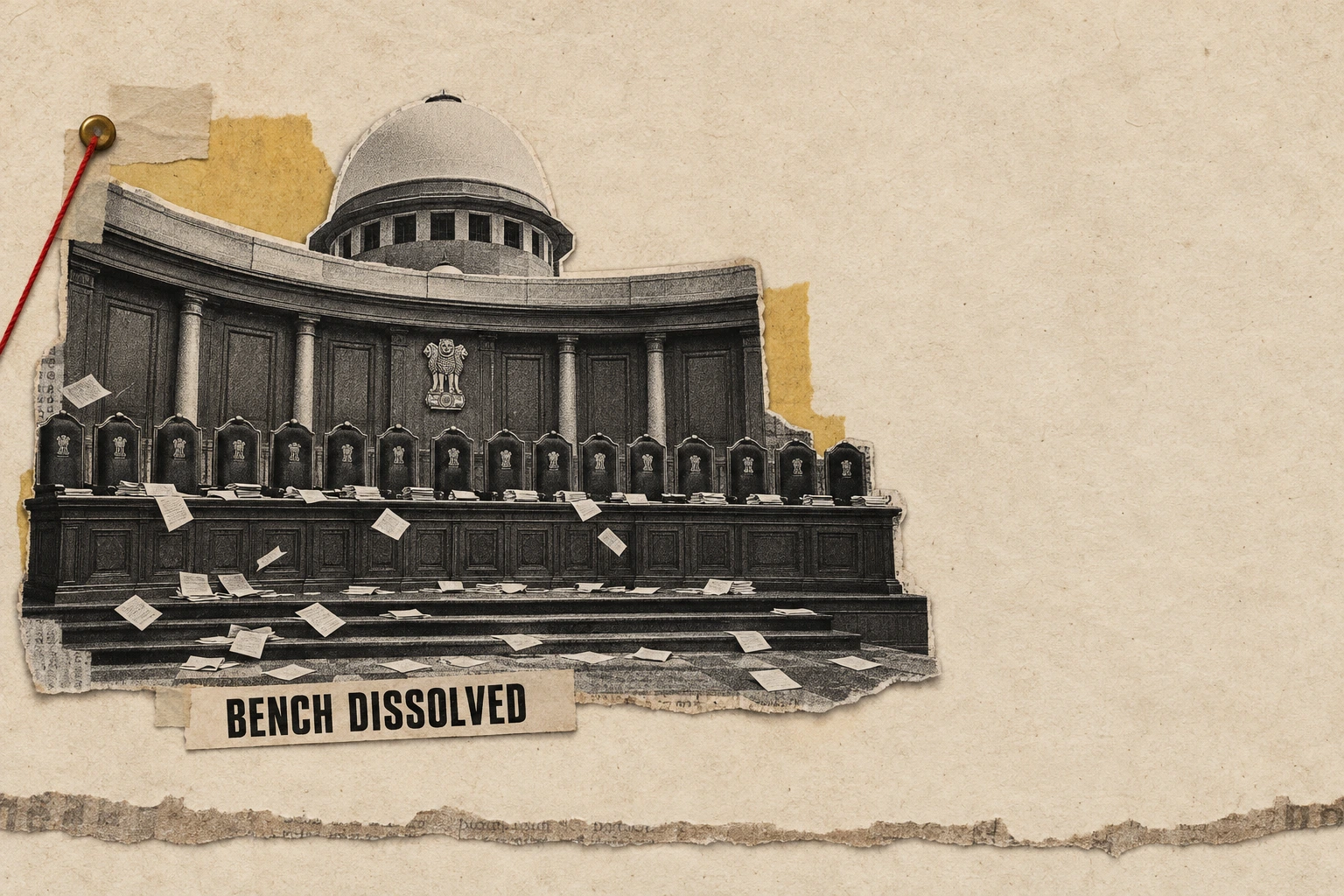
Three senior judges were passed over for Chief Justice and resigned. On 12 November 1975, the thirteen-judge review bench was dissolved and the doctrine survived.
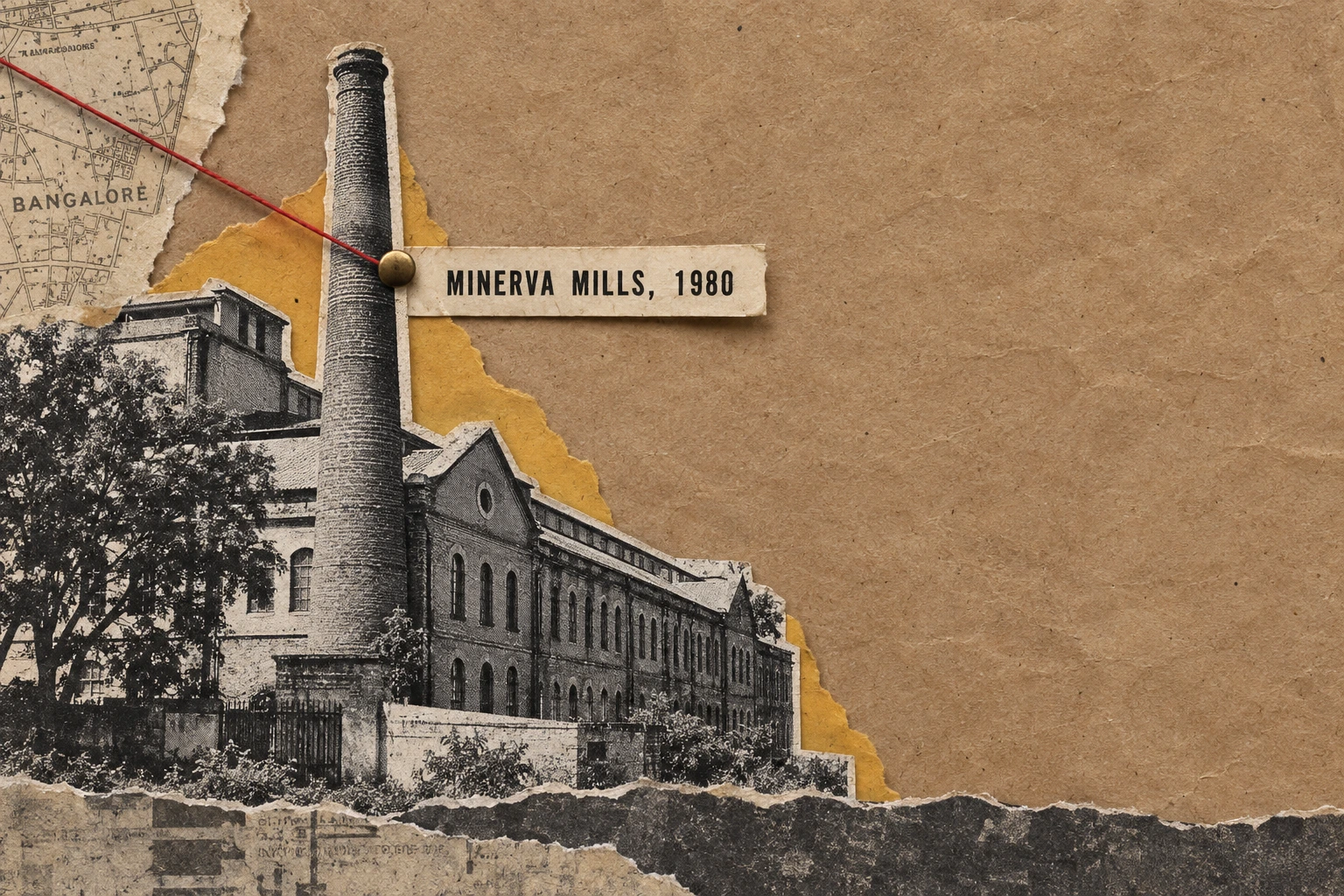
Minerva Mills (1980) held that the limited amending power is itself part of the basic structure. I.R. Coelho (2007) allowed post-1973 Ninth Schedule laws to be tested against it.
Three ideas behind the case, tap a card
Parliament may renovate the Constitution under Article 368, adding rooms and rebuilding floors. It may not pull down the pillars that hold the building up.
The Court upheld the Twenty-ninth Amendment, so the petitioner lost his challenge on the land. Yet the doctrine from his petition protects every citizen.
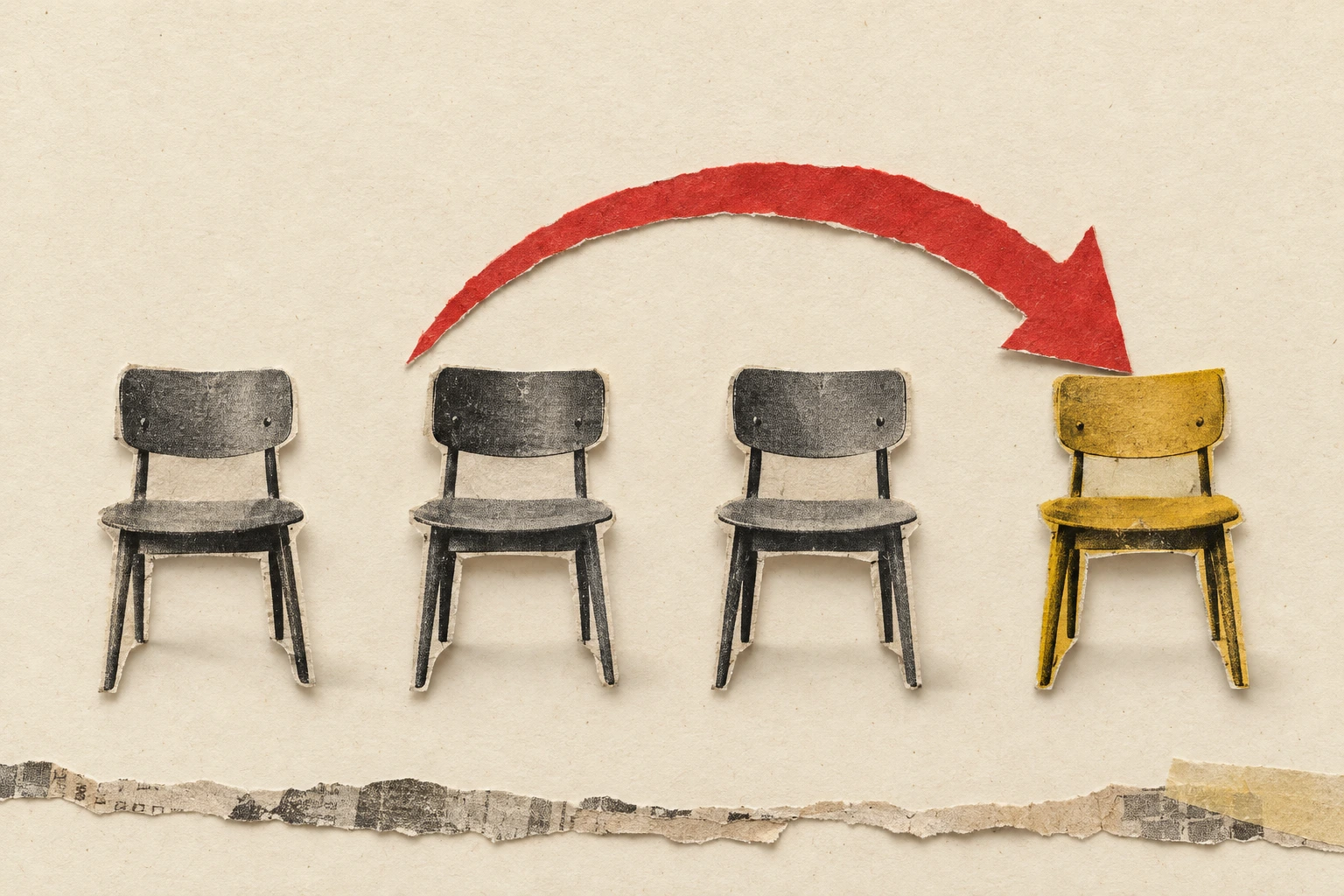
Six judges against six left Justice H R Khanna in the middle. He held that the power to amend is not a power to destroy, and his opinion gave the majority its seventh vote.
What the Kesavananda Bharati judgment decided
Power to amend is wide, not unlimited
The Court held that Parliament can amend any part of the Constitution, including fundamental rights. Golaknath was overruled. But the power to amend is not a power to destroy the Constitution’s essential features.
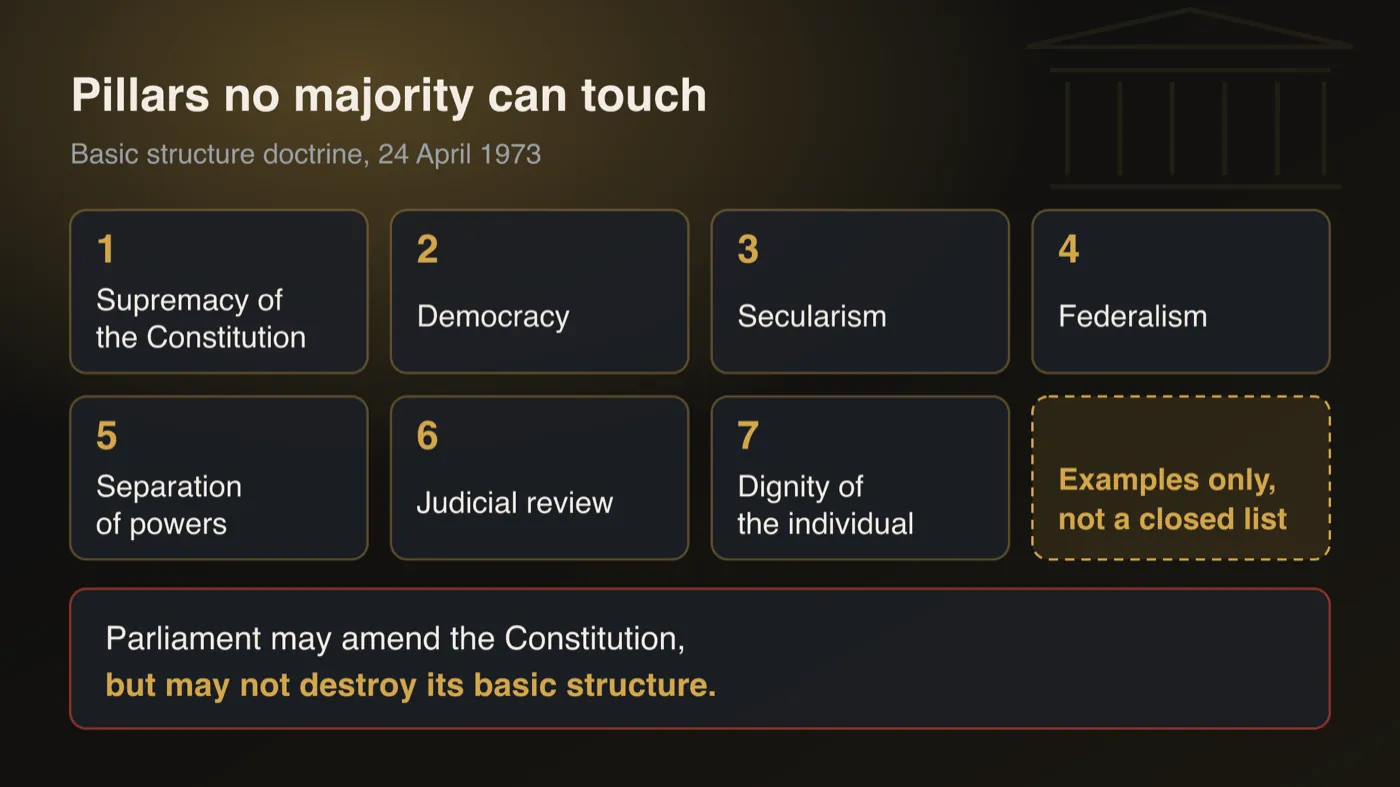
Pillars no majority can touch
Supremacy of the Constitution, democracy, secularism, federalism, separation of powers, judicial review and the dignity of the individual were named as examples, not a closed list.
A citizen's direct door to the Supreme Court
The petition went straight to the Supreme Court under Article 32 in March 1970. The remedy remains open when a fundamental right is threatened. Related High Court remedies are explained on our Calcutta High Court advocate page.
The petitioner lost, the doctrine won
The Twenty-ninth Amendment was upheld, so Kerala’s land laws stayed protected. Later, laws added to the Ninth Schedule on or after 24 April 1973 became open to the basic structure test.
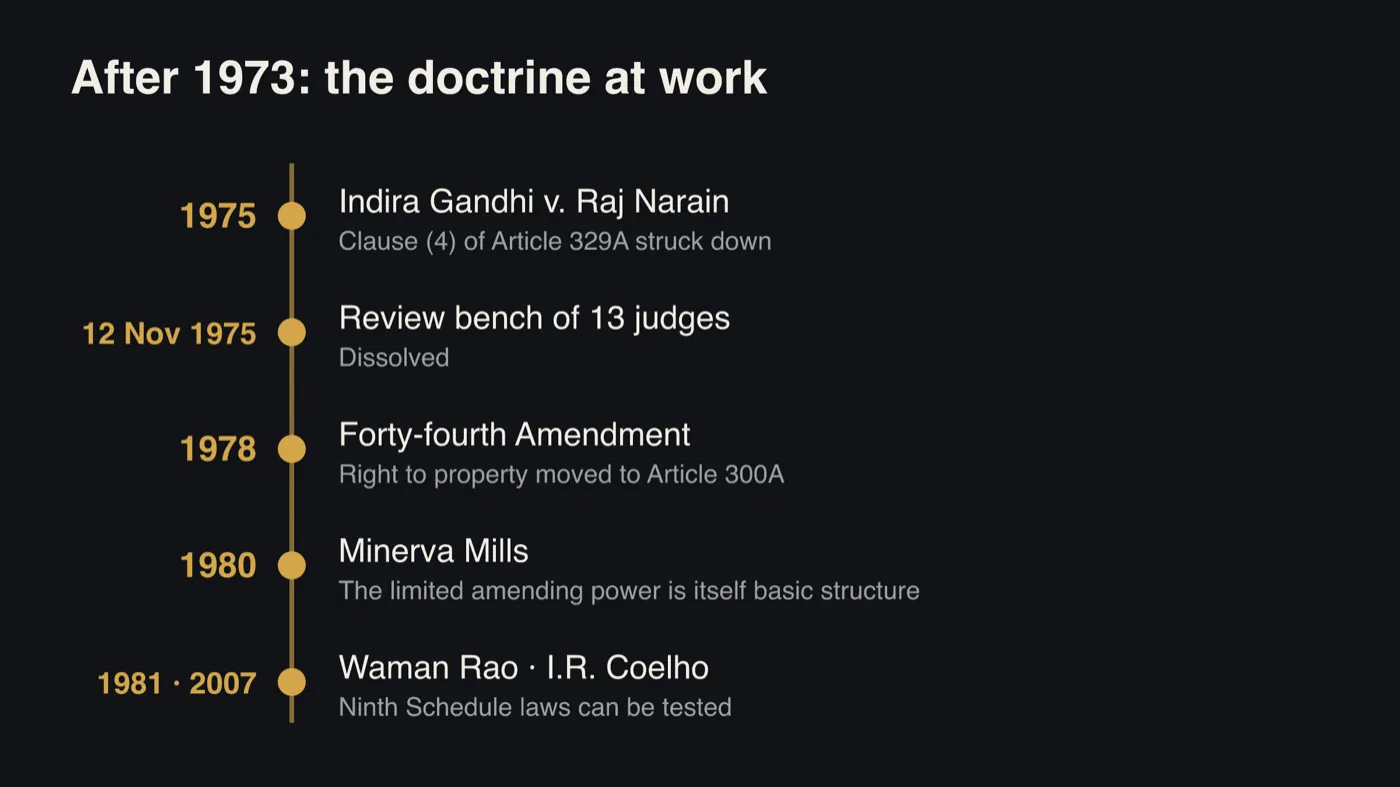
How the doctrine was applied after 1973
- Indira Gandhi v. Raj Narain (1975): clause (4) of Article 329A struck down
- Review bench of 13 judges dissolved on 12 November 1975
- Minerva Mills (1980): the limited amending power is itself basic structure
- Waman Rao (1981) and I.R. Coelho (2007): Ninth Schedule laws can be tested
- Right to property moved to Article 300A by the Forty-fourth Amendment (1978)
The judgments that built, tested and extended the basic structure doctrine
Kesavananda Bharati did not stand alone. These six Supreme Court decisions trace how the amending power under Article 368 went from unlimited, to limited, to protected by the courts.
1967
Fundamental rights placed beyond amendment
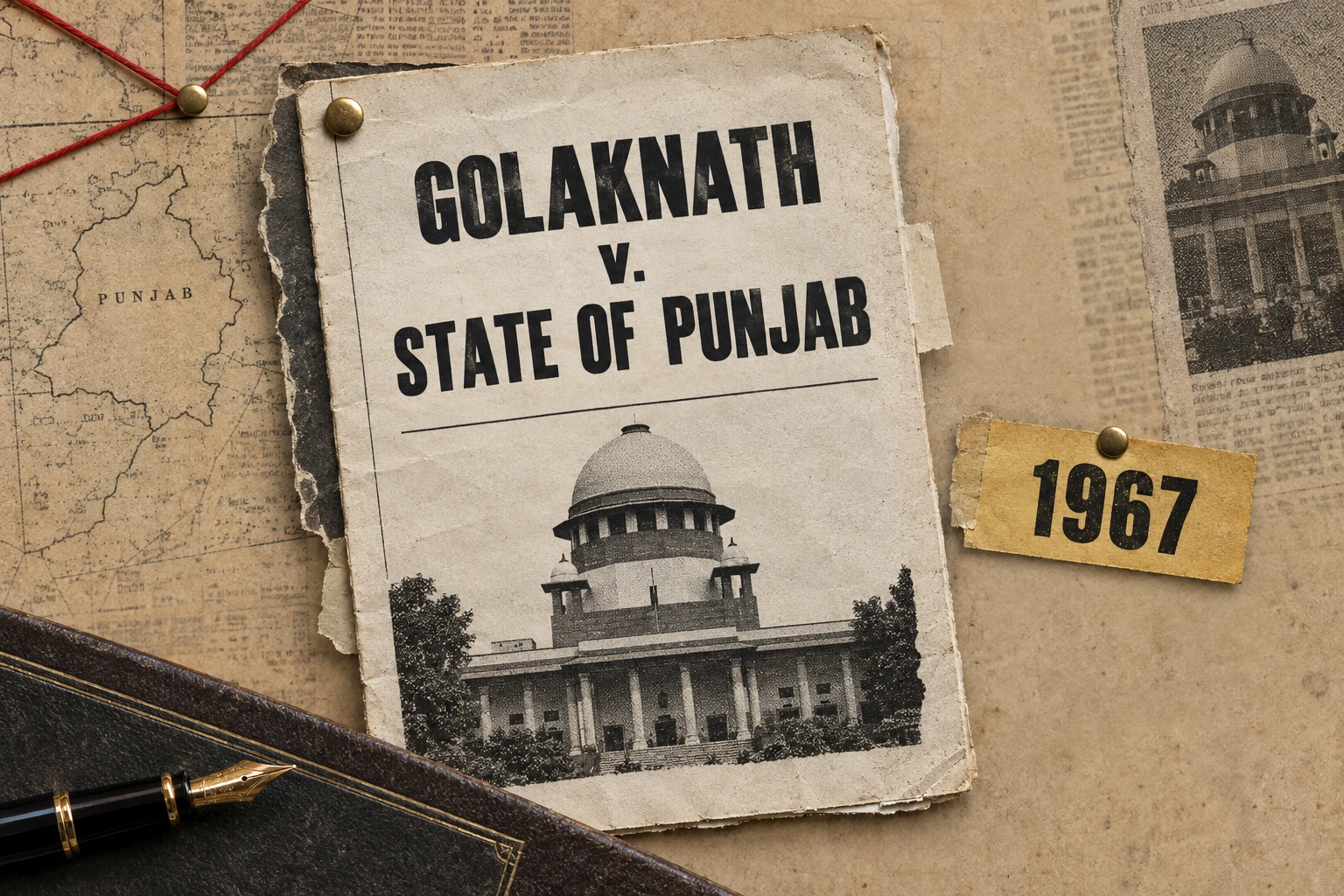
Eleven judges decided by six votes to five that Parliament could not take away fundamental rights, even by amending the Constitution. This was binding law until 1973. Parliament answered it with the Twenty-fourth Amendment, and in Kesavananda the thirteen-judge bench overruled Golaknath. It still matters because it explains why the conflict between Parliament and the Court began.
1973
Amend the Constitution, never destroy it
By seven votes to six, the Court held that Parliament can amend any part of the Constitution, including the fundamental rights, but cannot destroy its basic structure. It upheld the Twenty-fourth and Twenty-ninth Amendments and struck down the second part of Article 31C, which shut the courts out. Justice H R Khanna’s opinion gave the majority its seventh vote.
1975
Election shield struck down as against basic structure
Decided on 7 November 1975, during the Emergency. The Court used the basic structure doctrine against clause (4) of Article 329A, added by the Thirty-ninth Amendment, which had placed the Prime Minister’s own election beyond challenge in court. It was the first time the doctrine struck down part of a constitutional amendment after Kesavananda.
1980
The limit on amending power is itself basic
The Forty-second Amendment had added clauses (4) and (5) to Article 368 to make the amending power unlimited and keep amendments out of court. The Court struck both down, holding that the limited nature of the amending power is itself part of the basic structure. Chief Justice Y V Chandrachud, a 1973 dissenter, wrote the judgment.
1980
24 April 1973 is the dividing line
The Court fixed the date of the Kesavananda judgment as the cut-off for the Ninth Schedule. Amendments made before 24 April 1973 that placed laws in the Ninth Schedule stand. Those made on or after that date can be tested on whether they damage or destroy the basic structure of the Constitution.
2007
Ninth Schedule laws open to basic structure review
A nine-judge bench decided unanimously on 11 January 2007 and confirmed that putting a law in the Ninth Schedule does not take it out of the courts’ reach. Laws added on or after 24 April 1973 can be tested against the basic structure, so the shield the Twenty-ninth Amendment gave Kerala’s land laws cannot be used without limit today.

How a constitutional amendment is tested under the basic structure doctrine
Identify what the amendment changes
Start with the amendment itself. Find the article of the Constitution it changes and the essential feature it touches: the supremacy of the Constitution, democracy and free elections, secularism, federalism, the separation of powers, judicial review, the dignity of the individual, or the unity and integrity of the nation.
Approach the court with a writ petition
Kesavananda began as a writ petition filed straight in the Supreme Court under Article 32, which lets a citizen go directly to the Supreme Court when a fundamental right is threatened. The petition can be amended to challenge the constitutional amendments themselves, as the monk’s petition was.
Check the Ninth Schedule date
If the law is in the Ninth Schedule, check when it was added. After Waman Rao and I.R. Coelho, laws added on or after 24 April 1973 can be tested against the basic structure. Additions made before that date stand protected.
Apply the basic structure test
The court does not ask whether the amendment is wise or popular. It asks one question: does this amendment damage or destroy an essential feature of the Constitution? Passing it with the required majority in Parliament does not settle that question.
Only the offending part is struck down
The court removes only what destroys a basic feature. In Kesavananda the second part of Article 31C fell but the rest was upheld. In Raj Narain clause (4) of Article 329A fell. In Minerva Mills clauses (4) and (5) of Article 368 fell.

Before and after Kesavananda
How the amending power stood before 1973 and how it stands now.
The Kesavananda Bharati case at a glance
The key facts of the case in one place.
From a monk's land to a thirteen-judge bench
The case told in the order of the film, from Edneer in Kerala to the hearing in Delhi.
1. A monk in Edneer
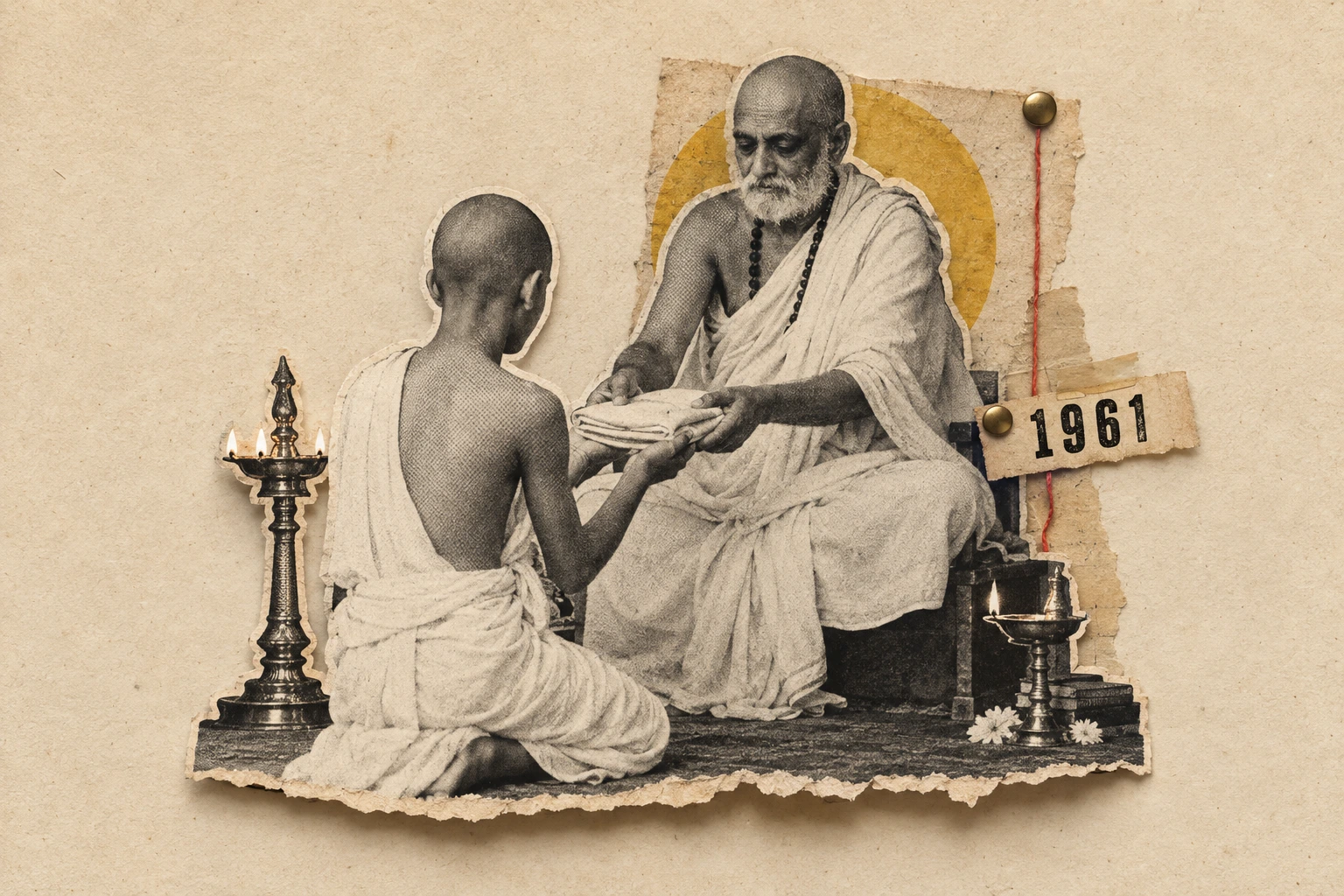
Edneer is a small village in the Kasaragod district, at the northern tip of Kerala. It sits among coconut groves, areca palms and paddy fields. There stands the Edneer Mutt, a monastery of the Shankaracharya tradition.
In 1961, a nineteen-year-old took sanyasa and became the head of the mutt. His name was Kesavananda Bharati. He was known for his love of music, not for politics. The mutt owned land, by some accounts nearly seven hundred acres. That land fed its students, kept its cattle and paid for its daily rituals. Within a decade, that land would reach the Supreme Court.
2. Kerala’s land reform law
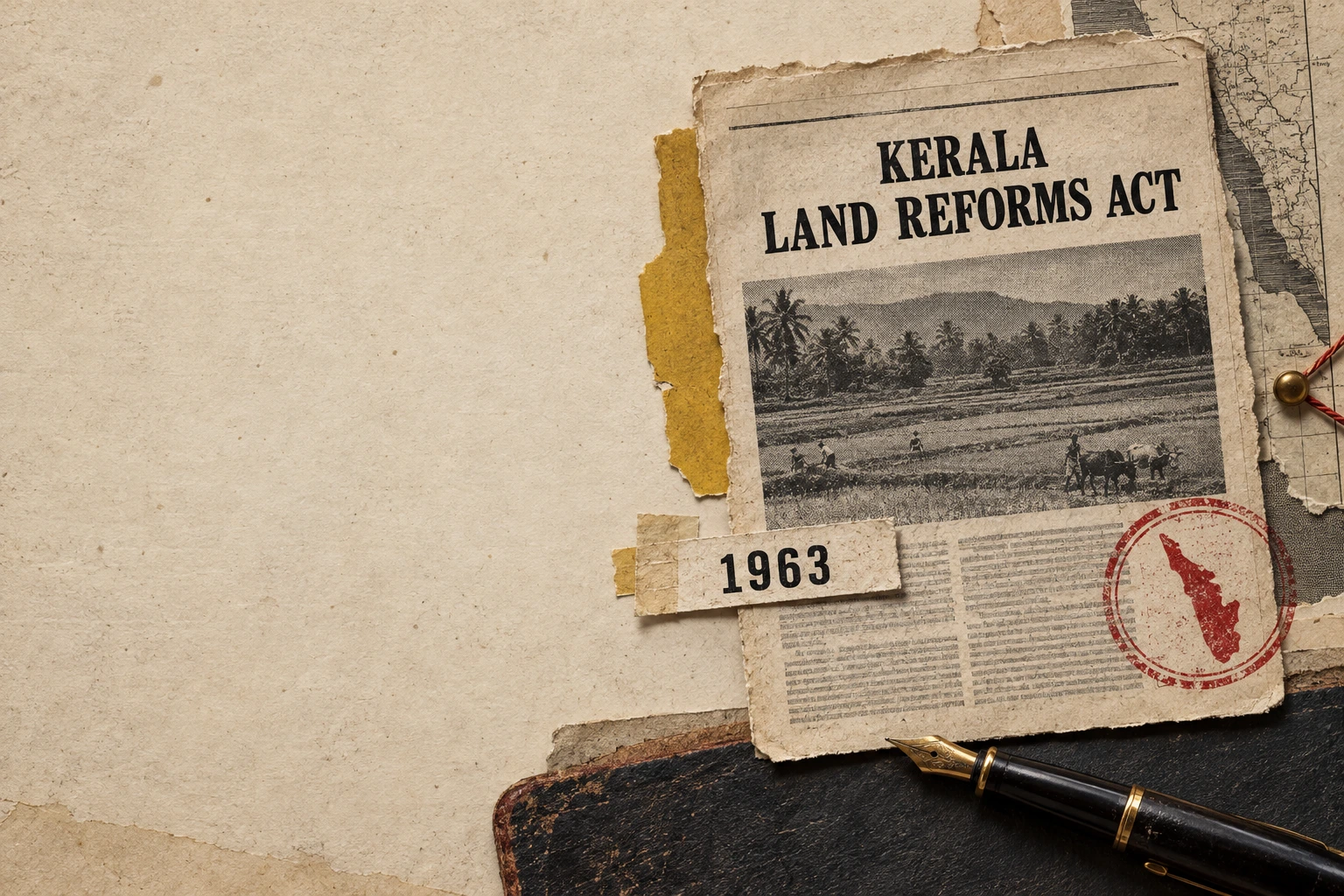
Kerala wanted to give land to the families who actually worked it. In 1963 it passed the Kerala Land Reforms Act. The law set a ceiling on how much land anyone could hold, and the ceiling applied to individuals and institutions alike. A monastery was treated like any other large landholder.
In 1969, an amendment made the law much stronger. Surplus land above the ceiling could now be taken over by the State. Tenants could become owners of the land they farmed. For thousands of farming families, this meant security. For the Edneer Mutt, it meant losing much of its estate, and with it, its income and its control over its own affairs.
3. The petition under Article 32
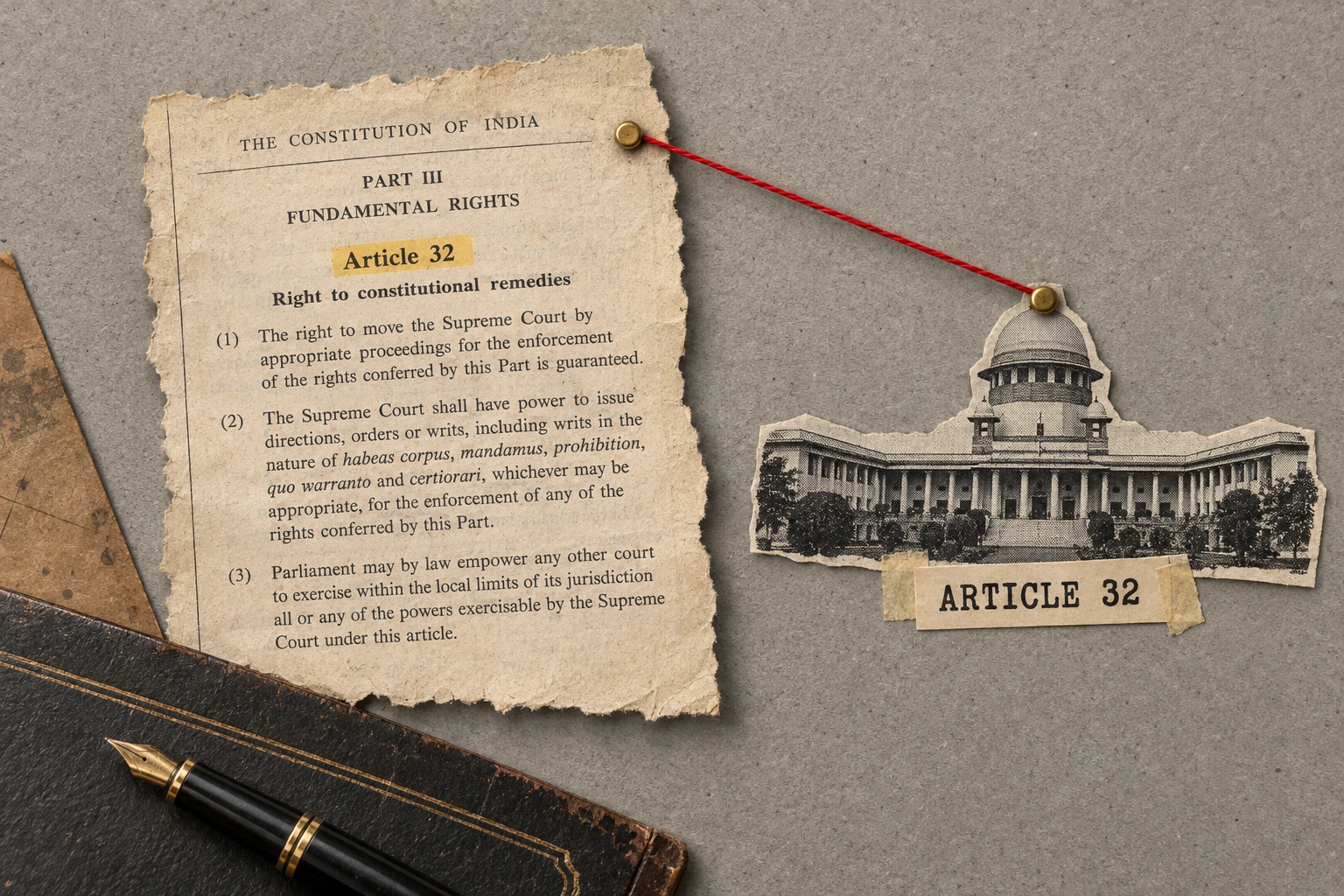
The young head of the mutt decided to challenge the law. On 21 March 1970, a writ petition was filed. It did not start in a lower court. It went straight to the Supreme Court under Article 32, the article that lets a citizen approach the Supreme Court directly when a fundamental right is threatened.
The petition said the law violated three of his rights: his right to property, his right to manage a religious institution, and his right to equality. Within four days, the Court issued notice to the State of Kerala. At that stage it looked like an ordinary dispute over land. Events far beyond Kerala were about to change its meaning.
4. Meanwhile, in the Kerala High Court
At the same time, other landholders went to the Kerala High Court, which then sat in Ernakulam. In August 1970, a Full Bench of that court decided Narayanan Nair versus State of Kerala. It upheld the broad scheme of land reform, but struck down several provisions of the 1969 amendment. In April 1971, the Supreme Court largely agreed with that view. Kerala’s land reform programme was now in serious difficulty.
One judge on that Kerala Full Bench was Justice K K Mathew. He would later sit on the thirteen-judge bench in Delhi, and he would vote with the minority.
5. Parliament against the Supreme Court
This was never only about one monastery. By then, India’s Parliament and its Supreme Court were in open conflict.
In 1967, in Golaknath versus State of Punjab, eleven judges decided by six votes to five that Parliament could not take away fundamental rights, even by amending the Constitution. In 1970 the Court struck down bank nationalisation. The same year it struck down the abolition of privy purses, the allowances promised to India’s former royal rulers. In March 1971, Prime Minister Indira Gandhi won a large majority, and Parliament answered the Court with a series of constitutional amendments.
6. The four amendments
The Twenty-fourth Amendment said Parliament could amend any part of the Constitution, including the fundamental rights. The Twenty-fifth Amendment weakened the right to property and tried to keep certain laws out of the reach of the courts. The Twenty-sixth Amendment ended the privy purses. The Twenty-ninth Amendment placed Kerala’s land laws in the Ninth Schedule. A law in the Ninth Schedule was shielded from challenge on the ground that it violated fundamental rights.
The monk’s petition was amended to challenge these amendments themselves. The question was no longer about one monastery’s land. It was whether any part of the Constitution was beyond Parliament’s reach.
7. Thirteen judges, sixty-eight days
Chief Justice S M Sikri constituted a bench of thirteen judges. Hearings began on 31 October 1972 and ended on 23 March 1973: sixty-eight days of argument in all.
Nani Palkhivala argued for the petitioner. Attorney General Niren De and H M Seervai, for Kerala, opposed him. Palkhivala’s central argument was about what unlimited power could mean. If Parliament could amend anything, he argued, it could amend away elections, free speech or the courts themselves, and still call it an amendment. The State’s side answered that the amending power had no hidden limits.
The monk whose name was on the case was back in Edneer. According to accounts, he never met Palkhivala and never spoke to him.
The verdict of 24 April 1973 and what followed
What the thirteen judges decided, and how the Government and the Court responded.
8. The verdict, 24 April 1973
Judgment came on 24 April 1973, one day before Chief Justice Sikri was due to retire. Thirteen judges delivered eleven separate opinions.
First, the Court overruled Golaknath. Parliament could amend any part of the Constitution, including the fundamental rights. Then came the limit that defined the case: Parliament could amend the Constitution, but it could not destroy its basic structure. The Court also struck down the clause of the Twenty-fifth Amendment that shut the courts out of certain laws, the second part of Article 31C. A new legal principle had been established: the basic structure doctrine.
9. What each judge said, and the seventh vote
Chief Justice Sikri listed examples of the basic structure: the supremacy of the Constitution, a republican and democratic form of government, its secular character, the separation of powers and its federal character. Justices Shelat and Grover added the dignity of the individual and the unity and integrity of the nation. Justices Hegde and Mukherjea pointed to the sovereignty of India and the mandate to build a welfare state. Justice Jaganmohan Reddy stressed parliamentary democracy itself.
Six judges took a different view. Justice A N Ray, with Justices Palekar, Mathew, Beg, Dwivedi and Chandrachud, held that Parliament’s amending power had no such implied limits. That included Justice Mathew, from the Kerala Full Bench.
Six against six left one judge in the middle: Justice H R Khanna. He accepted that the right to property was not part of the basic structure. But he held one line firmly: the power to amend is not a power to destroy. His opinion gave the majority its seventh vote.
10. The twist: the monk did not win
Kesavananda Bharati himself did not win. The Court upheld the Twenty-ninth Amendment, so Kerala’s land laws stayed protected in the Ninth Schedule. By many accounts, the mutt eventually lost more than four hundred acres. He lost the land he had gone to court to protect. The doctrine that came from his case now protects every citizen.
11. The Government responds: three judges superseded
Chief Justice Sikri retired on 25 April 1973. By convention, the senior-most judge became the next Chief Justice. Next in line were Justices Shelat, Hegde and Grover. All three had joined the majority in Kesavananda.
That evening, All India Radio announced the new Chief Justice. It was Justice A N Ray, who had been in the minority. Three senior judges had been passed over at once. At his farewell dinner, according to accounts, Sikri spoke to Ray and reportedly told him he would rue the day he accepted. Justices Shelat, Hegde and Grover resigned from the Supreme Court. Critics called it a direct blow to judicial independence.
12. The Emergency and the attempt to undo Kesavananda
In June 1975, the Emergency was declared. In November 1975, in Indira Gandhi versus Raj Narain, the Court used the basic structure doctrine against part of a constitutional amendment: the provision that had shielded the Prime Minister’s own election from challenge, clause (4) of Article 329A, inserted by the Thirty-ninth Amendment.
Days later, Chief Justice Ray convened thirteen judges to review Kesavananda. No party had filed a review petition. Palkhivala argued against the review for two days. When the Chief Justice mentioned a request from Tamil Nadu, its Advocate General reportedly replied that the State had never asked. On 12 November 1975, the bench was dissolved. The basic structure doctrine had survived its first real test. Justice Khanna later recalled divinity speaking through Palkhivala that day.
13. Legacy: Khanna, Minerva Mills and the doctrine today
In 1977 Justice Khanna was himself superseded. He had stood alone in dissent in the A D M Jabalpur case of 1976, the Emergency-era habeas corpus case. He too resigned from the Court.
In 1980, in Minerva Mills versus Union of India, the Court held that the limited nature of the amending power is itself part of the basic structure. It struck down clauses (4) and (5) of Article 368, added by the Forty-second Amendment, which had tried to make the amending power unlimited and keep amendments out of court. The judgment was written by Chief Justice Y V Chandrachud, who in 1973 had been one of the six dissenters.
Today, every constitutional amendment in India can be tested against this doctrine. Democracy, secularism, federalism and judicial review remain protected features, and courts continue to apply the test first set out in 1973.
The legal turning point: the basic structure doctrine explained
What the doctrine means, in plain words, for a layman.
The Constitution as a large building
Think of the Constitution as a large building. Parliament is allowed to renovate it. It can add rooms, change the doors, repaint the walls and even rebuild whole floors. That is the power to amend under Article 368. What Parliament cannot do, after Kesavananda, is pull down the pillars that hold the building up and still call the result the same building.
Those pillars are the basic structure. The judges named examples, not a closed list: the supremacy of the Constitution, democracy and free elections, the secular character of the State, federalism, the separation of powers, judicial review, the dignity of the individual, and the unity and integrity of the nation. Later cases have added to the list, but the test has stayed the same: does this amendment damage or destroy an essential feature of the Constitution?
Three practical points for any citizen
- First, an amendment to the Constitution is not automatically valid just because Parliament passed it with the required majority. It can be challenged in court.
- Second, the court does not ask whether the amendment is wise or popular. It asks only whether it destroys a basic feature.
- Third, the doctrine cuts both ways. In Kesavananda itself, the Court upheld the Twenty-fourth and Twenty-ninth Amendments, and the petitioner lost his land. The doctrine is not a tool to undo every change; it guards only the foundations.
This is why lawyers call Kesavananda the case that saved the Constitution. Before it, a large enough majority in Parliament could in theory rewrite anything. After it, there is a core that no majority can touch.
How the law has moved since 1973
A side-by-side view of what the law said then and what it says now.
Power to amend, Article 368
Then: Golaknath (1967) said Parliament could not take away fundamental rights; the Twenty-fourth Amendment (1971) said Parliament could amend any part of the Constitution.
Now: Parliament can amend any part, including fundamental rights, but cannot destroy the basic structure (Kesavananda, 1973). Clauses (4) and (5) of Article 368, which tried to remove this limit, were struck down in Minerva Mills (1980).
Golaknath versus State of Punjab (1967)
Then: binding law that fundamental rights were beyond amendment.
Now: overruled by Kesavananda.
Twenty-fifth Amendment, Article 31C
Then: laws giving effect to certain directive principles were protected, and a declaration in the law was meant to keep courts out.
Now: the first part was upheld; the clause shutting courts out was struck down in Kesavananda.
Twenty-ninth Amendment and the Ninth Schedule
Then: Kerala’s land laws were placed in the Ninth Schedule, beyond challenge on fundamental rights grounds; the amendment was upheld in 1973.
Now: laws added to the Ninth Schedule on or after 24 April 1973 can be tested against the basic structure (Waman Rao, 1980; I.R. Coelho, 2007).
Right to property
Then: a fundamental right, but held by Justice Khanna not to be part of the basic structure.
Now: no longer a fundamental right since the Forty-fourth Amendment (1978); it is a constitutional right under Article 300A: no one can be deprived of property except by authority of law.
Election of the Prime Minister shielded from courts (Article 329A(4), Thirty-ninth Amendment, 1975)
Then: placed beyond judicial challenge.
Now: struck down in Indira Gandhi versus Raj Narain (1975) using the basic structure doctrine.
What the Kesavananda Bharati case teaches us today
Five lessons that still hold.
A majority is not a blank cheque. A government with a large majority can change a great deal, but not the foundations on which the Constitution stands. That protection belongs to every citizen, whichever party is in power.
Judicial review is part of the Constitution’s core. Any attempt to shut the courts out of constitutional questions has been struck down, in 1973, in 1975 and in 1980.
Independent judges matter as much as good law. The doctrine survived because judges were willing to hold a line, even at personal cost. Three resigned in 1973, and Justice Khanna resigned in 1977.
The person who brings a case does not always win it. Kesavananda Bharati lost his land, yet his petition changed the law for everyone. Many landmark rulings start the same way, with one ordinary dispute that raises a much larger question.
Article 32 is a real remedy. The case began because a citizen could go straight to the Supreme Court when he believed his fundamental rights were threatened. That door is still open.
Epilogue: still standing
The monk who lost his land.
Kesavananda Bharati died on 6 September 2020. He had headed the Edneer Mutt for almost sixty years. He went to court to protect a few hundred acres, and he lost most of them. The Constitution he never set out to defend is still standing.
Frequently asked questions on the Kesavananda Bharati case
Short answers to common questions.
What is the Kesavananda Bharati case?
It is the 1973 judgment of a thirteen-judge bench of the Supreme Court of India in Kesavananda Bharati Sripadagalvaru v. State of Kerala. The head of the Edneer Mutt in Kerala challenged Kerala’s land reform laws and the constitutional amendments that protected them. By seven votes to six, the Court held that Parliament can amend any part of the Constitution but cannot destroy its basic structure.
What is the basic structure doctrine?
It is the rule that some essential features of the Constitution, such as its supremacy, democracy, secularism, federalism, the separation of powers and judicial review, cannot be destroyed by a constitutional amendment. Courts can strike down an amendment that damages these features.
Who won the Kesavananda Bharati case?
In a sense, nobody fully. The Court upheld the Twenty-ninth Amendment, so the petitioner lost his challenge to the land laws, and by many accounts the mutt lost more than four hundred acres. But the Court also laid down the basic structure doctrine, which limits Parliament’s power for all time.
Why was the verdict 7:6?
Six judges, led by Chief Justice Sikri, held that the amending power had implied limits. Six judges, led by Justice A N Ray, held that it had none. Justice H R Khanna held that the right to property was not part of the basic structure, but that the power to amend is not a power to destroy. His opinion gave the majority its seventh vote.
Who argued the Kesavananda Bharati case?
Nani Palkhivala argued for the petitioner. Attorney General Niren De and H M Seervai, for Kerala, argued on the other side. The hearing lasted sixty-eight days, from 31 October 1972 to 23 March 1973.
Which later cases applied the basic structure doctrine?
Indira Gandhi v. Raj Narain (1975), which struck down the clause shielding the Prime Minister’s election; Minerva Mills v. Union of India (1980), which held that the limited amending power is itself a basic feature; and I.R. Coelho v. State of Tamil Nadu (2007), which held that laws added to the Ninth Schedule after 24 April 1973 can be tested against the basic structure.
Sources for the Kesavananda Bharati case
Judgments and provisions relied on.
- Kesavananda Bharati Sripadagalvaru v. State of Kerala, (1973) 4 SCC 225; AIR 1973 SC 1461, judgment of 24 April 1973
- I.C. Golaknath v. State of Punjab, AIR 1967 SC 1643, judgment of 27 February 1967
- Indira Nehru Gandhi v. Raj Narain, AIR 1975 SC 2299, judgment of 7 November 1975
- Minerva Mills Ltd. v. Union of India, (1980) 3 SCC 625; AIR 1980 SC 1789
- Waman Rao v. Union of India, (1981) 2 SCC 362
- I.R. Coelho v. State of Tamil Nadu, (2007) 2 SCC 1, judgment of 11 January 2007
- Constitution of India: Articles 13, 31C, 32, 300A, 329A and 368; Constitution (Twenty-fourth, Twenty-fifth, Twenty-sixth, Twenty-ninth, Thirty-ninth, Forty-second and Forty-fourth Amendment) Acts
- Kerala Land Reforms Act, 1963
Disclaimer: This article is for general legal awareness and academic discussion only. It does not constitute personalized legal advice, and outcomes in any individual matter depend on the facts of the case and judicial discretion. Please consult a qualified advocate for advice specific to your situation.
Common misreadings of the Kesavananda Bharati case
Thinking the petitioner won his land back He did not. The Court upheld the Twenty-ninth Amendment, Kerala’s land laws stayed in the Ninth Schedule, and by many accounts the mutt eventually lost more than four hundred acres.
Treating the basic structure as a closed list The judges gave examples, not a complete list, and later cases have added to it. What has stayed the same since 1973 is the test: does the amendment destroy an essential feature?
Assuming the doctrine can undo any amendment you dislike The doctrine guards only the foundations. Kesavananda itself upheld the Twenty-fourth and Twenty-ninth Amendments, and Justice Khanna held that the right to property was not part of the basic structure.
Citing the right to property as a fundamental right Since the Forty-fourth Amendment (1978) it is no longer a fundamental right. It is a constitutional right under Article 300A: no one can be deprived of property except by authority of law.
From our practice


Constitutional and writ questions need careful reading of the law
Questions about fundamental rights, the validity of laws and amendments, and remedies under Article 32 or Article 226 turn on the facts and the record in each matter. If you have a constitutional or writ matter, the chamber can look at your papers and explain the forum, the limitation and the options. Outcomes depend on the facts and on judicial discretion, and nothing here is a promise of result. For legal consultation, call +91 890 222 4444 or visit www.patraslawchambers.com.
Book a ConsultationEstablished by a distinguished alumnus of IIT Kharagpur, Patra’s Law Chambers stands as a beacon of legal expertise in Kolkata & Delhi. Know more →

Kolkata Office
NICCO House, 6th Floor, 2 Hare Street
Kolkata-700001 (Near Calcutta High Court)
Delhi Office
4455/5, First Floor, Gali Shahid Bhagat Singh
Main Bazar Road, Paharganj, New Delhi-110055
Contact
[email protected]
+91 890 222 4444 / +91 7003 715 325
How a court tests a constitutional amendment
A plain-words view of the question courts ask after 1973.
Amendment is passed
Parliament passes it under Article 368 with the required majority.
A citizen challenges it
A writ petition goes to the High Court or directly to the Supreme Court under Article 32.
Court looks at the feature
It asks which essential feature of the Constitution is affected.
Damage or destroy?
The test is whether the amendment damages or destroys that feature, not whether it is wise or popular.
Upheld or struck down
If a basic feature is destroyed, the amendment is struck down; otherwise it stands.
Frequently asked questions about the Kesavananda Bharati case
It is the 1973 judgment of a thirteen-judge Supreme Court bench in Kesavananda Bharati Sripadagalvaru v. State of Kerala. The head of the Edneer Mutt challenged Kerala’s land reform laws and the amendments protecting them. By seven votes to six, the Court held Parliament cannot destroy the Constitution’s basic structure.
It is the rule that essential features of the Constitution, such as its supremacy, democracy, secularism, federalism, separation of powers and judicial review, cannot be destroyed by a constitutional amendment. Courts can strike down an amendment that damages these features.
In a sense, nobody fully. The Court upheld the Twenty-ninth Amendment, so the petitioner lost his challenge, and by many accounts the mutt lost more than four hundred acres. But the Court also laid down the basic structure doctrine, which limits Parliament’s power.
Six judges led by Chief Justice Sikri held the amending power had implied limits. Six led by Justice A N Ray held it had none. Justice H R Khanna held that the power to amend is not a power to destroy, giving the majority its seventh vote.
Nani Palkhivala argued for the petitioner. Attorney General Niren De and H M Seervai, for Kerala, argued on the other side. The hearing lasted sixty-eight days, from 31 October 1972 to 23 March 1973.
Indira Gandhi v. Raj Narain (1975) struck down the clause shielding the Prime Minister’s election. Minerva Mills (1980) held the limited amending power is itself a basic feature. I.R. Coelho (2007) held post-24 April 1973 Ninth Schedule laws can be tested against it.
No. Since the Forty-fourth Amendment (1978), property is a constitutional right under Article 300A: no one can be deprived of property except by authority of law. Justice Khanna had held in 1973 that the right to property was not part of the basic structure.