Calcutta High Court Advocate — Chambers Steps from the High Court
Writs, service matters, anticipatory bail, FIR quashing, civil revisions and appeals — argued by Advocate Sudip Patra from chambers at NICCO House, 2 Hare Street, a short walk from the Calcutta High Court and Bankshall Court. Speak to the chamber directly, today.
Watch: an introduction to Calcutta High Court matters
Kolkata High Court advocate contact number — skip the list
Most people searching for a “Kolkata High Court advocate list” or a “High Court vakil phone number” simply need one experienced advocate who will pick up, read the papers and tell them honestly where they stand. The official roll of advocates is kept by the Calcutta High Court and its Bar associations — but you can reach our chamber directly:
Names without practice areas, no idea who appears in which court, numbers that may be outdated, and no one to tell you whether the High Court is even the right forum.
A chamber that appears regularly on the Appellate Side — writ courts, the Chief Justice’s Division Bench and criminal benches — reads your papers and tells you the correct forum, remedy and timeline.
High Court chambers at NICCO House, 2 Hare Street
Our Kolkata chambers sit in the heart of the BBD Bag court district — on the 6th floor of NICCO House, 2 Hare Street, Kolkata-700001, a short walk from the Calcutta High Court and the Bankshall Court complex. That proximity matters: a conference can be fixed before or after a hearing, certified copies and affidavits move quickly, and urgent mentions do not wait on travel. Choose how you would like to consult:
- NICCO House, 6th Floor, 2 Hare Street, Kolkata-700001 — walkable from the High Court and Bankshall Court.
- Call ahead to fix a time; conferences are often scheduled around the day’s court listings.
- Bring originals plus one set of photocopies of every order and notice.
- Share scanned documents on WhatsApp or email before the call.
- A structured video conference covers facts, forum, limitation and the likely relief.
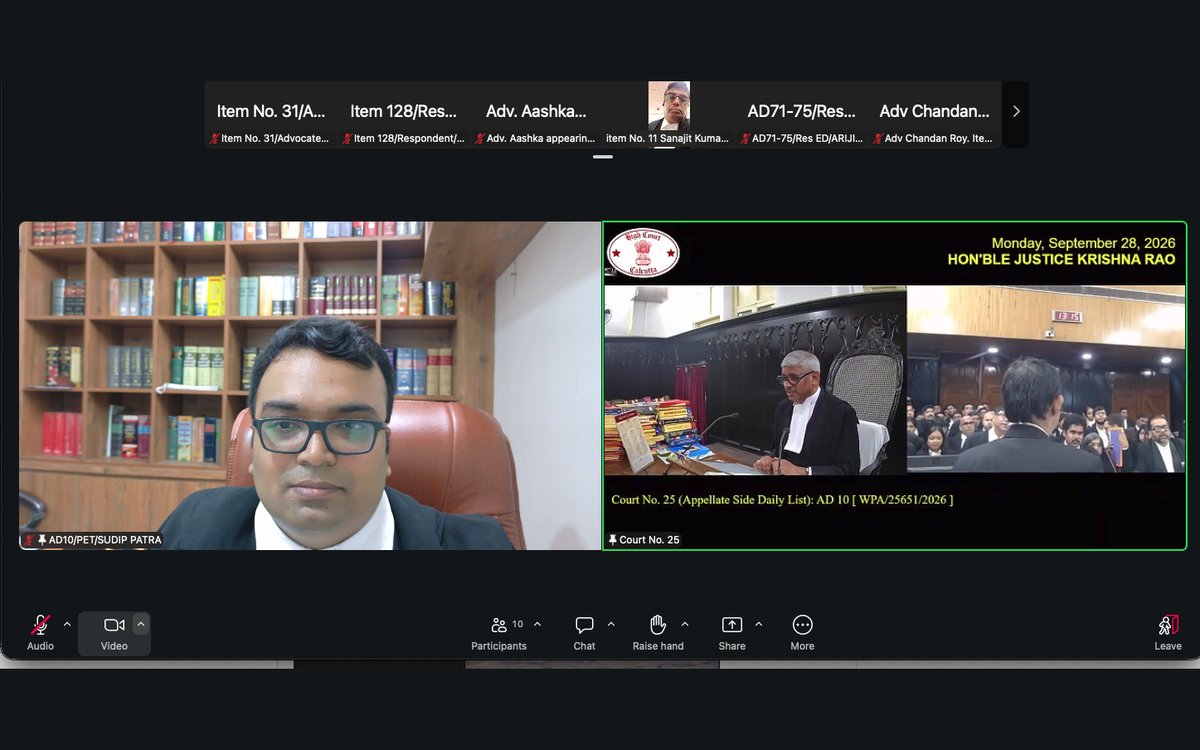
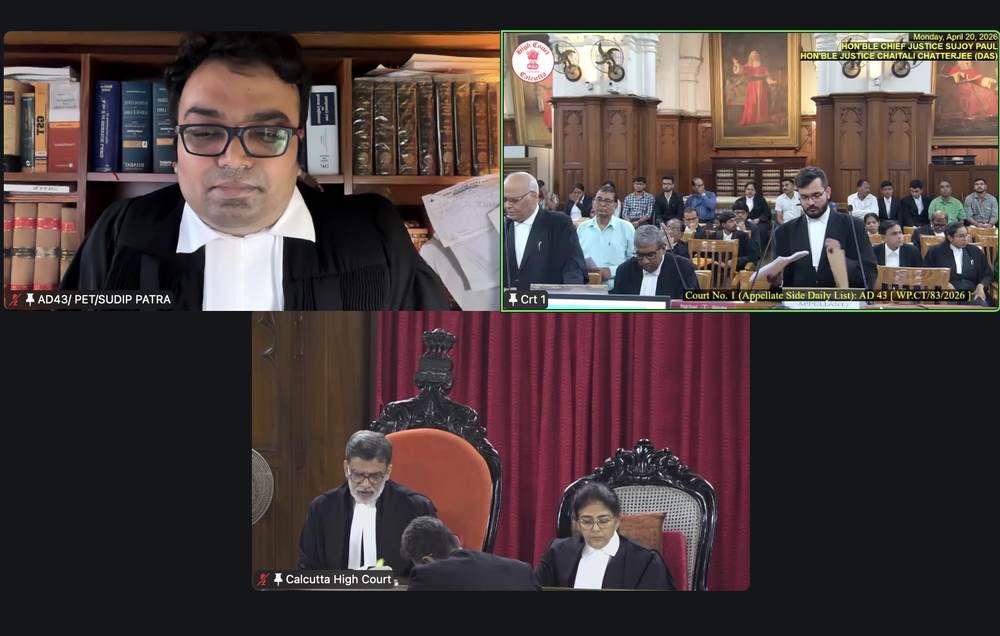
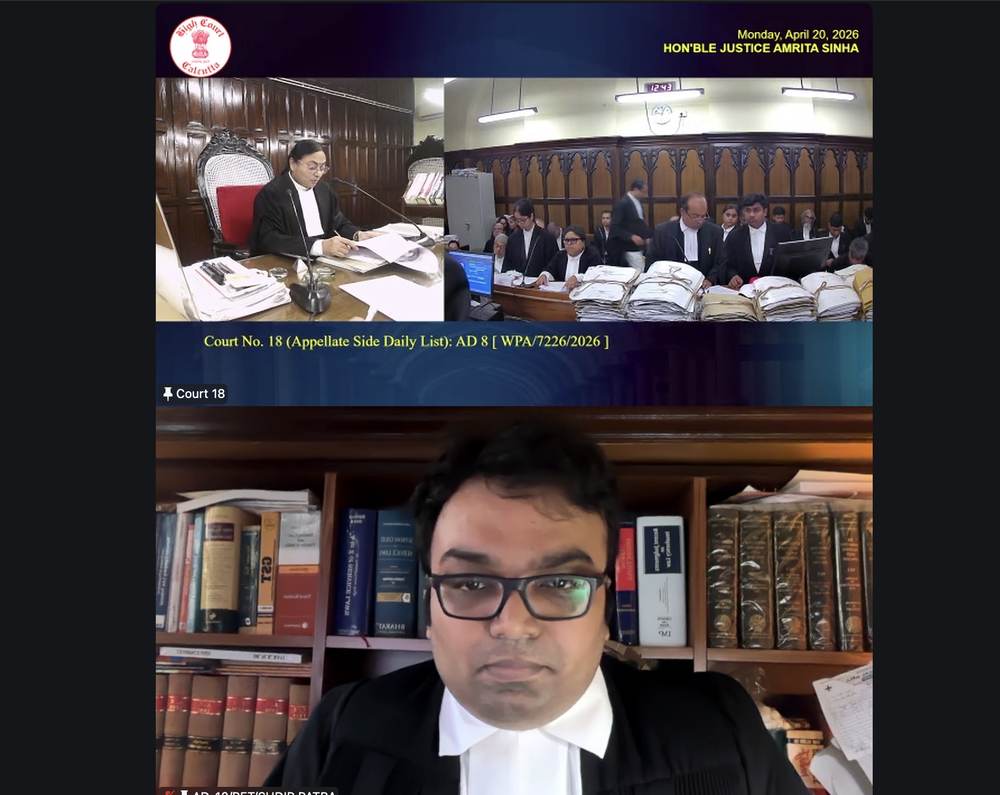
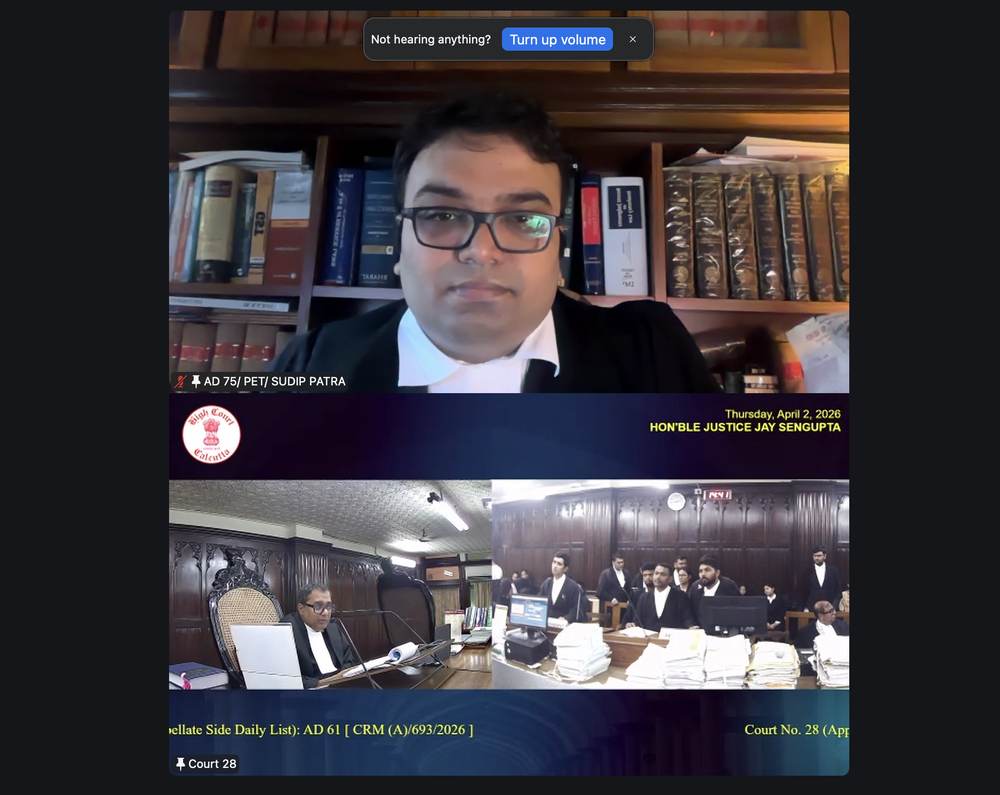
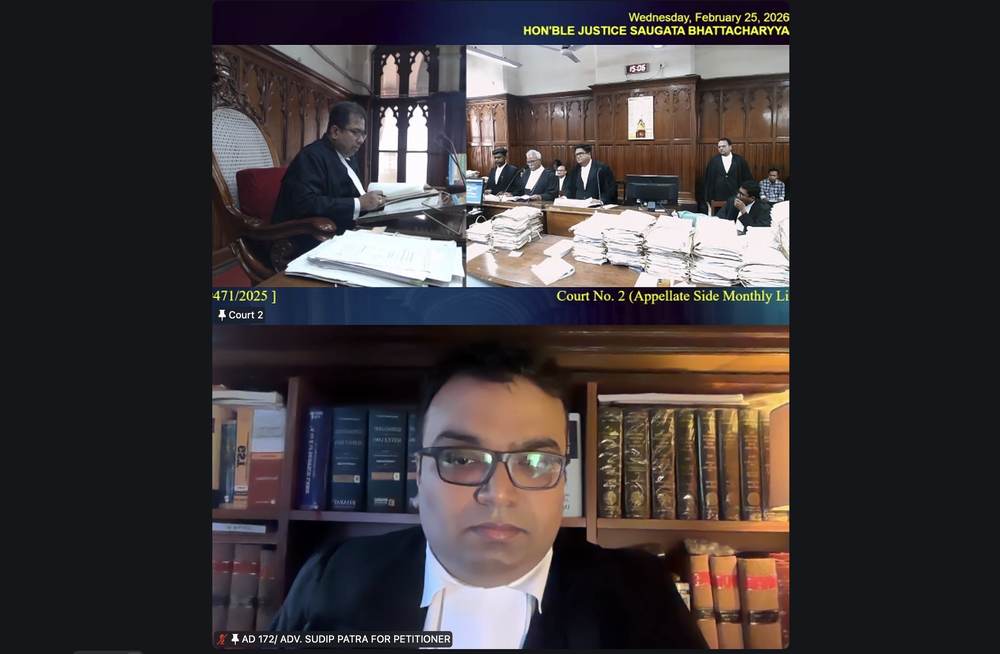
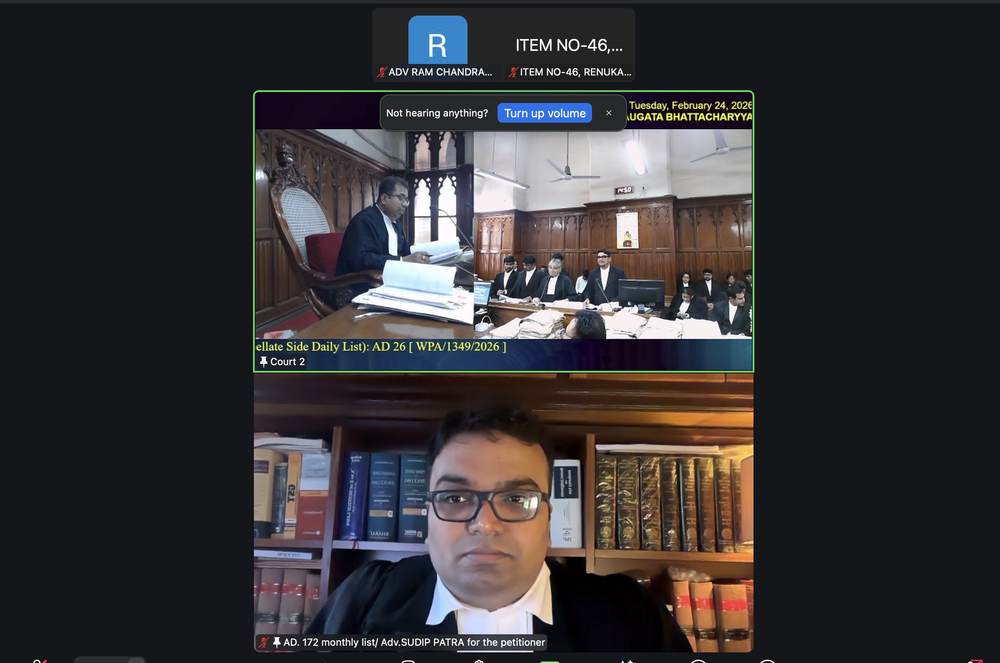
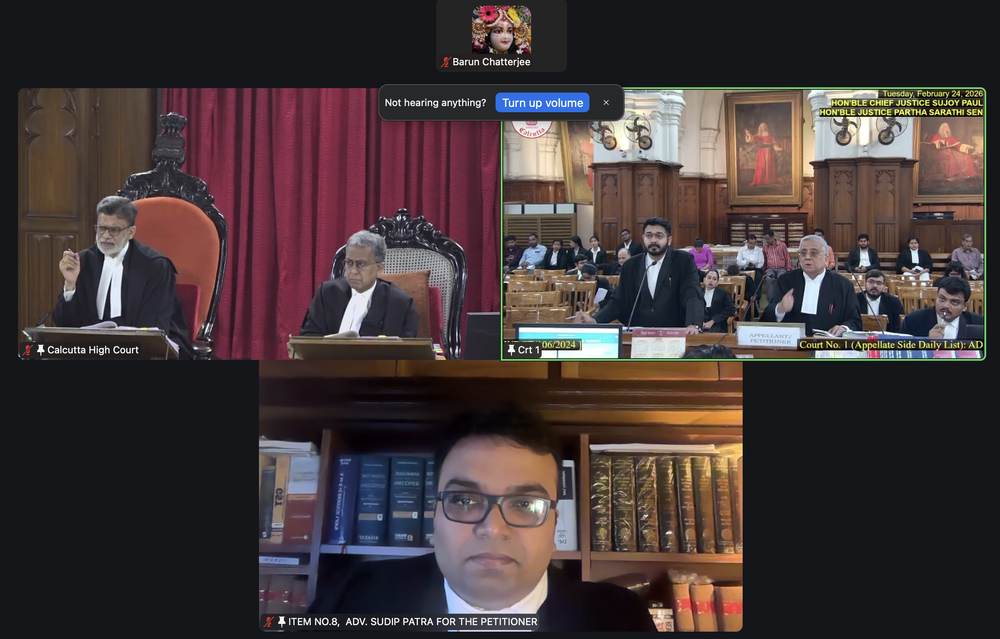
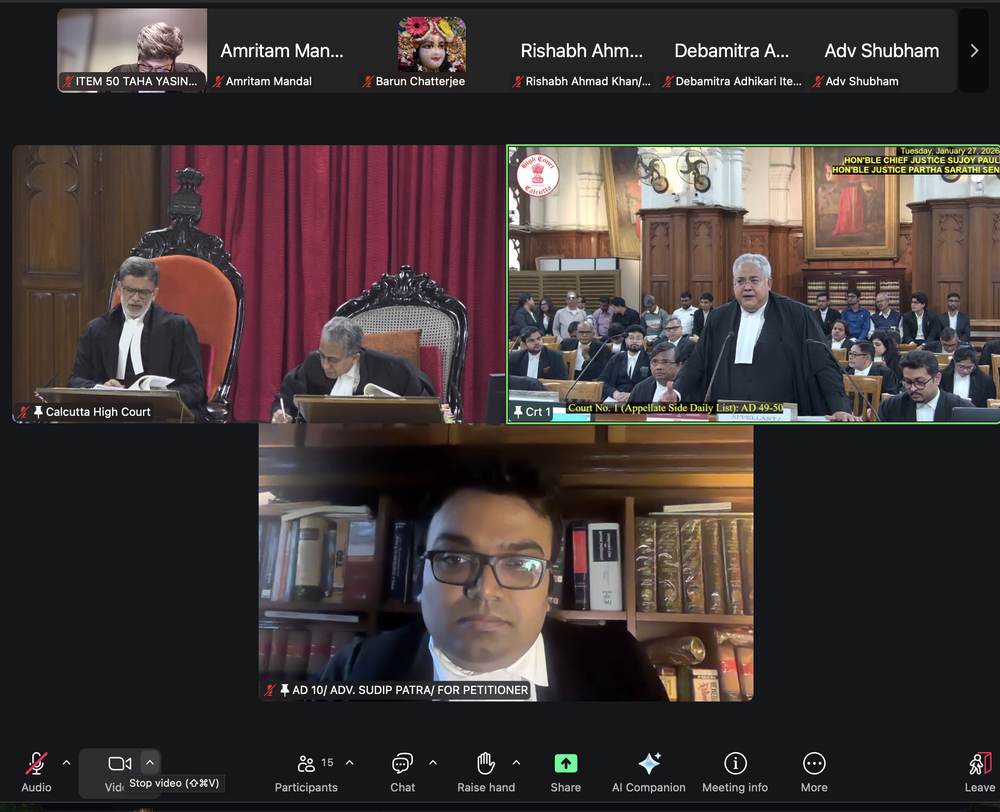
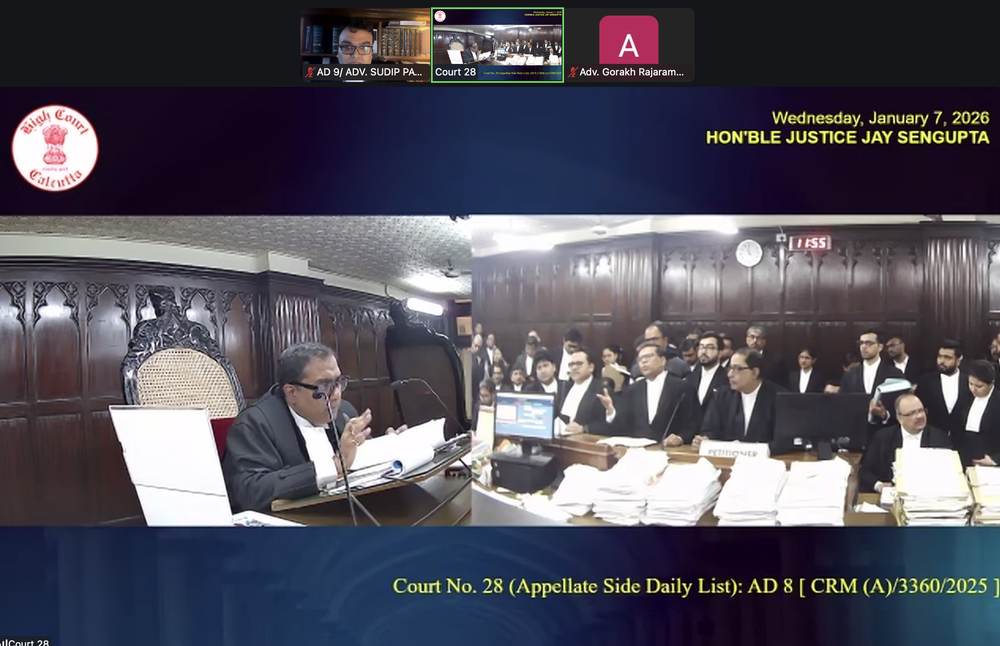
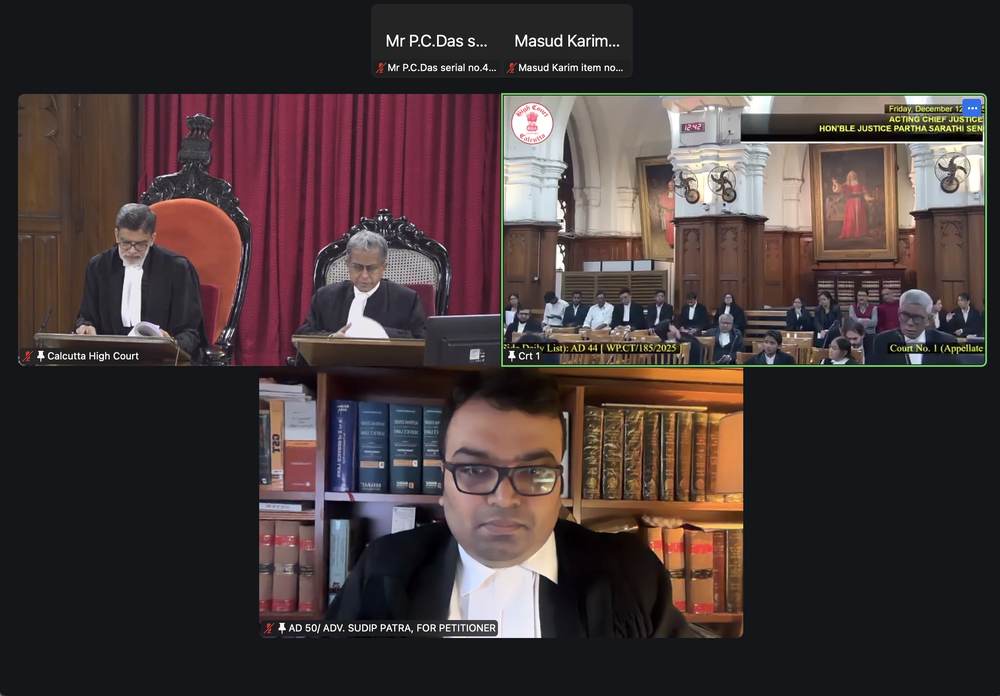
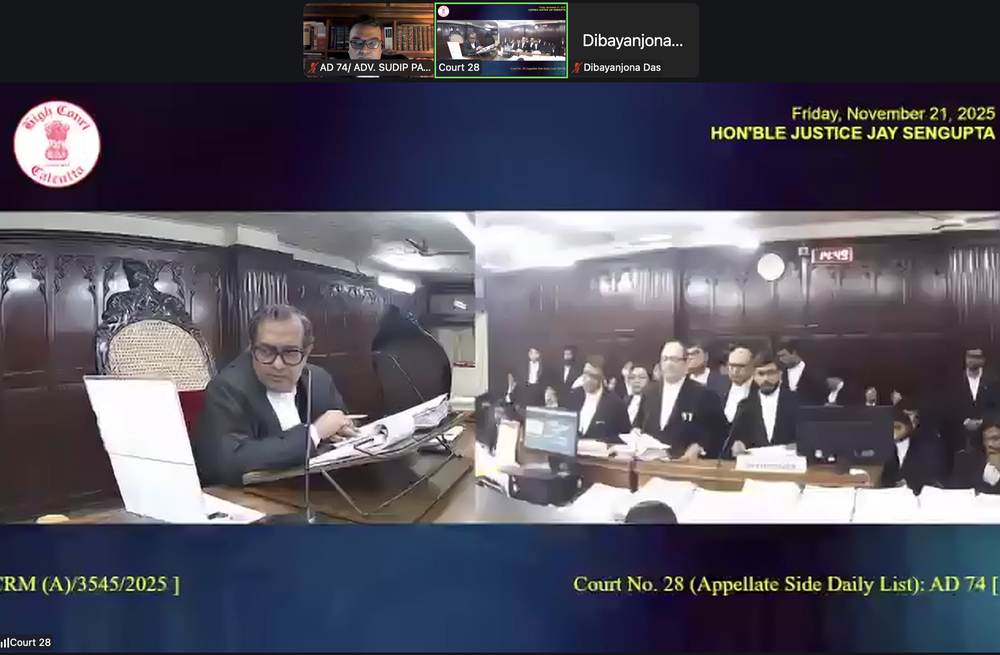
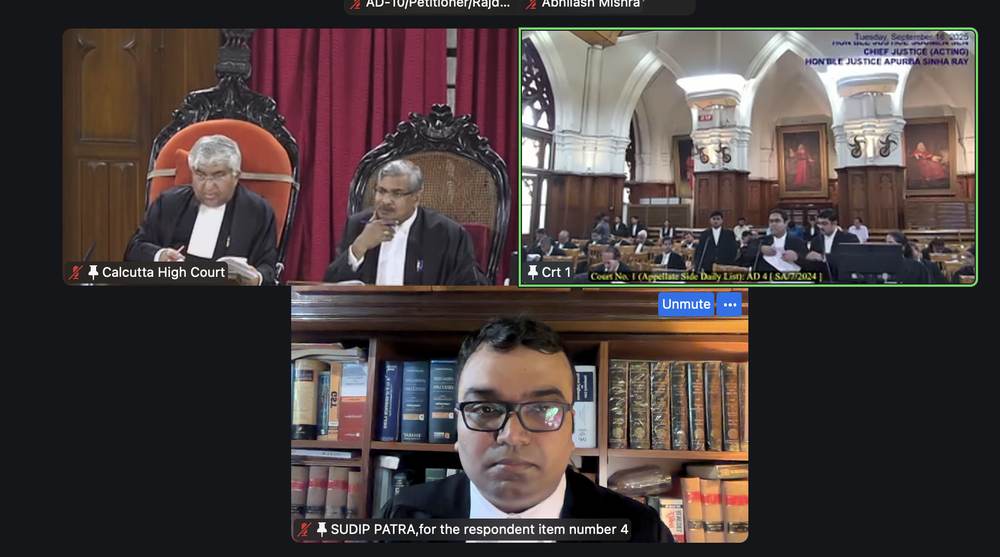
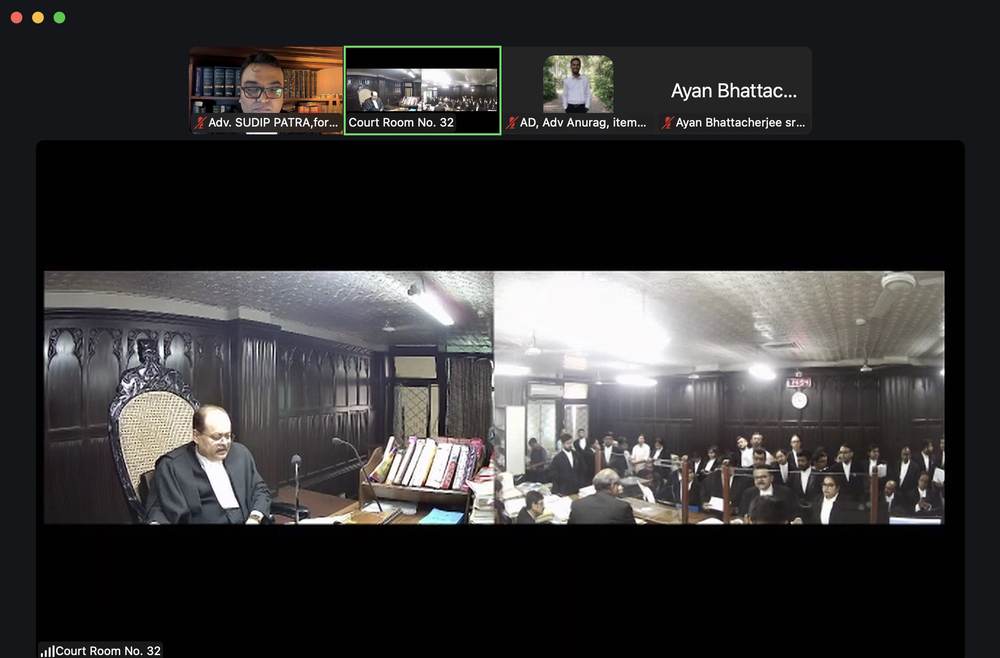
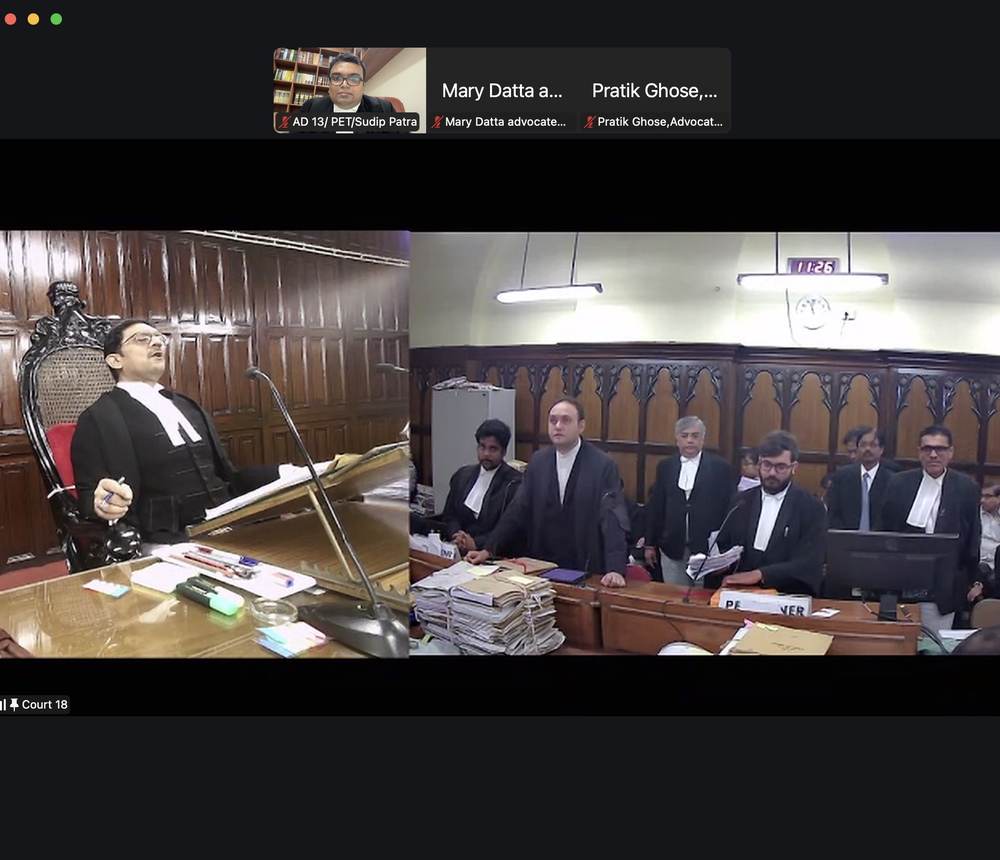
- Many hearings themselves proceed through the High Court’s video link, as the appearances below show.
- Call or WhatsApp +91 890 222 4444 with a two-line summary of the problem.
- Send a photo of the order, notice or FIR you are worried about.
- For an arrest threat, a demolition or an auction date, say “urgent” at the start of your message.
What we handle in the Calcutta High Court
Patra’s Law Chambers was founded in 2020 by Advocate Sudip Patra, an IIT Kharagpur and IIM Calcutta Alumnus with 9+ Years of Professional Legal Experience. The chamber is listed with the Bar Association, Calcutta High Court, and appears on both the Appellate Side and the Original Side, working alongside senior counsel where a matter calls for it.
Writ petitions
Police inaction, arbitrary administrative orders, licences, tenders, municipal and land matters — mandamus, certiorari, prohibition, quo warranto and habeas corpus. How a writ is filed →
Service matters & CAT challenges
Promotion, seniority, transfer, suspension, disciplinary and pension disputes, and writs against Central Administrative Tribunal orders heard by the Division Bench. Service matters →
Anticipatory bail & bail
Pre-arrest protection and regular bail, bail cancellation and opposing cancellation, with careful attention to the case diary and conditions the Court may impose. Anticipatory bail guide →
Quashing & criminal revision
Quashing of FIRs, complaints and charge-sheets under Section 528 BNSS (earlier Section 482 CrPC), NI Act and other complaint cases, and revisions against trial-court orders. Criminal quashing →
Civil revisions & appeals
Revisions against interlocutory orders, first appeals and appeals from orders in title, partition, inheritance, tenancy and money suits. FA vs FMA vs Article 227 →
Probate & commercial matters
Probate and letters of administration, will disputes, and commercial and banking challenges, including SARFAESI-related writs. Probate in the High Court →
We will show the usual High Court remedy and the next step. Every case turns on its own documents — call us to confirm.
The five writs under Article 226 — tap to flip
Article 226 of the Constitution of India empowers the High Court to issue writs not only to enforce fundamental rights but “for any other purpose”, which is why it reaches arbitrary action by the State, statutory bodies and tribunals alike.
Compels a public authority to perform a legal duty it has failed to perform — commonly used against police inaction and pending representations.
Quashes an order passed without jurisdiction, in breach of natural justice, or with an error apparent on the face of the record.
Stops an inferior court or tribunal from continuing a proceeding that lies outside its jurisdiction.
Tests the legal right of a person to hold a public office, and ousts a usurper.
Requires a detained person to be produced so the Court can test the legality of the detention.
In court, before the benches that decide your case
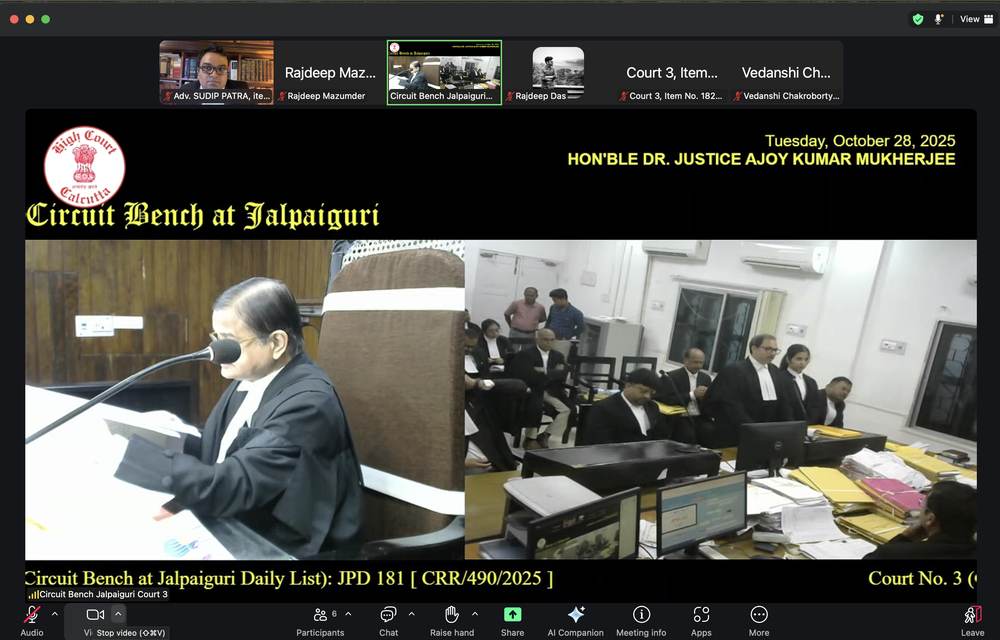
A selection of recent hearings — the Chief Justice’s Division Bench, single-bench writ courts, the anticipatory bail court and the Circuit Bench at Jalpaiguri. Filter by bench and tap any image to enlarge.
Showing 15 hearings
Five rulings that shape High Court practice
1998
Whirlpool Corporation v. Registrar of Trade Marks
(1998) 8 SCC 1An alternative remedy does not bar a writ where fundamental rights are at stake, natural justice has been violated, or the authority acted wholly without jurisdiction — the answer to the State’s commonest preliminary objection.
1997
L. Chandra Kumar v. Union of India
(1997) 3 SCC 261Tribunal decisions remain subject to the High Court’s writ jurisdiction before a Division Bench — the reason a lost CAT case comes to the High Court as a WP.CT.
2014
Lalita Kumari v. Government of U.P.
(2014) 2 SCC 1Registration of an FIR is mandatory where information discloses a cognizable offence — the foundation of police-inaction writs.
1992
State of Haryana v. Bhajan Lal
1992 Supp (1) SCC 335Sets out the categories in which criminal proceedings may be quashed to prevent abuse of process — still the starting point for every quashing petition.
2020
Sushila Aggarwal v. State (NCT of Delhi)
(2020) 5 SCC 1Anticipatory bail need not ordinarily be limited in time and can continue till the end of trial, subject to conditions the Court may impose.
From first call to filing — four stages
Give a short summary and say whether anything is urgent — an arrest threat, a hearing date, an auction or a demolition.
Send the order, notice, FIR or judgment and earlier proceedings, so the conference starts with the record rather than recollection.
In chambers near the High Court or by video: correct forum, limitation, maintainability, the likely relief and a realistic view of the risks.
Petition, affidavit and annexures are drafted, filed and listed, with the matter mentioned for urgent listing where the facts justify it.
Ready — call +91 890 222 4444 to fix your conference.
Mistakes that weaken a good High Court case
Waiting too long. Writs carry no fixed limitation period, but unexplained delay and laches can defeat relief — and criminal and service remedies have their own clocks.
Choosing the wrong forum. A service dispute may first belong before the CAT or a State tribunal; a civil court order may call for revision rather than a writ.
Hiding earlier proceedings. Every earlier petition and order must be disclosed — suppression alone can cost you the discretionary relief.
Skipping the representation. In many writ and service matters the Court first asks whether the authority was approached; a dated representation strengthens the case.
Speak to a Calcutta High Court advocate today
Patra’s Law Chambers represents petitioners and respondents on the Appellate and Original Sides of the Calcutta High Court and before the Circuit Bench at Jalpaiguri, and also practises before the Supreme Court of India and tribunals including the CAT, AFT, DRT and NCLT.
Book a ConsultationEstablished by a distinguished alumnus of IIT Kharagpur, Patra’s Law Chambers stands as a beacon of legal expertise in Kolkata & Delhi. Know more →

NICCO House, 6th Floor, 2 Hare Street
Kolkata-700001 (Near Calcutta High Court & Bankshall Court)
4455/5, First Floor, Gali Shahid Bhagat Singh
Main Bazar Road, Paharganj, New Delhi-110055
[email protected]
+91 890 222 4444 / +91 7003 715 325
Common questions about High Court consultation
Writ petitions under Article 226 (police inaction, service disputes, licences, tenders, municipal and land matters), writ petitions against Central Administrative Tribunal orders (WP.CT) before the Division Bench, anticipatory bail and regular bail, quashing of FIRs and criminal proceedings under Section 528 BNSS (earlier Section 482 CrPC), criminal revisions, civil revisions and appeals, probate on the Original Side, and commercial and SARFAESI-related challenges. We also appear before the Circuit Bench at Jalpaiguri.
Call or WhatsApp +91 890 222 4444 (or +91 7003 715 325) with a short description of the matter and the documents you have. We fix an in-chamber conference at NICCO House, 6th Floor, 2 Hare Street, Kolkata-700001 — a short walk from the Calcutta High Court and Bankshall Court — or a video/phone conference if you are outside Kolkata or abroad.
NICCO House, 6th Floor, 2 Hare Street, Kolkata-700001, in the BBD Bag court district a short walk from the Calcutta High Court and the Bankshall Court complex. Our Delhi office is at 4455/5, First Floor, Gali Shahid Bhagat Singh, Main Bazar Road, Paharganj, New Delhi-110055.
Yes. The official roll of advocates is maintained by the High Court and the Bar associations, but you do not need a list to reach us — call or WhatsApp +91 890 222 4444 and you will speak with the chamber directly about your High Court matter.
Yes. Clients from the districts, North Bengal, other states and abroad regularly consult by video or phone and share documents on WhatsApp or email. The Calcutta High Court also permits virtual appearance, as the hearings shown on this page illustrate.
Yes. Matters arising from the districts within the Jalpaiguri Circuit Bench's jurisdiction are filed and argued there, and we appear before that Bench, including through video conferencing.
The impugned order, notice, FIR or judgment; all earlier petitions, replies and orders in the matter; identity proof; and a short written chronology of dates. For service matters bring appointment and promotion orders and the relevant representation; for criminal matters bring the FIR, any Section 35(3) BNSS notice and the charge-sheet if filed.
Genuinely urgent matters — an imminent arrest, a demolition, an auction or a coercive step — can be moved for urgent listing once the petition is drafted and filed with the supporting documents. Call us immediately so the drafting starts the same day.