When a marriage ends, the welfare of your child decides everything else.
Custody is not a contest between parents — under Indian law it is one question the court asks about the child, and every argument either serves that question or wastes the court’s time. This guide sets out how physical, legal, joint and third-party custody are actually decided by Kolkata’s Family Court and the Calcutta High Court, what the Guardians and Wards Act and the Hindu Minority and Guardianship Act each require, and how Patra’s Law Chambers builds and defends that case for mothers, fathers and guardians alike.
One principle governs every custody case in India
Two statutes and one overriding doctrine control almost every child custody dispute that reaches a Kolkata court. The Guardians and Wards Act, 1890 is the secular framework that applies to every community — it gives the District/Family Court jurisdiction under Section 9 to decide guardianship where the child ordinarily resides, and Section 12 to grant interim custody while the main petition is pending. For Hindus, the Hindu Minority and Guardianship Act, 1956 operates alongside it, and its Section 13 states plainly that the welfare of the minor is the paramount consideration in appointing or declaring any guardian — overriding even a natural guardian’s ordinary legal right. Where custody is sought as part of a divorce or judicial separation, Section 26 of the Hindu Marriage Act, 1955 lets the same matrimonial court pass custody orders without a separate guardianship petition.
The Supreme Court settled the point definitively in Rosy Jacob v. Jacob A. Chakramakkal: children are not property to be allotted to the “winning” parent, and the controlling consideration is the welfare of the child, not the right of either parent. Every argument in this guide, and every strategy Patra’s Law Chambers builds for a client, starts from that single sentence.
Four kinds of custody, one welfare test
A court does not simply choose “mother” or “father.” It chooses among several distinct legal arrangements, and often combines them — a parent can hold legal custody jointly while physical custody sits with one household.
Physical Custody
Legal Custody
Joint Custody
Third-Party Custody
Which statute governs your petition?
The right filing route depends on your community and whether a matrimonial case is already running. Select each option below.
Section 6 & 13, HMGA, 1956
Applies where both parents are Hindu (which for this Act includes Buddhists, Jains and Sikhs). Section 6 names the father, then the mother, as natural guardians of a legitimate minor son or unmarried daughter — but Section 13 overrides this ordering the moment welfare points the other way. A custody petition can be filed independently of any matrimonial proceeding.
Sections 7, 9 & 12, Guardians and Wards Act, 1890
The secular route, available to every community including Muslims, Christians and Parsis, and to Hindus who prefer a standalone guardianship petition. Filed before the District/Family Court where the child ordinarily resides (Section 9). Section 12 lets the court grant interim custody at the very first hearing, before the main petition is decided — often the most urgent relief a client needs.
Section 26, Hindu Marriage Act, 1955
Where a divorce, judicial separation or restitution petition is already before the court, Section 26 lets that same court pass, vary or revoke custody orders as an incident of the matrimonial case — no separate guardianship petition needed. Interim orders can be passed at any stage, and revisited as the child grows.
The courtroom record behind the advice
Every strategy in this guide is drawn from time actually spent arguing before these benches. A short record of the chamber’s appearances and the relief obtained — the same forums where a custody, guardianship or habeas corpus writ is ultimately heard.

A personal appearance at the Calcutta High Court — the same Original and Appellate Side benches that hear guardianship writs and appeals from Family Court custody orders.
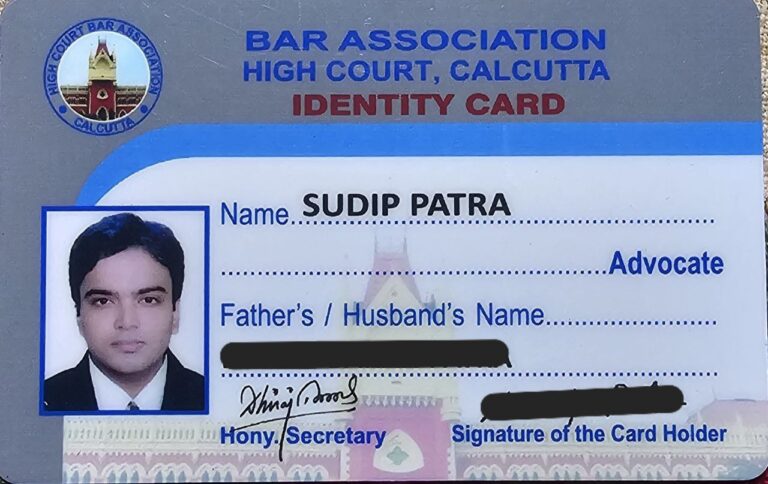
Enrolled member of the Calcutta High Court Bar — a standing that matters directly in custody matters, since contested guardianship appeals from the Family Court are heard here.

Briefed and argued before the Supreme Court of India — the forum of last resort for cross-border and inter-state custody disputes once High Court remedies are exhausted.
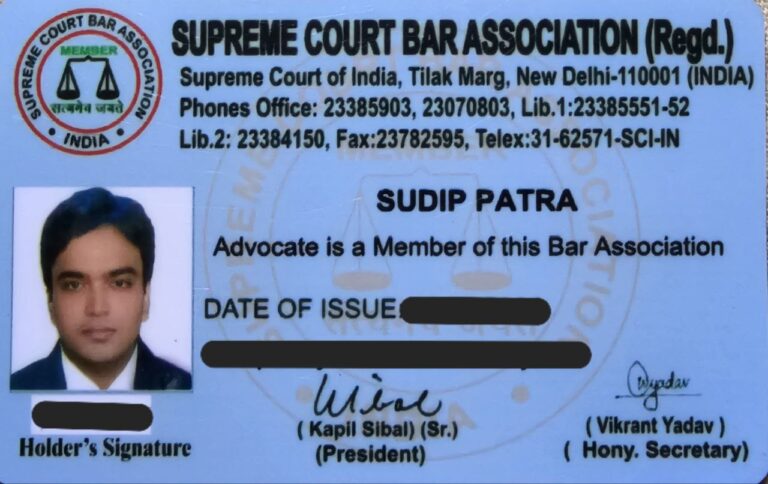
Enrolled to practise before the Supreme Court of India, the court that laid down the welfare doctrine this entire guide is built on, in judgments like Rosy Jacob and Gaurav Nagpal.
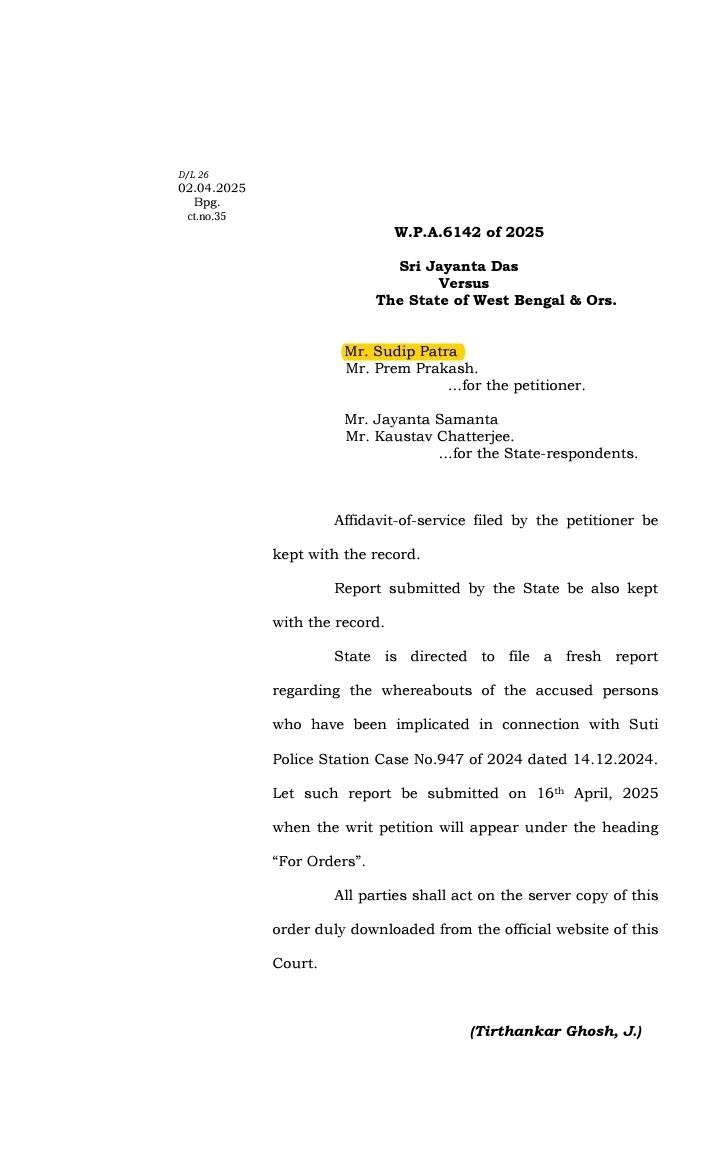
A High Court writ order secured by the chamber — the identical Article 226 remedy a parent uses to challenge an Family Court custody order that ignored the child’s welfare.
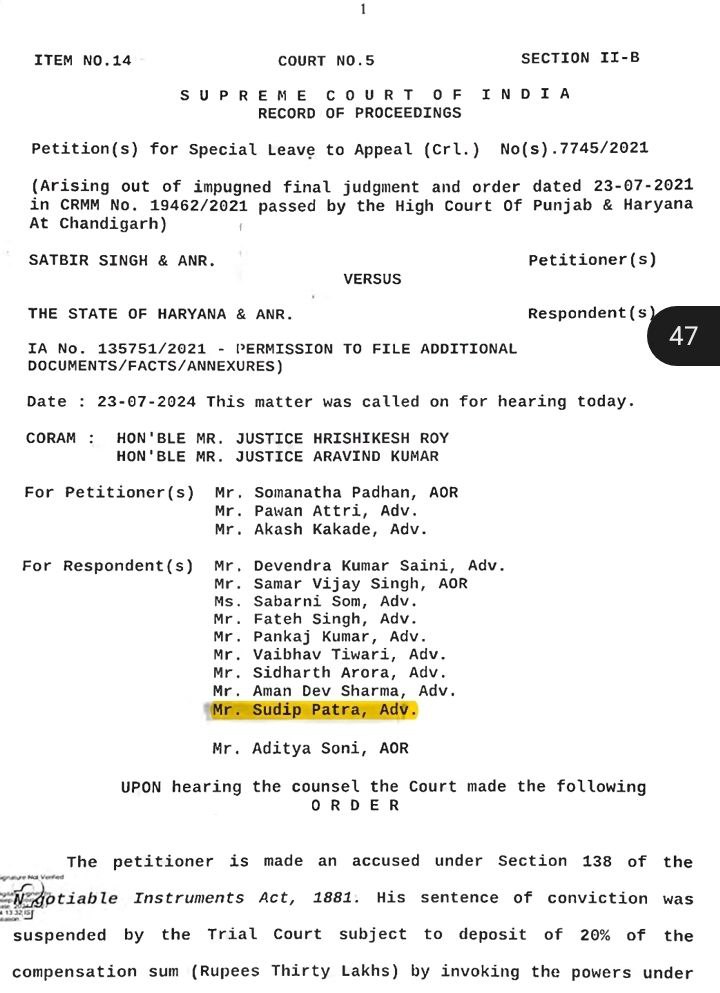
A favourable Supreme Court order — the level of drafting and argument every custody petition from this chamber is prepared to withstand on appeal.

Present and prepared, matter after matter — the same discipline of a verified timeline, indexed annexures and grounds mapped to statute that a custody petition demands.
Does my child’s own preference count?
Section 17 of the Guardians and Wards Act directs the court to consider the wishes of a minor “old enough to form an intelligent preference” — but that weight is not fixed. It grows with age, and never stands alone. Move the slider to see how a Kolkata Family Court typically treats it at different ages.
What the court actually weighs
No single factor decides a custody case. Judges build a picture from all of the following, and a petition or defence that ignores several of them is a weak one.
Ability to provide a stable home
Income matters, but Nil Ratan Kundu v. Abhijit Kundu confirms it is only one factor among many — emotional stability and the quality of attachment weigh just as heavily as the size of a bank balance.
Disruption to school, home and siblings
Courts are cautious about uprooting a settled child from their current school, neighbourhood and sibling relationships without a compelling welfare reason.
History of abuse, neglect or alienation
Documented domestic violence, neglect, or a pattern of turning the child against the other parent all weigh directly against the parent responsible — and must be pleaded with evidence, not just alleged.
Whether visitation will actually be honoured
A parent who has obstructed or is likely to obstruct the other’s visitation is viewed unfavourably — the court wants a custodian who will keep the child connected to both parents.
The child’s own medical and developmental needs
Where a child has specific medical, educational or developmental needs, the parent realistically able to meet them is given real weight — this can outweigh other factors entirely.
When the child was brought here from abroad
NRI custody disputes turn on a genuinely different question: not who should have custody, but which court — Indian or foreign — should decide that question at all.
Indian courts ordinarily respect the foreign court’s interim order under the principle of comity of courts, and direct the parties back to that jurisdiction — unless the return would itself cause the child demonstrable, grave harm.
Deference to foreign court, subject to a welfare exceptionNithya Anand Raghavan v. State (NCT of Delhi) held that comity gives way where a summary return would expose the child to real harm — the Indian court must then conduct its own full welfare enquiry, not a mechanical hand-back.
Full welfare enquiry in IndiaControlling precedent
These six Supreme Court judgments anchor almost every custody argument made before an Indian court, and are cited in nearly every petition and counter this chamber drafts.
Rosy Jacob v. Jacob A. Chakramakkal
Supreme Court of India · (1973) 1 SCC 840Children are not mere chattels to be handed to the “winning” parent.
The controlling consideration governing custody is the welfare of the children, not the right of either parent — the foundational statement every later custody judgment builds on.
Gaurav Nagpal v. Sumedha Nagpal
Supreme Court of India · (2009) 1 SCC 42Welfare overrides even a natural guardian’s technical legal right.
The Court reviewed English, American and Indian authority and held that welfare — understood broadly to include moral and physical well-being and ties of affection — controls the outcome even against a parent’s ordinary legal entitlement.
Roxann Sharma v. Arun Sharma
Supreme Court of India · (2015) 8 SCC 318No rigid rule automatically favours either parent.
Interim custody of a child under five is not an automatic entitlement of the mother under Section 6(a), HMGA — every case turns on the child’s best interests on its own facts.
Surya Vadanan v. State of Tamil Nadu
Supreme Court of India · (2015) 5 SCC 450The “first-strike” principle in cross-border custody.
Where a foreign court is already seized of a custody dispute concerning a child ordinarily resident there, Indian courts should ordinarily respect that court’s interim orders under the doctrine of comity of courts.
Nithya Anand Raghavan v. State (NCT of Delhi)
Supreme Court of India · (2017) 8 SCC 454Comity of courts yields to a genuine risk of harm to the child.
A three-judge bench held that summary return to the foreign jurisdiction is not automatic — where return would expose the child to grave harm, the Indian court must undertake its own full welfare enquiry rather than mechanically deferring.
Vivek Singh v. Romani Singh
Supreme Court of India · (2017) 3 SCC 231Custody arrangements must evolve as the child grows.
The Court reaffirmed that a custody order is never final in the way a property decree is — it can and should be revisited as the child’s needs, age and circumstances change over time.
How a custody case actually moves
The real-world sequence, from the first filing to an enforceable final order.
Filed before the Family Court (or District Court where no Family Court exists) with jurisdiction under Section 9, GWA — ordinarily where the child actually, ordinarily resides, not where either parent lives if that differs.
This is usually the most urgent step. Section 12 lets the court fix interim custody and visitation while the main petition is pending, so the child’s day-to-day life does not sit in limbo for the months a full hearing can take.
Family Courts in West Bengal routinely refer custody disputes to mediation before contested hearings. A mediated parenting plan is faster, less adversarial, and easier on the child — this chamber pursues it first wherever a workable agreement is realistic.
Where the case remains contested, the court examines each parent’s circumstances and, for a child old enough under Section 17, speaks with the child directly and privately — away from both parents — to gauge an intelligent preference without pressure.
The Family Court passes a reasoned final order on custody, visitation and, if relevant, maintenance. An aggrieved party can appeal to the Calcutta High Court; a genuinely urgent or rights-violating order can also be challenged by writ petition under Article 226.
An order that is ignored can be enforced by contempt proceedings. Because Vivek Singh v. Romani Singh confirms custody orders are never permanently frozen, either parent may later apply to modify the arrangement if circumstances genuinely change.
Where custody cases are actually lost
Assuming the mother automatically wins
The “tender years” preference is a rebuttable presumption, not a rule. Roxann Sharma and Gaurav Nagpal both confirm a father can and does secure custody, including of a young child, where the facts support it.
Taking the child without a court order
Removing a child from the other parent’s care outside a court-sanctioned arrangement is treated as self-help, not strength — it invites contempt proceedings and actively damages credibility at the very hearing where good judgment matters most.
Skipping mediation to “win” faster
Refusing a genuine mediation opportunity in favour of pure litigation often lengthens the case, increases legal cost, and is noticed unfavourably by a court assessing which parent will actually support the child’s relationship with the other.
Assuming a foreign custody order is automatically binding — or automatically ignorable
Both extremes are wrong. Surya Vadanan and Nithya Anand Raghavan together mean a foreign order carries real weight but is not an automatic mandate — each cross-border case needs its own comity-versus-welfare argument built on its facts.
Custody, guardianship and visitation, argued properly
Patra’s Law Chambers represents mothers, fathers and guardians in custody petitions and defences under the Guardians and Wards Act and the Hindu Minority and Guardianship Act, interim custody applications, visitation and parenting-time disputes, modification of existing orders, NRI and cross-border custody matters, and appeals and writ petitions before the Calcutta High Court. Read the Supreme Court’s reasoning on the welfare doctrine directly in Rosy Jacob v. Jacob A. Chakramakkal on Indian Kanoon, or the statute itself on India Code.
Bring whatever you already have — a divorce petition, a prior custody order, school or medical records, or simply the situation as it stands — to the first consultation. Family law matters move faster and more calmly with the right first steps.
Established by a distinguished alumnus of IIT Kharagpur, Patra’s Law Chambers stands as a beacon of legal expertise in Kolkata & Delhi. Know more →

Patra’s Law Chambers, NICCO House, 6th Floor, 2 Hare Street, Kolkata – 700001. Near the Calcutta High Court.
Patra’s Law Chambers, House No. 4455/5, First Floor, Gali Shahid Bhagat Singh, Main Bazar Road, Paharganj, New Delhi – 110055.
Frequently asked
There is no fixed rule favouring either parent. Both mother and father have an equal right to seek custody, and the court’s only real test is the welfare of the child, as settled in Rosy Jacob v. Jacob A. Chakramakkal.
It is a rebuttable presumption that a very young child’s day-to-day care is best placed with the mother. It is not absolute — Gaurav Nagpal v. Sumedha Nagpal and Roxann Sharma v. Arun Sharma both confirm a father can secure custody where he shows it better serves the child’s welfare.
Yes. If the father demonstrates to the court that the child’s welfare is best served in his care, full custody can and does go to him — the law draws no automatic preference for either parent.
A child old enough to form an intelligent preference is heard privately by the court under Section 17, GWA, and that preference is given real weight — but it is one factor among several, not a binding vote, and very young children are not asked to choose at all.
Yes. Vivek Singh v. Romani Singh confirms custody orders are never treated as permanently frozen — a petition to modify can be filed if there has been a genuine, material change in the child’s or a parent’s circumstances.
If a custody proceeding was already pending in the child’s home country, Indian courts generally defer to that court’s orders under the “first-strike” principle from Surya Vadanan v. State of Tamil Nadu — unless returning the child would cause genuine, demonstrable harm, in which case Nithya Anand Raghavan v. State (NCT of Delhi) allows the Indian court to conduct its own full welfare enquiry.
A violated order can be enforced through contempt proceedings before the same court that passed it. Persistent violation, including denial of visitation, is also a factor the court weighs heavily if custody is later reviewed.
Family Courts routinely direct parties to mediation before a contested custody hearing, though it is not an absolute bar to litigation if mediation genuinely fails. Most courts, and most experienced counsel, view it as the faster, less damaging first step for the child.
This page is general legal information on Indian child custody and guardianship law and is not advice on any particular set of facts. Outcomes turn on the specific evidence and circumstances of each case. Speak to the chamber before filing or responding to a custody petition.