GST Advocate in Kolkata for Notices, Appeals and High Court Writs
A GST notice carries a strict reply date, and an order can be appealed only within a fixed period. Advocate Sudip Patra appears for businesses and individuals in GST show cause notices, appeals, GSTAT matters and writ petitions before the Calcutta High Court, with a chamber in Delhi for Supreme Court and tribunal work.
When a GST notice arrives, the first reply shapes the whole case
Most GST disputes begin with a notice: a summons, an intimation, a show cause notice (SCN) or a demand in Form GST DRC-01. Whatever you say in the first reply becomes part of the record that the Adjudicating Authority, the Appellate Authority and later the High Court will read. A late, incomplete or careless reply is hard to repair afterwards. A GST advocate reads the notice section by section, checks whether the officer has the jurisdiction and time limit to proceed, and prepares a reply backed by documents.
Patra’s Law Chambers handles this work from the first notice to the writ stage. The matters include reply to an SCN, personal hearing, appeal to the Appellate Authority under Section 107 of the CGST Act, 2017, appeal to the GST Appellate Tribunal (GSTAT) under Section 112, and writ petitions under Article 226 where a notice or order is without jurisdiction or breaches natural justice. The law and portals are published by the GST Council and the GST portal. Deadlines differ for each notice, so please bring the notice itself and we will read the dates from it.

Which GST paper have you received?
GST disputes move through fixed stages, and the remedy depends on which paper is in your hand. This is general information, not advice. Check the dates on your own documents with a lawyer.
Choose one of the options above.

How a GST dispute normally travels
Most GST disputes follow the same path from notice to court. Dates and forms below are the usual ones, so confirm them against your own papers.
The department may start with a scrutiny notice, a summons under Section 70 or a DRC-01A intimation. Read it carefully, note the reply date and collect the invoices, returns and ITC records it refers to. For a comparison with income tax notices, see income tax notice types and deadlines.
A formal SCN under Section 73, 74 or 74A states the tax, interest and penalty proposed. Your reply (DRC-06) should answer each allegation with documents and ask for a personal hearing. The reply forms the record for every later stage.
After the hearing, the officer passes a reasoned order and issues a summary in Form DRC-07. Check the order against the SCN: a demand on a ground never mentioned in the notice can be challenged.
The appeal goes to the Appellate Authority under Section 107, with 10% of the disputed tax paid as pre-deposit. Payment of this amount also stays recovery of the balance demand during the appeal.
A second appeal lies to the GST Appellate Tribunal under Section 112 against the first appellate order, with a further pre-deposit. Matters on classification or place of supply may go to the High Court instead, so verify the route.
A writ under Article 226 is considered when an order breaches natural justice, lacks jurisdiction or ignores binding law. For the court’s procedure, see Calcutta High Court advocate consultation.

Three GST doubts, answered – tap a card
No. A notice may rest on a mismatch between returns, such as GSTR-1, GSTR-3B and GSTR-2B. An unanswered notice can end in an ex parte order, so reply with the reconciliation and proof of payment.
Section 73 covers tax not paid for reasons other than fraud, and Section 74 covers fraud, wilful misstatement or suppression. The two carry different time limits and penalties, so the section in the SCN matters. From FY 2024-25 Section 74A applies to both.
The pre-deposit is a part payment of the disputed demand made to file the appeal. If the appeal succeeds, the amount is refundable with interest as provided in Section 115, subject to the procedure. Verify the current rules before relying on this.


GST work we take up, from notice to High Court
Show cause notice and DRC-01 reply
A notice alleging short payment, wrong input tax credit or fraud is answered with a written reply, supporting documents and a personal hearing. We check the limitation period, whether the right section is invoked and whether the allegations are specific. Notices for 2024-25 onward may fall under Section 74A, so the notice is read first.
First appeal (Form APL-01)
An order can be challenged before the Appellate Authority within three months of communication, with a further month allowed in a fit case. We draft the grounds, compute the pre-deposit and the admitted tax, and file the appeal on the portal with the certified copy of the order.
GST Appellate Tribunal (GSTAT)
A second appeal against the order of the Appellate Authority lies to GSTAT, with its own time limit and pre-deposit. We prepare the memorandum of appeal, the paper book and the written submissions, and appear at the hearing. Please verify the current Bench and procedure at the time of filing.
Writ petitions in the High Court
Where a notice or order is without jurisdiction, passed without a hearing, or ignores a binding decision, a writ petition may be considered even when an appeal is available. Typical grounds are breach of natural justice, a time-barred notice, a blocked ITC ledger or a registration cancelled without reasons.
Other GST matters
- Refund applications (Form RFD-01), including inverted duty and export refunds, and replies to deficiency memos
- Detention of goods and vehicles under Section 129 and confiscation under Section 130, including e-way bill disputes
- Cancellation and revocation of GST registration, and blocking of the electronic credit ledger
- Summons, search and inquiry under Section 70 and Section 67, and advice on arrest and bail concerns
- Anti-profiteering allegations and input tax credit disputes (Sections 16 and 17)
- Advice on classification (HSN/SAC), valuation and applicable notifications
Court rulings a GST advocate relies on in notices, appeals and writs
These Supreme Court and Calcutta High Court decisions shape how GST notices, attachments, arrests and ITC disputes are argued today. Each citation below was checked. Read the full judgment before relying on it in your own case.
2021
Provisional attachment needs tangible material, strictly
The Supreme Court called the power to provisionally attach property and bank accounts under Section 83 of the CGST Act draconian. The Commissioner must form a real opinion, based on tangible material, that attachment is needed to protect revenue. The Court set aside the attachment of receivables and held that a writ was maintainable even though an alternative remedy was claimed.
2021
Appeal first; writ only in exceptional cases
Where an appeal under Section 107 is available, a High Court should entertain a writ under Article 226 only in exceptional cases: a breach of fundamental rights, a violation of natural justice, an order without jurisdiction, or a challenge to the validity of a statute or rule. The Court set aside a writ order that had quashed a tax and penalty demand on disputed facts.
2025
GST arrest powers valid, with safeguards
A three-judge bench upheld Sections 69 and 70 of the CGST Act. It held that the Commissioner’s reasons to believe must rest on material already gathered, not on suspicion. It also held that the safeguards on arrest under the CrPC, now the BNSS, apply to GST arrests. Persons facing summons or the threat of arrest can seek anticipatory bail.
2021
Filed GSTR-3B cannot be unilaterally rectified
The Supreme Court reversed a Delhi High Court order that had allowed GSTR-3B returns for July to September 2017 to be rectified for a refund of about Rs. 923 crore. A return can be corrected only through the mechanism in Section 39(9) of the CGST Act read with Rule 61. Errors in self-assessed returns should be caught early, within the statutory window.
2023
Act against the supplier before reversing ITC
The buyer held tax invoices and bank proof of payment, so the Calcutta High Court set aside a demand to reverse input tax credit that rested only on a GSTR-2A mismatch. The department must first proceed against the defaulting supplier. Reversal by the buyer is a last resort. The Supreme Court declined to interfere, but its dismissal gave no reasons, so the High Court judgment is the authority to cite.

How a GST notice moves from show cause to appeal and writ
Read the notice and check the section
Check whether the show cause notice is under Section 73 (no fraud alleged), Section 74 (fraud, wilful misstatement or suppression) or, for FY 2024-25 onwards, Section 74A. The section decides the time limit, the penalty and what the department must prove. Notices served on the GST portal count as served under Section 169, so check the portal regularly.
Reply in DRC-06 with documents
File a reasoned reply in Form GST DRC-06 within the time given. Attach tax invoices, bank proof of payment, e-way bills, ledgers and reconciliations. Under Section 73(8), if you pay the tax and interest within 30 days of the notice, no penalty is levied. If you have not decided whether to pay, have the figures checked first.
Ask for a personal hearing
Under Section 75(4), a hearing must be given where you ask for one in writing, or where an adverse decision is contemplated. Ask for it in your reply and attend with your written submissions. An order passed without a hearing can be challenged as a breach of natural justice.
Appeal in APL-01 with pre-deposit
An order in DRC-07 can be appealed to the Appellate Authority in Form GST APL-01 within three months of communication, under Section 107(1). A further one month may be allowed for sufficient cause. You must pay the admitted amount in full plus 10% of the disputed tax under Section 107(6). Recovery of the balance then stays while the appeal is pending.
Second appeal to the GSTAT
An order of the Appellate Authority can be taken to the GST Appellate Tribunal under Section 112 in Form GST APL-05. This needs a further pre-deposit of 10% of the disputed tax. The normal limit is three months. Special cut-off dates were notified for older orders, so check the current notification and Section 112(6) on delay before filing.
Writ before the Calcutta High Court
A writ under Article 226 fits where the order was passed without jurisdiction, without a hearing, after the time limit, or under a provision you are challenging as invalid. The same applies to an arbitrary bank attachment under Section 83. See our Calcutta High Court advocate consultation page.

Pre-deposit of disputed tax for a GST appeal, Section 107(6) (first appeal) and Section 112(8) (GSTAT), CGST Act
Mistakes that weaken a GST defence
Ignoring portal notices and DRC-01A intimations Notices uploaded on the GST portal are treated as served. Missing them can mean an order is passed ex parte and the three-month appeal clock starts running without your knowledge.
Filing a writ when an appeal is the proper remedy After Commercial Steel, High Courts usually send disputes on facts back to the Section 107 appeal. By then the appeal deadline may have passed. Choose the forum on the real ground of challenge.
Replying without invoices, bank proof and reconciliations ITC cases like Suncraft Energy were won on documents: tax invoices, payment through the bank and proof of receipt of goods. A reply with arguments only gives the officer little to rely on.
Missing the appeal deadline or the pre-deposit An APL-01 appeal filed after the condonable period, or without the 10% pre-deposit, may be rejected without a hearing on merits. Calendar the date of communication of the order on the day you receive it.

From our practice

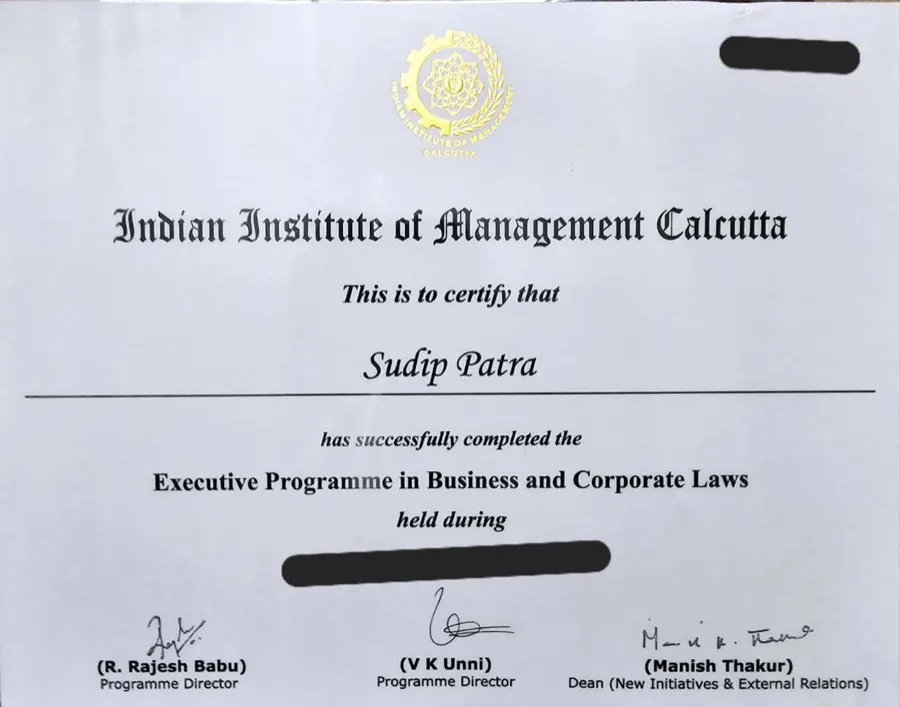
Have a GST notice, order or summons?
Send us the notice, the date you received it and your reply, if you have already filed one. We read the dates first, because the limitation period decides what can still be done. Consultations are held in Kolkata near the Calcutta High Court, in Delhi, and by phone or video. We will tell you plainly what the notice requires and what remedies the law gives. No result can be promised in any legal matter.
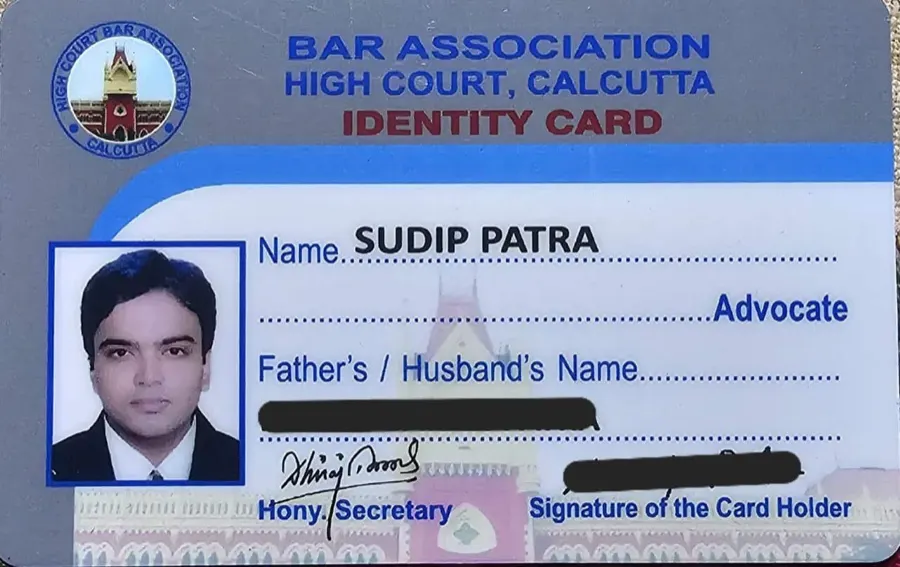
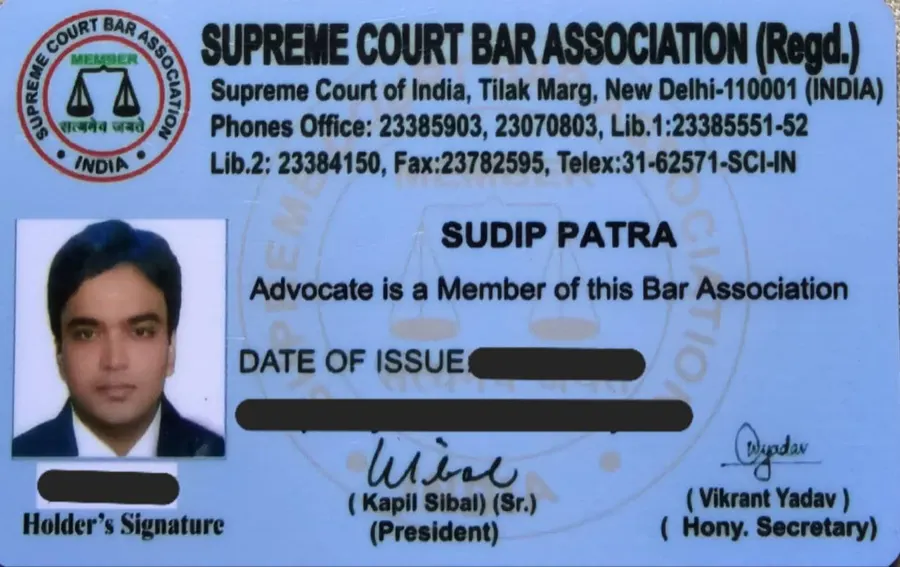
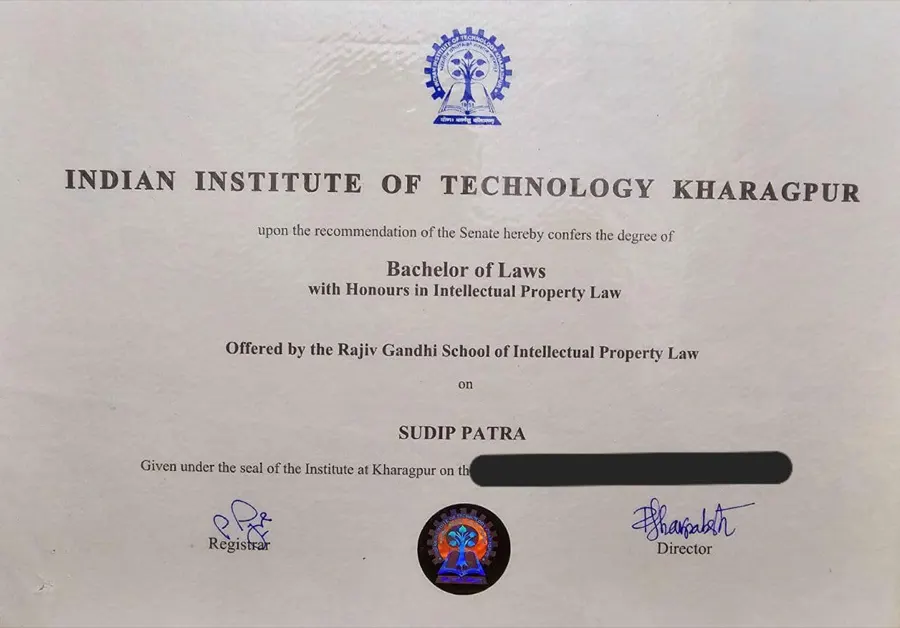
Book a ConsultationEstablished by a distinguished alumnus of IIT Kharagpur, Patra’s Law Chambers stands as a beacon of legal expertise in Kolkata & Delhi. Know more →

Kolkata Office
NICCO House, 6th Floor, 2 Hare Street
Kolkata-700001 (Near Calcutta High Court)
Delhi Office
4455/5, First Floor, Gali Shahid Bhagat Singh
Main Bazar Road, Paharganj, New Delhi-110055
Contact
[email protected]
+91 890 222 4444 / +91 7003 715 325
Frequently asked questions about GST notices, appeals and writs
Do not ignore it. Note the date, the section invoked and the reply deadline, then collect the invoices, returns and ITC records it refers to. Have a GST lawyer read the notice before you reply, because the reply becomes the record for every later appeal.
An SCN, issued in Form DRC-01 under Section 73, 74 or 74A, asks you to explain why the stated tax, interest and penalty should not be demanded. It must state the grounds. Your reply in DRC-06, with documents and a hearing request, is the core of your defence.
Yes. The first appeal is to the Appellate Authority under Section 107, in Form APL-01. A second appeal lies to the GST Appellate Tribunal under Section 112. On questions of law or jurisdiction, the High Court and Supreme Court can be approached as the law permits.
Section 107 allows three months from the date the order is communicated to you. The Appellate Authority may condone a further one month if you show sufficient cause. Beyond that, the appeal cannot ordinarily be admitted, so count from the date of communication, not the date of the order.
For the first appeal, you pay the full admitted tax plus 10% of the disputed tax, subject to the statutory ceiling. A further pre-deposit applies before the GSTAT. Amounts and caps are set by Sections 107 and 112, so verify them against your order.
A writ under Article 226 is usually considered when an order is passed without hearing you, without jurisdiction, or against settled law, or when an appeal cannot give timely relief. Courts often expect the statutory remedy to be used first, so each case needs checking.
Fees generally depend on the forum, the amount in dispute, the volume of documents, the number of hearings and the urgency. Advocates cannot promise results. Ask for the scope of work and fee terms in writing at the first consultation.
GST law changes through notifications, circulars and court rulings, and every stage has strict forms and dates. A lawyer can check the notice against the statute, frame the reply and appeal grounds, and meet procedural requirements. No outcome can be guaranteed.