Key takeaways
- The Armed Forces Tribunal (AFT) was established in 2007, marking a major reform in India's military justice system.
- It offers a specialized forum for adjudicating service matters, including pay and pension disputes previously handled by High Courts.
- The AFT has original jurisdiction over a broad range of service matters and appellate jurisdiction over court-martial findings.
- Chronic vacancies in judicial posts hinder the AFT's capacity to deliver speedy justice, contributing to a growing backlog of cases.
- The Supreme Court affirmed the High Courts' jurisdiction over AFT orders, enhancing legal recourse for servicemen.
- Judgments from the AFT have embedded principles of fairness and natural justice into military law, benefiting service personnel.
- Specialized legal counsel like Patras Law Chambers is essential for navigating the complexities of military law effectively.
A complete Guide to Filling cases in the Armed Forces Tribunal( AFT) of India
-
Creditor and contributor of this article:
Patra’s Law Chambers:
About Us:
Patra’s Law Chambers is a law firm with offices in Kolkata & Delhi, offering comprehensive legal services across various domains. Established in 2020 by Advocate Sudip Patra (Advocate, Supreme Court of India & Calcutta High Court) an alumnus of the Prestigious Rajiv Gandhi School of Intellectual Property Law, IIT Kharagpur ,with Post Graduate diploma in Business Law from IIM Calcutta, the firm specializes in Civil, Criminal, Writs,High Court Matters, Trademark, Copyright, Company, Tax, Banking, Property disputes, Service law, Family law, and Supreme Court matters.You can know more about us in here
Kolkata Office:
NICCO HOUSE, 6th Floor, 2, Hare Street, Kolkata-700001 (Near Calcutta High Court)
Delhi Office:
House no: 4455/5, First Floor, Ward No. XV, Gali Shahid
Bhagat Singh, Main Bazar Road, Paharganj, New Delhi-110055
Website: www.patraslawchambers.com
Email: [email protected]
Phone: +91 890 222 4444/ +91 7003 715 325
Introduction: The Dawn of a New Adjudicatory Era for the Armed Forces
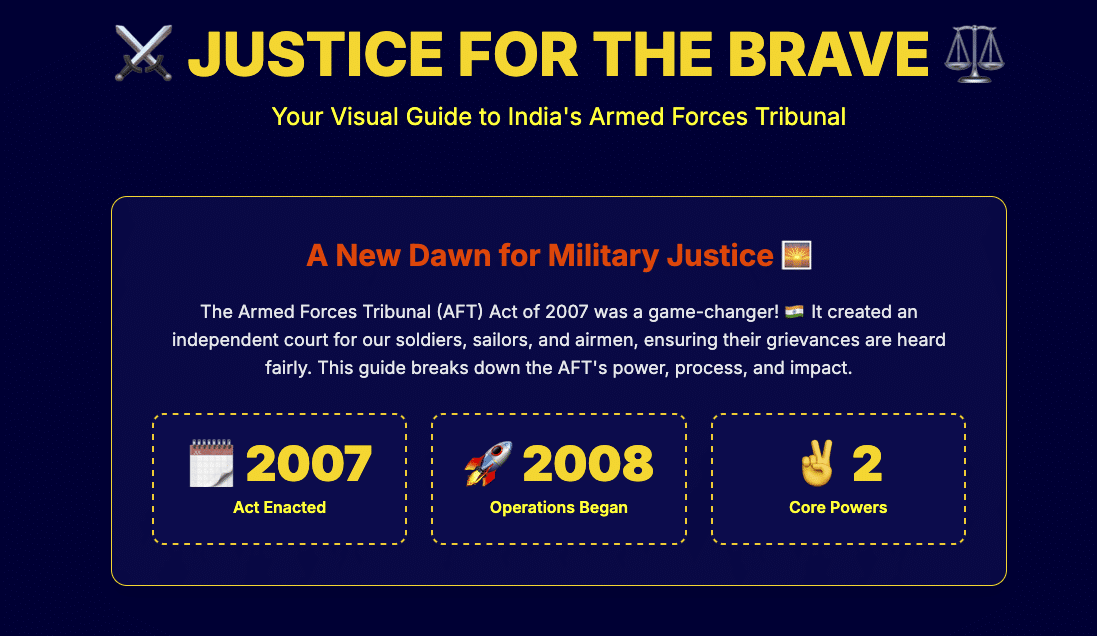
The establishment of the Armed Forces Tribunal (AFT) under the Armed Forces Tribunal Act, 2007, represents a watershed moment in the evolution of military justice in India.1 It marked a fundamental departure from a century-old system of internal discipline and grievance redressal, ushering in an era of external, independent judicial oversight for the nation’s service personnel. The creation of the AFT was not merely a proactive legislative reform but the culmination of a protracted struggle for a fair and impartial adjudicatory mechanism, a demand that echoed through the corridors of the judiciary for decades. The Supreme Court of India, in particular, played a pivotal role in highlighting the systemic deficiencies of the pre-AFT military justice framework.
The genesis of this transformation can be traced to the landmark 1982 judgment in Lt Col Prithi Pal Singh Bedi v. Union of India. In this seminal case, the Supreme Court delivered a scathing critique of the existing military justice system, which was governed by the Army Act, 1950, and its counterparts for the Navy and Air Force. The Court pointedly described the system as a closed loop, where appeals against court-martial verdicts were essentially petitions “from Caesar to Caesar’s wife,” lacking the independence and impartiality inherent in a judicial process.3 It identified the absence of even a single, independent appellate forum with the power to review evidence and law as a “glaring lacuna” in a democratic nation governed by the rule of law.3 This powerful judicial indictment set the stage for a long-overdue reform, making it clear that the principles of natural justice could not be sacrificed at the altar of military discipline.
The AFT was thus conceived with a dual mandate. Firstly, it was designed to provide a specialized and speedy forum for the adjudication of “service matters”—disputes relating to pay, pension, promotion, and other conditions of service—which were previously languishing in various High Courts and the Supreme Court.1 Secondly, and perhaps more significantly, it was established as the first court of judicial appeal against the orders, findings, and sentences of courts-martial. This endowed it with the power to conduct a full merits review, examining both questions of fact and law, a substantial expansion from the limited powers of judicial review that High Courts could exercise under their writ jurisdiction.5 This report provides a definitive analysis of the AFT’s legal framework, its procedural intricacies, its performance, and its jurisprudential contributions to Indian military law.
Section 1: The Armed Forces Tribunal Act, 2007: A Foundational Analysis
The Armed Forces Tribunal Act, 2007 (the Act) is the bedrock upon which the modern military justice system in India rests. Its provisions detail the establishment, composition, jurisdiction, and powers of the Tribunal, reflecting a carefully considered legislative response to long-standing systemic issues.
1.1. Genesis and Legislative Intent: From Judicial Prodding to Parliamentary Action
The path to the enactment of the AFT Act was neither swift nor straightforward. It was paved with decades of judicial observations, expert committee recommendations, and considerable institutional inertia. While the need for an independent appellate body was debated as early as the 1950s during the enactment of the Army and Air Force Acts, the legislature at the time opted for an internal, non-judicial review mechanism.7 Subsequent attempts, including a private member’s bill in 1960, failed to gain traction.7
The real impetus for change came from the judiciary. Following the Supreme Court’s clarion call in Prithi Pal Singh Bedi, the issue was taken up by the Law Commission of India, which, in its 169th Report, strongly recommended the establishment of a specialized tribunal.8 The Parliamentary Estimates Committee echoed this sentiment in its 19th Report in 1992.7 Despite these high-level recommendations, legislative action remained elusive for years. The Supreme Court was compelled to once again draw the government’s attention to this systemic void in the case of
Union of India v. CS Gill in 2000.7
This history reveals that the AFT was not born out of a proactive desire for reform from within the executive or military establishment, but rather as a necessary response to sustained judicial pressure. The Statement of Objects and Reasons of the AFT Bill explicitly acknowledges this, citing the Supreme Court’s observations and the “crying need of the day” for a judicial appeal on both law and facts against court-martial verdicts.3 This context is crucial, as it frames the AFT as an institution designed to infuse constitutional principles of fairness into a system historically resistant to external oversight. The enduring tension between the military’s emphasis on internal discipline and the judiciary’s mandate to uphold fundamental rights continues to shape the AFT’s operational realities and challenges.
1.2. Constitution and Composition: A Hybrid Model of Justice

The AFT is structured to provide accessible justice across the country. It comprises a Principal Bench located in New Delhi and several Regional Benches situated in major cities like Chandigarh, Lucknow, Kolkata, Guwahati, Chennai, Kochi, Mumbai, Jabalpur, Jammu, and Jaipur.2 Each regional bench has a defined territorial jurisdiction, generally covering multiple states, to cater to personnel stationed or residing in those areas.5 For instance, the Chandigarh Bench has jurisdiction over Punjab, Haryana, Himachal Pradesh, and the Union Territory of Chandigarh, while the Guwahati Bench covers the entire North-Eastern region.6
The composition of the AFT benches embodies a unique hybrid model designed to blend judicial expertise with military domain knowledge. Each bench is composed of:
● A Judicial Member: A retired Judge of a High Court, who brings legal acumen, experience in constitutional and administrative law, and the principles of judicial review to the proceedings.1
● An Administrative Member: A retired senior officer of the Armed Forces, who must have held the rank of Major General or an equivalent rank in the Navy or Air Force for at least three years, or have served as a Judge Advocate General (JAG) for at least one year.11 The Administrative Member provides invaluable insight into the unique service conditions, operational realities, ethos, and disciplinary imperatives of the armed forces.1
This hybrid structure is the AFT’s greatest strength, intended to ensure that decisions are not only legally sound but also contextually informed and sensitive to the specific requirements of military service, as recognized under Article 33 of the Constitution.13
1.3. The Ambit of Jurisdiction: Original and Appellate Mandates
The AFT Act grants the Tribunal two distinct and powerful streams of jurisdiction, effectively making it the primary forum for most legal disputes involving armed forces personnel.
Original Jurisdiction (Section 14): The Tribunal exercises original jurisdiction over “service matters.” This is a broad term defined in Section 3(o) of the Act to include all matters relating to the conditions of service of persons subject to the Army Act, 1950, the Navy Act, 1957, and the Air Force Act, 1950.14 This encompasses a wide array of grievances, including those concerning:
● Commission, appointments, and enrolments.
● Pay, allowances, and pensionary benefits (including service pension, disability pension, and family pension).
● Tenure, promotion, and seniority.
● Leave, discharge, and dismissal from service.1
However, certain matters are explicitly excluded from the AFT’s purview, most notably transfers and postings, which remain within the administrative domain of the armed forces.15
Appellate Jurisdiction (Section 15): This is arguably the most transformative aspect of the AFT’s mandate. Section 15 confers upon the Tribunal the jurisdiction, power, and authority to hear and decide appeals against any order, decision, finding, or sentence passed by a court-martial.1 This jurisdiction is comprehensive, allowing the AFT to:
● Re-appreciate evidence and review the factual findings of the court-martial.
● Decide on questions of law.
● Examine the legality and propriety of the sentence awarded.7
This power of merits review is a significant improvement over the limited scope of judicial review that was previously available to personnel through writ petitions in High Courts, where the inquiry was typically confined to errors of jurisdiction or violations of natural justice.7
1.4. Powers of the Tribunal: The Arsenal of Adjudication
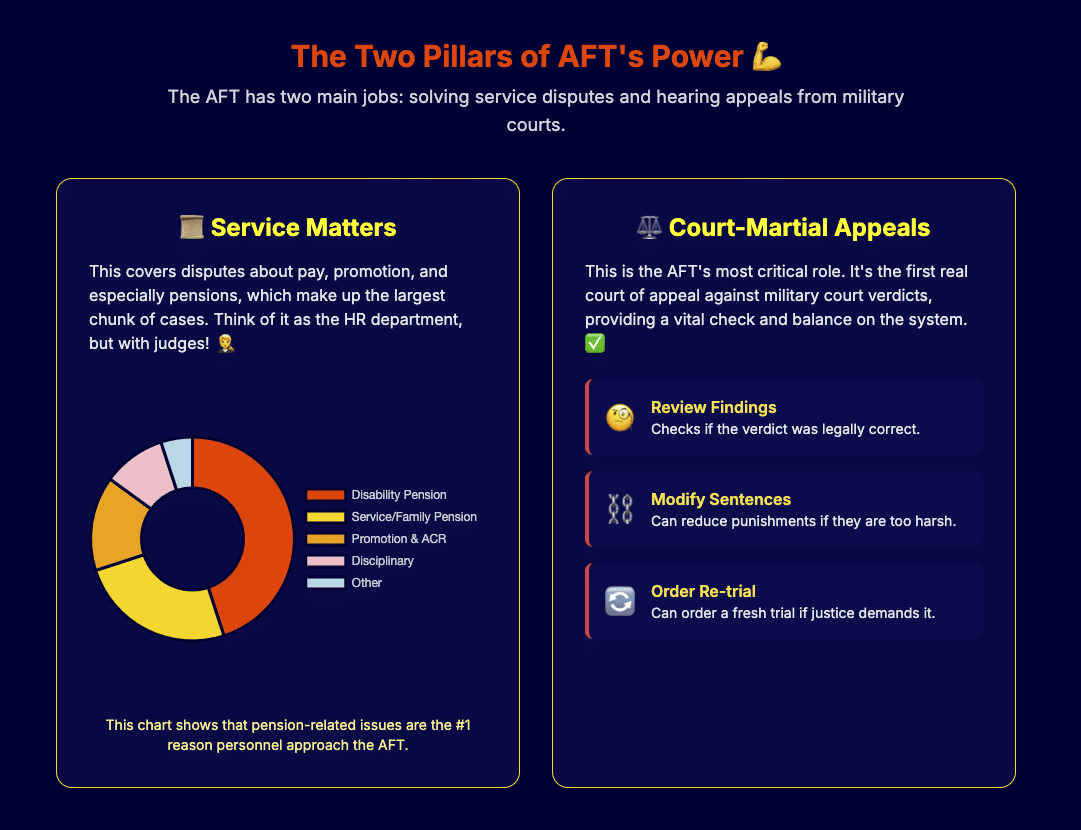
To effectively discharge its duties, the AFT is vested with a wide range of powers. For the purpose of adjudicating disputes, it has the same powers as a civil court under the Code of Civil Procedure, 1908, in respect of summoning and enforcing the attendance of witnesses, requiring the discovery and production of documents, receiving evidence on affidavits, and issuing commissions for the examination of witnesses or documents.1
In its appellate capacity over court-martial matters, its powers are akin to a criminal appellate court. The Tribunal can:
● Allow an appeal if the court-martial’s finding is legally unsustainable, involves a wrong decision on a question of law, or if there was a material irregularity resulting in a miscarriage of justice.5
● Grant bail to an accused in military custody, with or without conditions.5
● Substitute the finding of guilt with a finding for a lesser offence.5
● Suspend a sentence of imprisonment or release an appellant on parole.5
A critical power is the Power to Punish for Contempt under Section 19 of the Act. Initially, this power was interpreted narrowly, limited to punishing for acts like insulting the Tribunal or disrupting its proceedings.13 It did not explicitly include the power to punish for non-compliance with its own orders, which created a significant enforcement gap. However, recognizing the recurring issue of non-implementation of its judgments, a larger bench of the AFT, in a landmark ruling, held that the Tribunal does possess the inherent power to initiate contempt proceedings for non-compliance. This decision was subsequently upheld by the Delhi High Court, marking a crucial step in fortifying the AFT’s authority and ensuring that its verdicts are not mere paper tigers but are effectively enforced.13
Section 2: The Litigant’s Roadmap: Filing and Navigating a Case in the AFT
For a service member or veteran seeking justice, understanding the procedural pathway is as important as the merits of the case itself. The Armed Forces Tribunal (Procedure) Rules, 2008 16, and the
Armed Forces Tribunal (Practice) Rules, 2009 17, provide a detailed and codified framework for litigation. This high degree of codification represents a fundamental shift towards transparency and procedural fairness, moving away from the ad-hoc and command-influenced disciplinary systems of the past.3 These rules are not merely bureaucratic formalities; they are instruments designed to institutionalize natural justice and build trust in a system that previously lacked both.
2.1. Initiating Proceedings: A Step-by-Step Practical Guide
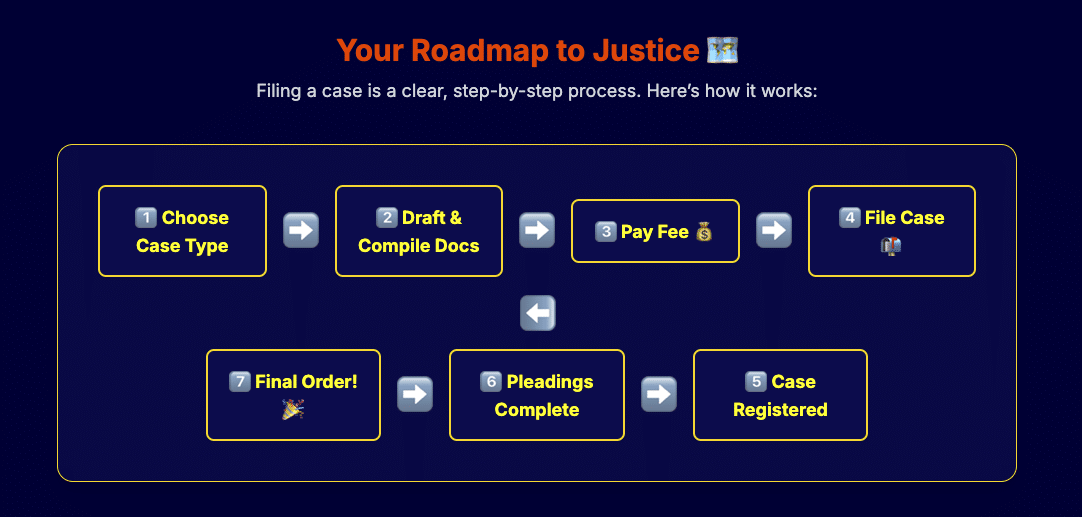
The process of initiating a case before the AFT involves a series of well-defined steps, ensuring clarity and uniformity for all litigants.16
Step 1: Choosing the Application Type
The first step is to identify the correct type of application based on the nature of the grievance. The primary types include 16:
● Original Application (OA): Used for all “service matters” under Section 14 of the Act, such as pension, promotion, pay anomalies, or wrongful discharge.
● Transferred Application (TA): This designation is given to cases that were pending before High Courts and were transferred to the AFT upon its establishment.
● Appeal: Filed under Section 15 against a court-martial verdict.
● Review Application (RA): To seek a review of the Tribunal’s own order.
● Miscellaneous Application (MA): For various interlocutory reliefs like condonation of delay, early hearing, or interim orders.
● Contempt Application (CA): To initiate contempt proceedings for non-compliance with the Tribunal’s orders.
Step 2: Drafting and Compilation
The application must be meticulously prepared as per the rules.16
● Form and Formatting: The application must be filed in Form I as prescribed in the Procedure Rules, 2008. It should be legibly typed or printed in double spacing on one side of A4 size paper, with specified margins.16
● Compilations: The application must be submitted in triplicate, organized into two separate compilations:
○ Compilation No. 1: Contains the main application along with an attested true copy of the impugned order (e.g., the pension rejection letter or the court-martial finding).
○ Compilation No. 2: Contains all other documents and annexures relied upon by the applicant, arranged in a paper-book format.16
● Indexing: All documents must be accompanied by a detailed index in duplicate, including a memo of parties and a list of relevant dates.16
Step 3: Fee Payment
A nominal fee is required for filing certain applications.
● Amount: The fee for an OA, RA, or CA is Rs. 250 for a single applicant. If multiple persons with a common interest are permitted to file a single application, the fee is Rs. 500.16
● Mode of Payment: The fee must be paid via a crossed Demand Draft on a nationalized bank or a crossed Indian Postal Order, drawn in favor of the Registrar of the concerned Bench.16
Step 4: Filing the Application
The completed application can be filed in one of the following ways 16:
● In Person: By the applicant themselves.
● Through an Agent or Legal Practitioner: By a duly authorized agent or a legal practitioner who has filed a Vakalatnama.
● By Post: Sent via registered post with acknowledgment due to the Registrar of the appropriate Bench.
2.2. Determining the Forum: The Nuances of Territorial Jurisdiction
Choosing the correct AFT Bench is a crucial jurisdictional requirement. The rules provide clear and flexible options to enhance accessibility for personnel across the country.16
● For Serving Personnel: An applicant who is still in service can ordinarily file their case with the Registrar of the Bench within whose jurisdiction either:
1. They are currently posted or were last posted/attached; or
2. The cause of action, wholly or in part, has arisen.16
● For Retired Personnel: This is a key provision designed for the convenience of veterans. A person who has been discharged, dismissed, or has retired from service has the option to file an application with the Registrar of the Bench within whose jurisdiction they ordinarily reside at the time of filing.16 This “mother AFT” concept saves veterans the hardship and expense of traveling to their last duty station to litigate.
● Role of the Principal Bench: The rules also provide that with the leave of the Chairperson, an application may be filed directly with the Registrar of the Principal Bench in New Delhi.16
2.3. The Procedural Labyrinth: From Registry to Hearing
Once an application is filed, it enters the internal procedural pipeline of the AFT Registry, which is governed by the detailed AFT (Practice) Rules, 2009.18
● Scrutiny and Registration: The Registry first scrutinizes the application for any formal defects. If it is found to be in order, it is assigned a diary number and subsequently registered with a formal case number (e.g., O.A. No. 123 of 2024).18
● Rectification of Defects: If the application has defects, the Registry will notify the applicant, usually by posting a notice on the Tribunal’s notice board. The applicant is given a reasonable time (typically not exceeding thirty days) to rectify these defects. Failure to do so may result in the Registrar declining to register the application.18
● Listing of Cases: After registration, the case is posted for admission before the appropriate Bench. The details are published in the Daily Cause List. The Registry also maintains a Warning List of cases that are likely to be listed for hearing in the coming weeks, giving litigants and their counsel advance notice to prepare.18
● Registrar’s Court: For many procedural matters, such as the completion of pleadings (filing of reply and rejoinder), cases are listed before the Registrar’s Court, which helps streamline the process and saves the judicial time of the main Bench.18
2.4. Pleadings, Evidence, and Hearing
The litigation process follows the standard adversarial procedure:
1. Service of Notice: Once the Tribunal admits a case, it issues notice to the respondents (typically the Union of India through the Ministry of Defence and relevant service headquarters).18
2. Reply Statement: The respondents are required to file a detailed reply statement, addressing the claims made in the application, within a specified time.16
3. Rejoinder: The applicant has the right to file a rejoinder to counter the points raised in the respondents’ reply.16
4. Hearing: Once the pleadings are complete, the case is listed for final hearing. The rules also provide for the summoning and examination of witnesses, discovery and production of documents, and the pronouncement of a reasoned order by the Bench after hearing arguments from both sides.18
Section 3: A Critical Appraisal: Caseload, Challenges, and Judicial Scrutiny
While the AFT has been a transformative force, its journey has been fraught with significant operational and systemic challenges. A critical analysis of its caseload, pendency rates, and its relationship with the executive and the higher judiciary reveals an institution that is both highly effective in its judicial function and deeply strained by external pressures.
3.1. The Anatomy of the AFT’s Docket: A Qualitative Analysis
An examination of the AFT’s docket reveals that the litigation is concentrated in a few key areas, reflecting the most common points of friction between service personnel and the military administration. The predominant categories of cases are:
● Pension and Pensionary Benefits: This is overwhelmingly the largest and most contentious category of litigation. It includes a vast number of disputes over the grant of disability pension, focusing on the crucial questions of whether a disability is “attributable to or aggravated by” military service and the percentage of disability assessed.20 Other major pension-related issues include claims for invalid pension, ordinary family pension, second service pension for DSC personnel, and the correct application of rounding-off benefits.20
● Promotion and Career Progression: A significant volume of cases pertains to career advancement. These are often emotionally charged disputes challenging non-empanelment for promotion, seeking the expungement of adverse or biased entries in Annual Confidential Reports (ACRs), and questioning the fairness and transparency of promotion selection boards.24
● Disciplinary Matters: These cases form the core of the AFT’s appellate jurisdiction. They involve appeals against the findings and sentences of courts-martial and challenges to the proceedings and findings of Courts of Inquiry (CoI), especially when such findings form the basis for subsequent disciplinary or administrative action against an individual.6
● Discharge and Dismissal: Litigants also approach the AFT to challenge orders of discharge or dismissal from service, arguing that the termination was wrongful, premature, or procedurally flawed.19
3.2. The Pendency Predicament: A Statistical Overview
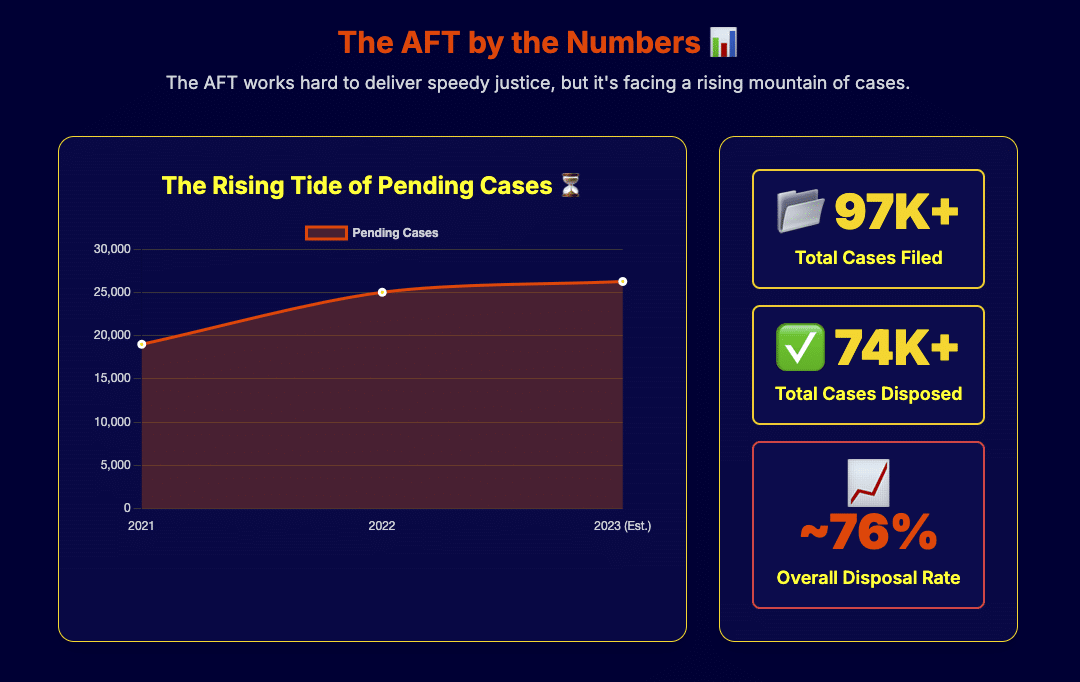
The AFT was established to provide speedy justice, but it is grappling with a substantial and growing backlog of cases. While its disposal rate is commendable, the sheer volume of new filings has led to a significant pendency.
Table 1: Pendency of Cases in the Armed Forces Tribunal (AFT)
(Data compiled from multiple sources, reflecting the most recent available statistics)
|
Metric
|
Figure
|
Source/Date
|
|
Total Cases Filed (since inception until June 2023)
|
> 97,500
|
PIB (June 30, 2023) 30
|
|
Total Cases Disposed (since inception until June 2023)
|
> 74,000
|
PIB (June 30, 2023) 30
|
|
Overall Disposal Rate (as of June 2023)
|
~76%
|
PIB (June 30, 2023) 30
|
|
Total Pending Cases (Recent Estimate)
|
26,253
|
Justice Rajendra Menon Interview 13
|
|
Total Pending Cases (2022 Estimate)
|
~25,000
|
The Tribune (Oct 2024, likely referencing older data) 31
|
|
Total Pending Cases (2021 Estimate)
|
~19,000
|
The Print (March 2021) 33
|
The data clearly indicates a rising trend in pendency, from around 19,000 cases in 2021 to over 26,000 more recently. This increase is attributed to a greater awareness among veterans and serving personnel about their rights, leading to a higher rate of filing.13 While the disposal rate of approximately 76% is impressive, the institution is struggling to keep pace with the influx of new litigation.
3.3. Systemic Hurdles and the Cycle of Litigation
The rising pendency is not merely a function of high filing rates; it is a symptom of deeper systemic problems that plague the AFT.
● Crippling Manpower Shortage: The single most significant bottleneck is the chronic and persistent vacancy in the posts of Judicial and Administrative Members. At times, the AFT has operated with just a fraction of its sanctioned strength, with some reports indicating that it was functioning with only 4 benches out of a sanctioned 17.33 This shortage has rendered several Regional Benches non-functional for extended periods, directly contributing to the case backlog.13 The problem is compounded by the fact that many retired High Court judges who are selected as Judicial Members have declined to accept the appointments, suggesting that the terms and conditions of service offered are not sufficiently attractive to draw the required talent.13
● The Government as a Prolific Litigant: A deeply concerning trend is the propensity of the Union of India (acting through the Ministry of Defence) to challenge a vast majority of AFT orders that grant relief to personnel. This is especially prevalent in disability pension cases. The government’s approach of filing routine appeals in the High Courts and the Supreme Court has drawn sharp criticism from the apex court itself. The Supreme Court has repeatedly admonished the government for dragging its own personnel, who have served the nation, into unnecessary and protracted legal battles, highlighting the adverse impact on morale.20 This practice effectively undermines the very purpose of the AFT, which was to provide a speedy and final forum for redressal.
This has created a paradoxical and dysfunctional dynamic: the AFT’s efficiency in delivering justice has, in an ironic twist, fueled more litigation at higher judicial levels. The former Chairperson of the AFT, Justice Rajendra Menon, noted that the increase in appeals filed by the government is a direct result of the AFT’s high disposal rate, particularly in cases decided in favor of service personnel.13 This creates a vicious cycle where the executive branch appears to treat the AFT not as a final adjudicatory authority but as a mere procedural hurdle on the path to the higher courts. Consequently, the backlog is simply transferred from the AFT to the High Courts and the Supreme Court, defeating the primary objective of speedy justice and placing an immense burden on both the litigant and the judicial system as a whole.
3.4. The Evolving Jurisprudence: The AFT, High Courts, and the Supreme Court
The relationship between the AFT and the constitutional courts has been the subject of a significant jurisdictional evolution, reflecting a deeper constitutional debate about the scope of judicial review.
For several years, the legal landscape was governed by the 2015 Supreme Court judgment in Union of India v. Major General Shri Kant Sharma. In this case, the Court held that the High Courts should not exercise their writ jurisdiction under Article 226 of the Constitution over orders passed by the AFT.34 The reasoning was that the AFT Act provided for a specific, albeit narrow, appellate path directly to the Supreme Court under Section 31, and allowing parallel writ petitions would create a multi-layered and lengthy litigation process.
This ruling, however, created a serious constitutional predicament. Article 136(2) of the Constitution explicitly bars the Supreme Court from granting special leave to appeal from any judgment of a court or tribunal constituted under a law relating to the Armed Forces.15 The statutory appeal under Section 31 of the AFT Act is also highly restrictive, limited only to cases involving “a point of law of general public importance”.15 This meant that for the vast majority of litigants whose cases involved individual service matters without a broader point of law, the AFT’s decision was effectively final, with no viable appellate remedy.
Recognizing this judicial vacuum, a larger bench of the Supreme Court, in its landmark 2023 judgment in Union of India v. Purushottam Dass, overruled the decision in Shri Kant Sharma.34 The Court held that the power of judicial review vested in the High Courts under Article 226 is a part of the
basic structure of the Constitution and cannot be ousted by statute.15 The Court reasoned that denying recourse to the High Court would leave many litigants remediless, which is contrary to the constitutional scheme. This ruling was not a mere procedural tweak; it was a profound reaffirmation of a fundamental constitutional principle. It underscored that even specialized tribunals like the AFT, created for efficiency and domain expertise, must operate within the overarching framework of constitutional checks and balances, with the High Courts serving as a vital safeguard against potential errors or injustice.
Section 4: Precedents and Principles: An Analysis of 20 Landmark Judgments
The jurisprudence developed by the AFT and affirmed or modified by the Supreme Court has profoundly shaped Indian military law. These judgments have infused principles of fairness, reasonableness, and natural justice into a domain traditionally governed by strict discipline and hierarchy. An analysis of these key precedents reveals the judiciary’s role as a crucial arbiter and guardian of the rights of service personnel.
4.1. The Foundation and Jurisdiction of the AFT
1. Lt Col Prithi Pal Singh Bedi v. Union of India (1982) 3:
This foundational Supreme Court judgment is the philosophical parent of the AFT. By declaring the absence of an independent appellate body a “distressing and glaring lacuna” and criticizing the lack of reasoned orders in courts-martial, it laid the moral and legal groundwork for comprehensive reform. It established that military justice, while distinct, is not immune to the constitutional imperatives of fairness and judicial review.
2. Union of India v. Major General Shri Kant Sharma (2015) 34:
This now-overruled Supreme Court decision had, for nearly a decade, barred the High Courts from entertaining writ petitions against AFT orders. It prioritized the legislative intent of creating a self-contained justice system for the armed forces but inadvertently created a situation where many litigants were left without an effective appellate remedy, leading to its eventual reversal.
3. Union of India v. Purushottam Dass (2023) 15:
A landmark judgment of immense constitutional significance. By overruling Shri Kant Sharma, the Supreme Court restored the writ jurisdiction of High Courts over AFT orders. The ruling affirmed that the power of judicial review under Article 226 is an integral part of the Constitution’s basic structure and cannot be legislatively excluded, ensuring that service personnel have a viable path for judicial recourse beyond the AFT.
4.2. Court-Martial, Court of Inquiry, and Disciplinary Proceedings
4. Maj Praveen Kumar v. UOI & Ors. (AFT, Chandigarh) 36:
This judgment provides a crucial interpretation of the AFT’s appellate jurisdiction under Section 15. The Tribunal clarified that its power to hear an appeal is triggered only by a final “order, decision, finding or sentence passed by a court martial.” It held that it cannot interfere at preliminary or intermediate stages, such as the recording of a summary of evidence or the issuance of a charge sheet, as these are not final adjudications.
5. JWO Rama Kumar SB v. UOI & Ors. (AFT, Principal Bench) 28:
Reinforcing the principle of judicial restraint, this case held that the AFT should not interfere with an ongoing court-martial at an interlocutory stage. The Tribunal will only intervene if there is a patent violation of statutory procedures that vitiates the trial, but not on routine procedural applications, thereby preventing the delay of disciplinary proceedings.
6. Cpl M. Ahmed v. UOI & Ors. (AFT, Guwahati) 29:
This ruling clarifies the legal status of a Court of Inquiry (CoI). The Tribunal held that a CoI is essentially a preliminary, fact-finding investigation and not a judicial or quasi-judicial proceeding. Therefore, courts and tribunals should not interfere with CoI proceedings unless there is a “glaring illegality” that goes to the very root of the matter.
7. Union of India & Anr v. Charanjit S. Gill & Ors (2000) 37:
This pre-AFT Supreme Court judgment remains relevant for its articulation of the standard of judicial review over military proceedings. The Court cautioned that while courts-martial are subject to judicial review, the High Court must “stay its hands” and not act as a court of appeal, recognizing the unique requirements of military discipline. This principle of deference continues to inform the approach of the AFT and higher courts.
4.3. Disability Pension: The Presumption of Attributability
This area of law has seen the most significant judicial intervention, with the courts consistently adopting a pro-personnel stance.
8. Dharamvir Singh v. Union of India (2013) 21:
This is the cornerstone judgment on disability pension. The Supreme Court established a powerful legal presumption: if a person was found medically fit upon entering service, any disability or disease that arises subsequently will be presumed to be “attributable to or aggravated by military service,” unless the military can produce compelling evidence to rebut this presumption. This ruling fundamentally shifted the onus of proof from the individual to the employer.
9. Union of India & Ors. v. Rajbir Singh (2015) 40:
Following closely on the heels of Dharamvir Singh, this Supreme Court decision emphatically reiterated and applied the same principles. It solidified the pro-soldier interpretation of the Entitlement Rules for Casualty Pensionary Awards, making it clear that the benefit of any reasonable doubt must be given to the claimant.
10. Subhash Chander Attri v. Union of India (AFT) 22:
This is a representative AFT judgment that demonstrates the practical application of the Dharamvir Singh principle. The Tribunal granted disability pension for “Primary Hypertension,” a common lifestyle disease, holding that the stress and strain of military service must be considered an aggravating factor, even if the disease is constitutional in nature.
11. Sgt. Kamal Kumar Case (Delhi HC) 21:
This recent High Court ruling provides an important nuance. It clarified that even if a medical condition is congenital (present from birth), it does not automatically disqualify a person from receiving disability pension. The crucial question is whether the rigors of military service aggravated the pre-existing condition. The Court remanded the case to the AFT for a thorough examination of this aspect, which the Tribunal had initially failed to consider.
12. Unnamed Soldier (HIV & TB) Case (SC) 45:
In a significant decision reflecting a compassionate and realistic approach, the Supreme Court upheld an AFT order granting 100% disability pension to a soldier who had contracted HIV and Tuberculosis during his service. The ruling rejected the narrow argument that such illnesses are not service-related, implicitly recognizing the environmental and stress factors of military life.
4.4. Promotion, Annual Confidential Reports (ACRs), and Fairness
The judiciary has actively intervened to ensure that administrative processes governing career progression are fair, transparent, and free from arbitrariness.
13. Maj Gen D.V.S. Rana v. Union of India (AFT) 24:
A landmark AFT judgment that struck a blow against the misuse of authority. The Tribunal expunged adverse ACR entries that were made by a Chief of the Army Staff after he had retired from service. It held that under the Doctrine of Pleasure (Article 310 of the Constitution and Section 18 of the Army Act), an officer’s authority ceases upon retirement, and any administrative action taken thereafter is void ab initio for lack of jurisdiction.
14. Brig Sandeep Chaudhary v. Union of India & Ors. (SC, 2025) 25:
This crucial Supreme Court judgment fortified judicial oversight over the ACR process. The Court found that a reporting officer had demonstrated mala fide intent by deliberately giving low ratings in non-disclosed sections of the ACR while maintaining favorable remarks in the visible portions. It expanded the relief granted by the AFT, ordering the expungement of both disputed ACRs and directing a fresh consideration for promotion, thereby preventing an officer’s career from being sabotaged by concealed bias.
15. Commander Jenson Mendez v. Union of India & Ors. (AFT, Principal Bench) 26:
This case addressed a unique situation concerning the right to be considered for promotion. The Tribunal held that where an officer is the sole contender for a vacancy in their specific cadre, they cannot be denied promotion based on a relative assessment of “inter-se merit” by comparing them with officers from entirely different cadres with different service experiences. This ensures that promotions are based on relevant and fair criteria.
16. Unnamed Naib Subedar Case (AFT, Kochi) 27:
This judgment underscores the importance of procedural fairness in promotions to Junior Commissioned Officer (JCO) ranks. The Tribunal noted that even an “average” grading in an ACR must be communicated to the individual if it is likely to adversely affect their promotion prospects, giving them an opportunity to represent against it. It highlighted that JCOs are expected to have exemplary character, but the assessment must be fair and transparent.
4.5. Service and Family Pension Benefits
The AFT and higher courts have consistently interpreted pension regulations liberally to benefit veterans and their families.
17. Shama Kaur v. Union of India (AFT, Full Bench) 46:
This seminal Full Bench ruling settled a long-standing dispute regarding personnel of the Defence Security Corps (DSC). It held that DSC personnel, who are typically re-employed ex-servicemen, are entitled to have any shortfall in their qualifying service (up to one year) condoned for the purpose of earning a second service pension, placing them on par with regular army personnel. It also affirmed the right of widows to agitate such claims on behalf of their deceased husbands.
18. Chanchal Singh v. UOI & Ors. (AFT, Larger Bench) 47:
This important Larger Bench decision clarified the nature of the Modified Assured Career Progression (MACP) scheme. It held that the grant of financial upgradation under MACP is meant to alleviate stagnation and is linked to the completion of a specified length of service (8, 16, and 24 years), not to an individual’s fitness or willingness for promotion. This delinking ensures that personnel receive their time-bound financial benefits irrespective of promotion cadre vacancies or other such conditions.
19. Mohan Singh v. Union of India (AFT, Lucknow) 48:
This case establishes a vital procedural principle regarding limitation. The Tribunal held that the grant of pension is a recurring cause of action. This means that a claim for pension cannot be dismissed solely on the grounds of delay. However, to balance the equities, the Tribunal often restricts the payment of arrears to a period of three years prior to the date of filing the application.
20. Reservist Pension Case (Punjab & Haryana HC) 49:
This High Court judgment upheld an AFT ruling that provided significant relief to elderly reservist pensioners. It affirmed that reservists, who served under an old system of “Colour + Reserve” service, are entitled to a pension equivalent to two-thirds of the pension applicable to the lowest grade of a sepoy under the One Rank One Pension (OROP) scheme. This protected their pensionary benefits from being disproportionately reduced after the implementation of OROP.
The collective thrust of these judgments reveals a judiciary that has consistently acted as a proactive guardian of the rights and welfare of armed forces personnel. By creating beneficial presumptions in pension cases, reading down restrictive regulations, and infusing constitutional principles of fairness into administrative processes, the AFT and the higher courts have not just interpreted military law but have actively shaped and improved it. This judicial activism serves as a vital counterbalance, ensuring justice and fairness for a constituency that has limited avenues for collective bargaining or protest.
Conclusion: The Path Forward and the Imperative of Specialized Counsel
The Armed Forces Tribunal stands as a testament to the maturation of India’s democratic and constitutional ethos. It has successfully carved out a crucial space for independent judicial adjudication within the traditionally insulated world of the armed forces. Its high disposal rate and the development of a progressive, pro-personnel jurisprudence, especially in the realm of pensionary benefits, are significant achievements that have provided tangible relief to thousands of service members, veterans, and their families.30 The principles of fairness and natural justice, once considered alien to the exigencies of military discipline, have now been firmly embedded into the system through the AFT’s functioning.
However, the institution is at a critical juncture. Its very success is threatened by persistent systemic challenges that risk betraying its founding purpose. The crippling shortage of Judicial and Administrative Members has created an enormous backlog of cases, delaying justice and straining the Tribunal’s resources.13 More alarmingly, the executive’s proclivity for filing routine appeals against the AFT’s decisions has created a new tier of litigation, undermining the goal of speedy and final redressal and drawing sharp rebukes from the Supreme Court.20 For the AFT to fulfill its promise, urgent policy interventions are imperative. The government must prioritize the streamlining of appointments to ensure the Tribunal is fully staffed. Furthermore, as repeatedly suggested by the Supreme Court, an internal, high-level mechanism within the Ministry of Defence is needed to filter out unnecessary and frivolous appeals, ensuring that only cases involving significant legal or policy questions are escalated to the higher courts.20
Navigating this complex and specialized legal landscape requires more than general legal acumen; it demands deep domain expertise. The AFT operates under its own unique statutes, procedural rules, and an ever-evolving body of case law that is distinct from mainstream civil or criminal law. For armed forces personnel, whose careers and post-retirement lives hang in the balance, securing counsel with dedicated experience in military law is not a luxury but a necessity.
In this context, specialized law firms like Patras Law Chambers play an indispensable role. With a practice focused squarely on military law and strategic offices in Kolkata and Delhi, the latter serving the crucial Principal Bench, the firm is expertly positioned to represent clients in the very types of cases that dominate the AFT’s docket.19 Their proven experience in core AFT litigation areas—including Disability Pension, Court-Martial appeals, Court of Inquiry issues, ACR disputes, and a wide range of Pensionary Benefits—directly aligns with the major legal battlegrounds identified in this report.19 For service members, veterans, and their families seeking to secure their rights and entitlements, engaging a dedicated military law advocate who understands the nuances of service conditions and the specific procedures of the Tribunal is the most effective path to achieving justice. The journey for justice in the barracks has been long, but with a strengthened Tribunal and specialized legal guidance, it can be a journey that ends in a fair and just resolution.
#ArmedForcesTribunal #AFTAct2007 #MilitaryJusticeIndia #IndianArmedForces #CourtMartial #ServiceMatters #DisabilityPension #MilitaryLaw #VeteransRights #IndianArmy #IndianNavy #IndianAirForce #JusticeForSoldiers #ACRDisputes #PensionRights #LegalHelpForVeterans #PatrasLawChambers #SupremeCourtIndia #JudicialReview #AFTCases
Works cited
6. Welcome to the Armed Forces Tribunal, Chandigarh Bench, accessed on August 2, 2025,
https://aftchd.in/23. PENSION | Department of Ex-servicemen Welfare | Ministry of Defence | Government of India – DESW, accessed on August 2, 2025,
https://desw.gov.in/en/pensions