Key takeaways
- Consolidation: India merged 29 labour laws into four comprehensive Labour Codes to simplify regulation and modernize the system.
- Gig and Platform Workers: Code on Social Security, 2020 formally recognizes gig/platform workers and mandates aggregator contributions to a Social Security Fund.
- Universal Minimum Wage: Code on Wages, 2019 guarantees a statutory minimum wage for all employees and introduces a national Floor Wage.
- Inspector-cum-Facilitator: Enforcement shifts from punitive inspectors to advisory facilitators focused on guidance and compliance support.
- Re-skilling Fund: Industrial Relations Code, 2020 requires employers to contribute 15 days' wages for retrenched workers' re-skilling within 45 days.
- Commuting Accidents Covered: Code on Social Security, 2020 treats accidents during home-to-work travel as employment-related, enabling compensation.
- Future-ready Blueprint: Codes aim to balance worker protections with business ease, using technology for harmonized, transparent labour administration.
5 Big Changes Hiding in India’s New Labour Codes
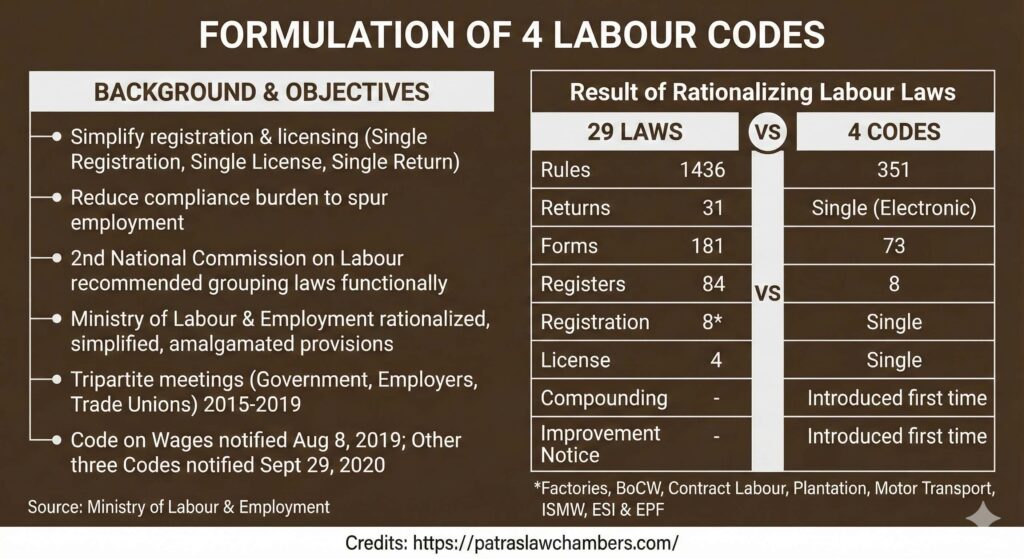
For decades, India’s labour market was governed by a complex web of laws, many of which were framed in the pre-Independence era. This intricate system of 29 separate statutes created significant challenges for compliance, enforcement, and modernization. The result was a framework that struggled to keep pace with a rapidly evolving economy and new forms of work.
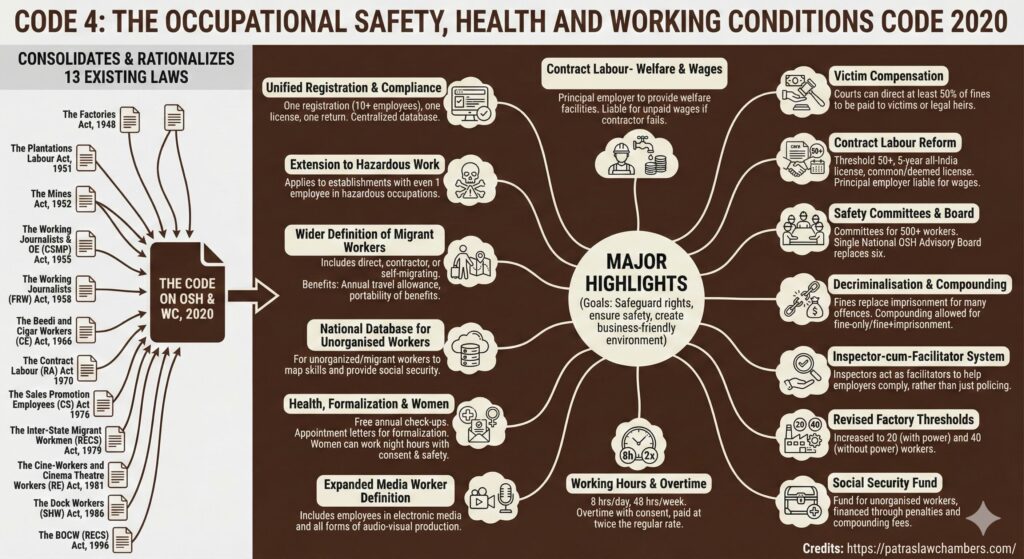
To address these long-standing issues, the Government of India has undertaken a historic consolidation, streamlining these 29 laws into four comprehensive Labour Codes: the Code on Wages, 2019; the Industrial Relations Code, 2020; the Code on Social Security, 2020; and the Occupational Safety, Health and Working Conditions Code, 2020. This monumental reform aims to simplify the entire regulatory landscape, making it easier for businesses to comply while strengthening protections for workers across every sector.
This article cuts through the legal jargon to highlight five of the most surprising and impactful changes from the new codes. These provisions are set to redefine the relationship between employers and employees, creating a new blueprint for the future of work in India.
Click here to download all the infographics in high-resolution PDF format.
1. For the First Time, Gig and Platform Workers Get Social Security
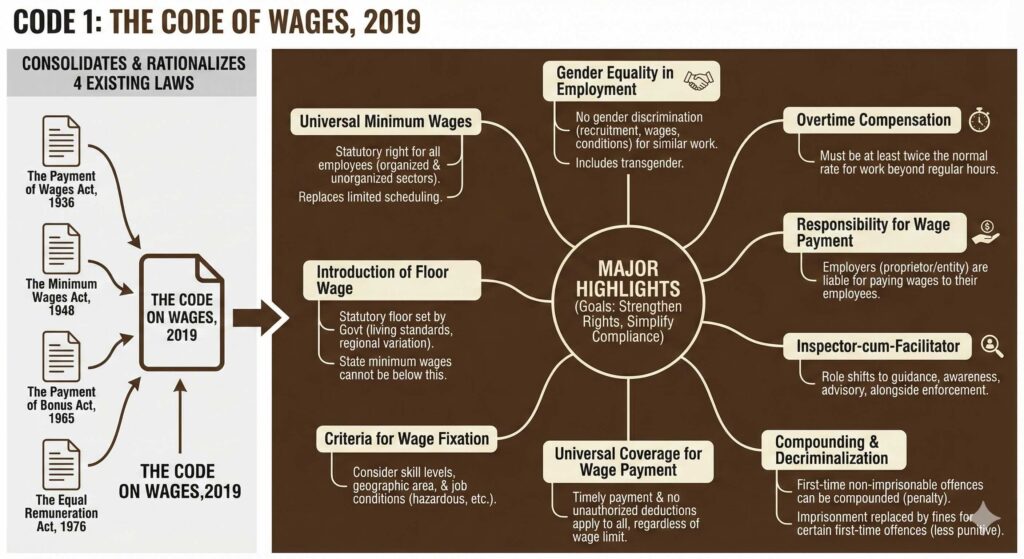
The Code on Social Security, 2020, formally acknowledges the modern workforce by creating official definitions for “gig workers,” “platform workers,” and “aggregators.” This is the first time this rapidly growing segment of the labour market has been recognized within India’s legal framework, paving the way for crucial protections.Under the new code, aggregators are required to contribute 1-2% of their annual turnover into a dedicated Social Security Fund, with this contribution capped at 5% of payments made to such workers. This fund is specifically designed to finance benefits for gig and platform workers, including coverage for life, disability, health, and old-age benefits. This change is a landmark reform that extends a social safety net to millions of workers who were previously outside the scope of traditional labour laws, reflecting the changing nature of employment in the digital age.
2. A Minimum Wage is Now Guaranteed for Everyone
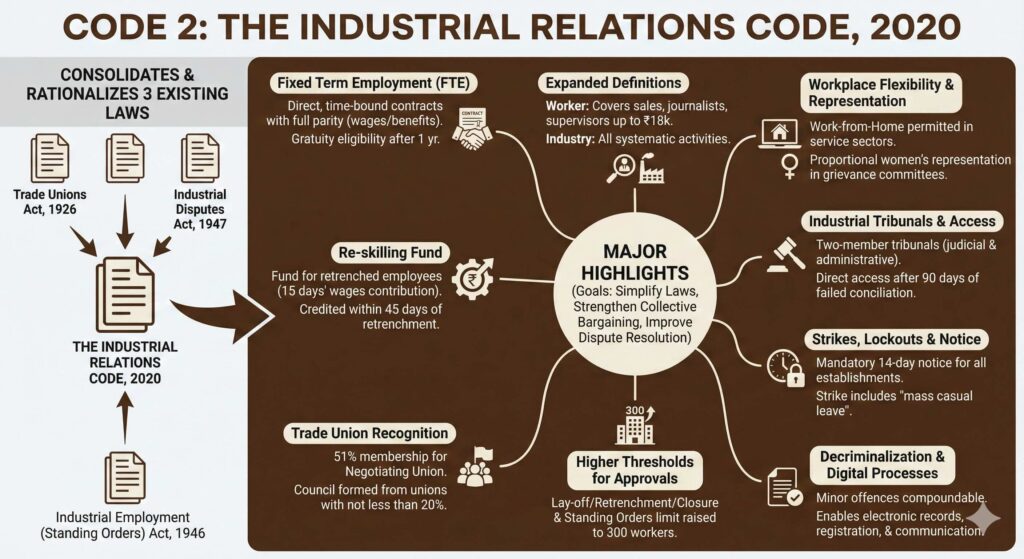
The new Code on Wages, 2019, fundamentally expands one of the most basic worker rights. For the first time, it establishes a statutory right to a minimum wage for all employees, regardless of whether they work in the organized or unorganized sector. This is a dramatic shift from the previous system, where the Minimum Wages Act only applied to “scheduled employments,” which covered an estimated 30% of the country’s workforce.
To ensure a national standard, the code introduces the concept of a statutory “Floor Wage” to be set by the central government based on minimum living standards, with scope for regional variation. No state government will be permitted to fix its minimum wages below this national baseline. This universal guarantee is a powerful tool aimed at reducing wage disparity and ensuring a basic standard of living for every worker in India.
3. The “Inspector Raj” Is Over; Say Hello to the “Facilitator”
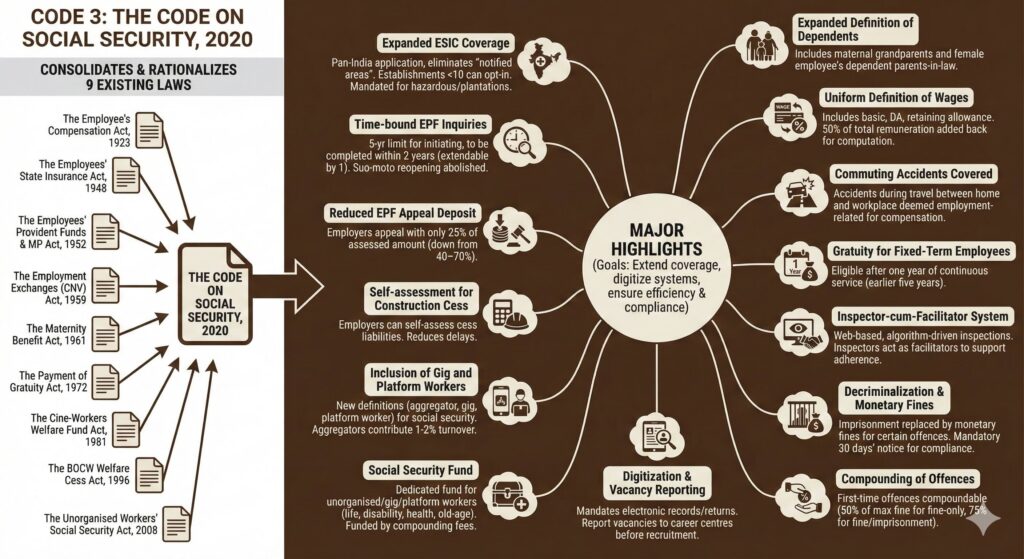
One of the most counter-intuitive but significant changes is the re-envisioning of the government’s enforcement role. The traditional “Inspector” is being replaced by an “Inspector-cum-Facilitator.” This new role is a key feature in the Code on Wages, the Code on Social Security, and the Occupational Safety Code.
Instead of focusing solely on enforcement and punishment, the facilitator’s primary function is to provide guidance, raise awareness, and offer advisory support to help employers comply with the law. This signals a major philosophical shift from a punitive framework to a more compliance-oriented and supportive one. The goal is to reduce harassment, foster a better business environment, and encourage voluntary adherence to the new regulations.
4. Laid-Off Workers Will Get Help Re-skilling for a New Job
The Industrial Relations Code, 2020, introduces an innovative mechanism to support workers who have been laid off: the “Re-skilling Fund.” This fund moves beyond simple financial compensation and focuses on preparing workers for their next job.
When an employee is retrenched, the employer is now required to contribute an amount equal to 15 days’ wages into this fund. This contribution is in addition to the standard retrenchment compensation the worker is already entitled to. The funds are to be credited to the retrenched worker’s account within 45 days, providing them with the resources to pursue training for new employment. This forward-thinking provision shows a focus not just on compensating for job loss but on actively helping workers regain their footing in the labour market.
5. Accidents While Commuting to Work Are Now Covered
In a significant expansion of worker protection, the Code on Social Security, 2020, redefines what constitutes an employment-related incident. Under the new provisions, accidents that occur while a worker is traveling between their home and their place of work are now considered to have happened in the course of employment.
This means that workers injured during their daily commute will now be eligible for compensation, extending protections far beyond the physical premises of the workplace. This impactful change recognizes the inherent risks associated with commuting and provides a crucial financial safety net for workers and their families in the event of an accident. As the Press Information Bureau release states, this reform is part of a broader vision:
This historic reform ensures that workers gain easier access to security, dignity, health, and welfare measures, reinforcing India’s commitment to a fair and future-ready labour ecosystem.
A New Blueprint for the Future of Work
The consolidation of 29 laws into four Labour Codes represents a transformative moment for India’s workforce. The core goal is to strike a new balance—one that protects and enhances worker welfare while creating an efficient, business-friendly environment. By introducing a harmonized and rationalized regulatory framework, strengthening protections, and encouraging the use of technology in the administration of labour laws, these reforms lay the foundation for a more modern labour market.
As these codes are implemented, will this grand unification of labour laws truly pave the way for a more equitable, transparent, and growth-oriented economy for all Indians?